
As a researcher in the field of unmanned aerial systems, I have witnessed the rapid evolution of vertical takeoff and landing (VTOL) unmanned aerial vehicles (UAVs). These innovative machines blend the long-range, high-speed endurance of fixed-wing aircraft with the convenient vertical takeoff and landing capabilities of helicopters, offering a transformative potential for both military and civilian applications. The VTOL UAV represents a paradigm shift in aerial mobility, enabling operations in confined spaces such as ship decks, urban environments, and remote areas without reliance on runways. In this article, we delve into the current state, key technologies, and future trends of VTOL UAVs, emphasizing their growing importance in modern aviation. The integration of advanced aerodynamics, propulsion systems, and control algorithms has propelled VTOL UAVs into the spotlight, making them a critical focus for aerospace engineering. We will explore how VTOL UAVs are reshaping missions like reconnaissance, logistics, and disaster response, while addressing the technical challenges that come with their unique design. Throughout this discussion, the term VTOL UAV will be frequently highlighted to underscore its centrality in this domain.
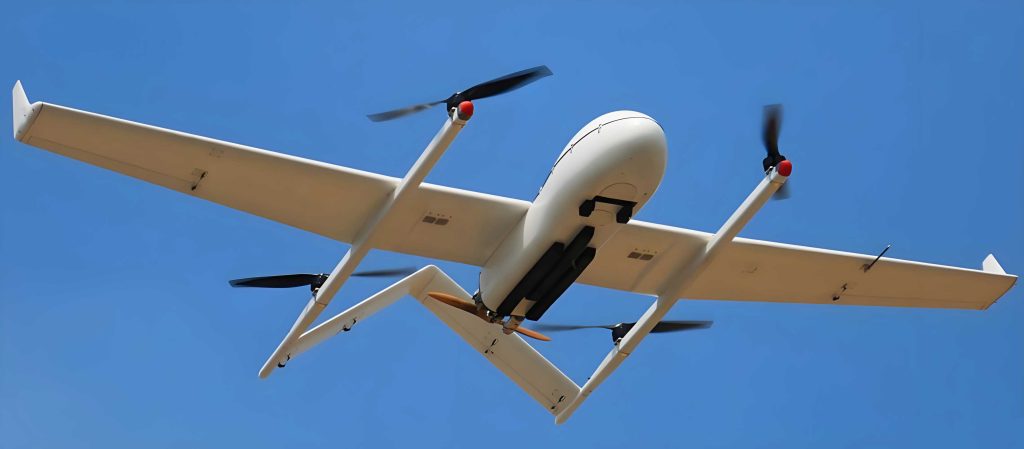
The concept of VTOL UAVs dates back several decades, but recent advancements in materials, computing, and energy systems have accelerated their development. A VTOL UAV typically operates in multiple flight modes: vertical takeoff and landing, transition to forward flight, and efficient cruising. This versatility stems from innovative designs that reconcile the often-conflicting demands of hover efficiency and high-speed flight. For instance, in military contexts, VTOL UAVs can be deployed from naval vessels to extend surveillance ranges or deliver payloads quickly, enhancing operational flexibility. In civilian sectors, VTOL UAVs are envisioned for tasks like parcel delivery, infrastructure inspection, and emergency medical services, where access to traditional airports is limited. The core appeal of VTOL UAVs lies in their ability to combine the best of both worlds, but this comes with complex engineering hurdles. We will examine these challenges through the lens of existing VTOL UAV configurations, key technological pillars, and emerging innovations. As we proceed, we will use tables and equations to summarize critical data and principles, providing a comprehensive overview for engineers and enthusiasts alike.
Research Status and Classifications of VTOL UAVs
The development of VTOL UAVs has led to diverse technical solutions, broadly categorized into thrust-vectoring and thrust-directing types. Thrust-vectoring VTOL UAVs, such as tilt-rotor and tilt-duct designs, alter the direction of their propulsion units to switch between vertical and horizontal flight. Thrust-directing VTOL UAVs, like tail-sitters, maintain a fixed thrust orientation but change the vehicle’s attitude for mode transitions. Each approach has its merits and drawbacks, influencing factors like stability, efficiency, and complexity. In this section, we analyze the current research landscape for major VTOL UAV types, drawing on examples from industry and academia. The VTOL UAV ecosystem is vibrant, with ongoing projects pushing the boundaries of performance and reliability.
First, let’s consider tilt-rotor and tilt-duct VTOL UAVs. These vehicles feature rotors or ducted fans that pivot from a vertical to a horizontal position, enabling seamless transitions. A prime example is the V-22 Osprey, a manned tilt-rotor aircraft that has inspired UAV adaptations. For VTOL UAVs, tilt-rotor designs offer high cruise speeds and ranges, but they grapple with issues like vortex ring state during hover and control instability during transition. The V-280 Valor, an advanced tilt-rotor VTOL UAV, addresses some of these by optimizing rotor aerodynamics and incorporating sophisticated flight control systems. Similarly, tilt-duct VTOL UAVs, such as the Phantom Swift and Aurora’s LightningStrike, use multiple ducted fans for distributed propulsion, enhancing maneuverability and redundancy. These VTOL UAVs often employ electric or hybrid power systems to reduce noise and increase efficiency. To illustrate, Table 1 summarizes key parameters of notable tilt-rotor and tilt-duct VTOL UAVs.
| VTOL UAV Model | Type | Max Speed (km/h) | Range (km) | Key Features |
|---|---|---|---|---|
| V-22 Osprey (UAV variant) | Tilt-Rotor | 507 | 653-933 | Dual rotors, turboshaft engines, transition in 12s |
| V-280 Valor | Tilt-Rotor | 519 | 930-1480 | Rotating nacelles only, improved hover efficiency |
| Phantom Swift | N/A | N/A | Four ducted fans, hybrid layout for stealth | |
| Aurora LightningStrike | Tilt-Duct | N/A | N/A | 24 ducted fans, distributed electric propulsion |
The aerodynamic principles behind these VTOL UAVs involve complex interactions. For instance, the thrust generated by a rotor in hover can be modeled using momentum theory. The thrust $T$ is given by:
$$T = 2 \rho A v_i^2$$
where $\rho$ is air density, $A$ is rotor disk area, and $v_i$ is induced velocity. During transition, the rotor’s angle of attack changes, affecting lift and drag coefficients. This necessitates advanced computational fluid dynamics (CFD) simulations to optimize performance. For VTOL UAVs, reducing drag in forward flight while maintaining hover capability is a key design challenge. Researchers often use dimensionless parameters like the advance ratio $\mu = V/\Omega R$ (where $V$ is forward speed, $\Omega$ is rotor speed, and $R$ is rotor radius) to analyze rotor behavior across flight regimes. The optimal speed tilt-rotor (OSTR) concept, as proposed by Kalerem, introduces variable rotor speeds to enhance efficiency, represented by the equation:
$$\Omega_{opt} = f(\mu, C_T)$$
where $C_T$ is the thrust coefficient. This flexibility allows VTOL UAVs to adapt to different flight conditions, mitigating issues like resonance and vortex ring state.
Second, tail-sitter VTOL UAVs represent a simpler mechanical approach. These VTOL UAVs take off and land on their tails, with the fuselage vertical, and then tilt horizontally for forward flight. Examples include the TERN project by Northrop Grumman and the Flexrotor by Carter Aviation Technologies. Tail-sitter VTOL UAVs benefit from a fixed-wing configuration during cruise, offering high aerodynamic efficiency, but they face challenges in stability during vertical phases and sensitivity to crosswinds. The control system must manage large attitude changes, often requiring robust algorithms. For instance, the TERN VTOL UAV uses a coaxial contra-rotating propeller to eliminate torque effects, simplifying control. Its flight dynamics can be described by equations of motion. Let $\theta$ be the pitch angle, then the transition involves rotating from $\theta = 90^\circ$ (vertical) to $\theta = 0^\circ$ (horizontal). The forces during hover include thrust $T$ and weight $mg$, with equilibrium given by:
$$T = mg$$
During transition, aerodynamic forces come into play, and the equations become nonlinear. For a tail-sitter VTOL UAV, the longitudinal dynamics can be expressed as:
$$\dot{u} = -g \sin \theta + \frac{X}{m}$$
$$\dot{w} = g \cos \theta + \frac{Z}{m}$$
$$\dot{q} = \frac{M}{I_y}$$
where $u$ and $w$ are velocity components, $q$ is pitch rate, $X$ and $Z$ are aerodynamic forces, $M$ is the pitching moment, and $I_y$ is moment of inertia. Controlling these dynamics is critical for safe mode transitions in VTOL UAVs.
Third, lift-propeller or lift-engine VTOL UAVs incorporate additional vertical thrust units for takeoff and landing. These VTOL UAVs, like the historical Dornier Do-31, use dedicated lift engines that shut down during forward flight, but this adds weight and complexity. For small VTOL UAVs, lift propellers are more common, as seen in multirotor hybrids. The advantage is simplicity in design, but the drag from inactive propellers can limit cruise performance. Modern iterations often integrate electric motors for lift, leveraging advancements in battery technology. The power requirement for hover in such VTOL UAVs can be estimated by:
$$P_{hover} = \frac{T^{3/2}}{\sqrt{2 \rho A}}$$
where $P_{hover}$ is the power needed. This equation highlights the trade-off between rotor size and efficiency for VTOL UAVs. Table 2 provides a comparison of tail-sitter and lift-propeller VTOL UAVs.
| VTOL UAV Model | Type | Max Speed (km/h) | Endurance (hours) | Key Features |
|---|---|---|---|---|
| TERN | N/A | N/A | Coaxial propeller, shipboard deployment | |
| Flexrotor | 145 | >40 | V-tail, gasoline engine, long endurance | |
| Do-31 (UAV concept) | Lift-Engine | 730 | N/A | Jet lift engines, heavy payload capacity |
| Typical multirotor hybrid | Lift-Propeller | 100-200 | 1-2 | Electric motors, simple transition |
In summary, the research status of VTOL UAVs shows a trend toward hybrid solutions that balance performance and practicality. Each configuration has inspired numerous studies, with ongoing efforts to overcome limitations. For example, the Sikorsky/Lockheed Martin rotor blown wing concept combines tail-sitter simplicity with blown-wing aerodynamics for improved lift. As VTOL UAV technology progresses, we are seeing more integrated designs that leverage computational tools and novel materials. The next section delves into the key technologies enabling these advancements, focusing on aerodynamics, modeling, and control for VTOL UAVs.
Key Technologies in VTOL UAV Development
The successful implementation of VTOL UAVs hinges on several core technologies. These include advanced aerodynamic design, accurate system modeling, and robust flight control systems. Each area presents unique challenges due to the multi-modal nature of VTOL UAVs. In this section, we explore these technologies in detail, using mathematical formulations and tabular summaries to elucidate their importance. As a researcher, I have found that interdisciplinary collaboration is essential to address the complexities of VTOL UAVs.
Aerodynamic Design Technology
Aerodynamic design for VTOL UAVs must account for both helicopter-like hover and fixed-wing cruise. This involves optimizing parameters such as wing aspect ratio, rotor diameter, and fuselage shape to minimize drag and maximize lift across flight regimes. For tilt-rotor VTOL UAVs, the interaction between rotors and wings during transition is critical. Studies often use CFD to simulate unsteady flow phenomena, such as dynamic wake and blade-vortex interactions. The aerodynamic forces on a VTOL UAV can be expressed using coefficients. For example, the lift coefficient $C_L$ and drag coefficient $C_D$ vary with angle of attack $\alpha$ and Reynolds number $Re$:
$$C_L = C_{L0} + C_{L\alpha} \alpha$$
$$C_D = C_{D0} + \frac{C_L^2}{\pi e AR}$$
where $AR$ is aspect ratio and $e$ is Oswald efficiency factor. For VTOL UAVs operating at low Reynolds numbers (typical for small UAVs), boundary layer separation and laminar flow effects become significant. Research has shown that wing designs with high-lift devices or adaptive shapes can improve performance. Moreover, the rotor aerodynamics in hover involve induced power losses, given by:
$$P_i = \frac{T v_i}{2}$$
Optimizing rotor speed and blade twist is crucial for VTOL UAV efficiency. Table 3 summarizes key aerodynamic considerations for VTOL UAVs.
| Flight Mode | Primary Aerodynamic Focus | Key Parameters | Challenges |
|---|---|---|---|
| Hover | Rotor/propeller efficiency | Thrust coefficient $C_T$, power loading | Vortex ring state, ground effect |
| Transition | Rotor-wing interference | Advance ratio $\mu$, download reduction | Unsteady flows, control coupling |
| Cruise | Wing aerodynamics | Lift-to-drag ratio $L/D$, stall speed | Drag from vertical components |
Recent advancements include the use of morphing wings or distributed propulsion to dynamically adjust aerodynamics. For VTOL UAVs, these innovations can reduce transition times and enhance stability. Additionally, low-noise design is becoming important for urban applications, influencing rotor blade geometry and tip speeds.
System Modeling Technology
Accurate system modeling is foundational for designing and controlling VTOL UAVs. Models encompass kinematics, dynamics, and environmental interactions. Two main approaches exist: forward modeling, which derives equations from first principles, and inverse modeling, which uses experimental data to identify parameters. For VTOL UAVs, the dynamics are highly nonlinear, especially during mode transitions. The equations of motion can be derived using Newton-Euler formulations. Let the state vector be $\mathbf{x} = [\mathbf{p}, \mathbf{v}, \mathbf{q}, \boldsymbol{\omega}]^T$, where $\mathbf{p}$ is position, $\mathbf{v}$ is velocity, $\mathbf{q}$ is quaternion orientation, and $\boldsymbol{\omega}$ is angular rate. The dynamics for a VTOL UAV with multiple thrusters can be written as:
$$\dot{\mathbf{p}} = \mathbf{v}$$
$$m \dot{\mathbf{v}} = m\mathbf{g} + \mathbf{R} \sum_{i=1}^{n} \mathbf{f}_i$$
$$\dot{\mathbf{q}} = \frac{1}{2} \mathbf{q} \otimes \begin{bmatrix} 0 \\ \boldsymbol{\omega} \end{bmatrix}$$
$$\mathbf{I} \dot{\boldsymbol{\omega}} = -\boldsymbol{\omega} \times \mathbf{I} \boldsymbol{\omega} + \sum_{i=1}^{n} \mathbf{r}_i \times \mathbf{f}_i$$
where $\mathbf{g}$ is gravity, $\mathbf{R}$ is rotation matrix, $\mathbf{f}_i$ is thrust from unit $i$, $\mathbf{r}_i$ is moment arm, and $\mathbf{I}$ is inertia tensor. For VTOL UAVs, the thrust forces $\mathbf{f}_i$ depend on flight mode—e.g., vertical in hover and tilted in transition. System identification techniques, such as frequency response analysis or machine learning, are often employed to refine models. A common challenge for VTOL UAVs is parameter uncertainty due to aerodynamic complexities. Robust modeling frameworks that incorporate wind disturbances and actuator dynamics are essential. Table 4 compares modeling methods for VTOL UAVs.
| Method | Description | Advantages | Disadvantages |
|---|---|---|---|
| Forward Modeling | Based on physics laws (e.g., momentum theory) | Predictive, good for design | Requires accurate parameters, may oversimplify |
| Inverse Modeling | Data-driven from flight tests | Captures real-world effects | Needs extensive data, may not generalize |
| Hybrid Approach | Combines both with iterative refinement | Balances accuracy and practicality | Computationally intensive |
In practice, VTOL UAV developers often use simulation environments like MATLAB/Simulink or ROS-Gazebo to validate models before flight testing. These tools allow for hardware-in-the-loop testing, critical for ensuring safety and performance. For VTOL UAVs, model predictive control (MPC) schemes rely heavily on accurate dynamics models to anticipate and optimize transitions.
Flight Control Technology
Flight control is arguably the most critical technology for VTOL UAVs, given their unstable nature in hover and complex transition phases. Controllers must stabilize the vehicle across all flight modes, handling nonlinearities and external disturbances. Common control strategies include PID, linear quadratic regulator (LQR), sliding mode control (SMC), and neural networks. For VTOL UAVs, gain scheduling is often used to adjust controller parameters based on flight mode. For example, during hover, a VTOL UAV may use altitude and attitude control loops, while in cruise, it switches to airspeed and heading control. The control law for a typical VTOL UAV can be expressed as:
$$\mathbf{u} = \mathbf{K} \mathbf{e}$$
where $\mathbf{u}$ is control input (e.g., throttle, rotor tilts), $\mathbf{K}$ is gain matrix, and $\mathbf{e}$ is error vector. During transition, the error dynamics change rapidly, necessitating adaptive gains. Sliding mode control offers robustness against uncertainties. Consider a VTOL UAV pitch control during transition; define a sliding surface $s = \dot{\theta} + \lambda \theta$, with $\lambda > 0$. The control input $u$ can be designed as:
$$u = u_{eq} – K \text{sgn}(s)$$
where $u_{eq}$ is equivalent control and $K$ is a constant. This ensures convergence despite model inaccuracies, which is vital for VTOL UAV safety. Additionally, modern VTOL UAVs increasingly employ machine learning techniques, such as reinforcement learning, to optimize control policies through simulation. Table 5 outlines control approaches for VTOL UAV flight modes.
| Flight Mode | Control Objectives | Typical Methods | Challenges |
|---|---|---|---|
| Vertical Takeoff/Landing | Maintain position and attitude | PID, SMC, feedback linearization | Ground effect, wind gusts |
| Transition | Smooth mode switch, stability | Gain scheduling, MPC, neural networks | Nonlinear dynamics, coupling |
| Cruise | Path following, efficiency | LQR, PID, adaptive control | Aerodynamic perturbations |
Recent research has focused on autonomous decision-making for VTOL UAVs, enabling them to handle emergencies or complex environments. For instance, vision-based systems can aid in landing on moving platforms, a key requirement for naval VTOL UAVs. The integration of sensors like IMUs, GPS, and LiDAR enhances situational awareness. As VTOL UAVs become more prevalent, standardization of control architectures will be important for interoperability and safety.
Future Trends in VTOL UAV Technology
Looking ahead, the evolution of VTOL UAVs will be driven by advancements in several areas. These include novel aerodynamic layouts, autonomous control systems, efficient propulsion, reliable actuation mechanisms, and precise landing guidance. In this section, we explore these trends, emphasizing their potential impact on VTOL UAV capabilities. As a researcher, I anticipate that interdisciplinary innovations will unlock new applications for VTOL UAVs.
Advanced Aerodynamic Layout Design
Future VTOL UAVs will likely embrace unconventional aerodynamic configurations to enhance performance. Concepts like blended wing-bodies, ring wings, or morphing structures can reduce drag and improve lift-to-drag ratios. For VTOL UAVs, integrating propulsion units into these layouts—such as embedded fans or wingtip rotors—will minimize interference losses. Computational design tools, including generative AI and CFD, will enable rapid optimization. For example, a VTOL UAV with a flying wing design could use distributed electric propulsion for vertical lift, with the wing providing efficient cruise. The aerodynamic benefits can be quantified using the Breguet range equation modified for VTOL UAVs:
$$R = \frac{\eta}{g} \frac{L}{D} \ln \left( \frac{m_{initial}}{m_{final}} \right)$$
where $\eta$ is propulsion efficiency. By increasing $L/D$ through advanced layouts, VTOL UAVs can achieve longer ranges. Additionally, stealth features like radar-absorbing materials and low-observable shapes will be crucial for military VTOL UAVs. Research into bio-inspired designs, such as flapping wings for hybrid VTOL UAVs, may also emerge, though scalability remains a challenge.
Highly Autonomous Flight Control Systems
Autonomy will be a game-changer for VTOL UAVs, enabling operations in dynamic environments without human intervention. Future control systems will leverage artificial intelligence to manage flight modes, navigate obstacles, and make real-time decisions. For VTOL UAVs, this means seamless transitions based on sensor fusion and predictive models. Techniques like deep reinforcement learning can train controllers in simulation to handle edge cases. The autonomy stack for a VTOL UAV might include perception modules for object detection, planning algorithms for trajectory generation, and execution controllers. A mathematical framework could involve partially observable Markov decision processes (POMDPs), where the state $s_t$ is estimated from observations $o_t$, and actions $a_t$ are chosen to maximize reward $R$:
$$\max \mathbb{E} \left[ \sum_{t=0}^{\infty} \gamma^t R(s_t, a_t) \right]$$
where $\gamma$ is a discount factor. This allows VTOL UAVs to adapt to uncertainties, such as engine failures or weather changes. Moreover, swarm coordination for multiple VTOL UAVs will open up collaborative missions, like distributed sensing or cargo transport. Standardized communication protocols will be essential for such systems.
Efficient Propulsion Systems
Propulsion technology directly impacts the endurance and payload capacity of VTOL UAVs. Future trends point toward hybrid-electric or all-electric systems, leveraging high-energy-density batteries or fuel cells. For VTOL UAVs, distributed electric propulsion (DEP) offers redundancy and control authority. DEP involves multiple small motors that can be individually throttled or vectored. The power management for a hybrid VTOL UAV can be modeled as an optimization problem:
$$\min \int_{0}^{T} P_{total}(t) \, dt$$
subject to thrust demands and energy constraints. Solar power integration, as seen in high-altitude VTOL UAVs, could enable perpetual flight for surveillance missions. Additionally, advanced thermal management systems will be needed to dissipate heat from motors and electronics. Table 6 summarizes propulsion trends for VTOL UAVs.
| Propulsion Type | Advantages | Challenges | Potential VTOL UAV Impact |
|---|---|---|---|
| All-Electric | Low noise, zero emissions | Battery energy density, recharge time | Short-range urban delivery VTOL UAVs |
| Hybrid-Electric | Extended range, flexibility | System complexity, weight | Medium-range logistics VTOL UAVs |
| Hydrogen Fuel Cell | High energy, lightweight | Infrastructure, storage safety | Long-endurance surveillance VTOL UAVs |
| Solar-Electric | Renewable, ultra-long endurance | Weather dependence, panel area | Stratospheric VTOL UAVs for comms relay |
Innovations in materials, such as carbon fiber composites, will also reduce weight, improving the thrust-to-weight ratio for VTOL UAVs. The synergy between propulsion and aerodynamics will be key to achieving efficient VTOL UAV designs.
Reliable Tilt Actuation Mechanisms
For tilt-rotor and tilt-duct VTOL UAVs, the actuation system that rotates propulsion units must be robust and precise. Future designs will incorporate fault-tolerant mechanisms, perhaps using redundant motors or passive locking features. Lightweight materials like titanium alloys can reduce inertia, enabling faster transitions. The dynamics of a tilt mechanism can be described by a second-order system:
$$J \ddot{\theta}_t + b \dot{\theta}_t + k \theta_t = \tau_m$$
where $J$ is moment of inertia, $b$ is damping, $k$ is stiffness, and $\tau_m$ is motor torque. Optimizing this for VTOL UAVs involves minimizing $J$ while ensuring sufficient torque for wind loads. Health monitoring sensors can predict wear, preventing failures during critical phases. Moreover, novel concepts like magnetic bearings or shape memory alloys could eliminate mechanical complexity in VTOL UAV tilt systems.
Precise Autonomous Landing Control and Guidance
Autonomous landing, especially on moving platforms like ships, is a vital capability for VTOL UAVs. Future systems will integrate multiple guidance sources, such as GPS-denied navigation using computer vision or LiDAR. For example, a VTOL UAV might use a camera to detect deck markings, combined with inertial measurements for stabilization. The control law for landing can be derived from proportional navigation:
$$\mathbf{a}_c = N \mathbf{v}_c \times \boldsymbol{\omega}$$
where $\mathbf{a}_c$ is acceleration command, $N$ is navigation constant, $\mathbf{v}_c$ is closing velocity, and $\boldsymbol{\omega}$ is line-of-sight rate. For VTOL UAVs, this must be adapted to account for vertical descent rates. Machine learning can enhance precision by learning from past landings. Additionally, cooperative systems where the landing platform emits signals (e.g., pseudolites or optical beacons) will improve reliability. As VTOL UAV operations expand, standardized landing protocols will ensure safety in crowded airspace.
Conclusion
In conclusion, VTOL UAV technology stands at the forefront of aerospace innovation, offering unparalleled versatility for a wide range of applications. From tilt-rotor designs to tail-sitter configurations, each VTOL UAV type presents unique advantages and challenges. The key technologies—aerodynamic design, system modeling, and flight control—are rapidly advancing, driven by computational tools and interdisciplinary research. Future trends point toward more autonomous, efficient, and reliable VTOL UAVs, capable of operating in complex environments. As we continue to explore these possibilities, the integration of novel materials, AI, and sustainable propulsion will shape the next generation of VTOL UAVs. The journey of VTOL UAV development is far from over, and I am excited to see how these machines will transform our skies, enabling new missions and enhancing human capabilities. The repeated emphasis on VTOL UAV throughout this article underscores its significance as a transformative technology in unmanned aviation.