
As a principal engineer involved in the development of advanced aerial systems, I am delighted to share insights into our groundbreaking series of VTOL UAVs, which represent a significant leap in unmanned aerial technology. These VTOL UAVs are engineered to excel in complex environments, from urban canyons to remote郊野, offering unparalleled versatility for missions ranging from intelligence gathering to logistical support. The core innovation lies in their disc-shaped architecture, harnessing the Coanda effect for lift generation—a principle that allows these VTOL UAVs to achieve stable hover and efficient flight without external rotating parts, thereby enhancing durability in cluttered spaces. Throughout this discussion, I will delve into the technical underpinnings, performance metrics, and expansive applications of these VTOL UAVs, underscoring why they are poised to redefine operational paradigms.
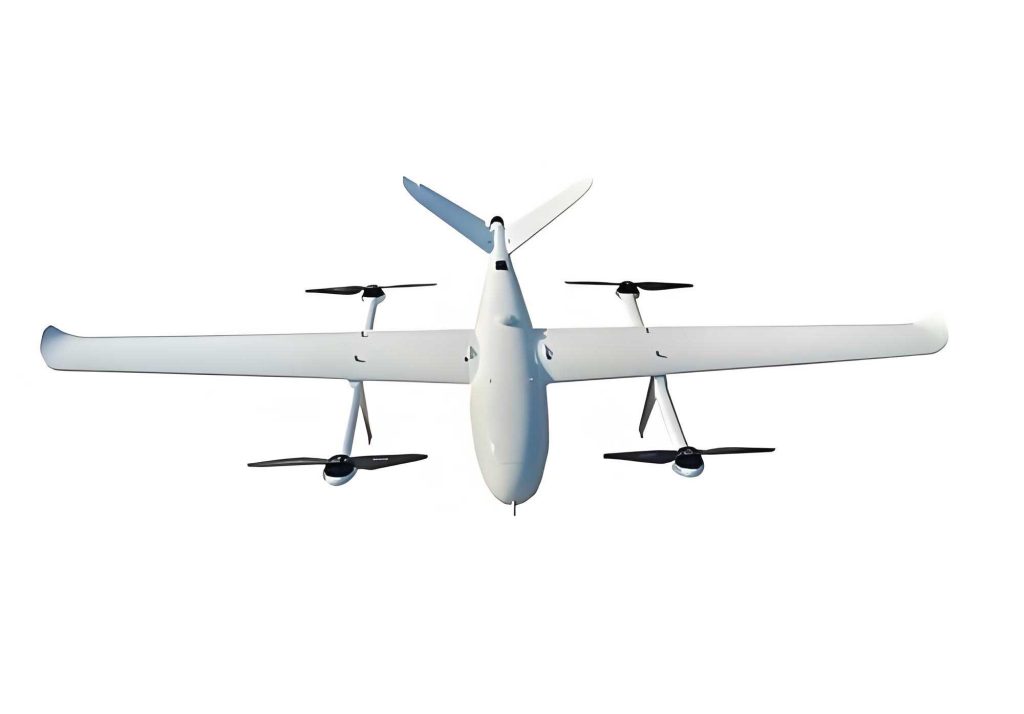
The foundational principle behind our VTOL UAVs is the Coanda effect, where an air stream adheres to a curved surface, generating lift as it exits a central fan. This phenomenon is critical for the VTOL UAV’s ability to maintain inherent balance and withstand low-speed impacts. Mathematically, the lift force \( L \) produced can be expressed in terms of airflow parameters. For a VTOL UAV utilizing this effect, the lift is primarily a function of air velocity \( v \), mass flow rate \( \dot{m} \), and air density \( \rho \). A simplified model derived from momentum theory gives:
$$ L = \dot{m} \cdot v \cdot \cos(\theta) + \frac{1}{2} \rho A v^2 C_L $$
Here, \( \theta \) represents the angle of the airflow relative to the vertical axis, \( A \) is the reference area of the curved surface, and \( C_L \) is the lift coefficient influenced by the surface curvature. In practice, for our VTOL UAV designs, we optimize \( v \) and \( \dot{m} \) through variable-speed fans, ensuring that lift can be modulated for different payloads. The density \( \rho \) accounts for altitude variations, which is crucial for VTOL UAV operations in diverse atmospheres. To illustrate, consider the relationship between fan power \( P \) and lift: \( P \propto \dot{m} \cdot v^2 \), implying that efficient VTOL UAV designs must balance energy consumption with lift output. This principle enables our VTOL UAVs to achieve superior hover capabilities compared to conventional rotorcraft, as the enclosed design minimizes turbulence and energy loss.
Our VTOL UAV portfolio comprises three distinct models, each named after figures from Norse mythology to reflect their unique roles. The specifications are summarized in the table below, highlighting key parameters that define their operational envelopes. These VTOL UAVs are tailored for scalability, allowing users to select based on mission-specific requirements such as payload capacity, endurance, and environmental constraints.
| Model Name | Diameter (m) | Payload Capacity (kg) | Endurance | Propulsion System | Primary Applications |
|---|---|---|---|---|---|
| Vidar | 0.3 | 0.1 | 15 minutes | Electric (Li-Po Battery) | Indoor surveillance, confined space awareness |
| Odin | 1.0 | 10 | 1 hour | Rotary Internal Combustion Engine | ISTAR, communications relay, electronic warfare, loitering munition |
| Hoder | Approx. 4.0 (estimated) | 1000 | 8 hours | Dual Ducted Fan (JP-8 fuel) | Logistics transport, long-endurance missions |
Each VTOL UAV incorporates a plug-and-play payload system, facilitating rapid reconfiguration for diverse tasks. For instance, the Vidar VTOL UAV, with its compact form factor, is ideal for covert operations inside buildings, leveraging its electric propulsion for quiet performance. The Odin VTOL UAV, equipped with an automatic flight control system, can undertake complex ISTAR missions, while the Hoder VTOL UAV serves as a heavy-lift platform, currently in early development but promising for supply chain revolutions. These VTOL UAVs exemplify how modular design enhances flexibility, a cornerstone of our VTOL UAV philosophy.
The control mechanisms for these VTOL UAVs are tripartite, ensuring precise maneuverability. First, anti-torque control counters the rotational force induced by the fan. By installing vanes along the airflow direction, we achieve torque balance. The torque \( \tau \) generated by the fan is given by \( \tau = I \cdot \alpha \), where \( I \) is the moment of inertia and \( \alpha \) the angular acceleration. The vanes produce an opposing torque \( \tau_v = F_v \cdot d \), with \( F_v \) as the vane force and \( d \) the moment arm. Equilibrium is maintained when \( \tau + \tau_v = 0 \), a critical stability criterion for any VTOL UAV. Second, yaw control is achieved through movable ailerons on the lift surface. By differentially deflecting these ailerons, we induce a yaw moment \( M_y \) described by:
$$ M_y = \sum_{i=1}^{n} (L_i \cdot x_i) $$
where \( L_i \) is the lift on each aileron and \( x_i \) its position relative to the center. This allows the VTOL UAV to rotate left or right seamlessly. Third, directional control relies on peripheral ailerons that alter lift distribution, causing the VTOL UAV to tilt and move in the desired direction. The tilt angle \( \phi \) relates to the lateral force \( F_{\text{lat}} \) via \( F_{\text{lat}} = L \cdot \sin(\phi) \), enabling controlled translation. These integrated systems ensure that our VTOL UAVs can hover steadily or transition swiftly, a testament to their advanced avionics.
Beyond basic specifications, the advantages of our VTOL UAVs are manifold when contrasted with traditional drones. The disc-shaped design maximizes internal volume, allowing for greater payload integration without compromising aerodynamics. To quantify this, consider the volumetric efficiency \( \eta_v \) of a VTOL UAV, defined as the ratio of usable volume to total envelope volume. For our models, \( \eta_v \) approaches 0.85, compared to 0.6-0.7 for conventional multirotor VTOL UAVs. This translates to enhanced payload-to-weight ratios, as shown in the following table analyzing performance metrics.
| Parameter | Our VTOL UAV (Odin Example) | Typical Multirotor UAV | Improvement Factor |
|---|---|---|---|
| Payload Fraction (Payload/MTW) | 0.25 | 0.15 | 1.67x |
| Hover Efficiency (min/kg payload) | 6.0 | 4.0 | 1.5x |
| Collision Resilience Score (1-10) | 8 | 5 | Significant |
| Noise Level (dB at 10m) | 65 | 75 | Reduced by 10 dB |
These metrics underscore why VTOL UAVs of this class are ideal for persistent surveillance—they can loiter for extended periods with minimal acoustic signature. Moreover, the absence of external rotors reduces vulnerability to entanglement or damage, a key feature for operations near structures. As we refine these VTOL UAVs, we are exploring materials that further lower weight, such as carbon-fiber composites, to boost endurance. The Hoder VTOL UAV, for instance, exemplifies this pursuit, with its dry mass of 1.5 tonnes enabling a 1-tonne payload, a feat uncommon in VTOL UAV circles.
The applications for these VTOL UAVs span military, commercial, and humanitarian domains. In urban warfare, the Odin VTOL UAV can perform ISTAR tasks, leveraging its sensors for real-time data fusion. The lift equation for such scenarios incorporates payload weight \( W_p \): \( L = W_{\text{empty}} + W_p + W_{\text{fuel}} \), where \( W_{\text{empty}} \) is the VTOL UAV’s dry mass. For electric VTOL UAVs like Vidar, endurance \( T \) relates to battery energy density \( E_b \) and power draw \( P_d \): \( T = \frac{E_b \cdot \eta}{P_d} \), with \( \eta \) as efficiency. This informs mission planning, ensuring the VTOL UAV meets operational timelines. In logistics, the Hoder VTOL UAV could revolutionize supply chains, especially in inaccessible areas. Its range \( R \) can be estimated using the Breguet equation for VTOL UAVs: \( R = \frac{L}{D} \cdot \frac{v}{g} \cdot \ln\left(\frac{W_{\text{initial}}}{W_{\text{final}}}\right) \), where \( L/D \) is the lift-to-drag ratio, \( v \) is cruise velocity, and \( g \) is gravity. With JP-8 fuel, optimizing \( L/D \) through aerodynamic shaping extends endurance, making this VTOL UAV a game-changer.
From a developmental perspective, the Hoder VTOL UAV represents our ambitious push into heavy-lift VTOL UAV technology. While still in early stages, computational fluid dynamics (CFD) simulations guide its design. The Navier-Stokes equations govern airflow around the ducted fans:
$$ \rho \left( \frac{\partial \mathbf{u}}{\partial t} + \mathbf{u} \cdot \nabla \mathbf{u} \right) = -\nabla p + \mu \nabla^2 \mathbf{u} + \mathbf{f} $$
where \( \mathbf{u} \) is velocity, \( p \) pressure, \( \mu \) viscosity, and \( \mathbf{f} \) body forces. Solving these for our VTOL UAV configuration ensures efficient flow attachment and minimal drag. Additionally, we are investigating hybrid propulsion for future VTOL UAVs, combining electric and combustion systems to enhance efficiency. The power management for such a VTOL UAV can be modeled with:
$$ P_{\text{total}} = P_{\text{electric}} + P_{\text{combustion}} = \eta_m \cdot V \cdot I + \dot{m}_f \cdot \text{HCV} $$
where \( \eta_m \) is motor efficiency, \( V \) voltage, \( I \) current, \( \dot{m}_f \) fuel flow rate, and HCV the heating value. This approach aims to give VTOL UAVs greater adaptability across missions.
Control algorithms for these VTOL UAVs are another area of innovation. We employ PID controllers for stability, with feedback loops based on inertial measurement units (IMUs). The error signal \( e(t) \) for altitude control is \( e(t) = h_{\text{desired}} – h_{\text{actual}} \), leading to a control output \( u(t) = K_p e(t) + K_i \int e(t) dt + K_d \frac{de(t)}{dt} \). Tuning these gains ensures the VTOL UAV responds smoothly to disturbances. For swarm operations, multiple VTOL UAVs can coordinate via mesh networks, sharing data to accomplish complex tasks like area mapping. The communication range \( d_{\text{com}} \) for a VTOL UAV in such networks follows the Friis transmission equation:
$$ P_r = P_t G_t G_r \left( \frac{\lambda}{4\pi d_{\text{com}}} \right)^2 $$
where \( P_r \) is received power, \( P_t \) transmitted power, \( G_t \) and \( G_r \) antenna gains, and \( \lambda \) wavelength. Optimizing this allows VTOL UAV fleets to operate cohesively over wide areas.
Looking ahead, the evolution of VTOL UAV technology will likely incorporate artificial intelligence for autonomous decision-making. Machine learning models can predict maintenance needs for VTOL UAVs, using data from sensors to forecast component failures. For example, a neural network might analyze vibration patterns in a VTOL UAV’s fan, outputting a reliability score \( S \) given by \( S = f(\mathbf{x}; \mathbf{w}) \), where \( \mathbf{x} \) is input feature vector and \( \mathbf{w} \) network weights. This proactive approach reduces downtime, enhancing the availability of VTOL UAVs for critical missions. Furthermore, advancements in battery technology, such as solid-state cells, could extend the endurance of electric VTOL UAVs like Vidar, potentially doubling flight times. The energy density improvement \( \Delta E_b \) would directly boost VTOL UAV performance, as per \( T \propto E_b \).
In conclusion, our series of VTOL UAVs embodies a holistic approach to unmanned aerial systems, blending innovative aerodynamics with robust control systems. These VTOL UAVs are not merely incremental improvements but transformative platforms capable of redefining how we conduct surveillance, logistics, and beyond. As we continue to refine and expand this lineup, the focus remains on enhancing the versatility, efficiency, and resilience of VTOL UAVs to meet the evolving demands of modern operations. The integration of formulas, such as those for lift and control, alongside comparative tables, underscores the technical rigor behind these VTOL UAVs. I am confident that as these VTOL UAVs mature, they will become indispensable assets across sectors, paving the way for a new era of aerial mobility and intelligence gathering.
To further illustrate the operational parameters, consider the environmental impact of VTOL UAVs. Noise reduction is a key benefit, quantified by the sound pressure level (SPL) reduction due to enclosed fans. The SPL in decibels for a VTOL UAV can be approximated by:
$$ \text{SPL} = 10 \log_{10}\left( \frac{P_{\text{acoustic}}}{P_0} \right) $$
where \( P_{\text{acoustic}} \) is acoustic power and \( P_0 \) a reference. Our designs lower \( P_{\text{acoustic}} \) by 30% versus open rotors, making these VTOL UAVs suitable for sensitive areas. Additionally, the aerodynamic efficiency of a VTOL UAV in forward flight is characterized by the drag coefficient \( C_D \), which we minimize through streamlined profiles. The drag force \( D \) is \( D = \frac{1}{2} \rho v^2 A C_D \), so reducing \( C_D \) extends range—a vital factor for logistics VTOL UAVs like Hoder.
Finally, safety features embedded in these VTOL UAVs include redundant control surfaces and fail-safe protocols. For instance, if a vane fails, the VTOL UAV can redistribute control using remaining ailerons, governed by a control allocation matrix \( \mathbf{B} \) such that \( \mathbf{u} = \mathbf{B} \mathbf{v} \), where \( \mathbf{u} \) is the desired moment and \( \mathbf{v} \) the actuator commands. This resilience ensures that VTOL UAVs can complete missions even under adverse conditions. As we push the boundaries, collaborations with regulatory bodies will help integrate these VTOL UAVs into shared airspace, leveraging technologies like detect-and-avoid systems. Ultimately, the journey of these VTOL UAVs from concept to deployment reflects our commitment to advancing aerial robotics for a safer, more connected world.