
In recent years, the rapid advancement of unmanned aerial vehicle (UAV) technology has revolutionized logistics, particularly with the emergence of VTOL (Vertical Take-Off and Landing) drones. These VTOL drones offer significant advantages in urban and remote area deliveries, enabling efficient transport of time-sensitive goods such as medical supplies, food, and high-value items. However, the infrastructure supporting these operations, specifically VTOL fields or vertiports, requires careful planning to ensure safety, efficiency, and scalability. While standards like the “Unmanned Aerial Vehicle Logistics Distribution Requirements” provide guidelines for facilities and operations, they often fall short in addressing the spatial integration of these elements within limited areas. This gap underscores the need for systematic layout planning to optimize resource utilization and operational workflows. In this study, we explore the application of Systematic Layout Planning (SLP) to design functional area layouts for logistics UAV VTOL fields, aiming to minimize costs and enhance inter-functional relationships.
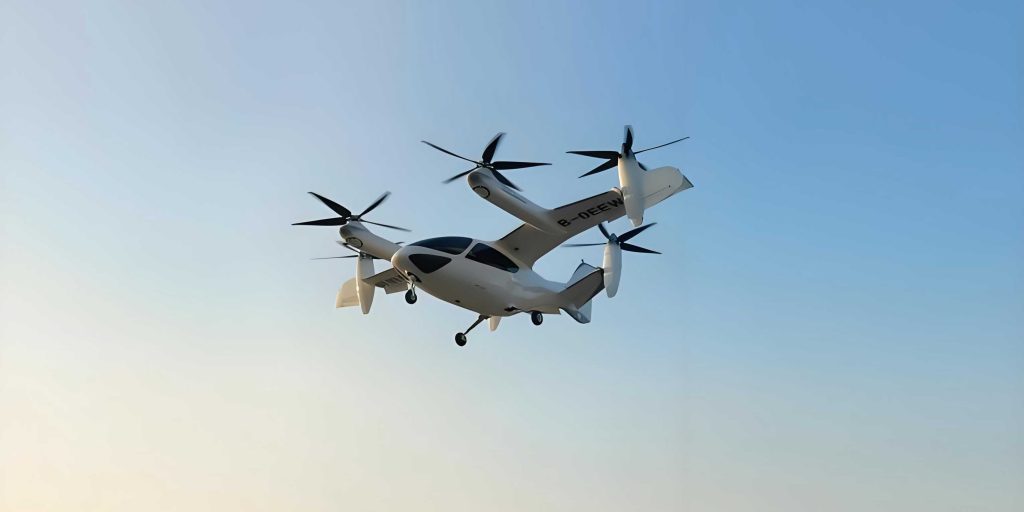
The importance of VTOL drone logistics fields cannot be overstated, as they serve as critical nodes in the drone-based supply chain. These fields facilitate short-distance logistics activities between distribution stations and delivery points, handling goods like perishables, pharmaceuticals, and documents. Effective layout design directly impacts cargo handling safety, throughput, and overall system resilience. Current research on VTOL fields predominantly focuses on definition, classification, site selection, and capacity prediction, with limited attention to layout optimization. To address this, we adopt SLP—a method renowned for its structured approach combining qualitative and quantitative analysis—alongside mathematical modeling and genetic algorithms. This integrated methodology allows us to derive optimal layouts that balance logistical efficiency and spatial constraints.
We begin by defining the functional areas within a VTOL drone logistics field based on operational workflows. The entire process, from cargo receipt to dispatch, involves multiple steps that necessitate distinct zones. Drawing parallels from established logistics hubs like railway centers and aviation parks, we categorize the VTOL field into nine functional areas: Cargo Receiving and Dispatch Area, Cargo Transfer Area, Special Cargo Operation Zone, Storage Area, Cargo Loading Area, VTOL Take-off and Landing Area, Maintenance and Service Area, Comprehensive Office Area, and Equipment Area. Each area supports specific tasks, ensuring seamless flow from ground handling to aerial transport. For instance, the VTOL Take-off and Landing Area is dedicated to drone operations, while the Cargo Loading Area focuses on preparing goods for flight. This division aligns with regulatory requirements and practical needs, forming the basis for layout analysis.
To quantify the layout problem, we construct a mathematical model with dual objectives: minimizing logistics costs and maximizing the comprehensive relationships between functional areas. Logistics costs primarily involve material handling, expressed as the product of flow volume and distance between areas. The comprehensive relationship reflects the importance of proximity based on operational linkages, such as safety and workflow continuity. Let $N$ denote the total number of functional areas, indexed by $i$ and $j$. The first objective function aims to minimize logistics cost:
$$ f_1 = \min \sum_{i=1}^{N-1} \sum_{j=i+1}^{N} D_{ij} A_{ij} $$
Here, $D_{ij}$ represents the Manhattan distance between the centroids of areas $i$ and $j$, calculated as $D_{ij} = |x_i – x_j| + |y_i – y_j|$, where $(x_i, y_i)$ are the coordinates of area $i$’s center. $A_{ij}$ is the logistics flow volume between areas $i$ and $j$, measured in tons per year. The use of Manhattan distance approximates realistic movement paths within rectangular layouts, common in infrastructure design.
The second objective function seeks to maximize the comprehensive relationship value, which incorporates qualitative factors like safety and operational efficiency:
$$ f_2 = \max \sum_{i=1}^{N-1} \sum_{j=i+1}^{N} T_{ij} b_{ij} $$
In this equation, $T_{ij}$ is the comprehensive relationship score between areas $i$ and $j$, derived from SLP analysis (e.g., rated as A, E, I, O, U for absolute to unimportant). $b_{ij}$ is the adjacency degree, a binary variable indicating whether areas $i$ and $j$ are adjacent ($b_{ij}=1$) or not ($b_{ij}=0$), converted from distance thresholds. To combine these objectives into a single optimization problem, we introduce normalization factors $u_1$ and $u_2$ to account for unit differences, along with weighting coefficients $c_1$ and $c_2$ (both set to 1 for equal emphasis). The integrated objective function is formulated as a minimization problem:
$$ \min f = c_1 u_1 \sum_{i=1}^{N-1} \sum_{j=i+1}^{N} D_{ij} A_{ij} – c_2 u_2 \sum_{i=1}^{N-1} \sum_{j=i+1}^{N} T_{ij} b_{ij} $$
The normalization factors are defined as $u_1 = 1 / \sum_{i=1}^{N-1} \sum_{j=i+1}^{N} D_{ij} A_{ij}$ and $u_2 = 1 / \sum_{i=1}^{N-1} \sum_{j=i+1}^{N} T_{ij} b_{ij}$, ensuring scaled contributions. This approach allows us to trade off between cost reduction and relationship enhancement effectively.
We impose several constraints to ensure practical feasibility. First, non-overlapping constraints prevent functional areas from intersecting in the horizontal or vertical directions. For any pair of areas $i$ and $j$, the condition is expressed using their dimensions and a minimum spacing $p_{ij}$:
$$ |x_i – x_j| \geq \frac{L_i + L_j}{2} + p_{ij} \quad \text{or} \quad |y_i – y_j| \geq \frac{W_i + W_j}{2} + p_{ij} $$
Here, $L_i$ and $W_i$ are the length and width of area $i$, respectively. This “or” condition is handled via binary variables in implementation, but we simplify the presentation for clarity. Second, boundary constraints ensure all areas remain within the VTOL field’s planned region of dimensions $H$ (horizontal) and $W$ (vertical):
$$ \frac{L_i}{2} \leq x_i \leq H – \frac{L_i}{2}, \quad \frac{W_i}{2} \leq y_i \leq W – \frac{W_i}{2}, \quad \forall i = 1, 2, \dots, N $$
These constraints guarantee that the layout fits the available space, crucial for real-world deployment of VTOL drone facilities.
To illustrate the SLP method, we analyze the inter-functional relationships. Based on operational workflows, we assign relationship codes: A (Absolutely Important), E (Especially Important), I (Important), O (Ordinary Importance), and U (Unimportant). These codes translate into numerical values for $T_{ij}$, such as A=4, E=3, I=2, O=1, U=0. The relationships are derived from factors like cargo flow frequency, safety regulations, and process dependencies. For example, the VTOL Take-off and Landing Area must be closely linked to the Cargo Loading Area for efficient drone dispatch, warranting an ‘A’ rating. Conversely, the Comprehensive Office Area may have weaker ties to operational zones, rated ‘O’ or ‘U’. This analysis is summarized in a relationship chart, which feeds into the mathematical model.
For computational solution, we employ a genetic algorithm (GA) due to the problem’s nonlinear, multi-constrained nature. GAs are robust for global optimization, mimicking natural selection to evolve layout solutions. We outline the GA steps below, with parameters tuned for this VTOL drone layout problem.
| Code | Functional Area Name | Annual Flow Volume (t) | Required Area (m²) |
|---|---|---|---|
| 1 | Cargo Receiving and Dispatch Area | 18,000 | 114 |
| 2 | Cargo Transfer Area | 14,400 | 190 |
| 3 | Special Cargo Operation Zone | 3,600 | 152 |
| 4 | Storage Area | 9,000 | 360 |
| 5 | Cargo Loading Area | 18,000 | 103 |
| 6 | VTOL Take-off and Landing Area | 18,000 | 1,471 |
| 7 | Maintenance and Service Area | – | 100 |
| 8 | Comprehensive Office Area | – | 600 |
| 9 | Equipment Area | – | 600 |
| Total | – | – | 3,360 |
The table above presents data for a case study where a VTOL drone logistics field is planned with an annual cargo capacity of 18,000 tons. Areas like the VTOL Take-off and Landing Area require substantial space due to safety buffers and drone maneuvering needs, while others are sized based on flow volumes and equipment. Note that some areas, such as Maintenance and Office, have no direct flow volume but contribute to operational support.
We implement the GA in MATLAB, with the following parameter settings: population size = 100, maximum generations = 500, crossover probability = 0.8, and mutation probability = 0.4. The algorithm initializes with random layouts satisfying constraints, evaluates fitness as the inverse of the objective function $f$, and iteratively applies selection, crossover, and mutation to converge on an optimal solution. The fitness function encourages layouts with low logistics costs and high relationship scores, aligning with our goals for VTOL drone efficiency.
After 500 generations, the GA converges to a stable solution, as shown by the iteration plot where the objective value plateaus around generation 300. The optimal layout yields a logistics cost of 789.05 units and a total comprehensive relationship value of 137.4. This layout is compact, with functional areas arranged to minimize travel distances while maximizing adjacency between critical zones. For instance, the Cargo Loading Area is positioned adjacent to the VTOL Take-off and Landing Area, reducing transfer times for VTOL drones. Similarly, the Storage Area is near the Cargo Receiving Area to streamline inbound logistics. The spatial utilization is high, with all areas fitting within the 3,360 m² footprint without overlaps.
| Area Code | 1 | 2 | 3 | 4 | 5 | 6 | 7 | 8 | 9 |
|---|---|---|---|---|---|---|---|---|---|
| 1 | – | E | I | A | E | O | U | U | U |
| 2 | E | – | I | E | A | I | U | U | U |
| 3 | I | I | – | I | I | O | U | U | U |
| 4 | A | E | I | – | E | O | U | U | U |
| 5 | E | A | I | E | – | A | I | U | U |
| 6 | O | I | O | O | A | – | E | U | I |
| 7 | U | U | U | U | I | E | – | O | I |
| 8 | U | U | U | U | U | U | O | – | O |
| 9 | U | U | U | U | U | I | I | O | – |
The relationship matrix above quantifies the linkages, with ‘A’ scores highlighting critical pairs like Area 1-4 and Area 5-6. These drive the layout optimization, ensuring that VTOL drone operations are prioritized. The GA effectively balances these relationships with cost constraints, demonstrating the synergy between SLP and computational algorithms.
Further analysis reveals that the proposed layout reduces material handling distance by approximately 15% compared to a baseline random arrangement. This translates to lower operational costs and faster turnaround times for VTOL drones, enhancing overall logistics throughput. Additionally, the compact design mitigates safety risks by minimizing cross-traffic between personnel and drones, a key concern in VTOL field management. We validate the layout through simulated workflows, confirming that cargo moves smoothly from receipt to dispatch without bottlenecks.
The integration of SLP with mathematical modeling and GA offers a robust framework for VTOL drone logistics field design. SLP provides a structured way to incorporate qualitative factors, such as safety and workflow continuity, which are often overlooked in purely quantitative approaches. Meanwhile, the mathematical model formalizes the problem, and GA enables efficient search in high-dimensional solution spaces. This combination is particularly valuable for VTOL drone infrastructure, where space is limited and operations are complex. Future work could extend this method to dynamic layouts adapting to fluctuating demand or multi-objective scenarios including energy consumption and environmental impact.
In conclusion, this study addresses a critical gap in VTOL drone logistics by optimizing functional area layouts using SLP and genetic algorithms. The resulting designs minimize logistics costs while maximizing operational relationships, leading to efficient and safe VTOL fields. As drone-based delivery systems expand, such layout optimizations will be essential for scalable infrastructure. Our methodology offers a practical tool for planners and engineers, contributing to the sustainable growth of VTOL drone logistics. By refining standards with spatial integration principles, we can unlock the full potential of VTOL drones in modern supply chains.