
From my perspective, the rise of unmanned aircraft systems (UAS), or drones, represents one of the most significant technological convergences in modern aviation. These systems synthesize advanced aeronautical engineering, information technology, control systems, measurement and sensing technologies, alongside breakthroughs in new materials and energy sources. I observe their potential to fundamentally reshape traditional operational paradigms across numerous sectors. Their successful application in fields like aerial pesticide application, cinematography, surveying and mapping, and commercial displays is just the beginning. The concept of “UAS+” signifies a powerful channel for public engagement in advancing the general aviation sector and serves as a transformative vehicle for upgrading traditional industries through innovation. Consequently, the research, development, and application of drone technology are intrinsically linked to national interests, public safety, and civil rights. In this era of “UAS+” expansion, I firmly believe that the education and training of professionals in this field constitute the foundational engineering required for the sustainable and innovative development of the civil drone industry.
The production and application of civil drones have seen explosive growth globally in recent years. Notably, there has been a rapid proliferation of low-altitude, slow-speed, micro, light, and small drones, which now constitute the vast majority of the civil UAS fleet. This industry boom has led many radio control model enthusiasts and photography hobbyists to purchase drones. However, operating a drone cannot be mastered simply by following a user manual. A drone pilot, much like any other category of civil aviation pilot, must possess knowledge of relevant laws and regulations, professional aeronautical knowledge, and undergo practical skill training. Drones, as intelligent aircraft, implicate more than just “overhead safety”; reckless flight operations can jeopardize public safety and even national security. The safety management of civil drones involves coordinated oversight from multiple entities including state security, public security, the air force, civil aviation, sports, urban management, and industry and commerce authorities. From my standpoint, the professional准入, education, training, and competency certification for practitioners should be spearheaded by the civil aviation authority. A regulatory evolution began with the Civil Aviation Administration of China (CAAC) Flight Standards Department’s issuance of the “Interim Provisions on the Management of Civil Unmanned Aircraft System Pilots” (AC-61-FS-2013-20) in November 2013. This was followed by complementary measures from other bodies, like the China Aeronautical Sports Association’s standards for remote-control model pilots. A key development was the CAAC’s “Light and Small Unmanned Aircraft Operation Regulations (Interim)” (AC-91-FS-2015-31) in December 2015, which mandated that pilots comply with specific requirements based on their drone’s classification. To further refine pilot management, the CAAC revised the interim provisions and issued the “Regulation on the Management of Civil Unmanned Aircraft Pilots” (AC-61-FS-2016-20R1) in July 2016. This revision redefined drone classifications and clarified tiered management requirements, which can be summarized as follows:
| Category | Aircraft Empty Weight (kg) | Maximum Take-Off Weight (kg) |
|---|---|---|
| I | 0 < W ≤ 1.5 | – |
| II | 1.5 < W ≤ 4 | 1.5 < W ≤ 7 |
| III | 4 < W ≤ 15 | 7 < W ≤ 25 |
| IV | 15 < W ≤ 116 | 25 < W ≤ 150 |
| V | Plant Protection UAS | |
| VI | Unmanned Airship | |
| VII | Category I, II UAS operating Beyond Visual Line of Sight (BVLOS) | |
| XI | 116 < W ≤ 5700 | 150 < W ≤ 5700 |
| XII | W > 5700 | W > 5700 |
| Serial | Management Type | Applicable Scenario |
|---|---|---|
| 1 | Pilot responsibility; No license/certificate management required. |
A. UAS operated indoors. B. Category I & II UAS (optional registration in UAS Traffic Management (UTM) system). C. UAS tested in non-congested, sparsely populated areas. |
| 2 | Management by industry associations, supervised by the authority. |
A. UAS other than Cat I/II operating in segregated airspace. B. Cat III, IV, V, VI, VII UAS operating in non-segregated airspace. |
| 3 | Direct management by the civil aviation authority. | Cat XI & XII UAS operating in non-segregated airspace. |
With the industry maturing, drone training for pilots must align with the latest effective regulations. Currently, there are no formal资质 requirements for other UAS technical professionals, such as developers or application engineers, from the industry regulator.
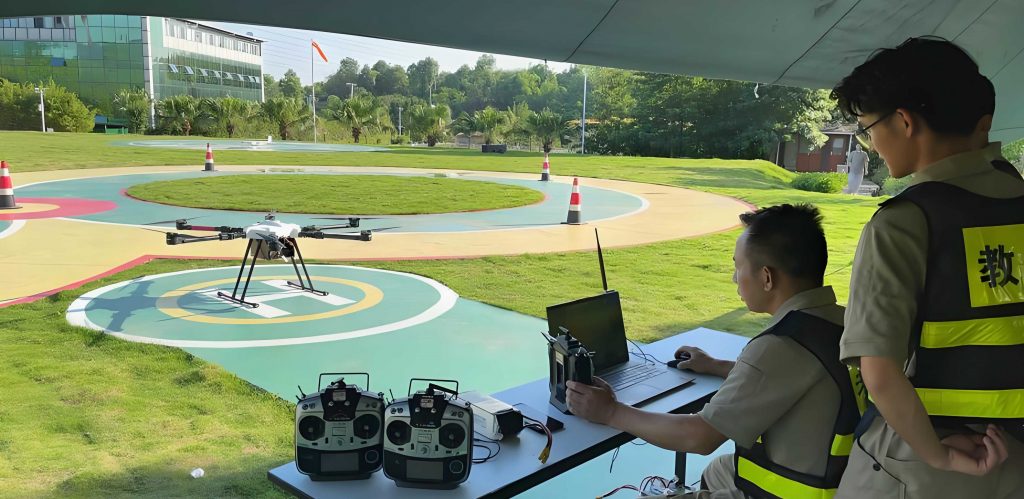
The rapid expansion of drone applications into more professional fields has starkly revealed a critical lag in talent cultivation. I see a severe shortage of human resources within the industry, where the insufficient number of technical professionals in application service domains has become a major bottleneck. The sustainable and healthy development of the drone industry requires not only robust legal frameworks and technological innovation but, in my view, a stronger emphasis on professional education and drone training. Presently, the primary demand in China’s civil UAS application service sector is for qualified pilots. I understand that there are three main types of drone-related certifications in the domestic market:
- Civil Unmanned Aircraft System Pilot Certificate (AOPA-China): Authorized by the CAAC, the Aircraft Owners and Pilots Association of China (AOPA) is responsible for managing pilot资质 for most small-to-medium UAS. The number of certificates issued has grown exponentially, with thousands of training institutions established across the country in recent years. The annual report on Chinese civil aviation pilot development now includes data from AOPA训练机构.
- Remote Control Aeronautical Model Pilot License (ASFC): Administered by the China Aeronautical Sports Association (ASFC) under the State General Administration of Sports, this system focuses on aeronautical models and micro-drones (typically under 7kg). It offers graded licenses (Levels 1-8 and Special Class) across fixed-wing, multi-rotor, and helicopter categories, and is geared more towards sports and recreational flying.
- UTC Unmanned Aircraft Systems Operator Certificate: Pioneered by leading manufacturer DJI through its “UAV Training Center” (UTC) ecosystem, this certification focuses on application-specific skills. Developed in collaboration with industry associations, it offers specialized training tracks in areas like aerial photography, plant protection, inspection, surveying, and security. The curriculum combines flight skills, maintenance, and industry-specific operational knowledge. It is widely adopted but is often seen as closely tied to the manufacturer’s product ecosystem.
Furthermore, universities have begun to contribute significantly. Prestigious aeronautical institutions like Beihang University, Nanjing University of Aeronautics and Astronautics, and Civil Aviation University of China have established UAS R&D and training centers, integrating related disciplines into their curricula. Simultaneously, over twenty vocational colleges across China have launched “UAS Application Technology” programs, aiming to cultivate technical and skilled personnel. The training market is also supplemented by professional training companies, online media platforms, and industry alliances focused on knowledge dissemination and skill development. This multifaceted landscape constitutes the current state of drone training in China.
| Certification Type | Issuing/Governing Body | Primary Focus | Analogous to Manned Aviation License |
|---|---|---|---|
| ASFC Model Pilot License | China Aeronautical Sports Association (ASFC) | Sports, recreation, aeromodeling; Micro/small drones. | Private Pilot License (PPL) |
| AOPA Pilot Certificate | Aircraft Owners and Pilots Association of China (AOPA) – under CAAC oversight. | Civil commercial & operational flying for small-medium UAS. | Commercial Pilot License (CPL) | Large UAS Pilot License | Civil Aviation Administration (CAAC) directly. | Operation of large unmanned aircraft (Cat XI/XII). | Airline Transport Pilot License (ATPL) |
| UTC Operator Certificate | DJI’s UTC centers (with association endorsement). | Application-specific skills training, often product-oriented. | Type Rating / Specific Equipment Training |
Analyzing this market reveals several pressing issues. Civil drones, as a burgeoning sector within general aviation, require their personnel and operators to be纳入 within the航空 personnel framework for enhanced competency. Global estimates suggest the drone technology field will create hundreds of thousands of jobs and generate massive economic value. Domestic forecasts indicate a need for hundreds of thousands of operation and maintenance professionals, with total industrial chain demand reaching millions. However, the surge in owners and hobbyists has resulted in a vast number of untrained operators. The high cost of formal drone training and certification deters many, leaving them in an unlicensed, untrained state. This, coupled with uneven quality and pricing among training providers, has contributed to frequent incidents of “clandestine flying,” crashes (“炸机”), and safety breaches, most notably dangerous干扰 around airports. While tightening regulations are pushing more pilots towards正规 training, the market still suffers from a scarcity of certified, regulation-aware, and safety-conscious pilots. Beyond pilots, there is a glaring lack of资质 requirements for other technical roles in应用, development, and maintenance. Fundamentally, a clear distinction must be made between a drone (an autonomous or programmable system capable of BVLOS operations) and a radio-controlled model (manually controlled within visual line of sight for sport/recreation), though product blurring has confused this line for consumers.
The drone training market, while growing rapidly, faces challenges. Increased airspace restrictions around urban airports have forced some training机构 to suspend operations, cooling the market slightly. Looking ahead, I believe a comprehensive talent cultivation system must be constructed. This system should not only cover pilots of various categories (multi-rotor, fixed-wing, etc.) but also extend to the broader产业链, including R&D engineers, maintenance technicians, and industry-specific application engineers.
Constructing a Holistic UAS Talent Education and Training System for the “UAS+” Era
National authorities should adopt a service-oriented approach towards general aviation development. In line with the civil aviation authority’s mandate to strengthen personnel competency, they must grasp the current state and trends of the UAS market to健全 the professional talent cultivation framework. The goal is to build a comprehensive, systematic education and drone training ecosystem centered on applied talents, fostering practical, versatile, and innovative professionals to support sustainable industry growth.
1. Standardizing Training Benchmarks Based on Competency Requirements. In the context of frequent safety incidents, a unified standard is paramount. A national authority or authorized industry association should lead the development of a standardized civil UAS vocational training curriculum and aviation safety education program. This must integrate national security and aviation law, airspace management, UAS专业知识,监管 policies, and safety procedures. The curriculum should be work-process oriented, combining theory and practice. Core elements include:
- Standardized textbooks and training syllabi.
- Differentiated training tracks for specific professions: flight operations, R&D, maintenance, marketing, operations management, and various application fields (e.g., surveying vs. plant protection).
- Clear准入 standards for drone training organizations themselves.
We can model the desired competency outcome $C$ for a professional role as a function of standardized training inputs:
$$ C = f(S_t, T_p, P_a, E_v) $$
where $S_t$ represents standardized theoretical knowledge, $T_p$ is standardized practical skill训练, $P_a$ is policy and regulation awareness, and $E_v$ is evaluation and assessment rigor. A high-quality drone training program maximizes $C$ through optimal $f$.
2. Strengthening Professional Education Through Industry-Academia Integration. Most current practitioners originate from hobbyist backgrounds, lacking systematic education. Professional institutions must reform. Universities and vocational colleges should:
- Establish UAS-related majors and specializations based on regional economic and industrial needs.
- Implement a “dual-certificate” system, integrating academic credentials with professional qualifications (“课证融通”).
- Adopt project-led, school-enterprise co-cultivation models (“校企合作,订单培养”).
The curriculum should be modular:
$$ M_{curriculum} = M_{platform} + M_{specialization} + M_{application} $$
$M_{platform}$ covers core aeronautics, electronics, and control theory. $M_{specialization}$ delves into flight control, data processing, maintenance. $M_{application}$ focuses on sector-specific tasks like crop analysis or power line inspection. Teaching should use task-driven, project-oriented methods to achieve理论-practical integration.
3. Developing Social and Vocational Training Through Collaborative Innovation. Academic institutions alone cannot meet demand. Professional社会 training机构 are vital. They must:
- Offer practical, industry-focused non-degree programs and qualification certifications.
- Develop customized courses for corporate clients.
- Provide tiered training: from beginner入门 to industry-specific进阶 courses.
- Include advanced topics like UAS通信, intelligent detection, data processing, and counter-UAS technology.
The effectiveness of such targeted vocational drone training $E_v$ can be expressed in terms of skill acquisition speed and relevance:
$$ E_v = \frac{\sum (w_i \cdot S_{acquired_i})}{T_{training}} $$
where $S_{acquired}$ represents specific skills gained, $w_i$ is the weight (relevance) of that skill to the target job, and $T_{training}$ is the training duration. High-quality programs maximize $E_v$.
4. Leveraging “Internet+” to Establish Public科普 Platforms. For the vast number of consumer drone users who operate under license-exempt categories but lack formal education, public awareness is crucial. An “Internet+” strategy is needed to create accessible online platforms for public aviation and UAS科普. These platforms should provide systematic,通俗易懂 introductions to:
- Basic aeronautical theory and UAS technology.
- Regulatory frameworks and飞行 rules.
- Safety culture and operational best practices.
This broad-based education, targeting the public, hobbyists, investors, and entrepreneurs, helps build a larger talent pool, fosters a safety culture, and supports the healthy, compliant growth of the industry. The potential reach $R$ of such a digital drone training and awareness platform can be modeled as:
$$ R = N_{users} \cdot (A_{retention} \cdot K_{transmission}) $$
where $N_{users}$ is the number of platform users, $A_{retention}$ is the content engagement/retention rate, and $K_{transmission}$ is the knowledge传播 factor through social sharing. Maximizing $R$ is key to building a solid societal foundation for safe drone operations.
In conclusion, the future growth and integration of the civil UAS industry hinge on the establishment of a robust, multi-tiered, and standardized ecosystem for education and drone training. This ecosystem must encompass formal academic education, regulated vocational certification, specialized industry training, and broad public awareness. Only through such a comprehensive approach can the industry secure the skilled, responsible, and innovative human capital required to safely realize the immense potential of the “UAS+” era.