
As a practitioner deeply engaged in vocational education and workforce development, I have observed firsthand the critical role that emerging technologies play in addressing societal challenges. One of the most pressing issues today is the employment and entrepreneurship of military veterans, a matter that significantly impacts the livelihood of countless families and social stability. It is a direct reflection of the national imperative to honor military service as a respected profession. In this article, I will explore, from my personal perspective and experience, how drone training serves as a powerful catalyst for expanding employment channels for veterans. Starting from the current employment landscape for veterans, the rapid development of drone applications in China, and the broader economic transformation’s demand for skilled talent, I will delve into the effectiveness of drone training programs. Through analysis of practical cases, I will examine existing challenges in veteran drone training and employment, and propose corresponding measures and recommendations.
The global and domestic shift towards Industry 4.0, centered on intelligent manufacturing, has propelled the drone industry into a phase of explosive growth. Drones, representing a convergence of smart manufacturing and general aviation advancements, are reshaping traditional operational methods across numerous sectors. The vast consumer market continuously expands the domains of civilian drone applications, ushering in a new era where drones are ubiquitous in both work and daily life. This technological revolution inherently opens new vocational pathways, and I believe drone training is uniquely positioned to channel veterans into these opportunities. The synergy between industrial transformation and technological advancement in drones is profound, each fueling the other’s progress.
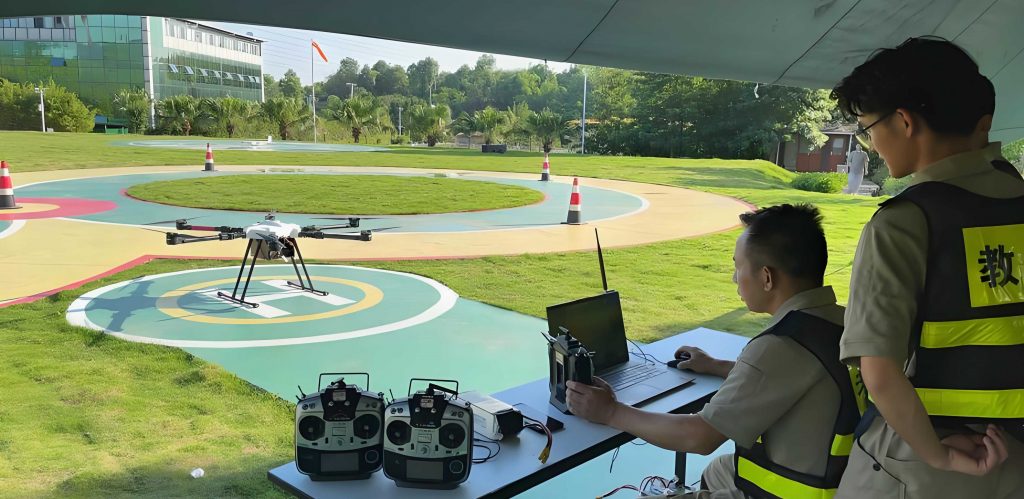
The expansion of drone application technologies is fundamentally widening employment avenues for veterans. The drone’s evolution from military to civilian use has been driven by technological leaps, enhanced capabilities, and diversification of applications, now encompassing almost every industry imaginable. Beyond defense, civilian applications are vast and growing: disaster assessment, geological surveying, aerial photography and mapping, highway inspection, forest fire prevention, maritime patrol, public security and counter-terrorism, agricultural plant protection, power line inspection and installation, and more. During natural disasters like landslides, earthquakes, and storms, drones play an indispensable role by rapidly collecting data and transmitting information, aiding lifesaving efforts and minimizing damage. In recent public health crises, drones have been deployed for surveillance and public communication. They perform tasks in inaccessible or hazardous environments, driving industry-wide变革. This proliferation across military and civilian sectors injects new动能 into various industries and generates substantial demand for skilled drone application personnel. Each new application domain开发s fresh job roles, necessitating systematic and specialized drone training to ensure competency. The integration of veterans into this workforce not only addresses industry needs but also significantly broadens veterans’ employment options, creating a mutually beneficial outcome for the nation and its people.
To illustrate the breadth of opportunities created by drone training, consider the following table summarizing key application sectors and corresponding potential job roles for veterans:
| Application Sector | Specific Drone Applications | Potential Job Roles for Trained Veterans |
|---|---|---|
| Public Safety & Security | Surveillance, Crowd Monitoring, Search & Rescue, Anti-terrorism Ops | Drone Operator for Police/EMS, Security Surveillance Specialist |
| Infrastructure & Inspection | Power Line Inspection, Pipeline Monitoring, Bridge/Tower Assessment, Construction Site Mapping | Infrastructure Inspection Technician, Surveying & Mapping Specialist |
| Agriculture & Environment | Crop Spraying, Health Monitoring, Land Mapping, Forest Fire Detection, Wildlife Tracking | Precision Agriculture Specialist, Environmental Monitoring Technician |
| Media & Logistics | Aerial Cinematography, Photography, Delivery Services, Inventory Management | Commercial Drone Pilot for Media, Logistics Drone Coordinator |
| Disaster Management | Damage Assessment, Terrain Mapping, Emergency Supply Delivery, Hotspot Identification | Disaster Response Drone Pilot, Emergency Management Coordinator |
The effectiveness of integrating veterans into these fields through drone training can be modeled. Let us define a metric for the employment impact of a drone training program:
$$ \text{Employment Impact Score (EIS)} = \frac{N_e}{N_t} \times \left( \frac{S_a}{S_e} \right) \times \log(1 + C_d) $$
Where:
- $N_e$ = Number of veterans employed post-drone training.
- $N_t$ = Total number of veterans who completed the drone training.
- $S_a$ = Average salary after drone training.
- $S_e$ = Expected salary based on pre-training benchmarks.
- $C_d$ = Number of distinct drone application domains the training covers.
This formula captures not just the placement rate, but also the quality of employment (salary ratio) and the breadth of the drone training program. A higher EIS indicates a more successful drone training initiative.
In my practice and exploration of drone training for veterans, we have developed a structured approach. Drone training programs are generally categorized into two tiers based on duration and learning objectives. The first tier focuses on foundational knowledge and basic operational skills. The second tier aims to cultivate high-end talent, involving comprehensive study of core theory, principles, assembly, debugging, fault diagnosis, maintenance, simulator practice, and actual flight training. The goal is not merely piloting proficiency but enhancing analytical and problem-solving capabilities. To date, our initiatives have provided drone training to over 280 veterans and trained 25 core instructors. Each program is tailored with specific training plans and curricula to ensure quality.
Our methodology rests on several pillars, which I have found critical for effective drone training:
1. Conducting Comprehensive Needs Analysis: We employ surveys and data collection to understand industry demands for drone application skills, including competency requirements and application层次. This informs the development of targeted veteran drone training curricula and establishes pathways for school-enterprise cooperation. We also gauge veterans’ employment expectations, current employment status in drone companies, salary levels, job requirements, and technical skill needs. This understanding allows us to tailor the drone training process effectively.
2. Building a High-Caliber Teaching Team: Quality drone training necessitates a high-quality faculty. We select instructors with strong comprehensive abilities and extensive industry experience. Additionally, we engage master trainers from drone enterprises who hold dual-qualifications (theoretical and practical). These measures have proven popular among veteran trainees, contributing to a graduation certification rate of 98% in our programs.
3. Developing Specialized Training Materials: While numerous drone training textbooks exist, we choose or develop materials based on specific program goals. Drawing from years of drone training experience, we have compiled a series of proprietary training manuals that address gaps in standard texts, ensuring the materials meet the precise needs of veteran drone training.
4. Ensuring Robust Teaching Facilities: Well-equipped facilities and standardized venues are indispensable for drone training. Our accumulated experience has allowed us to build infrastructure that meets all规范化 requirements for the entire training process: theoretical classrooms, assembly and maintenance workshops, flight simulators, and outdoor flight fields. All hardware and software environments are constructed to specification, ensuring veteran drone training occurs in a fully compliant setting.
5. Allocating Sufficient Training Time: The duration of drone training varies with objectives, content, and trainee background. Based on实践, we have established basic timeframes for different certification levels, such as AOPA Pilot Certificates, Chief Pilot Certificates, or System Engineer Certificates, combined with industry-specific applications. Adequate time is a non-negotiable factor for effective drone training. Our experience suggests programs ranging from three months to two years, depending on depth.
We can summarize the relationship between training input and outcomes in another formula, highlighting the importance of time and resources in drone training:
$$ \text{Skill Proficiency (P)} = \alpha \cdot \ln(T_t + 1) + \beta \cdot Q_f + \gamma \cdot E_i $$
Where:
- $T_t$ = Total dedicated drone training time (in hours).
- $Q_f$ = Quality factor of teaching facilities (score 0-1).
- $E_i$ = Instructor expertise index (score 0-1).
- $\alpha, \beta, \gamma$ are positive weighting coefficients determined by program design.
This illustrates that proficiency gains from drone training are a logarithmic function of time, emphasizing the need for substantial, well-supported programs.
Despite the promise, our implementation of veteran drone training has revealed several shortcomings and challenges.
On the Veteran Trainee Side:
- Some veterans enter drone training with relatively weak educational foundations from before their service, leading to learning difficulties and apprehension.
- The technical and applied nature of drone operations presents certain demands and complexities. Sometimes, the outcomes of drone training—in terms of job placement and salary—do not align with pre-training expectations, creating psychological dissatisfaction.
- While veterans generally possess high overall discipline and素质, drone application work often involves outdoor operations in challenging weather conditions. This aspect can dampen the enthusiasm of some individuals for pursuing drone training and subsequent careers.
In Training Organization and Implementation:
- The workflow encompassing recruitment for drone training, program delivery, management, certification, and employment placement is not always seamless. Sourcing sufficient trainees can be difficult, sometimes resulting in cohorts that are too small to be cost-effective or pedagogically dynamic.
- There is a lack of standardized, comprehensive, and targeted drone training教材. Different institutions use varied materials, leading to inconsistencies in the quality of drone training across the board.
- For veterans participating in cross-regional drone training programs, significant regional disparities can make funding support uncertain and logistical保障 challenging.
- There is a need for local government职能部门 to细化 national policies and actively coordinate with organizations delivering drone training, providing clearer guidance to ensure task completion.
The table below consolidates these challenges and their primary dimensions, a useful summary from my oversight of drone training programs:
| Challenge Category | Specific Issues | Primary Affected Stage |
|---|---|---|
| Trainee Background & Motivation | Varied educational base, mismatched expectations, reluctance toward field conditions | Pre-Training & During Drone Training |
| Program Coordination & Resources | Fragmented recruitment-to-employment pipeline, inconsistent training materials, funding gaps for cross-region trainees | Administration & Logistics of Drone Training |
| Systemic & Policy Support | Need for finer policy implementation and active government-agency partnership with training providers | Policy & Ecosystem for Drone Training |
To address these issues and enhance the effectiveness of drone training for veterans, I propose the following对策 and recommendations, grounded in my experience.
1. Elevate Ideological认识和站位: All personnel and institutions involved in veteran education must deeply comprehend the significance and importance of their work. We must operate from a national development perspective, carrying a sense of mission and patriotic commitment to execute drone training programs effectively. The success of drone training is not just vocational; it’s a societal imperative.
2. Advocate for Enhanced Policy Support: I recommend that government职能部门 at all levels introduce detailed配套 measures. At the operational level, they should provide便利 conditions and comprehensive services to organizations承担 drone training tasks. This ensures that well-intentioned policies translate into tangible benefits, allowing government关怀 to genuinely reach veterans and their families through successful drone training outcomes.
3. Foster High Responsibility in Training Providers: Organizations and individuals conducting veteran drone training must exercise utmost responsibility. We must plan meticulously, anticipate challenges specific to the veteran demographic, and provide proactive, high-quality service throughout the drone training journey. This includes career counseling and post-training support.
4. Propose Pre-discharge Drone Training Integration: A highly efficient measure would be to前置 veteran drone training. Relevant authorities should研究 collaborating with the military to organize drone training programs for personnel即将退役. This synergistic approach could yield事半功倍的效果, smoothing the transition to civilian careers. The potential efficiency can be expressed as:
$$ \text{Transition Efficiency Gain} = \frac{R_{post} – R_{pre}}{T_{pre}} \times 100\% $$
Where:
- $R_{post}$ = Employment rate after post-discharge drone training.
- $R_{pre}$ = Employment rate after pre-discharge (integrated) drone training.
- $T_{pre}$ = Time from training completion to employment for the pre-discharge group (expected to be lower).
A positive gain indicates the superior effectiveness of integrated, pre-discharge drone training.
In conclusion, the strategic expansion of drone training represents a vital and viable pathway for addressing veteran employment. The dynamic growth of the drone industry creates a sustained demand for skilled operators and technicians—a demand that veterans are uniquely suited to fill given their discipline and aptitude. However, realizing this potential requires concerted effort. It demands high-quality, well-resourced drone training programs, sensitive to the unique backgrounds of veterans. It requires systemic support to bridge the gap between training and employment. And it needs a collaborative ecosystem involving training providers, industries, and policymakers. From my vantage point, investing in comprehensive drone training for veterans is not merely an employment program; it is an investment in national innovation, social stability, and the dignified transition of those who have served. The continued evolution of drone technology will undoubtedly present new applications, and with it, new opportunities. Our task is to ensure that drone training remains adaptive, accessible, and effective, continually opening these new channels for our veteran community. The journey of integrating veterans into the digital economy through specialized skills like drone operation is ongoing, and each successful placement following rigorous drone training reinforces the model’s validity. Future research should quantify the long-term economic and social returns on investment in such targeted drone training initiatives, further solidifying their role in national workforce development strategies.