
The proliferation of Unmanned Aerial Vehicles (UAVs), or drones, across civilian and commercial sectors has created an unprecedented demand for skilled personnel. Effective drone training is the cornerstone of safe, efficient, and reliable operations. However, the current landscape often features fragmented or overly simplistic training materials that fail to equip technicians with the depth of knowledge required for complex system operations and maintenance. This article, drawn from extensive experience in aviation design, details a systematic methodology for compiling comprehensive drone training manuals that cater to the distinct needs of both aircrew and ground crew, thereby establishing a robust foundation for a sustainable, high-skilled workforce.
1. Foundational Preparations for Drone Training
Prior to content creation, a clear definition of the training scope and objectives is paramount. This initial phase directly informs the structure and emphasis of the entire drone training manual.
1.1 Identifying the Trainee Cohort
The target audience for professional drone training is bifurcated into two primary roles, each with distinct responsibilities:
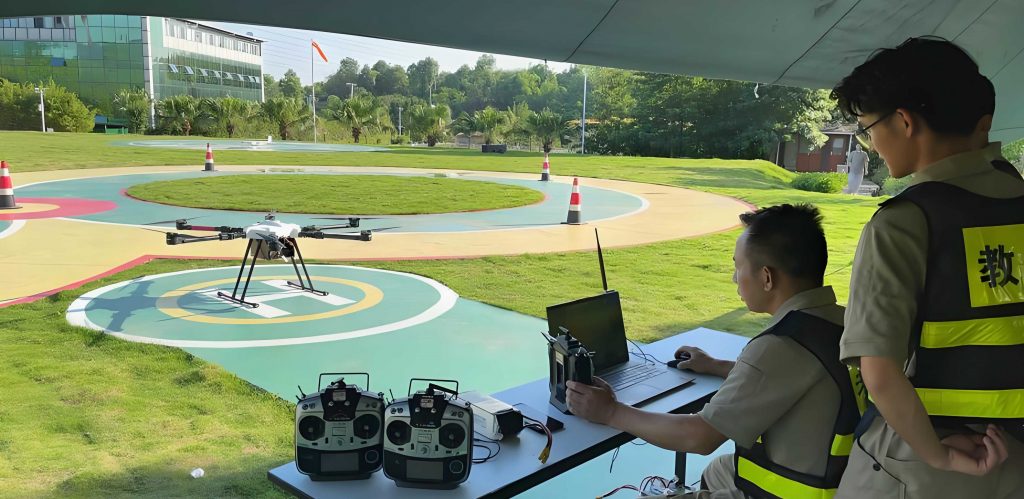
- Aircrew (Remote Pilots & Payload Operators): These personnel operate the Ground Control Station (GCS). Their duties encompass flight monitoring, mission payload management (e.g., camera, sensor control), and maintaining data link integrity.
- Ground Crew (Maintenance Technicians): Responsible for the physical upkeep of the air vehicle and ground support equipment. Their tasks include pre- and post-flight inspections, scheduled maintenance, system diagnostics, and troubleshooting/repair.
1.2 Defining Training Objectives
The manual must be engineered to achieve specific, measurable outcomes for each group.
For Aircrew: Upon completion, trainees should:
$$ O_A = \{ \text{Understand system architecture}, \text{Master GCS procedures}, \text{Execute mission profiles} \} $$
They must gain a functional understanding of the drone’s subsystems, become proficient in the operational protocols of the mobile GCS, and learn to manage both normal and contingency flight scenarios.
For Ground Crew: The objective set is:
$$ O_G = \{ \text{Perform system maintenance}, \text{Diagnose faults}, \text{Execute repairs} \} $$
Technicians must master maintenance schedules, understand system interdependencies to diagnose failures, and learn correct repair and part replacement procedures.
2. Structural Framework of the Training Manual
A well-organized manual is critical for effective learning and reference. The proposed structure includes standard publishing elements tailored for technical drone training.
2.1 Manual Components
The complete manual comprises the following sequential elements:
- Cover Page: Clearly identifies the manual title, applicable drone system, and version.
- Front Matter: Includes a table of contents, list of figures/tables, applicable warnings, and revision history.
- Core Body: The substantive instructional content, divided into logically ordered chapters.
- Appendices & References: Contains supplemental data, quick-reference checklists, glossary, and index.
2.2 Core Writing Principles
The authoring philosophy must balance the needs of both trainee types. The core principle can be expressed as maximizing relevance and clarity:
$$ P_{\text{manual}} = \max( R_A + R_G ) $$
where $R_A$ is relevance for Aircrew and $R_G$ is relevance for Ground Crew.
- For Aircrew Sections: Focus on procedural clarity. Use step-by-step instructions, high-fidelity screenshots or photographs of the GCS interface, and unambiguous command descriptions. Explain the “how” and the “why” behind each action.
- For Ground Crew Sections: Emphasize practical diagnostics and action. Structure content around real-world failure modes, symptoms, diagnostic steps, and corrective actions. Prioritize practical schematics and installation diagrams over exhaustive theoretical parameter lists.
3. Detailed Chapter Structure and Content Requirements
The heart of the drone training manual is its chapter organization. A 17-chapter framework is recommended to comprehensively cover a typical small UAV system, as outlined in Table 1.
| Chapter | Title | Primary Content Focus |
|---|---|---|
| 1 | UAV System Overview | System architecture, design parameters, major components. |
| 2 | Flight Characteristics | Aerodynamics, stability, performance envelopes (take-off, cruise, landing). |
| 3 | Aircraft Structure | Airframe layout, structural components, access panels. |
| 4 | Crew Roles | Definitions and responsibilities of aircrew vs. ground crew. |
| 5 | Flight Control & Management System | FCS architecture, autopilot modes, sensor fusion, actuator interfaces. |
| 6 | Flight Control Inceptors | Manual control procedures, pre-flight control checks. |
| 7 | Propulsion System | Engine/operational limits, start-up/shutdown procedures, monitoring. |
| 8 | Fuel System | Fuel management, refueling procedures, leak diagnostics. |
| 9 | Landing Gear System | Retraction/extension, braking, steering, emergency lowering. |
| 10 | Avionics & Data Link | Communication systems, mission payload control, data handling. |
| 11 | Electrical Power System | Power generation, distribution, battery management, load analysis. |
| 12 | Environmental Control | Cooling/heating systems for avionics/payload (if applicable). |
| 13 | Interior & Equipment | Cockpit/GCS layout, human-machine interface. |
| 14 | Lighting System | Navigation, anti-collision, and landing light operation. |
| 15 | Ground Control Station | Detailed GCS hardware/software operation, mission planning. |
| 16 | Emergency Procedures | Checklist-based response to system failures and abnormal conditions. |
| 17 | Support Equipment | List and use of test equipment, tools, and ground support items. |
3.1 Universal Content Requirements
All technical chapters must adhere to stringent quality standards to ensure the drone training manual is both accurate and pedagogically effective:
- Technical Accuracy: All data must reflect the certified configuration of the UAV system.
- Clarity & Logic: Descriptions must be precise, unambiguous, and follow a logical flow from overview to detail.
- Data Integrity: All performance graphs, tables, and specifications must be verified and correctly cited.
- Completeness: Chapters must cover all aspects necessary for operation or maintenance without assuming prior knowledge.
- Integrated Graphics: Text and supporting visuals (diagrams, photos) must be co-located to minimize page-turning.
3.2 Aircraft System Chapter Specification
Chapters detailing aircraft systems (e.g., Ch. 5-14) should follow a consistent template. The depth of content for a given system $S$ can be modeled as a function of its criticality $C$ and complexity $X$:
$$ Depth(S) = k \cdot (C \cdot X) $$
where $k$ is a constant scaling factor. The standard template includes:
- 3.2.1 Overview: States the system’s purpose, main functions, and its high-level integration within the UAV.
- 3.2.2 Composition & Installation: Lists all major components and describes their physical location on the airframe, often supported by installation diagrams.
- 3.2.3 Performance Data: Provides key operational parameters (e.g., pressures, voltages, flow rates, tolerances).
- 3.2.4 Operational Principles: Explains how the system works, using block diagrams, schematics, or flow charts. For electronic systems, signal flow and interconnections with other systems (e.g., “Interface with Flight Control Computer”) are detailed.
- 3.2.5 Interface Specifications: Defines mechanical, electrical, and data interfaces (connector types, pinouts, communication protocols like CAN bus, voltage levels).
- 3.2.6 Power Characteristics: Details input voltage, current draw, and any special power sequencing requirements.
3.3 Mobile Ground Control Station Chapter Specification
Chapter 15 is dedicated to the GCS and is primarily for aircrew drone training. It must be procedural and safety-centric. The content generation rule for this chapter emphasizes task-based sequencing:
$$ T_C = A \times (C + P + O + I) $$
where $T_C$ is Task Coverage, $A$ is the target Audience (Aircrew), $C$ is Checklists, $P$ is Procedures, $O$ is Operational limits, and $I$ is Indoctrination on warnings. It must cover:
- A complete walkthrough from power-on, pre-flight checks, mission upload, launch, in-flight monitoring, payload operation, recovery, to post-flight shutdown.
- Explicit description of all software menus, dialogs, and hardware controls.
- Clear emphasis on system limitations, software warnings, and operational “gotchas” to prevent operator-induced incidents.
4. Critical Elements in the Drone Training Manual Development Process
4.1 Illustration and Graphic Standards
Visuals are not supplementary; they are integral to comprehension in technical drone training.
- Clarity and Relevance: Graphics must be simple, clean, and directly support the adjacent text. Isometric or exploded-view drawings are excellent for showing component relationships.
- Fidelity: Use high-resolution photographs or accurate 3D renderings. Color should be used functionally to differentiate wires, fluid lines, or system states.
- Orientation and Integration: Prefer portrait-oriented figures. Performance data should be presented in easy-to-read graphs or tables with clearly labeled axes and units matching the drone’s instruments.
- Graphical Aid Formula: The utility of an image $I$ can be considered as:
$$ U(I) = \frac{\text{Information Density}}{\text{Visual Complexity}} $$
Aim for high utility by maximizing relevant information while minimizing clutter.
4.2 Use of Warning, Caution, and Note Callouts
Safety and critical information must be unmissable. A hierarchical system is mandated:
| Callout | Implication | Typical Usage |
|---|---|---|
| WARNING | Failure to comply will likely cause serious injury or death. | Procedures involving high voltage, spinning propellers, or explosive components. |
| CAUTION | Failure to comply could cause equipment damage or mission failure. | Incorrect startup sequences, exceeding torque limits, improper battery handling. |
| NOTE | Provides essential supplementary information for clarity or efficiency. | Explaining a software workaround, highlighting a frequently missed step. |
These callouts must be placed before the step to which they apply and be visually distinct (e.g., bordered, bolded, or iconified).
5. Synthesis and Implementation Guidance
Developing a superior drone training manual is an iterative engineering process. It begins with the unequivocal identification of the end-user – the aircrew trainee or the maintenance technician. The manual’s architecture is then constructed around their cognitive and procedural needs, separating and highlighting content accordingly. The 17-chapter framework provides a comprehensive shell that ensures no critical system is overlooked.
The rigor applied to each section—demanding technical accuracy, logical progression from overview to detail, consistent use of templates for system descriptions, and an unwavering focus on procedural safety through standardized callouts—transforms a simple document into a primary tool for competency development. Furthermore, the strategic use of performance graphs, system block diagrams, and high-quality photographs directly enhances knowledge retention and practical skill transfer. By adopting this structured methodology, organizations can produce drone training materials that not only meet immediate instructional goals but also serve as enduring reference guides, ultimately fostering a culture of safety, proficiency, and operational excellence within the UAV ecosystem.