
In the dynamic and competitive landscape of drone technology, our research institute faced a significant challenge. Our drone products, while gaining international recognition and increasing export volumes, were in a relatively nascent stage. The product system was not yet fully mature. As market demand grew, so did user expectations for functional expansion and, critically, for a comprehensive and responsive training and support ecosystem. Between 2015 and 2016, we were confronted with highly diverse requirements from different countries regarding product technical configurations and the need to adapt to various national standard systems. It became urgently clear that we needed an effective management methodology. This approach had to achieve three core objectives: shorten product development cycles, enhance product quality, and, most pertinently, establish a robust **drone training** and support system that was perfectly aligned with the product’s technical state and closely attuned to the evolving needs of our end-users.
The traditional, department-centric management model was proving inadequate. Coordination was slow, feedback loops from the field to designers were long and often distorted, and creating tailored **drone training** programs for different international clients was a protracted struggle. We recognized that to excel in **drone training** and support, we needed to break down silos. Our exploration led us to study and adapt the Integrated Product Development (IPD) model used by leading international firms. The core of IPD is the Integrated Product Team (IPT)—a cross-functional group tasked with guiding a product or process from concept to completion. We decided to pioneer an innovative management model specifically for our **drone training** and operational support, built around the principles of the IPT. This was not merely an organizational change; it was a strategic shift towards agility, customer-centricity, and continuous improvement in how we prepare our clients to operate our complex systems.
Constructing the IPT Model for Drone Training
Our journey began with the deliberate construction of an IPT model tailored to the unique demands of **drone training** and lifecycle support. We focused on four foundational pillars: organizational structure, team composition, process standardization, and embedded quality control.
1. Adopting a Flattened, Networked Management Structure
We moved decisively away from a pyramidal, hierarchical management model towards a flat, network-based structure. In this model, various functional subgroups (e.g., curriculum design, field operations, technical publishing) are interconnected, forming a cohesive web. Coordination occurs directly between team members across these groups, either through shared personnel or through established communication protocols. This structure allowed us to embed the **drone training** IPT within our existing organizational framework with minimal disruption, leveraging existing expertise while dramatically improving coordination speed and decision-making agility. The administrative, design, and support functions were integrated into a single, focused entity.
2. Establishing the Training Support Team Architecture
Building an effective IPT required clear principles. We adhered to the following: a single, empowered team leader; clearly defined and limited tasks for each member; and a focus on producing definable, measurable outputs. The composition of our **drone training** IPT was critical. Beyond core technical competency, members needed strong foreign language skills for direct client interaction, a broad systems-thinking perspective, and a collaborative mindset.
The team leadership role demanded exceptional multi-disciplinary coordination skills and the ability to navigate relationships with other departments. Crucially, we included virtual “seats” for the customer and our international trade representatives. While not physically present in all meetings, their needs and market perspectives were formally represented and formed the primary input for all **drone training** development. We formally defined roles, responsibilities, and behavioral norms before carefully selecting and authorizing team members.
3. Developing a Network-Enabled Standardized System
To manage the complexity of developing **drone training** programs for diverse international standards, we leveraged digital collaboration tools. We established dedicated, secure online group workspaces for different functions (e.g., flight manual development, simulator training modules). Each group had a designated moderator responsible for maintaining workflow and adherence to newly established **drone training** protocols. This network-based management enabled real-time, cross-departmental collaboration on a scale impossible under the old model, all while enforcing strict information security protocols for non-classified discussions.
4. Implementing Full-Cycle Quality Control Mechanisms
Quality was integrated from the outset, not inspected at the end. A quality assurance specialist was a core member of the **drone training** IPT from day one. Their involvement followed a proactive path:
- Requirements Phase: Ensuring customer **drone training** requirements did not compromise product robustness or safety, filtering out impractical requests early.
- Decomposition Phase: Working with sub-teams to define quality boundaries and metrics for each training module and deliverable.
- Implementation & Delivery Phase: On-site supervision of training execution and the concurrent development of standardized operating procedures to ensure consistent, high-quality delivery.
This end-to-end involvement ensured the **drone training** program’s output remained stable, reliable, and met stringent standards.
The Project in Practice: Building a World-Class Drone Training System
The core of our support system is the user **drone training** program. An advanced training system is paramount—it reduces long-term support costs, enables users to unlock the full potential of the equipment, and is absolutely critical for safe operation. Our IPT’s mission was to build this system from the ground up.
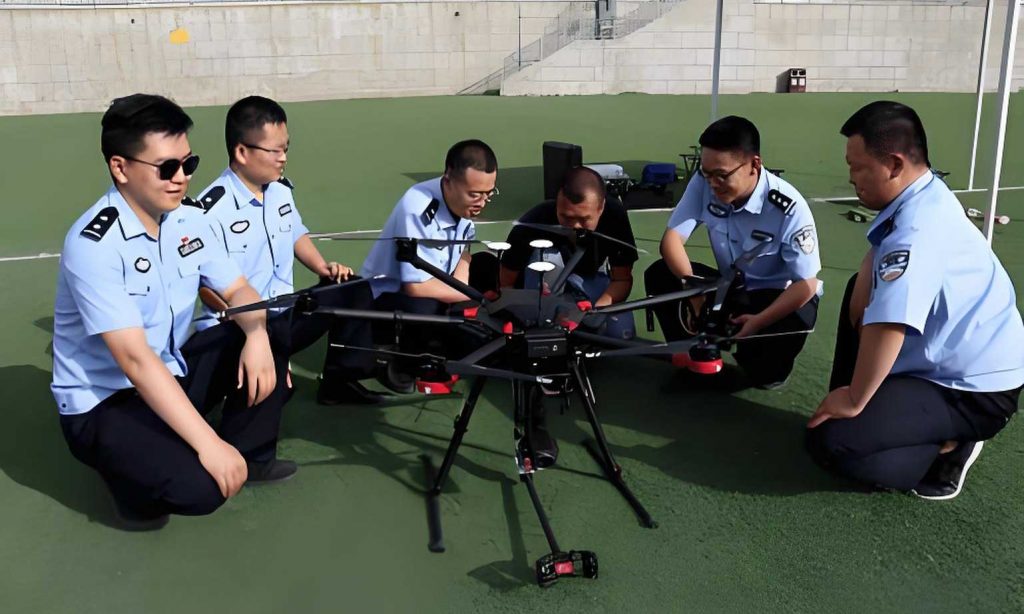
1. Developing a Standardized, Yet Flexible, Training System Framework
Our goal was a system that could professionally enable users to independently operate and maintain our drones. We structured it as a cohesive framework guiding the interaction between instructors, trainees, and materials. The IPT operated in a “tight-loose” mode: administratively decentralized but professionally unified under the Training Manager during active projects. The process, visualized below, became our roadmap.
| Phase | Key Activities | IPT Coordination Focus |
|---|---|---|
| Needs Analysis & Planning | Define client requirements, develop training & reception plans, schedule airspace/equipment. | Daily sync-ups, cross-group resource alignment. Critical path management for long-lead items. |
| Content Development | Create technical manuals, lesson plans, simulator scenarios, practical exercises. | Parallel work streams. Weekly IPT meetings following PDCA (Plan-Do-Check-Act) cycle to resolve blockers. |
| Delivery (Basic Training) | Classroom theory, subsystem familiarization, basic simulator training. | Real-time adjustment by instructors, feedback collection for iterative improvement. |
| Delivery (Field Training) | On-site operations at client facility, full mission rehearsals, maintenance drills. | Close integration with client personnel, adaptation to local environment and procedures. |
| Delivery (Advanced Training) | Complex mission profiles, tactical employment, advanced troubleshooting. | Knowledge transfer empowerment, final competency assessment. |
| Feedback & Iteration | Post-training debriefs, analysis of user performance data, update of materials. | Formal handoff of insights to R&D for product improvement; update of **drone training** baseline. |
Weekly IPT meetings were the engine of this process. We rigorously followed the PDCA cycle: reviewing action items, reporting progress, tackling collective problems, and planning next steps. This kept the **drone training** development tightly synchronized.
2. Crafting Personalized Training Content through Agile Iteration
A pure, rigid standard was insufficient. Different nationalities and operational doctrines led to “cultural misfit” issues during **drone training**. Our IPT’s strength was its ability to rapidly respond and iterate. User feedback from early sessions was immediately analyzed, and training content was subtly adjusted—whether in terminology, sequence of operations, or emphasis on certain procedures. This agility in personalizing the **drone training** experience significantly enhanced user satisfaction and operational effectiveness.
3. Forging a Core Training Organization
The IPT’s output depended entirely on the value contributed by its members. We built a lean, potent team structure:
- Training Manager: The single point of leadership, responsible for overall coordination, scheduling, client liaison, and resource management.
- Support Staff (4): Drawn from management, finance, and general support, handling logistics, budgets, and administrative coordination to free the technical team.
- Instructor Corps: The backbone. These were senior engineers and designers from various subsystems (aerodynamics, propulsion, avionics, GCS) with exceptional technical and language skills. They developed manuals, lesson plans, and delivered training. Their direct client contact became a priceless source of authentic feedback for product refinement.
To scale this model, we pioneered an “Assistant Instructor” program. Talented junior engineers supported master instructors, developed materials, and demonstrated procedures. Their performance was evaluated through a dual-feedback system involving both the lead instructor and the trainees. This proved highly successful in building a sustainable pipeline of **drone training** expertise.
4. Co-Creating Technical Manuals with Users to International Standards
Curriculum design is the soul of **drone training**. We committed to producing technical publications that met global aerospace standards like ASD/AIA S1000D. After foundational research, we established a new documentation architecture characterized by systemization, standardization, granular detail, and dynamic updating. Recognizing our initial inexperience, we proactively invited seasoned pilots and ground crews from a client nation to provide direct input. In an intense, month-long collaborative workshop, our IPT worked side-by-side with these users, transitioning from a translate-late model to a “write in English once” process. This resulted in over 20 comprehensive, user-validated technical manuals, which directly informed the creation of six specialized **drone training** courses that were later highly praised.
5. Quantifying the Impact: Metrics and Formulae
The IPT model’s success can be expressed in measurable outcomes. The direct link between instructors (who were also designers) and users created a virtuous cycle of rapid improvement. We can model the acceleration in product functional updates. If traditional development cycles are sequential and longer, the IPT’s parallel, feedback-driven approach compresses time.
Let traditional development cycle time for a feature update be $T_{traditional}$. The IPT model, with integrated feedback from **drone training**, reduces this by a factor $k$ (where $0 < k < 1$), representing the efficiency gain from concurrent problem identification and solution development.
$$ T_{IPT} = k \cdot T_{traditional} $$
In our observed case, $k \approx 0.5$, indicating the update speed doubled. Furthermore, system readiness time and human-error probability saw significant reductions. We can define a System Readiness Index ($SRI$) and Operational Error Probability ($OEP$):
$$ SRI_{new} = SRI_{old} \cdot (1 + \alpha) $$
$$ OEP_{new} = OEP_{old} \cdot (1 – \beta) $$
Where $\alpha$ represents the fractional improvement in readiness (e.g., 0.3 for a 30% reduction in setup time), and $\beta$ represents the fractional reduction in error rate (e.g., 0.95 for a reduction to 5% of the former probability). Our **drone training** IPT directly contributed to achieving positive $\alpha$ and $\beta$ values.
Reflections and Hard-Won Outcomes
Our实践 was distinct: unlike a classic IPT for new product design, our **drone training** and support IPT was built around the continuous evolution of an existing product based on market and user feedback. This channeled user needs directly into the product’s development heart. The outcomes were transformative. The agility of the IPT enabled us to rapidly adapt drones for diverse environments and complex uses, directly increasing their marketability.
The ultimate tangible results were a complete, institutionalized user training and support system, including a full set of standardized drone technical manuals and a scalable, adaptable **drone training** program standard. We successfully broke free from traditional management silos, incorporating user co-creation as a fundamental element. This established a powerful, closed-loop cycle of Product R&D → Customer Support & Training → User Feedback → Rapid Product Iteration.
This model has provided indispensable support for our drone product line’s market transformation. The lessons learned—particularly on flattening hierarchies, embedding quality early, and leveraging direct user feedback within a cross-functional team—offer a valuable reference for the agile development and support of complex aerospace systems. The **drone training** IPT proved to be more than a team; it became the central nervous system for customer success and product evolution.