
In recent years, the rapid advancement of crop spraying drones has revolutionized agricultural practices, offering a smart and efficient solution for plant protection. As a key component of precision agriculture, these spraying UAVs have demonstrated significant advantages in reducing operational costs, enhancing application efficiency, and ensuring crop quality and safety. In this paper, we explore the working principles, structural developments, and innovative methods to improve the performance of crop spraying drones. We focus on integrating advanced technologies such as intelligent sensors, optimized flight paths, enhanced control systems, and precise application techniques. Furthermore, we discuss the role of artificial intelligence and big data in elevating the capabilities of these drones, driving agriculture toward a more sustainable and productive future. The widespread adoption of crop spraying drones not only optimizes farming practices but also supports data-driven decision-making for improved crop management and yield.
The increasing demand for food security and environmental sustainability has propelled the development of advanced agricultural technologies. Traditional ground-based spraying equipment often struggles with inefficiencies and limitations in challenging terrains such as hills, wetlands, and marshes. In contrast, crop spraying drones provide a versatile and intelligent alternative, enabling precise and efficient pesticide application. These spraying UAVs leverage real-time data and autonomous systems to navigate complex environments, minimize human intervention, and reduce chemical usage. We begin by examining the fundamental principles of crop spraying drones, followed by an analysis of their structural evolution and methods to enhance spraying efficiency. The integration of AI and big data is also highlighted as a transformative force in modern agriculture.
Working Principles of Crop Spraying Drones
The operation of crop spraying drones involves a coordinated process of data acquisition, environmental modeling, and intelligent control. We break down these principles into key components to provide a comprehensive understanding.
Data Acquisition
Data acquisition forms the foundation of crop spraying drone functionality. These spraying UAVs are equipped with a variety of sensors, including optical sensors (e.g., cameras and hyperspectral sensors), LiDAR, GPS, and meteorological sensors. These devices work in tandem to collect multi-dimensional information about the farmland, such as topography, vegetation health, humidity, and temperature. For instance, multispectral cameras capture crop reflectance data, which can indicate stress or disease, while LiDAR provides detailed terrain mapping. The real-time data from these sensors enable the drone to make informed decisions during flight, ensuring targeted and efficient spraying. We emphasize that the accuracy and reliability of these sensors are critical for effective crop protection. The integration of multiple sensors enhances the drone’s ability to perceive its surroundings, as summarized in Table 1.
| Sensor Type | Detection Range | Response Speed | Cost |
|---|---|---|---|
| Monocular Vision | <10 m | Slow | Low |
| LiDAR | <50 m | Fast | High |
| Stereo Vision | <100 m | Slow | Low |
| Millimeter-wave Radar | <200 m | Very Fast | Low |
| Ultrasonic | <10 m | Slow | Low |
| Infrared | <10 m | Fast | Low |
The data from these sensors are processed to generate actionable insights. For example, the vegetation index derived from multispectral data can be calculated using the formula: $$ NDVI = \frac{(NIR – Red)}{(NIR + Red)} $$ where \( NIR \) is the near-infrared reflectance and \( Red \) is the red reflectance. This index helps in identifying areas requiring treatment, allowing the crop spraying drone to adjust spraying parameters accordingly.
Flight Environment Modeling
Flight environment modeling is essential for safe and autonomous operation of spraying UAVs. The environment is typically represented using grid-based or 3D terrain models, which facilitate path planning and obstacle avoidance. We utilize algorithms to process sensor data and construct these models, ensuring that the drone can navigate around obstacles and adapt to terrain variations. For instance, digital elevation models (DEMs) are generated from LiDAR data to create accurate maps. The path planning must account for constraints such as wind conditions, crop height, and no-fly zones. We often employ probabilistic roadmaps or potential fields to generate collision-free paths. The objective function for path optimization can be expressed as: $$ J = \int_{0}^{T} \left( w_1 \cdot \text{distance} + w_2 \cdot \text{energy} + w_3 \cdot \text{coverage} \right) dt $$ where \( w_1, w_2, w_3 \) are weights balancing distance, energy consumption, and coverage area, and \( T \) is the mission time. This ensures that the crop spraying drone operates efficiently while minimizing risks.
Intelligent Control and Spraying Systems
The intelligent control system of a crop spraying drone processes real-time sensor data to autonomously adjust flight height, speed, and spraying parameters. This system relies on feedback loops and control algorithms to maintain stability and precision. For example, a PID controller can be used to regulate flight altitude: $$ u(t) = K_p e(t) + K_i \int_{0}^{t} e(\tau) d\tau + K_d \frac{de(t)}{dt} $$ where \( u(t) \) is the control output, \( e(t) \) is the error signal, and \( K_p, K_i, K_d \) are proportional, integral, and derivative gains. The spraying system, on the other hand, uses nozzles controlled by pulse-width modulation (PWM) to achieve variable-rate application. The flow rate \( Q \) can be modeled as: $$ Q = k \cdot \sqrt{\Delta P} $$ where \( k \) is a constant and \( \Delta P \) is the pressure difference. This allows the spraying UAV to apply pesticides or nutrients in a targeted manner, reducing waste and environmental impact.
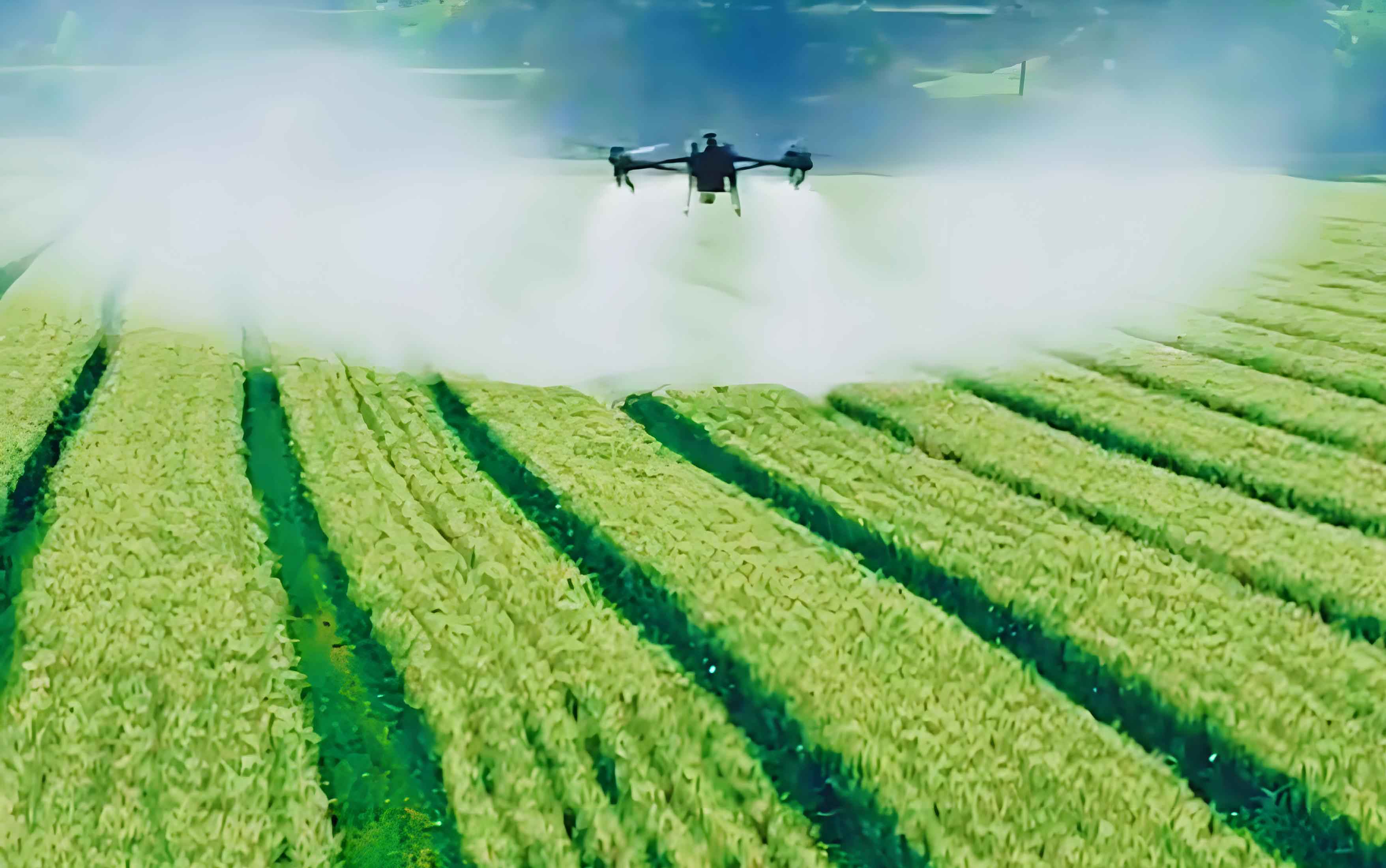
Current Developments in Crop Spraying Drone Structures
The structural design of crop spraying drones has evolved significantly to enhance performance, durability, and efficiency. We review key areas of development, including the airframe, propulsion systems, tail designs, and sensor-sprayer integration.
Airframe and Wing Design
Lightweight and robust airframe designs are critical for the efficiency of crop spraying drones. We often use high-strength composite materials, such as carbon fiber, to reduce weight while maintaining structural integrity. The frame configurations include quadcopter, hexacopter, and octocopter designs. Quadcopters, with larger propellers, offer stable airflow and lower power consumption, making them popular for many applications. Hexacopters and octocopters, although having more complex airflow patterns, provide better stability and fault tolerance; for instance, if one motor fails, the drone can still operate safely. The natural frequency of the airframe can be analyzed to avoid resonance, using the equation: $$ f_n = \frac{1}{2\pi} \sqrt{\frac{k}{m}} $$ where \( f_n \) is the natural frequency, \( k \) is the stiffness, and \( m \) is the mass. This ensures that the spraying UAV remains stable during operation, even in turbulent conditions.
Diversity in Propulsion Systems
Propulsion systems for crop spraying drones vary to meet different operational needs. We commonly encounter fuel-based systems, hybrid systems, and all-electric systems. Fuel-based systems use gasoline or other fuels for power, offering long endurance but higher emissions. Hybrid systems combine a fuel generator with electric motors, providing a balance between runtime and environmental impact. All-electric systems, driven by batteries and motors, are increasingly favored for their cleanliness and simplicity. The thrust \( T \) generated by a propeller can be calculated as: $$ T = \frac{1}{2} \rho A v^2 C_T $$ where \( \rho \) is air density, \( A \) is the propeller disk area, \( v \) is the airflow velocity, and \( C_T \) is the thrust coefficient. Battery life remains a challenge, but advancements in energy density are extending the flight time of these spraying UAVs.
Vertical Tail Design
Vertical tail designs contribute to the stability and maneuverability of crop spraying drones. We see various configurations, such as conventional tails, T-tails, and V-tails. Conventional tails are lightweight and provide adequate control, while T-tails elevate the horizontal stabilizer to avoid wake interference from the wings and propellers, improving efficiency. V-tails combine vertical and horizontal functions, reducing drag and weight but requiring more complex control algorithms. The yaw moment \( N \) induced by the tail can be expressed as: $$ N = q S b C_{n_\beta} \beta $$ where \( q \) is dynamic pressure, \( S \) is reference area, \( b \) is wingspan, \( C_{n_\beta} \) is yaw stability derivative, and \( \beta \) is sideslip angle. This helps in maintaining directional stability during spraying operations.
Sensors and Spraying Mechanisms
Sensors and spraying mechanisms are integral to the functionality of crop spraying drones. We integrate advanced sensors like multispectral cameras and infrared sensors to monitor crop health and detect pests. The spraying mechanisms include hydraulic and pneumatic nozzles, with variable-rate technology enabling precise application. For example, PWM-controlled systems adjust the duty cycle to regulate flow rate: $$ \text{Duty Cycle} = \frac{T_{on}}{T_{total}} \times 100\% $$ where \( T_{on} \) is the on-time and \( T_{total} \) is the total cycle time. Tank designs have evolved from fixed to modular types, allowing quick refills and reducing downtime. However, challenges remain in achieving uniform droplet distribution in mixed-crop environments. We are researching improved nozzle designs and adjuvant formulations to enhance coverage and reduce drift.
Methods to Enhance Spraying Efficiency in Crop Spraying Drones
Improving the spraying efficiency of crop spraying drones is a multi-faceted endeavor. We discuss several approaches, including sensor fusion, path optimization, control system enhancements, and precision application techniques.
Intelligent Sensor Fusion
Sensor fusion technology combines data from multiple sensors to improve the accuracy and reliability of crop spraying drones. We employ techniques like Kalman filtering to integrate GPS, IMU, and vision data for precise positioning and height control. The state estimation equation in a Kalman filter is: $$ \hat{x}_{k|k} = \hat{x}_{k|k-1} + K_k (z_k – H \hat{x}_{k|k-1}) $$ where \( \hat{x} \) is the estimated state, \( K \) is the Kalman gain, \( z \) is the measurement, and \( H \) is the observation matrix. This allows the spraying UAV to maintain optimal altitude and avoid obstacles even in GPS-denied environments. High-resolution sensors enable real-time detection of crop stress, facilitating on-the-go adjustments to spraying parameters. The integration of thermal and hyperspectral sensors further enhances the ability to identify disease hotspots, ensuring targeted intervention.
Flight Path Optimization
Optimizing flight paths is crucial for maximizing the coverage and efficiency of crop spraying drones. We use algorithms such as ant colony optimization (ACO) to generate optimal routes. In ACO, artificial ants deposit pheromones on paths, and the probability of selecting a path is given by: $$ P_{ij} = \frac{[\tau_{ij}]^\alpha [\eta_{ij}]^\beta}{\sum_{k} [\tau_{ik}]^\alpha [\eta_{ik}]^\beta} $$ where \( P_{ij} \) is the probability of moving from node i to j, \( \tau_{ij} \) is the pheromone level, \( \eta_{ij} \) is the heuristic value (e.g., inverse of distance), and \( \alpha, \beta \) are parameters. The pheromone update rule is: $$ \tau_{ij}(t+1) = (1-\rho) \tau_{ij}(t) + \Delta \tau_{ij} $$ where \( \rho \) is the evaporation rate and \( \Delta \tau_{ij} \) is the pheromone deposited by ants. This approach helps in finding shortest paths while avoiding obstacles, reducing flight time and energy consumption for the spraying UAV. Additionally, we incorporate geographic information systems (GIS) to account for field boundaries and no-spray zones.
Improvements in Intelligent Control Systems
Enhanced intelligent control systems enable crop spraying drones to adapt dynamically to changing conditions. We design controllers that integrate fault detection and diagnosis, ensuring safe operation. For instance, a model predictive control (MPC) framework can be used: $$ \min_{u} \sum_{k=0}^{N-1} \left( \| y(k) – r(k) \|_Q^2 + \| u(k) \|_R^2 \right) $$ subject to system constraints, where \( y \) is the output, \( r \) is the reference, \( u \) is the control input, and \( Q, R \) are weighting matrices. This allows the spraying UAV to optimize spraying rates based on real-time sensor feedback. Safety systems, such as emergency landing protocols and battery monitoring, are integrated to prevent accidents. We also implement predictive maintenance algorithms that analyze historical data to forecast component failures, minimizing downtime.
Precision Application Technology
Precision application technology focuses on delivering the right amount of agrochemicals to the right place at the right time. Crop spraying drones use PWM-based systems to achieve variable-rate spraying. The relationship between PWM duty cycle and flow rate can be linearized as: $$ Q = m \cdot D + c $$ where \( Q \) is flow rate, \( D \) is duty cycle, and \( m, c \) are constants. We combine this with real-time vegetation maps to adjust spraying parameters. For example, if a multispectral sensor detects low NDVI in a area, the drone increases the spraying rate for that zone. This reduces chemical usage by up to 30% while maintaining efficacy. We are also exploring electrostatic spraying, where charged droplets are attracted to plant surfaces, improving adhesion and coverage. The charge-to-mass ratio is critical: $$ \frac{q}{m} = \frac{2 \epsilon_0 E}{\rho d} $$ where \( q \) is charge, \( m \) is mass, \( \epsilon_0 \) is permittivity, \( E \) is electric field, \( \rho \) is density, and \( d \) is droplet diameter.
Integration of Artificial Intelligence and Big Data in Crop Spraying Drones
The fusion of AI and big data with crop spraying drones is transforming agricultural practices. We discuss how these technologies enhance decision-making, predictive analytics, and operational efficiency.
Advancements in Big Data Platforms
Big data platforms for crop protection enable the collection, storage, and analysis of vast amounts of agricultural data. We develop cloud-based systems that integrate data from spraying UAVs, weather stations, and soil sensors. These platforms use machine learning algorithms to identify patterns and predict pest outbreaks. For example, a time-series model for pest population dynamics might be: $$ P(t+1) = \alpha P(t) + \beta W(t) + \gamma S(t) $$ where \( P(t) \) is pest population at time t, \( W(t) \) is weather data, \( S(t) \) is soil moisture, and \( \alpha, \beta, \gamma \) are coefficients. By analyzing historical data, we can forecast high-risk periods and schedule preventive spraying. This proactive approach reduces crop losses and minimizes unnecessary chemical applications. We also leverage mobile applications to provide farmers with real-time insights, promoting “digital farming” where decisions are data-driven.
Digital Farmland Construction
Digital farmland involves creating virtual representations of fields using data from crop spraying drones and other sources. We use AI to process imagery and generate prescription maps for variable-rate application. Convolutional neural networks (CNNs) are employed for image segmentation to identify weeds or diseases: $$ y = f(W * x + b) $$ where \( y \) is the output, \( x \) is the input image, \( W \) is the weight matrix, \( b \) is bias, and \( f \) is activation function. The drone then applies pesticides only to infected areas, reducing overall usage. Big data analytics also enable performance monitoring of the spraying UAV itself; for instance, we can predict motor failures by analyzing vibration data: $$ \text{Failure Risk} = \sigma \left( \sum w_i x_i \right) $$ where \( \sigma \) is sigmoid function, \( w_i \) are weights, and \( x_i \) are sensor readings. This predictive maintenance extends the lifespan of the equipment and ensures reliable operations.
Conclusion
In summary, crop spraying drones represent a convergence of advanced technologies that are reshaping modern agriculture. We have discussed their working principles, structural innovations, and methods to improve spraying efficiency. The integration of intelligent sensors, optimized path planning, and precise control systems has significantly enhanced the capabilities of these spraying UAVs. Moreover, the adoption of AI and big data enables predictive analytics and data-driven management, leading to more sustainable farming practices. As battery technology, materials science, and AI continue to evolve, we anticipate further improvements in the endurance, payload capacity, and intelligence of crop spraying drones. Ultimately, these advancements will contribute to higher crop yields, reduced environmental impact, and greater food security, solidifying the role of crop spraying drones as indispensable tools in the future of agriculture.