
In recent years, the adoption of crop spraying drones, also known as spraying UAVs, has revolutionized modern agricultural practices. As a team engaged in agricultural research, we have observed how these unmanned aerial vehicles enhance precision, efficiency, and sustainability in farming. Crop spraying drones integrate advanced navigation systems, intelligent spraying modules, and cloud-based management platforms, enabling precise application of pesticides and fertilizers. This technology surpasses traditional manual and mechanical methods by significantly improving operational efficiency, reducing chemical usage, and boosting crop yield and quality. The evolution of crop spraying drones began in the early 21st century, with the first commercial models entering the market around 2010. Since then, rapid advancements in agriculture mechanization and智能化 have propelled these devices into widespread use. Today, crop spraying drones are in a phase of high-speed development and large-scale application, with sales and operational coverage expanding globally. For instance, the annual sales of these drones have grown substantially, and their application areas have diversified across various agricultural sectors. This article, from our perspective, delves into the practical achievements, key bottlenecks, and optimization strategies for crop spraying drones in modern agriculture, incorporating data analyses, formulas, and tables to provide a comprehensive overview.
The integration of crop spraying drones into agricultural systems has yielded significant benefits, which we will explore in terms of market growth, technological progress, application diversity, and policy support. We emphasize the role of spraying UAVs in transforming traditional farming into a more data-driven and efficient practice.
Market Scale and Growth Trends
The market for crop spraying drones has experienced exponential growth, driven by technological innovations and supportive policies. As we analyze the data, it is evident that the adoption rate of spraying UAVs has surged, reflecting their increasing importance in agriculture. The global market size for crop spraying drones has expanded rapidly, with compound annual growth rates exceeding 30% in recent years. For example, the market value increased from approximately $3 billion in 2018 to over $15 billion by 2023, demonstrating a more than 300% growth. This growth is accompanied by a rise in the number of operational units and the area covered by these drones. Specifically, the inventory of crop spraying drones has climbed from around 75,000 units in 2019 to over 250,000 units by 2024, while the cumulative operational area has expanded from about 10 billion mu (a Chinese unit of area) in 2019 to nearly 27 billion mu by 2024. To illustrate this trend, we present a table summarizing the market dynamics.
| Year | Market Size (Billion USD) | Inventory (Thousand Units) | Operational Area (Billion Mu) |
|---|---|---|---|
| 2019 | 4.5 | 75 | 10.0 |
| 2020 | 6.0 | 110 | 14.5 |
| 2021 | 8.5 | 150 | 18.0 |
| 2022 | 11.0 | 190 | 22.0 |
| 2023 | 15.0 | 230 | 25.5 |
| 2024 | 18.5 | 251 | 26.7 |
This growth is largely attributed to the dominance of key players in the industry, where two major companies account for over 90% of the market share. These firms have developed integrated solutions that combine crop spraying drones with AI and digital farming platforms, further driving adoption. The efficiency gains from using spraying UAVs are substantial; for instance, a single drone can cover an average of 10,000 mu per year, up from about 4,000 mu in 2019, representing a 150% increase in productivity. Such improvements underscore the transformative impact of crop spraying drones on agricultural operations.
Technological Advancements in Crop Spraying Drones
From a technical standpoint, we have witnessed remarkable progress in the capabilities of crop spraying drones. The core technologies include flight control systems, spraying mechanisms, navigation, and intelligent features. Modern spraying UAVs utilize dual-mode navigation systems, such as GPS and BeiDou, combined with Real-Time Kinematic (RTK) technology, to achieve centimeter-level positioning accuracy. This precision is crucial for applications like variable-rate spraying, where the amount of pesticide applied is adjusted based on real-time data. The flight control system can be modeled using equations that account for dynamic stability and path planning. For example, the motion of a crop spraying drone can be described by the following equations of motion:
$$ \dot{x} = v \cos(\theta) $$
$$ \dot{y} = v \sin(\theta) $$
$$ \dot{\theta} = \omega $$
where \( x \) and \( y \) represent the position coordinates, \( v \) is the velocity, \( \theta \) is the heading angle, and \( \omega \) is the angular velocity. These equations help in optimizing flight paths for maximum coverage and minimal resource use.
In terms of spraying technology, centrifugal atomization nozzles and ultrasonic systems are employed to produce fine droplets, ensuring uniform coverage and reducing drift. The droplet size distribution can be characterized by the Sauter mean diameter (SMD), given by:
$$ \text{SMD} = \frac{\sum d_i^3}{\sum d_i^2} $$
where \( d_i \) is the diameter of individual droplets. This parameter influences the efficacy of pesticide application, with smaller SMD values leading to better adhesion and reduced waste. Additionally, intelligent obstacle avoidance systems using millimeter-wave radar and LiDAR enhance safety by detecting and navigating around obstacles in real-time. The integration of AI algorithms allows for adaptive spraying based on environmental conditions, such as wind speed and crop density, further optimizing the performance of crop spraying drones. We have observed that these advancements have made spraying UAVs more reliable and efficient, contributing to their widespread adoption in diverse agricultural settings.
Diverse Application Scenarios
The versatility of crop spraying drones is evident in their application across various agricultural domains. As we have studied, spraying UAVs are used in field crop protection, economic crop management, orchard operations, forestry, and emergency response. In field crops like rice and wheat, crop spraying drones enable rapid and uniform pesticide application, reducing labor costs and chemical usage by up to 30%. For economic crops such as tea and cotton, the precision of spraying UAVs allows for tailored treatments that enhance yield and quality. In orchards, the ability to perform three-dimensional spraying ensures comprehensive coverage of tree canopies, addressing challenges posed by complex terrains. Forestry applications involve large-scale pest control in inaccessible areas, where crop spraying drones provide an efficient alternative to ground-based methods. Emergency scenarios, such as disease outbreaks or natural disasters, benefit from the rapid deployment of spraying UAVs for containment and mitigation.
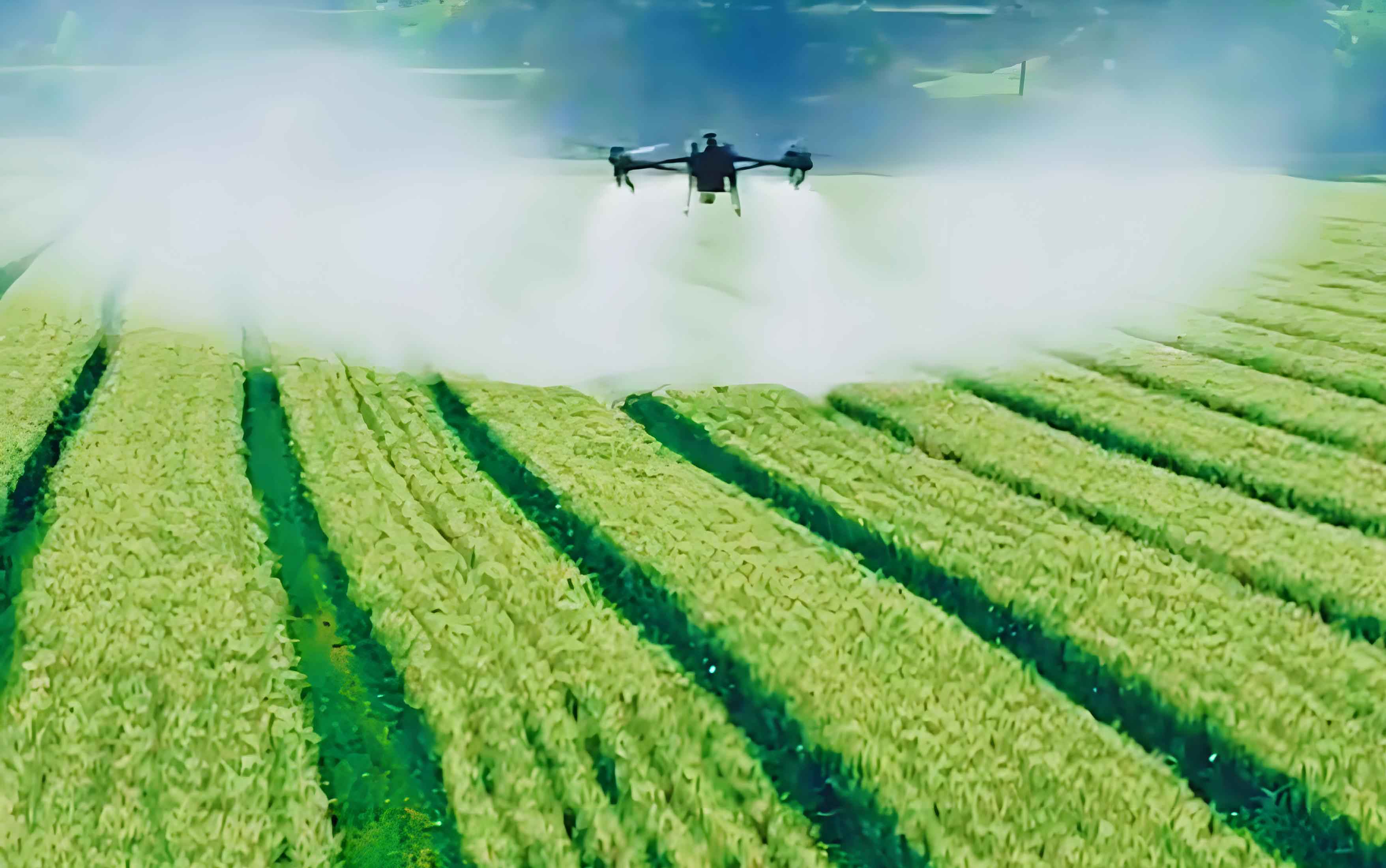
To quantify the benefits, we can use a formula for operational efficiency. The efficiency \( E \) of a crop spraying drone can be expressed as:
$$ E = \frac{A}{T \times C} $$
where \( A \) is the area covered, \( T \) is the time taken, and \( C \) is the cost per unit area. Studies show that crop spraying drones achieve efficiencies 5-10 times higher than traditional methods, making them indispensable in modern agriculture. The adaptability of spraying UAVs to different environments underscores their value in promoting sustainable farming practices.
Policy Environment and Support Mechanisms
Government policies have played a pivotal role in the proliferation of crop spraying drones. We have analyzed various initiatives that provide subsidies, technical standards, and training programs to lower the barriers to adoption. For instance, subsidies covering 50-70% of the purchase cost have made spraying UAVs more accessible to smallholders. Additionally, policies encouraging the formation of agricultural service cooperatives have facilitated the shared use of crop spraying drones, reducing individual financial burdens. The table below summarizes key policy impacts on the adoption of spraying UAVs.
| Policy Type | Impact Description | Outcome |
|---|---|---|
| Subsidies | Financial support for drone purchases | Increased adoption by 40% in targeted regions |
| Training Programs | Skill development for operators | Rise in certified pilots by 25% annually |
| Technical Standards | Establishment of safety and performance norms | Improved product reliability and interoperability |
| Service Cooperatives | Promotion of shared resource models | Reduction in per-unit operational costs by 20% |
These policies not only accelerate the deployment of crop spraying drones but also foster innovation in related technologies. As we continue to monitor these developments, it is clear that supportive regulatory frameworks are essential for the sustainable integration of spraying UAVs into agricultural systems.
Key Bottlenecks in Application
Despite the successes, we have identified several critical bottlenecks that hinder the optimal utilization of crop spraying drones. These challenges span technical, economic, and social dimensions, and addressing them is crucial for future growth.
Limited Endurance and Payload Capacity
One of the most pressing issues is the limited battery life and payload capacity of crop spraying drones. Most spraying UAVs rely on lithium-ion batteries with energy densities around 150-200 Wh/kg, resulting in flight times of only 20-40 minutes per charge. This restriction necessitates frequent recharging or battery swaps, disrupting large-scale operations. The payload, typically between 5-20 kg, is insufficient for extensive areas, leading to increased operational time and costs. The energy consumption can be modeled as:
$$ E_{\text{total}} = P \times t $$
where \( E_{\text{total}} \) is the total energy consumed, \( P \) is the power requirement, and \( t \) is the flight time. In low-temperature conditions, battery efficiency drops by up to 30%, exacerbating the problem. Hybrid power systems, combining fuel and electricity, offer potential solutions but are not yet widely adopted due to higher maintenance costs and noise issues.
Precision Limitations in Complex Environments
Crop spraying drones often struggle with precision in challenging terrains, such as mountainous regions or areas with dense obstacles. GPS signal disruptions in these environments reduce positioning accuracy, affecting route planning and spraying uniformity. Obstacle avoidance systems, while advanced, have limitations in detecting thin wires or small branches, with success rates below 60% in high-density settings. The precision \( P \) can be expressed as a function of environmental factors:
$$ P = f(S, W, O) $$
where \( S \) is signal strength, \( W \) is wind speed, and \( O \) is obstacle density. In windy conditions, spray drift increases, reducing efficacy. Moreover, dynamic response algorithms for real-time adjustments are still under development, limiting the adaptability of spraying UAVs in volatile weather.
High Application Costs in Rural Areas
The economic barrier is significant, particularly for small-scale farmers. The initial investment for a crop spraying drone can range from $10,000 to $50,000, and even with subsidies, farmers bear substantial costs. Operational expenses, including maintenance, battery replacement, and repairs, add to the financial burden. In rural regions, the lack of local service centers increases downtime and costs. A cost-benefit analysis can be represented as:
$$ \text{Net Benefit} = R – (C_i + C_o) $$
where \( R \) is revenue from increased yield, \( C_i \) is initial cost, and \( C_o \) is operational cost. For smallholders with average land holdings below 10 acres, the return on investment is often negative, discouraging adoption of spraying UAVs.
Shortage of Skilled Personnel
The rapid expansion of crop spraying drones has outpaced the availability of trained operators and technicians. As of 2024, the global number of certified drone pilots is less than 250,000, while the drone inventory exceeds 2 million units. This gap is especially acute in agriculture, where operators need expertise in both drone technology and agronomy. The demand-supply imbalance can be quantified as:
$$ D_s = \frac{N_{\text{drones}}}{N_{\text{pilots}}} $$
where \( D_s \) is the drone-to-pilot ratio, currently exceeding 8:1 in many regions. Training programs are inadequate, and career pathways for operators are unclear, reducing the attractiveness of this profession. This shortage impedes the scalability of crop spraying drone services.
Lack of Unified Standards and Quality Issues
The absence of comprehensive industry standards for crop spraying drones leads to variability in product quality and performance. With nearly 200 manufacturers globally, most assemble components without core technologies like proprietary flight control systems. This results in inconsistencies in safety, reliability, and interoperability. Standardization metrics, such as compliance rates with safety norms, are low, averaging around 50% across the industry. The quality index \( Q \) can be defined as:
$$ Q = \sum w_i \cdot c_i $$
where \( w_i \) are weights for factors like durability and accuracy, and \( c_i \) are compliance scores. Without uniform standards, farmers face risks of suboptimal performance and increased maintenance costs for their spraying UAVs.
Optimization Strategies for Enhanced Performance
To overcome these bottlenecks, we propose a multi-faceted approach focusing on technological innovation, service models, and regulatory frameworks. These strategies aim to maximize the potential of crop spraying drones in modern agriculture.
Enhancing Endurance and Payload Technologies
Investing in advanced battery technologies, such as solid-state or hydrogen fuel cells, can significantly improve the endurance of crop spraying drones. Research indicates that increasing energy density to 300-400 Wh/kg could extend flight times by 50-100%. Additionally, lightweight materials like carbon fiber composites can reduce overall weight, allowing for larger payloads without compromising efficiency. The relationship between payload \( L \) and energy consumption \( E \) can be optimized using:
$$ E = k \cdot L \cdot d $$
where \( k \) is a constant and \( d \) is the distance covered. Hybrid power systems should be developed to combine the benefits of electric and fuel-based propulsion, enhancing reliability in diverse conditions. We recommend increased R&D funding and public-private partnerships to accelerate these innovations for spraying UAVs.
Advancing Intelligent Obstacle Avoidance and Algorithms
Improving the智能 of crop spraying drones through AI and sensor fusion can address precision challenges. Deep learning algorithms for real-time image recognition can enhance obstacle detection rates to over 90%. Path planning algorithms, such as those based on ant colony optimization, can be employed to navigate complex terrains efficiently. The objective function for path optimization can be formulated as:
$$ \min \sum_{i=1}^{n} \left( \frac{d_i}{v_i} + \frac{c_i}{e_i} \right) $$
where \( d_i \) is segment distance, \( v_i \) is velocity, \( c_i \) is cost, and \( e_i \) is energy consumption. By integrating these technologies, spraying UAVs can achieve higher accuracy and adaptability, reducing spray drift and improving crop health.
Promoting Agricultural Socialized Services to Reduce Costs
To mitigate economic barriers, we advocate for the expansion of agricultural socialized services, where cooperatives or service providers offer shared access to crop spraying drones. This model distributes costs among multiple users, making it affordable for smallholders. The cost savings can be calculated as:
$$ \text{Savings} = C_{\text{individual}} – C_{\text{shared}} $$
where \( C_{\text{individual}} \) is the cost for a single user and \( C_{\text{shared}} \) is the proportional cost in a cooperative. Governments should provide incentives, such as tax breaks or grants, to establish these services. Additionally, mobile maintenance units can be deployed in rural areas to reduce downtime for spraying UAVs.
Developing Comprehensive Training and Talent Systems
Addressing the talent shortage requires a structured approach to education and certification. We propose the integration of crop spraying drone operations into vocational training programs, with curricula covering agronomy, drone mechanics, and data analysis. The training effectiveness \( T_e \) can be measured as:
$$ T_e = \frac{N_{\text{graduated}}}{N_{\text{enrolled}}} \times S_r $$
where \( S_r \) is the success rate in operational tasks. Partnerships between educational institutions and industry players can facilitate hands-on experience. Furthermore, creating clear career progression paths and certification standards will attract more individuals to this field, ensuring a steady supply of skilled operators for spraying UAVs.
Establishing Industry Standards and Quality Control
We urge the development of international standards for crop spraying drones, covering aspects like manufacturing, performance, and safety. Regulatory bodies should implement certification processes to ensure compliance. The quality assurance process can be modeled as a control system:
$$ Q_{\text{output}} = K \cdot Q_{\text{input}} + \epsilon $$
where \( K \) is the gain factor and \( \epsilon \) is the error term. Regular audits and market surveillance will help maintain high standards, boosting farmer confidence in spraying UAVs. Collaboration among stakeholders, including manufacturers, farmers, and policymakers, is essential to harmonize these standards globally.
Conclusion
In summary, crop spraying drones have profoundly impacted modern agriculture by enhancing efficiency, precision, and sustainability. From our analysis, the market for spraying UAVs continues to grow, supported by technological advancements and favorable policies. However, challenges such as limited endurance, precision issues, high costs, talent shortages, and lack of standards persist. Through targeted strategies—including technological upgrades, service model innovations, and regulatory improvements—we can overcome these bottlenecks. The future of crop spraying drones lies in their evolution towards greater intelligence and environmental friendliness, enabling precise chemical application and optimized resource use. As we move forward, these developments will drive agricultural productivity and contribute to global food security, solidifying the role of spraying UAVs as a cornerstone of modern farming practices.