
In recent years, the adoption of crop spraying drones, also known as spraying UAVs, has seen rapid growth in Inner Mongolia, playing a crucial role in enhancing operational efficiency, reducing production costs, and improving pest and disease control. However, challenges such as poor technical adaptability and high economic costs persist. To meet the demands of agricultural modernization, it is essential to implement measures in technological innovation, policy support, and education to fully leverage the potential of these drones. This article, from my perspective as a researcher in agricultural technology, explores the current application status, constraints, and development recommendations for crop spraying drones in this region, incorporating data analysis through tables and formulas to provide a comprehensive overview.
Inner Mongolia covers a vast area of approximately 1.183 million square kilometers, with a grain sowing area of around 105 million mu (about 7 million hectares). In 2024, the region achieved its “21st consecutive bumper harvest,” solidifying its position as a key grain-producing area in China. Despite this, plant protection issues remain significant, with about 120 million mu (approximately 8 million hectares) of crops affected by various pests and diseases annually, particularly corn and soybeans. Traditional manual methods suffer from low efficiency, high costs, and safety concerns. In this context, crop spraying drones have emerged as a vital solution. Promoting their application is essential for improving agricultural quality and efficiency and advancing agricultural modernization in Inner Mongolia.
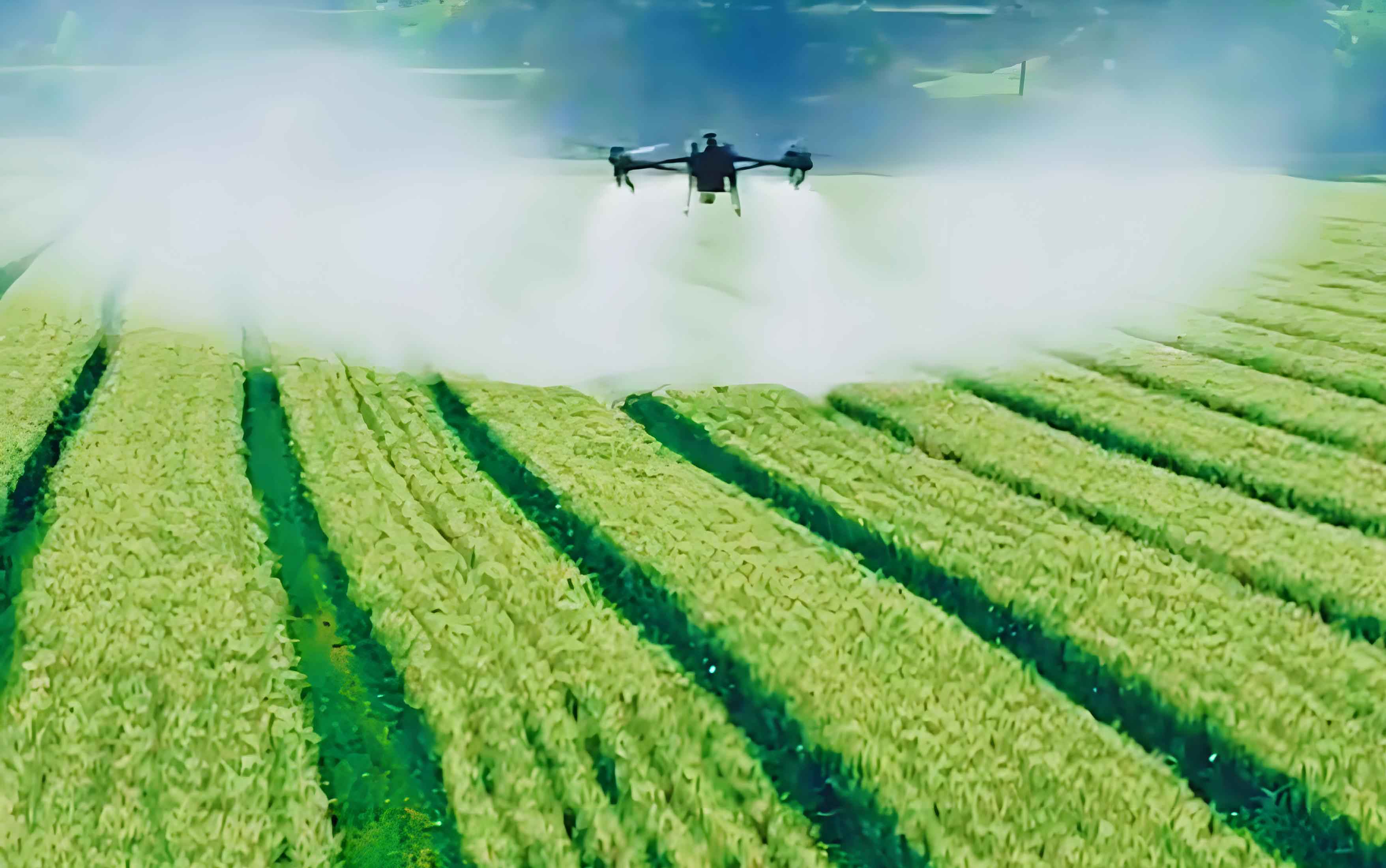
Current Application Status of Crop Spraying Drones in Inner Mongolia
The adoption of crop spraying drones in Inner Mongolia has expanded significantly, driven by national policies such as the 2024-2026 agricultural machinery purchase subsidies, which provide up to 12,000 CNY per drone. This has reduced the financial burden on farmers, especially as labor costs rise. However, the application varies across regions due to factors like product quality and natural disasters. For instance, eastern leagues like Chifeng, Tongliao, and Xing’an have larger operational areas, with Chifens boasting over 400 drones covering more than 5 million mu (about 333,000 hectares), while western leagues like Alxa and Xilingol have lower adoption due to dispersed farmland and pastoral focus, with only around 50 drones in Alxa. Plain areas such as the Hetao Plain and Xiliao River Plain have fully integrated drone operations, whereas mountainous regions like the Greater Khingan Range face challenges due to complex terrain.
In terms of application effects, crop spraying drones demonstrate remarkable efficiency. For example, the DJI T40 model, with its intelligent flight system, can cover 500-800 mu (approximately 33-53 hectares) per day, with a maximum flight speed of 10 m/s and a spray width of 11 m. This represents a hundredfold increase in efficiency compared to manual backpack sprayers and 10-20 times that of small motorized sprayers. The cost-effectiveness is also notable; although the initial purchase cost for a DJI T40 is 50,000-60,000 CNY, long-term benefits include a 20-30% reduction in pesticide use through precision application and a 30-50% decrease in overall costs due to lower labor expenses. In Tongliao’s corn-growing areas, the use of spraying UAVs has addressed issues like difficult mid-to-late-stage pesticide application and improved pest control without damaging crops.
| Method | Daily Coverage (mu) | Pesticide Savings (%) | Cost Reduction (%) | Key Challenges |
|---|---|---|---|---|
| Manual Backpack Sprayer | 5-10 | 0 | 0 | Low efficiency, high labor cost |
| Small Motorized Sprayer | 50-100 | 10-15 | 10-20 | Limited terrain adaptability |
| Crop Spraying Drone | 500-800 | 20-30 | 30-50 | Technical and environmental constraints |
The operational efficiency of crop spraying drones can be modeled using a simple formula for area coverage: $$ A = v \times w \times t $$ where \( A \) is the area covered (in square meters), \( v \) is the flight speed (m/s), \( w \) is the spray width (m), and \( t \) is the operational time (s). For instance, with \( v = 10 \, \text{m/s} \), \( w = 11 \, \text{m} \), and \( t = 8 \, \text{hours} = 28,800 \, \text{s} \), the daily coverage is $$ A = 10 \times 11 \times 28,800 = 3,168,000 \, \text{m}^2 \approx 4,752 \, \text{mu} $$ which aligns with empirical data and highlights the superiority of spraying UAVs.
Constraints on the Application of Crop Spraying Drones in Inner Mongolia
Despite the benefits, several factors hinder the widespread adoption of crop spraying drones in Inner Mongolia. Technologically, the region’s harsh climate—characterized by strong winds (average 3-6 m/s), large temperature variations, and complex terrain—poses significant challenges. For example, when wind speeds exceed 5 m/s, drones can deviate by 5-10 m, leading to uneven pesticide application. In high-temperature conditions, battery life decreases by 20-30%, while in cold winters, electronic components often malfunction. Obstacle avoidance systems perform poorly in mountainous areas, and in sandy environments, components like motors and propellers are prone to erosion. Precision issues arise with wind speeds ≥3 m/s, causing droplet drift and uneven deposition, with variation coefficients exceeding 15%. Additionally, poor network signals in remote areas hinder data transmission and real-time operation, and compatibility issues between different drone brands increase costs and complexity.
Economically, the high costs associated with crop spraying drones are a major barrier. The initial purchase price for a mainstream model ranges from tens of thousands of CNY, which is prohibitive for small-scale farmers. Operating and maintenance costs further add to the burden; for instance, propellers need replacement every 100-150 hours at a cost of 200-300 CNY per set, motors may require 1000-3000 CNY for repairs, and batteries degrade after 200-300 charge cycles, with replacement costs of 2000-3000 CNY each. Regular maintenance is essential but difficult in remote areas, leading to delays and additional expenses. The return on investment (ROI) is often prolonged; as an example, a large-scale farmer in Tongliao investing 60,000 CNY in a drone and 20,000 CNY annually in maintenance might earn only 10,000 CNY per year from servicing 3,000 mu at 30 CNY per mu, resulting in a payback period of 6-7 years. Competition has driven service fees down from 40-50 CNY to 30 CNY per mu, squeezing profits and extending cost recovery.
The ROI for a crop spraying drone can be expressed as: $$ ROI = \frac{\text{Net Profit}}{\text{Total Cost}} \times 100\% $$ where Net Profit = Annual Revenue – Annual Costs, and Total Cost includes purchase and maintenance. For instance, with an annual revenue of 90,000 CNY (3,000 mu × 30 CNY/mu) and annual costs of 20,000 CNY, Net Profit = 70,000 CNY over several years, but initial investment delays positive ROI.
| Cost Component | Estimated Cost (CNY) | Frequency | Annual Impact (CNY) |
|---|---|---|---|
| Drone Purchase | 50,000-60,000 | One-time | 5,000-6,000 (amortized) |
| Propeller Replacement | 200-300 | Every 100-150 hours | 1,000-2,000 |
| Battery Replacement | 2,000-3,000 | Every 200-300 cycles | 3,000-5,000 |
| Maintenance and Repairs | Variable | Annual | 5,000-10,000 |
| Total Annual Cost | 14,000-23,000 | ||
In terms of talent and services, there is a shortage of skilled operators for crop spraying drones. For example, Chifeng has over 400 drones but only 300-400 qualified pilots, many of whom lack advanced skills for adverse conditions. This leads to inefficient operations and reduced crop yields. Service support is inadequate, with repair times of 3-5 days in remote areas like Hulunbuir, causing missed agricultural windows. Moreover, the absence of insurance and risk-sharing mechanisms exacerbates the situation; without coverage for accidents or equipment failures, users bear full financial responsibility, deterring adoption.
On the policy and awareness front, farmers have limited knowledge of crop spraying drones due to insufficient outreach. Traditional habits and resistance to new technologies persist, and subsidy processes are cumbersome. Market regulation is weak, with no unified standards for drone quality or operator certification, leading to unreliable products and safety risks.
Development Recommendations for Crop Spraying Drones in Inner Mongolia
To overcome these constraints, several strategies are proposed. Technologically, targeted innovations are needed to enhance the adaptability of crop spraying drones to Inner Mongolia’s environment. For wind resistance, lightweight and robust materials like carbon fiber can be used for fuselages, coupled with optimized wings and increased motor power to ensure stable flight in strong winds. For temperature extremes, developing low-temperature resistant batteries and adding heating elements to electronic components can maintain functionality in cold conditions. Upgrades to spraying systems, such as electrostatic and centrifugal nozzles, can improve precision; electrostatic nozzles use charge adhesion to reduce drift, while centrifugal nozzles allow adjustable droplet sizes for different scenarios. Intelligent systems integrated with multispectral cameras and thermal imagers can collect real-time data on crop health and pest distribution, using AI algorithms to optimize flight paths and pesticide application. This can be modeled as: $$ E = \int_{0}^{T} P(t) \, dt $$ where \( E \) is the efficiency gain, \( P(t) \) is the precision function over time \( T \), indicating how smart systems reduce waste. Additionally, leveraging 5G or satellite communications enables real-time data transmission and decision support through big data and deep learning.
Policy support and cost control are crucial. Governments should increase subsidies for high-performance crop spraying drones suited to local conditions, simplifying application processes to alleviate financial burdens. Financial services, such as insurance products covering drone damage and third-party losses, can reduce risks, with insurers offering flexible premiums based on regional risks. Loans linked to insurance can further encourage adoption. For maintenance, establishing service centers with subscription-based models can lower costs, and battery leasing programs with recycling initiatives can extend battery lifespans. Training for farmers on proper maintenance is essential to maximize durability.
The cost-benefit of subsidies can be analyzed with: $$ C_s = C_p – S $$ where \( C_s \) is the subsidized cost, \( C_p \) is the purchase price, and \( S \) is the subsidy amount. For example, if \( S = 12,000 \, \text{CNY} \) and \( C_p = 60,000 \, \text{CNY} \), then \( C_s = 48,000 \, \text{CNY} \), making crop spraying drones more accessible.
| Measure | Description | Expected Impact |
|---|---|---|
| Increased Subsidies | Higher subsidies for environment-adapted drones | Reduced purchase cost by 20-30% |
| Insurance Products | Coverage for damage and third-party risks | Lower financial risk, increased adoption |
| Service Centers | Network of maintenance facilities | Faster repairs, cost savings |
| Battery Leasing | Rental programs with recycling | Extended battery life, lower upfront costs |
In talent development and service体系建设, collaboration among government, enterprises, and schools is key to establishing training bases with simulators and real equipment. Curricula should cover agriculture, pest control, and pesticide safety, with standardized assessments to ensure competency. For售后服务, manufacturers should expand service networks to remote areas, offering quick repairs and technical support. Regular training for technicians, tied to certifications and performance-based pay, can improve quality. Insurance companies should design tailored products with adjustable rates to protect operators and foster industry growth.
Market promotion and planning are also vital. Demonstrations in key areas like Tongliao’s corn fields during critical periods can showcase the benefits of crop spraying drones, using experts to explain time and cost savings. Short videos on platforms like TikTok and WeChat can disseminate information and address queries. Governments should outline development plans with clear goals, such as prioritizing drones for windy and cold environments, and support professional service teams with subsidies. Regulatory bodies must establish uniform standards for drone performance, safety, and operator conduct, with regular inspections to remove substandard products and penalize violations, ensuring healthy industry development.
Conclusion
The future of crop spraying drones in Inner Mongolia’s agriculture is promising but constrained by technical, economic, and human factors. By focusing on innovation, policy incentives, service improvements, and effective promotion, these barriers can be overcome, paving the way for modernized agriculture. The continued integration of spraying UAVs will not only enhance productivity but also contribute to sustainable farming practices in the region.