
In recent years, the application of crop spraying drones, also known as spraying UAVs, has revolutionized agricultural pest and disease management. These unmanned aerial vehicles offer significant advantages in terms of efficiency, precision, and reduced labor costs. This study focuses on optimizing the operational parameters of a crop spraying drone for use in hilly lychee orchards and evaluating its efficacy in controlling lychee pepper spot disease, a prevalent issue that severely impacts fruit quality and yield. We conducted a series of experiments to assess the effects of flight speed and height on droplet deposition within the lychee canopy and subsequently applied the optimized parameters in field trials to measure disease control effectiveness. The findings provide valuable insights into the practical deployment of spraying UAVs in challenging terrains, highlighting their potential for sustainable agriculture.
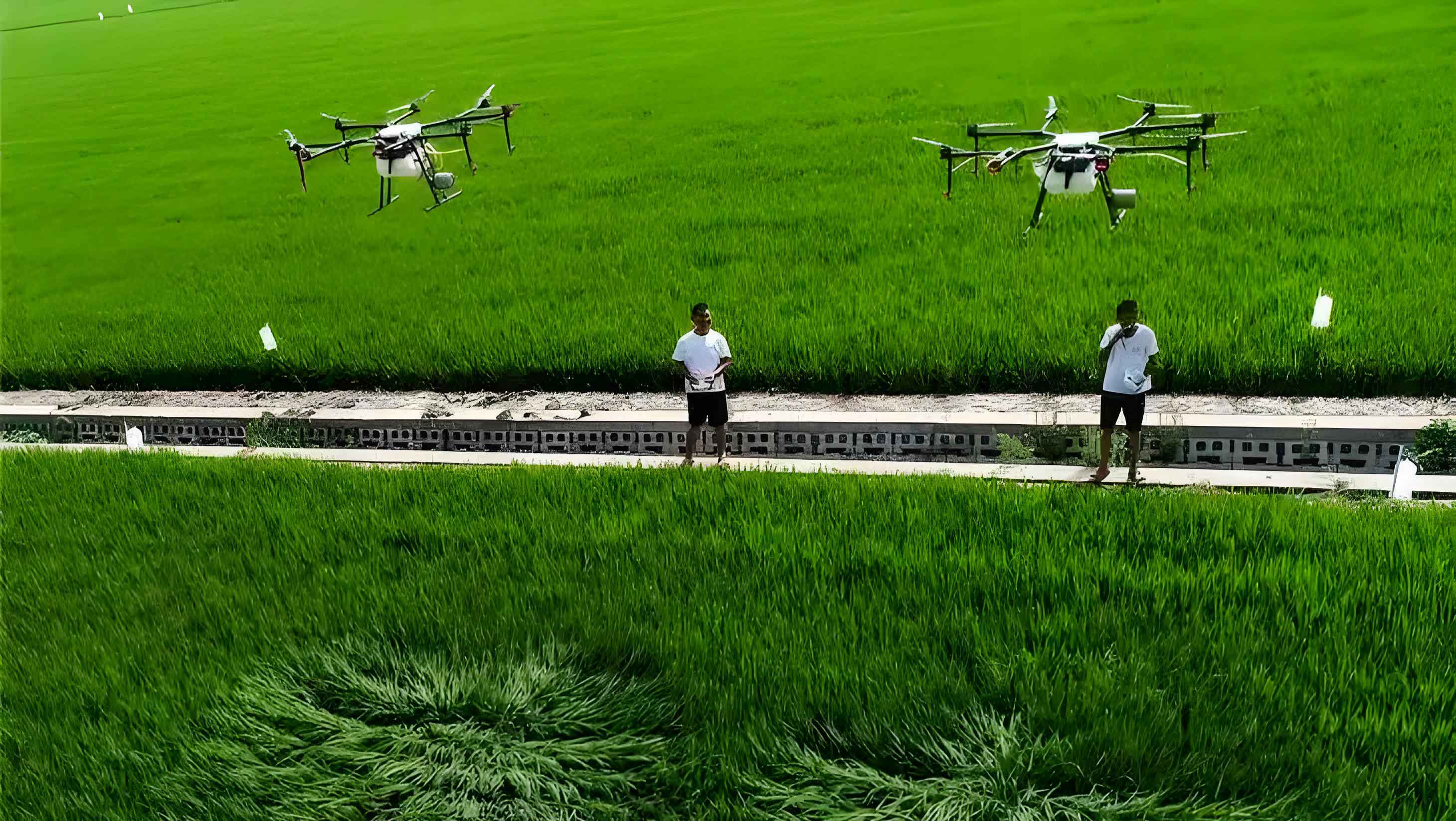
The widespread adoption of crop spraying drones in agriculture has been driven by their ability to cover large areas quickly and apply pesticides with high precision. In hilly regions, where traditional ground-based equipment faces limitations, spraying UAVs can navigate complex topography and deliver uniform spray coverage. Lychee orchards, often located in such areas, are susceptible to diseases like pepper spot, which causes dark lesions on fruits, leading to economic losses. Chemical control remains the primary method for managing this disease, but efficiency and environmental concerns necessitate optimized application techniques. This research aims to bridge the gap by systematically evaluating how flight parameters influence droplet distribution and disease control, ultimately guiding farmers in adopting crop spraying drone technology effectively.
Our methodology involved using a T50 multi-rotor crop spraying drone, equipped with dual centrifugal nozzles, capable of adjustable droplet sizes and precise height control. The experiments were conducted in a lychee orchard with undulating terrain, where we tested various combinations of flight speed and height. Droplet deposition was measured using water-sensitive papers placed at different canopy positions, and data were analyzed for density, coverage, and deposition volume. Based on the optimized parameters, we carried out disease control trials comparing the crop spraying drone with manual spraying methods, assessing efficacy, water usage, and time efficiency. The results demonstrate that spraying UAVs can achieve comparable disease control to manual methods while significantly reducing resource consumption.
Materials and Methods
The study was conducted from March to June 2023, during the critical fruit-setting period of lychee trees, in a hilly orchard with an average slope of 20°. The orchard covered approximately 0.5 hectares and consisted of dwarfed, mature lychee trees with an average height of 2.2 to 2.8 meters. We employed a T50 spraying UAV, which features a maximum payload of 40 kg, a flight speed range of up to 10 m/s, and a height capacity of 30 meters. The drone was fitted with LX8060SZ centrifugal nozzles, allowing for liquid flow rates of 0 to 12 L/min per nozzle and droplet size adjustments between 50 and 500 μm. For comparison, a manual electric sprayer was used, with a maximum flow rate of 15 L/min. Meteorological data, including temperature and wind speed, were monitored to ensure optimal spraying conditions, adhering to standards that require temperatures below 35°C and wind speeds less than 5 m/s.
Water-sensitive papers were utilized as sampling tools to capture droplet deposition characteristics. These papers were strategically placed at 18 positions per tree, covering upper and lower canopy layers, as well as inner and outer regions. After each spraying event, the papers were collected, scanned at 600 dpi, and analyzed using specialized software to determine droplet density (droplets per cm²), coverage (percentage), and deposition volume (μL/cm²). The experimental design included six parameter combinations, as shown in Table 1, varying flight speed (2 m/s and 4 m/s) and flight height (3 m, 4 m, and 5 m). Each combination was tested with a fixed spray volume of 298.5 L/ha, and the drone’s terrain-following function was enabled to maintain consistent height over uneven ground.
| Combination | Flight Speed (m/s) | Flight Height (m) |
|---|---|---|
| C1 | 2 | 3 |
| C2 | 2 | 4 |
| C3 | 2 | 5 |
| C4 | 4 | 3 |
| C5 | 4 | 4 |
| C6 | 4 | 5 |
For the disease control phase, the orchard was divided into four plots: T1 (manual spraying at 100% dose), T2 (crop spraying drone at 100% dose), T3 (crop spraying drone at 80% dose), and CK (control, no spraying). The pesticides used included 450 g/L imidazole emulsifiable concentrate and 325 g/L benzoyl·azoxystrobin suspension, applied at three key growth stages: post-flowering, small fruit stage, and fruit coloring stage. The spray volume for the crop spraying drone was set at 1.3 L per tree, compared to 9.0 L per tree for manual spraying. Disease severity was assessed seven days after the final application by randomly sampling 30 fruits per plot and rating them on a scale from 0 (no disease) to 7 (severe infection). The disease index and control efficacy were calculated using the following formulas:
$$ \text{Disease Index} = \frac{\sum (\text{Number of diseased fruits} \times \text{Relative rating})}{\text{Total fruits surveyed} \times \text{Maximum rating}} \times 100\% $$
$$ \text{Control Efficacy} = \frac{\text{Disease Index in Control} – \text{Disease Index in Treatment}}{\text{Disease Index in Control}} \times 100\% $$
Data analysis was performed using Excel and SPSS 23.0, with Duncan’s multiple range test applied to determine significant differences between treatments. This comprehensive approach allowed us to evaluate the performance of the spraying UAV under realistic conditions and derive actionable recommendations for lychee growers.
Results and Analysis
The optimization trials revealed significant variations in droplet deposition across different canopy layers and parameter combinations. Overall, the upper canopy exhibited higher droplet density, coverage, and deposition volume compared to the lower canopy, regardless of the flight settings. For instance, in the combination with a flight speed of 2 m/s and height of 4 m, the upper canopy had an average droplet density of 74.60 droplets/cm², deposition volume of 0.492 μL/cm², and coverage of 12.33%, while the lower canopy values were 39.82 droplets/cm², 0.129 μL/cm², and 6.58%, respectively. This represents differences of approximately 87.2% in density, 281.4% in deposition volume, and 87.4% in coverage, underscoring the challenge of achieving uniform penetration with crop spraying drones.
As flight height increased from 3 m to 5 m at a constant speed of 2 m/s, the upper canopy droplet density improved slightly, but the lower canopy metrics declined significantly. For example, at 2 m/s, increasing height from 4 m to 5 m reduced lower canopy droplet density from 39.82 to 33.81 droplets/cm² (a 15.1% decrease), deposition volume from 0.129 to 0.103 μL/cm² (20.2% decrease), and coverage from 6.58% to 5.86% (10.9% decrease). Similarly, at a fixed height of 4 m, increasing flight speed from 2 m/s to 4 m/s resulted in a 21.5% reduction in lower canopy droplet density, 12.4% in deposition volume, and 35.7% in coverage. These trends highlight that lower flight speeds enhance droplet deposition in the lower canopy, which is crucial for targeting diseases like pepper spot that often affect shaded areas. The data are summarized in Table 2, which provides a detailed comparison of droplet deposition under different parameter combinations.
| Canopy Position | Flight Height (m) | Flight Speed 2 m/s | Flight Speed 4 m/s | ||||
|---|---|---|---|---|---|---|---|
| Droplet Density (droplets/cm²) | Deposition Volume (μL/cm²) | Coverage (%) | Droplet Density (droplets/cm²) | Deposition Volume (μL/cm²) | Coverage (%) | ||
| Upper | 3 | 71.31 ± 7.08 | 0.509 ± 0.070 | 10.88 ± 1.08 | 74.27 ± 12.14 | 0.535 ± 0.082 | 8.74 ± 1.11 |
| 4 | 74.60 ± 6.66 | 0.492 ± 0.049 | 12.33 ± 0.73 | 76.42 ± 9.45 | 0.539 ± 0.066 | 9.13 ± 0.93 | |
| 5 | 75.66 ± 8.77 | 0.487 ± 0.034 | 13.15 ± 0.75 | 77.89 ± 9.99 | 0.522 ± 0.030 | 9.46 ± 0.77 | |
| Lower | 3 | 40.24 ± 7.91 | 0.144 ± 0.037 | 6.23 ± 1.13 | 33.21 ± 9.43 | 0.124 ± 0.029 | 4.54 ± 0.89 |
| 4 | 39.82 ± 5.36 | 0.129 ± 0.024 | 6.58 ± 0.45 | 31.27 ± 4.59 | 0.113 ± 0.019 | 4.22 ± 0.82 | |
| 5 | 33.81 ± 4.68 | 0.103 ± 0.023 | 5.86 ± 0.23 | 28.82 ± 6.73 | 0.085 ± 0.021 | 4.03 ± 0.44 |
Further analysis of droplet distribution within inner and outer canopy regions showed that the combination of 4 m height and 2 m/s flight speed provided the most balanced performance. In the upper inner canopy, this combination achieved a droplet density of 68.4 droplets/cm², while in the lower inner canopy, it reached 36.8 droplets/cm². Comparatively, combinations with higher speeds or heights, such as 5 m and 4 m/s, excelled in outer upper canopy deposition but performed poorly in inner and lower regions. For instance, at 5 m and 4 m/s, the outer upper canopy had a droplet density of 85.9 droplets/cm², but the inner upper and lower canopies lagged behind. The deposition volume and coverage patterns followed similar trends, with the 4 m + 2 m/s combination showing consistent results across all canopy areas. However, practical challenges arose at lower flight heights (e.g., 3 m), where the crop spraying drone experienced unstable flight paths due to terrain variations, leading to uneven spraying. Thus, after considering both deposition metrics and operational stability, we selected 4 m height and 2 m/s speed as the optimal parameters for subsequent disease control trials.
The disease control experiments demonstrated that the crop spraying drone, using the optimized parameters, could effectively manage lychee pepper spot disease. As shown in Table 3, the manual spraying treatment (T1) achieved a disease index of 4.3 and control efficacy of 74.1%, while the spraying UAV at 100% dose (T2) resulted in a disease index of 4.7 and efficacy of 71.8%. This indicates that the spraying UAV performed nearly as well as manual methods, with only a minor reduction in efficacy. Importantly, the spraying UAV at 80% dose (T3) still attained a respectable control efficacy of 66.1%, with a disease index of 5.6, suggesting that reduced chemical usage is feasible without compromising disease management significantly. Statistical analysis confirmed that the differences between T1 and T2 were not significant, whereas T3 showed a slightly lower efficacy, highlighting the potential for pesticide reduction with spraying UAVs.
| Treatment | Disease Index (7 days after final application) | Control Efficacy (%) |
|---|---|---|
| T1 (Manual, 100% dose) | 4.3 ± 0.5 | 74.1 ± 3.2 |
| T2 (Spraying UAV, 100% dose) | 4.7 ± 0.3 | 71.8 ± 2.1 |
| T3 (Spraying UAV, 80% dose) | 5.6 ± 0.8 | 66.1 ± 4.5 |
| CK (Control) | 16.5 ± 3.0 | — |
In terms of operational efficiency, the crop spraying drone outperformed manual spraying by a substantial margin. As detailed in Table 4, the spraying UAV used only 1.3 L of water per tree, which is 14.4% of the 9.0 L required for manual spraying. Additionally, the average time per tree for the spraying UAV was 0.18 minutes, compared to 1.50 minutes for manual methods, representing an 88% reduction in time. This efficiency gain translates to faster coverage of large orchards and lower labor costs, making spraying UAVs an attractive option for modern agriculture. The time savings primarily stem from reduced movement between trees and faster application rates, though factors like battery changes and refilling were accounted for in the overall assessment.
| Spraying Method | Water Usage (L per tree) | Time per Tree (minutes) |
|---|---|---|
| Spraying UAV | 1.3 | 0.18 |
| Manual Electric Sprayer | 9.0 | 1.50 |
To model the relationship between flight parameters and droplet deposition, we derived empirical equations based on the data. For example, the droplet density in the lower canopy (D_lower) can be expressed as a function of flight speed (v) and height (h):
$$ D_{\text{lower}} = k_1 \cdot v^{-0.5} \cdot h^{-0.3} + C $$
where \( k_1 \) and \( C \) are constants determined from regression analysis. Similarly, the coverage (C_lower) follows a logarithmic trend:
$$ C_{\text{lower}} = k_2 \cdot \ln(v) + k_3 \cdot h + C’ $$
These formulas help in predicting deposition under varying conditions and can be integrated into decision-support systems for crop spraying drone operations. The optimization process underscores that lower speeds and moderate heights enhance droplet penetration, but practical constraints like terrain must be considered to avoid flight instability.
Discussion
The results of this study emphasize the critical role of flight parameters in determining the efficacy of crop spraying drones. The superior performance of the 4 m height and 2 m/s speed combination aligns with previous research indicating that lower speeds improve droplet deposition by allowing more time for spray interaction with the canopy. However, the trade-off between deposition quality and operational efficiency must be managed; for instance, while slower speeds enhance coverage, they may reduce the area covered per unit time. In hilly orchards, the use of spraying UAVs with terrain-following capabilities mitigates height-related issues, but operators should avoid excessively low heights that cause navigation errors. Our findings suggest that spraying UAVs can achieve disease control levels comparable to manual methods, even with reduced pesticide doses, which aligns with global trends toward sustainable agriculture and integrated pest management.
One limitation observed in this study is the inherent variability in droplet distribution within complex canopies. Despite optimization, the upper and outer regions received higher deposition, potentially leaving inner areas vulnerable. Future work could explore advanced nozzle designs or flight patterns, such as zigzag routes, to improve penetration. Additionally, the economic benefits of spraying UAVs, including reduced water and chemical usage, contribute to their adoption. The formulas we developed provide a foundation for automated parameter adjustment, enabling real-time optimization based on canopy characteristics and environmental conditions. As crop spraying drone technology evolves, integration with IoT and AI could further enhance precision, making spraying UAVs indispensable tools for modern orchards.
Conclusion
In conclusion, this research demonstrates that optimizing flight parameters for crop spraying drones can significantly improve droplet deposition and disease control in hilly lychee orchards. The combination of 4 m flight height and 2 m/s speed proved optimal, balancing deposition quality and operational stability. The spraying UAV achieved over 71% control efficacy for lychee pepper spot disease, matching manual methods while using only 14.4% of the water and 12% of the time. These findings underscore the potential of spraying UAVs to revolutionize pest management in challenging terrains, offering a scalable solution for growers. Future efforts should focus on adapting these insights to other crops and diseases, promoting the widespread adoption of crop spraying drone technology in sustainable agriculture.