
In my experience working with modern agricultural technologies, I have witnessed firsthand how crop spraying drones are transforming the way we approach pest and disease management in crops. As urbanization accelerates and rural labor shortages become more pronounced, traditional farming methods are increasingly inadequate to meet the demands of large-scale, sustainable agriculture. Climate change has further exacerbated the frequency and severity of crop diseases and pest outbreaks, making it essential to adopt mechanized and intelligent solutions. Crop spraying drones, also known as spraying UAVs, have emerged as a pivotal tool in this context, eliminating terrain and labor constraints while enabling rapid, precise operations. This not only addresses immediate challenges but also supports broader goals of reducing pesticide usage, minimizing environmental pollution, and ensuring food safety. In this article, I will delve into the multifaceted applications of these drones, their advantages, operational considerations, and future prospects, all from my perspective as an advocate for innovative agricultural practices.
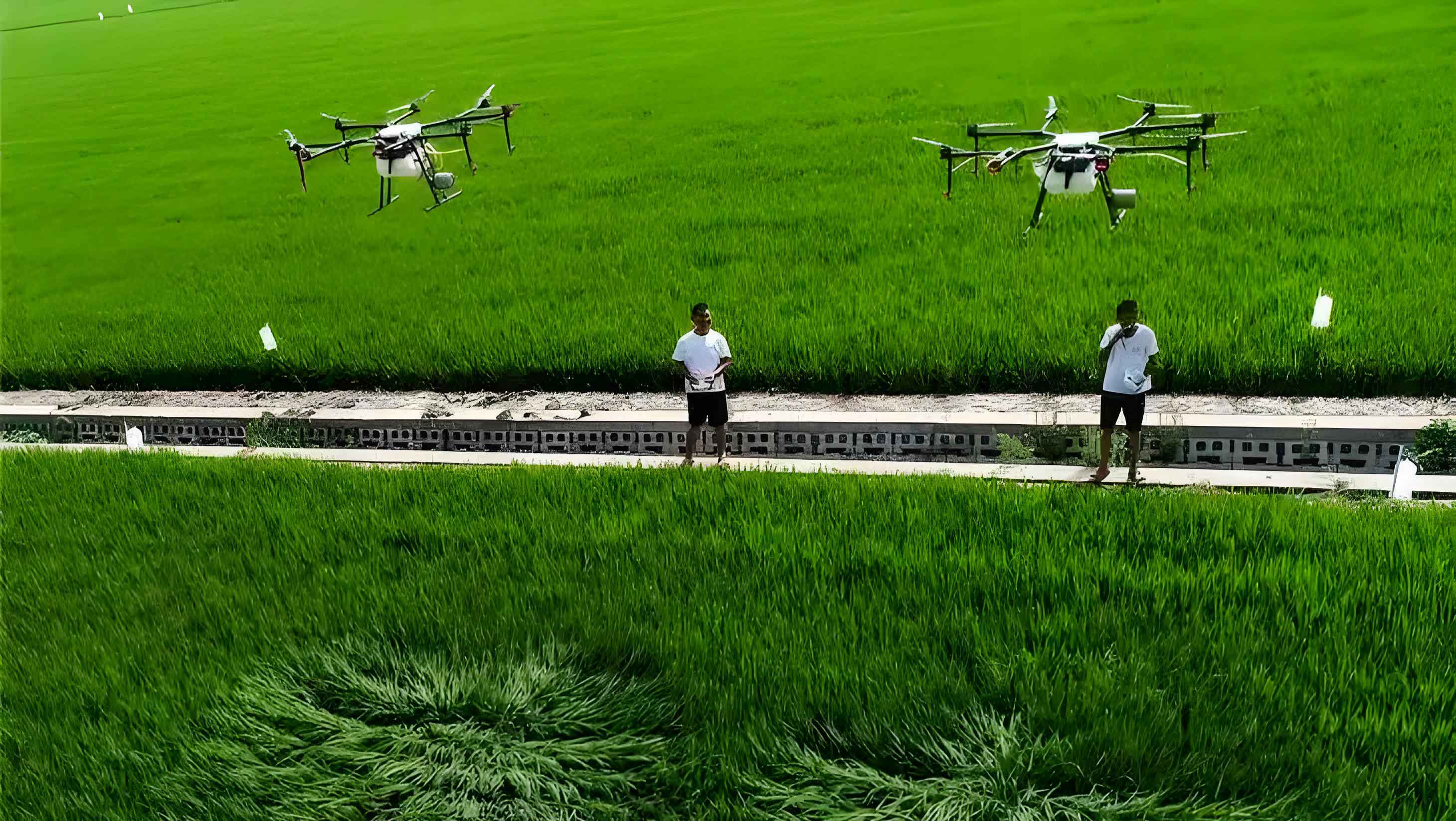
One of the primary roles I have observed for crop spraying drones in modern agriculture is monitoring crop growth conditions. Equipped with multispectral and high-resolution optical cameras, these spraying UAVs act as precise “eagle eyes,” providing comprehensive, multi-layered insights into plant health. For instance, during regular aerial surveys, the drones capture data on parameters such as plant height, density distribution, and chlorophyll content. Based on this information, I can advise farmers to adjust fertilization strategies, implement thinning or intercropping techniques, and manage fields more scientifically. This proactive approach ensures healthier crop development and maximizes yield potential. The data collected by crop spraying drones can be summarized in a table to illustrate key growth metrics:
| Growth Parameter | Measurement Method | Impact on Crop Management |
|---|---|---|
| Plant Height | Optical imaging | Indicates growth stages and nutrient needs |
| Density Distribution | Multispectral analysis | Guides spacing and thinning decisions |
| Chlorophyll Content | Spectral reflectance | Reflects photosynthetic efficiency and health |
In terms of pest and disease monitoring, I have found that crop spraying drones excel due to their advanced sensors and real-time data transmission capabilities. For example, when dealing with infestations like corn borers, the multispectral sensors on a spraying UAV can detect subtle changes in infrared reflectance from leaves, signaling early-stage damage. This information is instantly relayed to a ground control center, where intelligent algorithms analyze it to pinpoint the exact location and severity of the issue. As a result, farmers can take immediate, targeted actions, preventing widespread outbreaks. The effectiveness of this monitoring can be expressed mathematically using a detection probability formula: $$ P_d = 1 – e^{-\lambda \cdot A \cdot t} $$ where \( P_d \) is the probability of detecting a pest outbreak, \( \lambda \) is the sensor sensitivity coefficient, \( A \) is the area covered, and \( t \) is the monitoring time. This highlights how crop spraying drones enhance early warning systems.
When it comes to actual pest and disease control, I have seen that traditional manual spraying methods are inefficient and unsuitable for large-scale operations. In contrast, crop spraying drones equipped with advanced navigation systems and precision spraying mechanisms can cover hundreds of acres in a single session, drastically shortening treatment cycles and boosting productivity. These spraying UAVs allow for customized applications based on crop type and pest species, ensuring that pesticides are applied only where needed. The efficiency gains can be quantified using a simple formula for spraying coverage: $$ E_s = \frac{C \cdot V}{A} $$ where \( E_s \) represents spraying efficiency in liters per hectare, \( C \) is the chemical concentration, \( V \) is the volume sprayed, and \( A \) is the area treated. This demonstrates the superior performance of crop spraying drones over conventional methods.
The advantages of using crop spraying drones in pest and disease management are numerous, and I have categorized them based on my observations. First, accuracy is a standout feature. By leveraging satellite positioning, image recognition algorithms, and real-time遥感技术, these drones can precisely identify pest hotspots and severity levels. This enables targeted interventions, such as fertilization, weeding, and insect control, which are particularly beneficial for large-scale commercial farms and specialty crops like fruits and vegetables. The precision of a spraying UAV can be modeled using a positioning error formula: $$ \sigma_p = \sqrt{\sigma_g^2 + \sigma_i^2} $$ where \( \sigma_p \) is the total positioning error, \( \sigma_g \) is the GPS error, and \( \sigma_i \) is the image-based correction error. This ensures that crop spraying drones minimize chemical drift and maximize effectiveness.
Second, efficiency is remarkably high with crop spraying drones. Compared to manual spraying, which I have often found labor-intensive and slow, these drones can operate continuously, achieving efficiency improvements of tens to hundreds of times. This not only reduces the time required for pest control but also lowers labor and operational costs for farmers. For instance, a single crop spraying drone can complete tasks that would otherwise take multiple workers days to finish. The relationship between time savings and area covered can be illustrated in a table:
| Method | Area Covered per Hour (hectares) | Time Required for 100 Hectares (hours) |
|---|---|---|
| Manual Spraying | 0.5 | 200 |
| Crop Spraying Drone | 10 | 10 |
Third, the environmental benefits of crop spraying drones are significant in my view. By enabling precise control over pesticide application rates, these spraying UAVs reduce chemical runoff into soil and water, minimize waste, and lower the risk of poisoning for agricultural workers. This aligns with sustainable farming practices and helps ensure the safety and quality of agricultural products. The reduction in pesticide usage can be expressed with an environmental impact formula: $$ I_e = \frac{P_a – P_r}{P_a} \times 100\% $$ where \( I_e \) is the percentage reduction in environmental impact, \( P_a \) is the amount applied traditionally, and \( P_r \) is the reduced amount with drones. This highlights how crop spraying drones contribute to eco-friendly agriculture.
Fourth, the智能化程度 of crop spraying drones is impressive. With dedicated control algorithms, these spraying UAVs can perform autonomous遥感监测, data transmission, and adjust operations based on interactive commands. This makes them highly adaptable to various terrains and weather conditions, enhancing their reliability and ease of use. In my work, I have seen how multi-rotor crop spraying drones, in particular, offer short takeoff and adjustment times, high availability, and consistent performance across diverse environments.
However, operating crop spraying drones requires careful attention to several factors, as I have learned through practical experience. Pre-operation checks are crucial: I always ensure that the drone’s components, such as the mechanical arms and propellers, are intact and securely fastened. The spraying system must be verified for proper nozzle alignment and cleanliness to prevent malfunctions. Additionally, signal communication should be tested to avoid accidents. Environmental conditions also play a key role; for instance, I recommend conducting operations on flat, open terrain to avoid collisions with obstacles. Weather limitations are strict: temperatures outside 10°C to 35°C, winds exceeding level 3, or recent heavy rainfall can compromise effectiveness and safety. These requirements can be summarized in a table for clarity:
| Factor | Requirement | Rationale |
|---|---|---|
| Temperature | 10°C – 35°C | Prevents plant damage and chemical evaporation |
| Wind Speed | Below level 3 | Reduces drift and waste |
| Rainfall | No rain within 8 hours | Avoids wash-off and inefficiency |
Operator qualifications are another critical aspect I emphasize. Only certified individuals should handle crop spraying drones, as this ensures they possess the necessary skills and safety awareness. Proper protective gear is mandatory to reduce exposure to pesticides. During operations, I always maintain a safe distance and keep non-operators away from the field to prevent accidents. This holistic approach to safety underscores the importance of responsible use of spraying UAVs.
Looking ahead, I am excited about the future trends in crop spraying drone technology. Innovation will drive further advancements in intelligence and automation. For example, I anticipate improvements in battery life, flight stability, and spraying accuracy, which can be modeled with an optimization formula: $$ O_p = \alpha \cdot S + \beta \cdot A – \gamma \cdot C $$ where \( O_p \) is the overall performance score, \( S \) is stability, \( A \) is accuracy, \( C \) is cost, and \( \alpha, \beta, \gamma \) are weighting factors. This will enable better coordination in agricultural tasks and enhance the capabilities of crop spraying drones.
Diversification of applications is another area I foresee growth. Beyond pest control, crop spraying drones could be used for nutrient management, growth promotion, and yield prediction. By equipping these spraying UAVs with different sensors and attachments, we can tailor them to specific regional needs, achieving more precise outcomes. Standardization will also become increasingly important; I expect governments to introduce policies regulating the use, maintenance, and operation of crop spraying drones, ensuring compliance and safety. A quality control framework could include metrics like spray uniformity, which can be calculated as: $$ U_s = 1 – \frac{\sigma_d}{\mu_d} $$ where \( U_s \) is the uniformity index, \( \sigma_d \) is the standard deviation of droplet distribution, and \( \mu_d \) is the mean droplet size. This will help establish reliable standards for spraying UAV operations.
Finally, the integration of artificial intelligence will propel crop spraying drones into a new era of smart farming. I envision these drones interacting seamlessly with other agricultural IoT devices, forming interconnected systems that boost efficiency and productivity. For instance, AI algorithms could analyze data from crop spraying drones to predict pest outbreaks or optimize resource allocation, making agriculture more resilient and sustainable.
In conclusion, based on my extensive involvement with agricultural technologies, I am confident that crop spraying drones will play an increasingly vital role in crop pest and disease control. Their ability to lower costs, improve efficiency, and promote environmental sustainability makes them indispensable for modern farming. As technology continues to evolve, I believe that spraying UAVs will see widespread adoption, providing robust support for crop health and global food security. Through continued innovation and responsible practices, crop spraying drones will undoubtedly shape the future of agriculture.