
In modern information-based warfare, Unmanned Aerial Vehicle swarm operations represent a new domain and qualitative combat style for system confrontation. Penetration missions are critical for achieving efficient infiltration, threat avoidance, and precision strikes. However, evaluating the effectiveness of such missions in complex battlefield environments with networked threats remains challenging. Traditional Availability, Dependability, Capability (ADC) methods often fail to quantify survival-related penetration capabilities, leading to incomplete assessments. This paper proposes an improved ADC evaluation method that integrates penetration capability indicators, reconstructs the mission capability vector, and employs the Analytic Hierarchy Process (AHP) for dynamic fusion. Our approach addresses the limitations of existing methods by incorporating real-time threat interactions and cluster survivability, providing a closed-loop framework for mission planning and optimization.
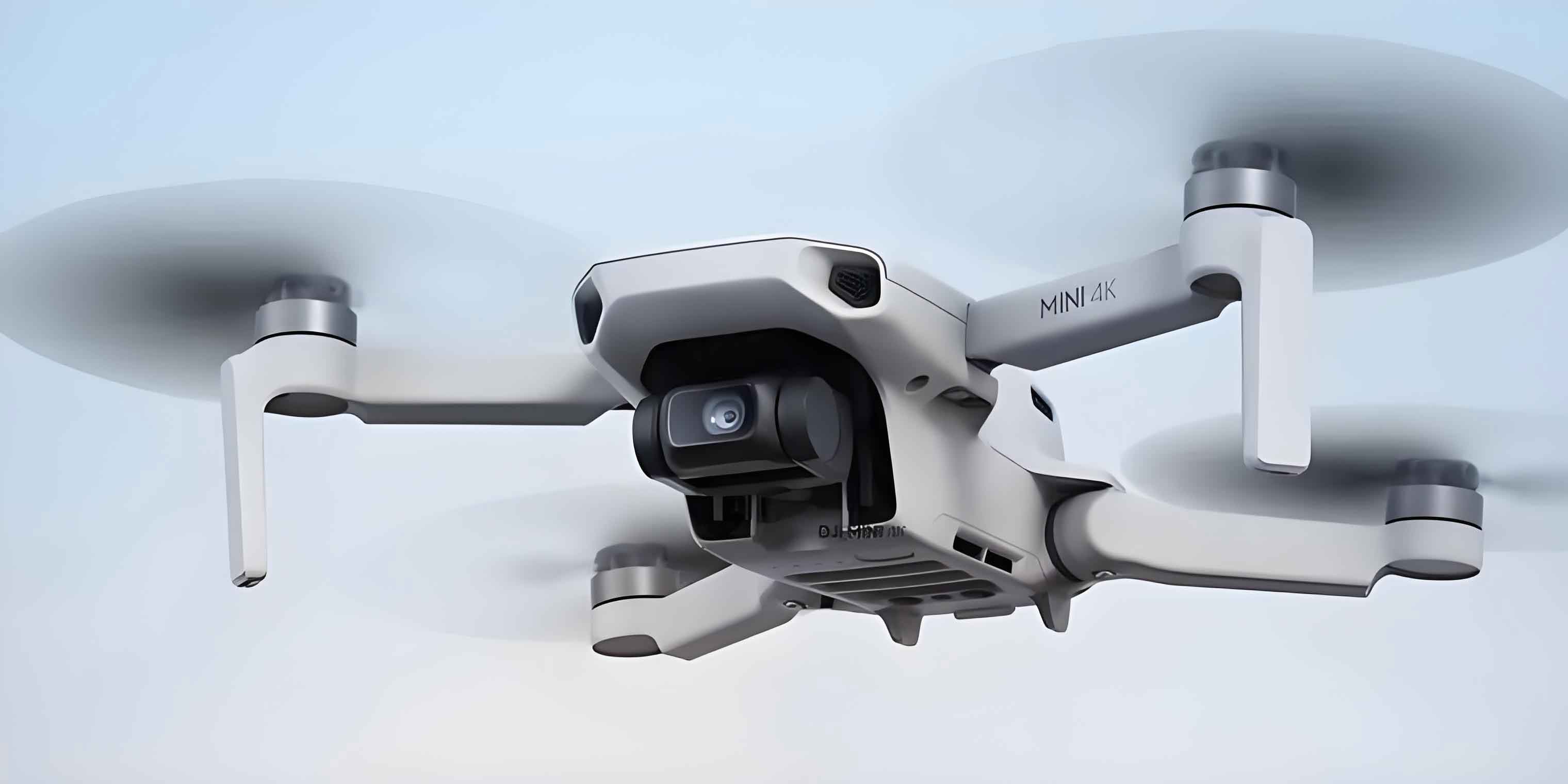
The proliferation of Unmanned Aerial Vehicle technologies has enabled complex swarm operations, but evaluating their effectiveness in penetration missions requires a holistic approach. Traditional ADC methods focus on single-system performance and lack adaptability to dynamic, multi-constraint environments. For instance, they do not adequately model the impact of networked threats on cluster survivability. Our improved ADC method introduces a penetration capability indicator that quantifies the Unmanned Aerial Vehicle swarm’s ability to survive in threat-networked scenarios. By reconstructing the mission capability vector and integrating AHP, we establish a comprehensive evaluation model that reflects the intricacies of modern battlefields. This paper details the threat networking model, survival capability indicators, and the improved ADC framework, validated through simulations that demonstrate its efficacy in route planning and mission assessment.
Problem Description
Unmanned Aerial Vehicle swarm penetration missions involve navigating through areas defended by multiple interconnected threats, such as ground-based air defense systems. These threats can share target information and coordinate attacks, forming a networked environment that complicates penetration. Traditional ADC analysis, while useful for assessing system reliability and performance, does not account for the dynamic interactions between threats and the cluster’s adaptive responses. Specifically, it overlooks factors like detection probability under information sharing, communication delays, and formation-based survivability. Our improved method addresses these gaps by embedding penetration capability into the ADC model, enabling a more accurate evaluation of mission effectiveness.
The core challenge lies in quantifying how threat networking affects cluster survivability. For example, when a Unmanned Aerial Vehicle is detected by one threat unit, the information may be relayed to others, increasing the overall detection probability. Similarly, cluster formations and flight paths influence exposure time and vulnerability. By modeling these aspects, we enhance the ADC framework to provide actionable insights for mission planning. The improved ADC evaluation process involves four stages: mission analysis, penetration capability modeling, ADC model reconstruction, and dynamic fusion using AHP. This structured approach ensures that all relevant factors are considered, from platform reliability to collaborative capabilities.
Penetration Capability Indicator Model
The penetration capability indicator model assesses the Unmanned Aerial Vehicle swarm’s survival probability when traversing threat-networked regions. It combines the joint detection probability of defense systems and strike threats to compute the survival probability for each Unmanned Aerial Vehicle, aggregating results for the entire cluster. This model captures the effects of information sharing and coordinated attacks, providing a realistic measure of penetration effectiveness.
Threat Networking Model
The threat networking model consists of interconnected threat units (e.g., ground-based air defense systems) that can detect, strike, and share information. Each threat unit \( T_m \) is connected via communication links \( L_{uv} \), and communication routes \( R_{m \to n} \) define the path for information exchange between units \( T_m \) and \( T_n \). The model’s reliability and interaction degree are key metrics for evaluating network robustness.
The reliability \( R \) of the threat networking model is derived using the minimum cut-set method, which assesses network connectivity based on topology and unit importance. It is defined as:
$$R = \frac{2}{N_{ta}(N_{ta}-1)} \sum_{m=1}^{N_{ta}-1} \sum_{n=m+1}^{N_{ta}} S(m,n)$$
where \( N_{ta} \) is the total number of threat units, and \( S(m,n) \) is the connectivity between \( T_m \) and \( T_n \), given by:
$$S(m,n) = \min(\deg(T_m), \deg(T_n))$$
Here, \( \deg(T) \) represents the degree of threat unit \( T \), i.e., the number of connected units.
The interaction degree \( U_{m \to n} \) between threat units \( T_m \) and \( T_n \) considers information transmission rates and delays. The transmission rate \( V_{m \to n} \) is calculated as:
$$V_{m \to n} = \frac{I_{m \to n}^o + I_{m \to n}^c}{\Delta T}$$
where \( I_{m \to n}^o \) is the target information sent, \( I_{m \to n}^c \) is the relay information, and \( \Delta T \) is the time interval. The total delay \( D_{m \to n} \) along route \( R_{m \to n} \) is the sum of delays on each link \( L_{uv} \), modeled using queuing theory:
$$D_{uv} = \frac{\rho_{uv}}{\mu (1 – \rho_{uv})}$$
where \( \rho_{uv} = \frac{V_{uv}^{link}}{\mu} \) is the processing intensity, \( \mu \) is the information processing rate, and \( V_{uv}^{link} \) is the total transmission rate on link \( L_{uv} \). The interaction degree is then:
$$U_{m \to n} = R \cdot \frac{\tau_{\max} – D_{m \to n}}{\tau_{\max} – \tau_{\min}}$$
where \( \tau_{\max} \) and \( \tau_{\min} \) are the maximum and minimum allowable delays.
Survival Capability Indicator
The survival capability indicator evaluates the probability that a Unmanned Aerial Vehicle survives after penetrating threat areas. It incorporates the target indication probability, which accounts for information sharing between threats. The target indication probability \( P_{A,m} \) for threat unit \( T_m \) is:
$$P_{A,m} = 1 – \prod_{k=1}^{N_{tp}} (1 – P_k U_{k \to m})$$
where \( N_{tp} \) is the number of penetrated threat units, \( P_k \) is the detection probability of \( T_k \), and \( U_{k \to m} \) is the interaction degree. The directive detection probability \( P_{d,i,m} \) for Unmanned Aerial Vehicle \( i \) by \( T_m \) is:
$$P_{d,i,m} = P_{A,m} P_{zd} + (1 – P_{A,m}) P_{ad}$$
where \( P_{zd} \) and \( P_{ad} \) are the radar detection probabilities without and with target indication, respectively. These are computed as:
$$P_{zd} = 1 – \prod_{\tau=1}^{m_{zd}} (1 – P_{d,\tau})$$
$$P_{ad} = 1 – \prod_{\tau=1}^{m_{ad}} (1 – P_{d,\tau})$$
Here, \( m_{zd} \) and \( m_{ad} \) are the number of radar scans without and with indication, and \( P_{d,\tau} \) is the instantaneous detection probability. The survival probability \( P_{sur,i,m} \) of Unmanned Aerial Vehicle \( i \) in the area of \( T_m \) is:
$$P_{sur,i,m} = 1 – P_{d,i,m} P_h$$
where \( P_h \) is the single-strike probability. The overall survival probability \( P_{sur,i} \) after penetrating \( N_{tp} \) threats is:
$$P_{sur,i} = \prod_{m=1}^{N_{tp}} P_{sur,i,m}$$
The expected number of surviving Unmanned Aerial Vehicles \( N_S \) is:
$$E[N_S] = \sum_{i=1}^N P_{sur,i}$$
and the penetration capability \( S \) is defined as:
$$S = \frac{N_S}{N}$$
where \( N \) is the total number of Unmanned Aerial Vehicles in the cluster.
Improved ADC Analysis Method for Mission Effectiveness Evaluation
The improved ADC method integrates the penetration capability indicator into the traditional framework, resulting in the mission effectiveness \( E \):
$$E = S \cdot \mathbf{A} \times \mathbf{D} \times \mathbf{C}$$
where \( \mathbf{A} \) is the availability vector, \( \mathbf{D} \) is the dependability matrix, and \( \mathbf{C} \) is the capability vector. This formulation ensures that survival probability directly influences the overall evaluation.
ADC Effectiveness Evaluation Model
Assuming a homogeneous Unmanned Aerial Vehicle cluster, each Unmanned Aerial Vehicle has two states: normal and fatal failure. The availability vector \( \mathbf{A} \) is defined as:
$$\mathbf{A} = [a_0, a_1, \ldots, a_N]$$
where \( a_j \) is the probability that \( N-j \) Unmanned Aerial Vehicles are operational at mission start, calculated as:
$$a_j = C_{N}^{j} P_{nor}^j (1 – P_{nor})^{N-j} \quad \text{for } j = 0, 1, \ldots, N$$
Here, \( P_{nor} \) is the probability of normal operation, given by:
$$P_{nor} = \frac{t_{MTBF}}{t_{MTBF} + t_{MTTR}}$$
where \( t_{MTBF} \) is the mean time between failures and \( t_{MTTR} \) is the mean time to repair. The sum of all \( a_j \) is 1.
The dependability matrix \( \mathbf{D} \) represents state transition probabilities, with elements \( d_{jl} \) indicating the probability of moving from state \( j \) to state \( l \). Since failures are irreparable, \( d_{jl} = 0 \) for \( j > l \). The matrix is:
$$\mathbf{D} = \begin{bmatrix}
d_{00} & d_{01} & \cdots & d_{0N} \\
0 & d_{11} & \cdots & d_{1N} \\
\vdots & \vdots & \ddots & \vdots \\
0 & 0 & \cdots & d_{NN}
\end{bmatrix}$$
where each row sums to 1. The elements are computed as:
$$d_{jl} = C_{N-j}^{l-j} P_s^{l-j} (1 – P_s)^{N-l} \quad \text{for } j \leq l$$
and \( P_s = e^{-\frac{T_d}{t_{MTBF}}} \) is the probability of a Unmanned Aerial Vehicle remaining operational during mission duration \( T_d \).
The capability vector \( \mathbf{C} \) is:
$$\mathbf{C} = [c_0, c_1, \ldots, c_N]^T$$
where \( c_j \) is the mission capability in state \( j \). For a homogeneous cluster, capability decreases linearly with the number of failed Unmanned Aerial Vehicles:
$$c_j = c_0 \frac{N – j}{N} \quad \text{for } j = 0, 1, \ldots, N$$
The overall mission effectiveness is then:
$$E = S \cdot \mathbf{A} \times \mathbf{D} \times \mathbf{C}$$
Indicator System
The indicator system for mission effectiveness evaluation is built using AHP, covering overall effectiveness, local effectiveness, and underlying indicators. It includes penetration capability, availability, dependability, and mission capability, with mission capability further divided into platform capability and collaborative capability.
| Local Effectiveness | Underlying Indicator | Description |
|---|---|---|
| Platform Capability \( p \) | Flight Capability \( p_1 \) | Includes altitude, range, speed, and maneuverability. |
| Stealth Capability \( p_2 \) | Related to fuselage length, wingspan, and radar cross-section. | |
| Economic Affordability \( p_3 \) | Typically limited to 60% of enemy missile cost. | |
| Collaborative Capability \( s \) | Collaborative Planning \( s_1 \) | Determined by swarm size, decision-making, and route planning. |
| Collaborative Target Recognition \( s_2 \) | Based on sensor performance, data fusion, and target database. | |
| Collaborative Communication \( s_3 \) | Involves range, delay, reliability, and anti-jamming. | |
| Collaborative Formation \( s_4 \) | Depends on formation keeping and switching abilities. | |
| Collaborative Strike \( s_5 \) | Combines damage probability and strike interval. |
The mission capability \( c_0 \) is calculated as:
$$c_0 = \omega_p \sum_{i=1}^3 \omega_{p_i} p_i + \omega_s \sum_{i=1}^5 \omega_{s_i} s_i$$
where \( \omega_p \) and \( \omega_s \) are weights for platform and collaborative capabilities, and \( \omega_{p_i} \), \( \omega_{s_i} \) are weights for underlying indicators. Weights are determined via expert scoring and AHP, ensuring consistency (e.g., CR < 0.1).
Simulation Results and Analysis
To validate the improved ADC method, we simulated a Unmanned Aerial Vehicle swarm penetration mission with three route schemes. The red team comprised a launcher and a homogeneous cluster of 7 JUYE UAVs, each with a speed of 200 m/s, altitude of 1.5 km, \( t_{MTBF} = 500 \) min, and \( t_{MTTR} = 30 \) min. The blue team included a ground target and 10 threat units, each with a defense radius of 5 km and communication range of 6 km. Threat units shared target information at 10 s⁻¹ and relay information at 12 s⁻¹, with a processing rate of 100 s⁻¹ and link capacity of 100. Maximum allowed delay was 0.2 s, scan periods were 8 s (with indication) and 12 s (without), and strike probability \( P_h = 0.7 \).
The three route schemes all penetrated 4 threat units but differed in path and formation: Route 1 used a “△” formation over 31.42 km, Route 2 used a “一” formation over 32.34 km, and Route 3 used a “一” formation over 41.68 km. Simulations were conducted in a 3D visual environment to derive key parameters.
For Route 1, the threat network reliability was \( R = 0.92 \). Detection probabilities for each Unmanned Aerial Vehicle were computed based on flight time and threat interactions, leading to a survival count \( N_S = 5 \) and penetration capability \( S = 0.714 \). The availability vector was \( \mathbf{A}_1 = [0.665, 0.279, 0.050, 0.005, 0, 0, 0, 0] \), and the dependability matrix \( \mathbf{D}_1 \) was:
$$\mathbf{D}_1 = \begin{bmatrix}
0.964 & 0.035 & 0.001 & 0 & 0 & 0 & 0 & 0 \\
0 & 0.969 & 0.031 & 0 & 0 & 0 & 0 & 0 \\
0 & 0 & 0.974 & 0.026 & 0 & 0 & 0 & 0 \\
0 & 0 & 0 & 0.979 & 0.021 & 0 & 0 & 0 \\
0 & 0 & 0 & 0 & 0.984 & 0.016 & 0 & 0 \\
0 & 0 & 0 & 0 & 0 & 0.990 & 0.010 & 0 \\
0 & 0 & 0 & 0 & 0 & 0 & 0.995 & 0.005 \\
0 & 0 & 0 & 0 & 0 & 0 & 0 & 1
\end{bmatrix}$$
Mission capability indicators for Route 1 were: flight capability 0.916, stealth 0.863, affordability 1, planning 0.876, target recognition 0.763, communication 0.911, formation 0.875, and strike 0.834. Using AHP, weights were assigned as \( \omega_p = 0.333 \), \( \omega_s = 0.667 \), with sub-weights \( \omega_{p_1} = 0.321 \), \( \omega_{p_2} = 0.536 \), \( \omega_{p_3} = 0.143 \), \( \omega_{s_1} = 0.062 \), \( \omega_{s_2} = 0.160 \), \( \omega_{s_3} = 0.419 \), \( \omega_{s_4} = 0.097 \), \( \omega_{s_5} = 0.262 \). This yielded \( c_0 = 0.861 \), and the capability vector \( \mathbf{C}_1 = [0.861, 0.738, 0.615, 0.492, 0.369, 0.246, 0.123, 0]^T \). Thus, \( \mathbf{A}_1 \times \mathbf{D}_1 \times \mathbf{C}_1 = 0.794 \), and mission effectiveness \( E_1 = 0.714 \times 0.794 = 0.567 \).
Similarly, for Route 2, \( \mathbf{A}_2 \times \mathbf{D}_2 \times \mathbf{C}_2 = 0.791 \), and with \( S = 0.857 \) (based on \( N_S = 6 \)), \( E_2 = 0.678 \). For Route 3, \( \mathbf{A}_3 \times \mathbf{D}_3 \times \mathbf{C}_3 = 0.778 \), and \( S = 0.571 \) (\( N_S = 4 \)), giving \( E_3 = 0.446 \). The effectiveness order is Route 2 > Route 1 > Route 3, highlighting that formation and exposure time significantly impact survivability. Route 2’s “一” formation reduced exposure, increasing survival, while Route 3’s longer path decreased it. This aligns with results from grey relational-TOPSIS analysis (effectiveness values: 0.551, 0.514, 0.434), confirming the method’s validity.
| Route | Formation | Distance (km) | Time (s) | Surviving UAVs | Effectiveness |
|---|---|---|---|---|---|
| 1 | △ | 31.42 | 157.1 | 5 | 0.567 |
| 2 | 一 | 32.34 | 161.7 | 6 | 0.678 |
| 3 | 一 | 41.68 | 208.4 | 4 | 0.446 |
Conclusion
This paper presents an improved ADC evaluation method for Unmanned Aerial Vehicle swarm penetration missions, addressing the gaps in traditional approaches by incorporating penetration capability indicators. The threat networking model and survival capability quantification provide a realistic foundation for assessing cluster performance in dynamic environments. By reconstructing the mission capability vector and using AHP, we establish a comprehensive指标体系 that captures platform reliability, collaborative abilities, and survival probability. Simulations demonstrate that formation design and mission duration critically affect effectiveness, with Route 2 outperforming others due to higher survivability. The consistency with grey relational-TOPSIS validation underscores the method’s reliability for route optimization and mission assessment. Future work will focus on leveraging evaluation results to enhance decision-making and planning mechanisms, advancing autonomous closed-loop planning for Unmanned Aerial Vehicle swarms. The JUYE UAV platform serves as a practical example for applying this method in real-world scenarios.