
In recent years, the integration of Unmanned Aerial Vehicles (UAVs) with deep learning algorithms has revolutionized search and rescue (SaR) operations. UAVs, such as the JUYE UAV, offer unparalleled flexibility in accessing hazardous and complex environments, enabling rapid data acquisition through various sensors. Deep learning enhances this capability by automating target detection and localization, which is critical in time-sensitive missions. However, UAV-based SaR faces significant challenges, including limited detection modalities, environmental interference, cluttered backgrounds, and resource constraints on UAV platforms. In this article, I explore the latest advancements in deep learning-driven UAV SaR methods, addressing these challenges through innovative approaches in detection, image enhancement, and autonomous decision-making.
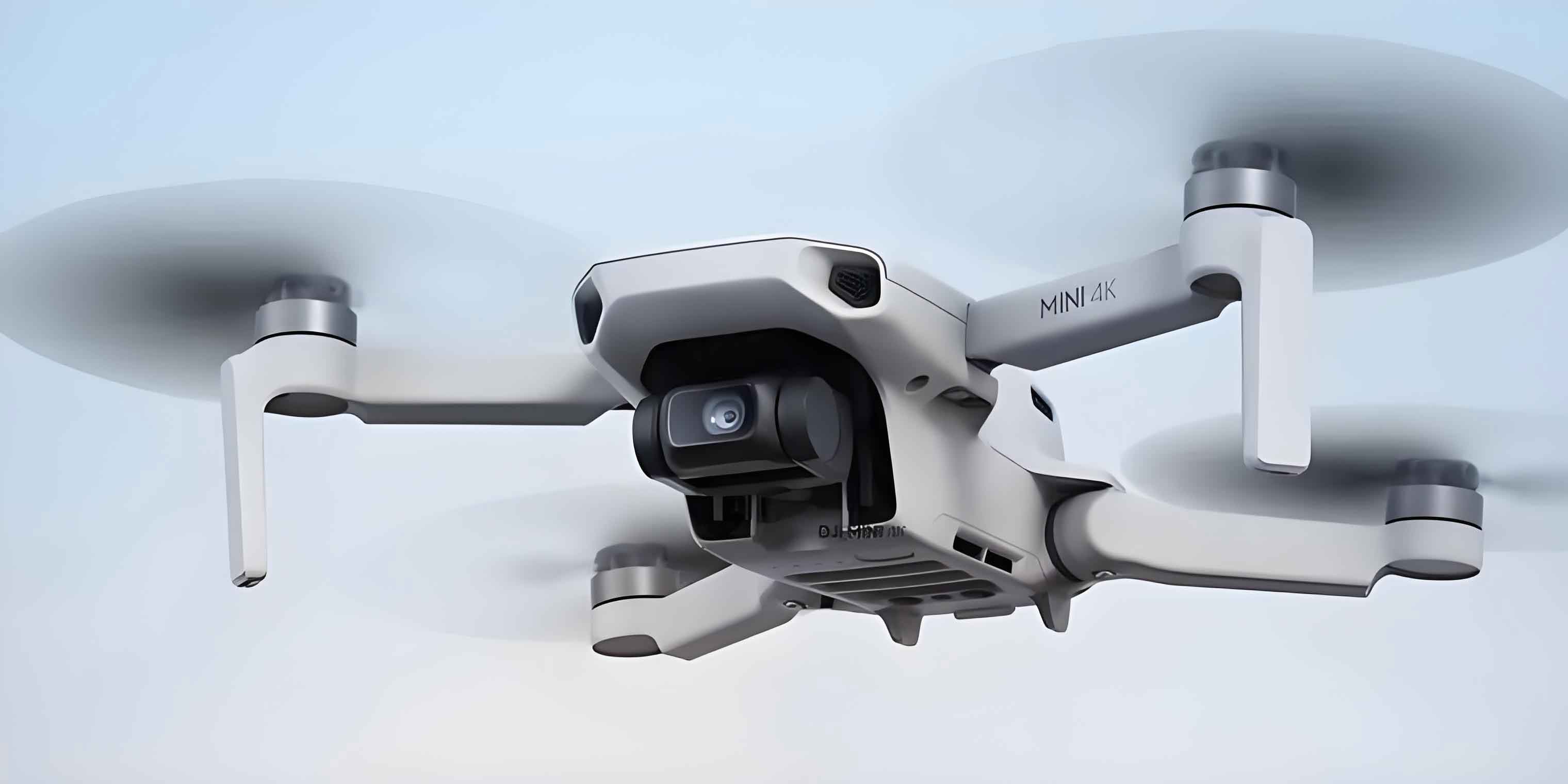
The core of UAV SaR lies in target detection, where deep learning models, such as convolutional neural networks (CNNs) and transformers, process sensor data to identify humans or objects of interest. For instance, the JUYE UAV can be equipped with RGB cameras, infrared sensors, or radar systems, each offering unique advantages. I will delve into how these modalities are leveraged, the impact of environmental factors like low light and fog, and strategies for optimizing performance in diverse scenarios. Additionally, I will summarize key datasets that facilitate research in this domain and discuss future directions for improving UAV SaR systems.
Detection Modalities in UAV Search and Rescue
UAV SaR operations employ multiple detection modalities to adapt to varying environmental conditions. Each modality has distinct characteristics, as summarized in Table 1. For example, visible light detection using RGB cameras provides high-resolution images but struggles in low-light conditions, whereas infrared detection excels in darkness by capturing thermal radiation. Radar detection, though less common, penetrates obstacles like foliage or debris, making it ideal for scenarios where targets are obscured. The JUYE UAV, with its modular design, can integrate these sensors to enhance detection accuracy. Deep learning models, such as YOLO (You Only Look Once) or SSD (Single Shot MultiBox Detector), are often deployed on UAV platforms for real-time processing. The choice of modality depends on factors like weather, terrain, and target visibility, and fusion of multiple modalities can lead to robust performance.
| Detection Modality | Equipment | Key Features | Limitations |
|---|---|---|---|
| Visible Light | RGB Camera | High resolution, color and texture details, cost-effective | Sensitive to lighting and weather, poor performance in darkness or fog |
| Infrared | Thermal Camera | Operates in darkness, detects heat signatures, identifies humans and animals | Lower resolution, affected by rain or fog, higher cost |
| Radar | Radar Detector | Penetrates smoke, vegetation, and walls, all-weather capability | Low imaging resolution, bulky equipment, high power consumption |
In visible light detection, models like YOLOv4 or Faster R-CNN are commonly used. For instance, the detection accuracy can be quantified using the mean Average Precision (mAP), defined as:
$$ \text{mAP} = \frac{1}{N} \sum_{i=1}^{N} AP_i $$
where $AP_i$ is the average precision for class $i$, and $N$ is the number of classes. In infrared detection, thermal images are processed to distinguish humans from backgrounds based on temperature differences. However, environmental factors like rain can reduce contrast, necessitating image enhancement techniques. Radar-based methods, though less explored, utilize signals like FMCW (Frequency-Modulated Continuous Wave) to detect micro-movements, such as breathing, which is vital for locating survivors in rubble. The JUYE UAV’s ability to switch between modalities allows for adaptive SaR strategies, but challenges in data fusion and computational load remain.
Addressing Environmental Interference in UAV Imaging
Environmental interference significantly degrades the quality of UAV-captured images, impairing target detection. Key challenges include low-light conditions, fog or rain, and motion blur, each requiring specialized deep learning solutions. For example, in low-light scenarios, images exhibit high noise and low contrast, which can be mitigated through image enhancement networks or cross-modal fusion with infrared data. Similarly, fog and rain cause scattering and absorption of light, reducing visibility, while motion blur arises from UAV or target movement. I summarize these interference types and countermeasures in Table 2.
| Interference Type | Problem Manifestation | Deep Learning Solutions | Characteristics |
|---|---|---|---|
| Low-Light Interference | Low brightness, high noise, blurred textures | Multi-task networks (e.g., Retinex-based enhancers), cross-modal fusion, auxiliary lighting | High model complexity, real-time issues, reliant on enhancement quality |
| Fog/Rain Interference | Reduced contrast, scattered signals | Dehazing networks (e.g., joint dehazing-detection), depth-aware modulation, radar integration | Training difficulty, dependency on depth estimation, equipment requirements |
| Motion Blur Interference | Blurred edges, distorted textures | Deblurring networks (e.g., GAN-based methods), multi-task learning | High computational cost, challenges in real-time deployment |
For low-light enhancement, methods like REUT (Retinex-inspired Low-light Image Enhancer) decompose an image into illumination and reflection components. The enhancement process can be modeled as:
$$ I_{\text{enhanced}} = R \cdot L $$
where $I_{\text{enhanced}}$ is the enhanced image, $R$ is the reflection component (detail), and $L$ is the estimated illumination. Cross-modal fusion, such as combining RGB and infrared data using transformers, improves detection in extreme darkness. For fog interference, dehazing networks estimate the transmission map $t(x)$ and atmospheric light $A$ to recover the scene radiance $J(x)$ from the hazy image $I(x)$:
$$ I(x) = J(x) \cdot t(x) + A \cdot (1 – t(x)) $$
Motion blur is addressed through deblurring generative adversarial networks (GANs), which learn to reconstruct sharp images from blurred inputs. However, these methods often increase computational overhead, posing challenges for real-time applications on UAV platforms like the JUYE UAV. Optimizing these networks for edge devices is crucial for practical SaR missions.
SaR in Complex Backgrounds: Forest, Marine, and Urban Environments
UAV SaR operations must contend with diverse and cluttered backgrounds, such as forests, marine areas, and urban settings. Each environment presents unique obstacles, like occlusion by vegetation, small target sizes in water, or dense structures in cities. Deep learning models are tailored to these contexts through techniques like attention mechanisms, feature pyramid networks, and path planning algorithms. For instance, in forest backgrounds, targets are often partially obscured, requiring models that explicitly handle occlusion. In marine environments, targets like floating persons are small and affected by waves, necessitating high-resolution detectors. Urban SaR involves navigating complex geometries and dynamic obstacles. Table 3 compares these scenarios and common approaches.
| Background | Key Challenges | Deep Learning Solutions | Examples |
|---|---|---|---|
| Forest | Occlusion by trees, varying lighting | Occlusion-aware networks (e.g., OGMN), infrared fusion, path planning | YOLO-S with Haar classifiers for thermal images |
| Marine | Small targets, reflections, dynamic scenes | Multi-scale detectors (e.g., YOLOv11 variants), attention modules, DQN-based path planning | BiFormer attention for filtering false detections |
| Urban | Dense obstacles, structural complexity | Multi-task networks for occlusion, synthetic data generation, reinforcement learning for path planning | RRT-based algorithms for indoor navigation |
In forest environments, occlusion-guided multi-task networks (OGMN) incorporate occlusion estimation into detection, improving accuracy. The loss function for such models might combine detection loss $\mathcal{L}_{\text{det}}$ and occlusion loss $\mathcal{L}_{\text{occ}}$:
$$ \mathcal{L}_{\text{total}} = \alpha \mathcal{L}_{\text{det}} + \beta \mathcal{L}_{\text{occ}} $$
where $\alpha$ and $\beta$ are weighting coefficients. For marine SaR, models like YOLOv11 are enhanced with wavelet transforms to capture small target features, and attention mechanisms like BiFormer filter out reflections. In urban settings, synthetic datasets generated using harmony composite images train detectors for disaster scenarios. Path planning algorithms, such as RRT (Rapidly-exploring Random Tree) or DQN (Deep Q-Network), enable UAVs like the JUYE UAV to navigate efficiently, minimizing coverage time. These methods highlight the importance of context-aware deep learning in overcoming background complexity.
Efficient UAV Platforms: Real-Time Detection and Swarm Coordination
Efficiency in UAV SaR hinges on real-time processing and collaborative operations using UAV swarms. Resource constraints on UAV platforms demand lightweight deep learning models, while large-area missions benefit from multi-UAV coordination. Techniques like model quantization, network pruning, and knowledge distillation reduce computational load, enabling deployment on edge devices. For example, quantizing models from 32-bit to 8-bit integers can shrink size by 90%, maintaining frame rates of 10-20 FPS on devices like NVIDIA Jetson. Swarm coordination involves communication protocols and machine learning for task allocation, enhancing coverage and redundancy. The JUYE UAV, with its scalable architecture, supports such advancements, but challenges in synchronization and dynamic planning persist.
For real-time detection, lightweight networks like YOLO-S or MobileNetv3 are optimized through depthwise separable convolutions and attention modules. The computational complexity, measured in GFLOPs (Giga Floating Point Operations), is reduced while preserving accuracy. Knowledge distillation transfers knowledge from a large teacher model to a compact student model, formalized as minimizing the distillation loss $\mathcal{L}_{\text{distill}}$:
$$ \mathcal{L}_{\text{distill}} = \lambda \mathcal{L}_{\text{CE}}(y, \sigma(z_s)) + (1 – \lambda) \mathcal{L}_{\text{KL}}(\sigma(z_t / T), \sigma(z_s / T)) $$
where $\mathcal{L}_{\text{CE}}$ is cross-entropy loss, $\mathcal{L}_{\text{KL}}$ is Kullback-Leibler divergence, $z_t$ and $z_s$ are teacher and student logits, $T$ is temperature, and $\lambda$ is a weight. In swarm coordination, multi-agent reinforcement learning (MARL) algorithms, such as MASAC (Multi-Agent Soft Actor-Critic), optimize path planning by modeling it as a Markov Decision Process (MDP). The reward function $R(s, a)$ guides UAVs to avoid obstacles and maximize target detection. For instance, in a swarm of $N$ UAVs, the global objective is to maximize the cumulative reward:
$$ J(\pi) = \mathbb{E} \left[ \sum_{t=0}^{\infty} \gamma^t R(s_t, a_t) \right] $$
where $\pi$ is the policy, $\gamma$ is the discount factor, and $s_t$ and $a_t$ are state and action at time $t$. These approaches enable UAVs like the JUYE UAV to operate autonomously in dynamic environments, though issues like communication latency and scalability require further research.
Datasets for UAV Search and Rescue Research
Benchmark datasets are essential for training and evaluating deep learning models in UAV SaR. They vary in modality, including visible light, infrared, radar, and multispectral data. I summarize prominent datasets in Table 4, highlighting their scale, scenarios, and annotations. These datasets facilitate the development of robust detectors for diverse conditions, such as low light or occlusion. For example, the VTSaR dataset provides aligned RGB and thermal images for multi-modal fusion, while SeaDronesSee focuses on marine environments with small targets. The JUYE UAV can leverage these datasets to improve its detection capabilities, but gaps remain in radar-based and extreme weather data.
| Data Type | Dataset | Scale | Scenarios | Annotations |
|---|---|---|---|---|
| Visible Light | HERIDAL | 68,750 image patches | Mountains, forests | Bounding boxes for persons |
| Visible Light | TinyPerson | 1,610 images | Ocean, beaches | Class labels and bounding boxes |
| Infrared | HIT-UAV | 6,447 images | Various terrains | Bounding boxes for persons and vehicles |
| Radar | UWB Radar Dataset | 270 sessions | Vegetated areas | Human presence indicators |
| Multispectral | SeaDronesSee | 54,000+ images | Marine environments | Bounding boxes and metadata |
These datasets support the training of models like YOLO or SSD, with evaluation metrics like mAP. For instance, on the HERIDAL dataset, a detector might achieve a mAP of 0.85, indicating high precision in non-urban settings. Multispectral datasets, such as NII-CU, combine RGB and infrared bands, enabling cross-modal studies. However, the scarcity of datasets for radar-based SaR limits progress in obstacle-penetrating detection. Future efforts should focus on curating diverse, large-scale datasets to advance UAV SaR systems like the JUYE UAV.
Conclusion and Future Directions
In conclusion, deep learning has profoundly enhanced UAV search and rescue capabilities, addressing challenges in detection, environmental interference, and complex backgrounds. The JUYE UAV, as a versatile platform, exemplifies the potential of integrating multiple sensors and lightweight models for real-time operations. However, several areas require further exploration. First, the development of comprehensive datasets, especially for radar and adverse weather conditions, is crucial for training generalized models. Second, multi-modal fusion techniques should evolve towards adaptive weighting, allowing UAVs to dynamically prioritize sensor inputs based on context. Third, UAV swarm coordination must advance in dynamic environments, leveraging reinforcement learning for robust task allocation and path planning. Lastly, edge computing hardware tailored for UAVs, like optimized GPUs, will enable more complex models without sacrificing real-time performance. By addressing these aspects, future UAV SaR systems can achieve higher efficiency and reliability, ultimately saving more lives in disaster scenarios.