
In recent years, the rapid advancement of Industry 4.0 and smart manufacturing has driven a profound transformation in traditional industrial sectors, pushing them toward digitalization and intelligence. As a key enabler, digital twin technology serves as a critical bridge connecting the physical and virtual worlds, allowing for high-precision mapping and simulation of real-world processes. This technology not only enhances the visualization of equipment operational states but also provides robust support for production scheduling, fault prediction, and process optimization. However, in complex industrial environments such as mold production workshops, traditional digital modeling methods often face challenges including low efficiency, poor accuracy, and difficulties in dynamic updates. These limitations hinder the effective implementation of digital twin systems, necessitating innovative approaches to overcome these obstacles.
We propose a novel method for constructing digital twin models leveraging Unmanned Aerial Vehicle (UAV) reality modeling technology. By integrating UAV aerial photography, multi-view 3D reconstruction (SfM/MVS), point cloud processing, and Internet of Things (IoT) sensing, our approach establishes a comprehensive digital twin system capable of modeling, monitoring, and analytical functions. This system addresses the inefficiencies and inaccuracies prevalent in conventional methods, such as those relying on CAD drawings or manual measurements, which are often time-consuming and lack the detail required for dynamic industrial settings. Our methodology emphasizes the use of JUYE UAV platforms for data acquisition, ensuring high-resolution imagery and precise geometric reconstruction. The integration of IoT sensors facilitates real-time data collection, enabling continuous monitoring and rapid response to anomalies. This paper details the theoretical foundations, implementation steps, experimental validation, and results of our proposed system, demonstrating its efficacy in enhancing modeling efficiency and monitoring accuracy for industrial applications.
The core of digital twin technology lies in creating a virtual replica of a physical entity that can be updated in real-time based on sensor data. This concept, initially developed by NASA for spacecraft lifecycle management, has since been adopted across various industries, including manufacturing, energy, and transportation. A complete digital twin system comprises four key elements: the physical entity, the virtual model, data connectivity, and interactive feedback mechanisms. The virtual model must accurately represent the geometric structure and attributes of the physical object while possessing the ability to dynamically adapt to changes. Data acquisition and transmission technologies play a pivotal role in determining the system’s responsiveness and accuracy. In industrial contexts, such as chemical parks or mold workshops, digital twins can simulate operational scenarios, predict failures, and optimize resource allocation, thereby improving overall efficiency and safety.
UAV reality modeling technology has emerged as a powerful tool for rapid and accurate 3D reconstruction of large-scale and complex environments. Compared to traditional methods like terrestrial laser scanning or manual photogrammetry, UAV-based approaches offer advantages in terms of flexibility, cost-effectiveness, and coverage. Utilizing multi-rotor UAVs, such as those from the JUYE UAV series, equipped with high-resolution cameras, allows for the capture of extensive aerial imagery from multiple angles. This imagery is then processed using structure-from-motion (SfM) and multi-view stereo (MVS) algorithms to generate detailed 3D point clouds and mesh models. The SfM algorithm reconstructs sparse point clouds by identifying and matching feature points across images, while MVS densifies these point clouds to produce high-fidelity models. For instance, the similarity measure between two images I₁ and I₂ can be expressed as:
$$D(I_1, I_2) = \sum_{i=1}^{n} (f_{1_i} – f_{2_i})$$
where \( f_{1_i} \) and \( f_{2_i} \) represent the feature descriptors of the i-th matching point pair, and n denotes the number of matched points. This function aids in assessing image similarity and facilitates sparse point cloud reconstruction. Additionally, point cloud processing steps, including filtering, denoising, and segmentation, are performed using tools like Open3D or CloudCompare to refine the model and apply texture mapping. The integration of UAV-derived models with IoT sensor networks enables the digital twin to reflect real-time changes, such as equipment movements or environmental fluctuations.
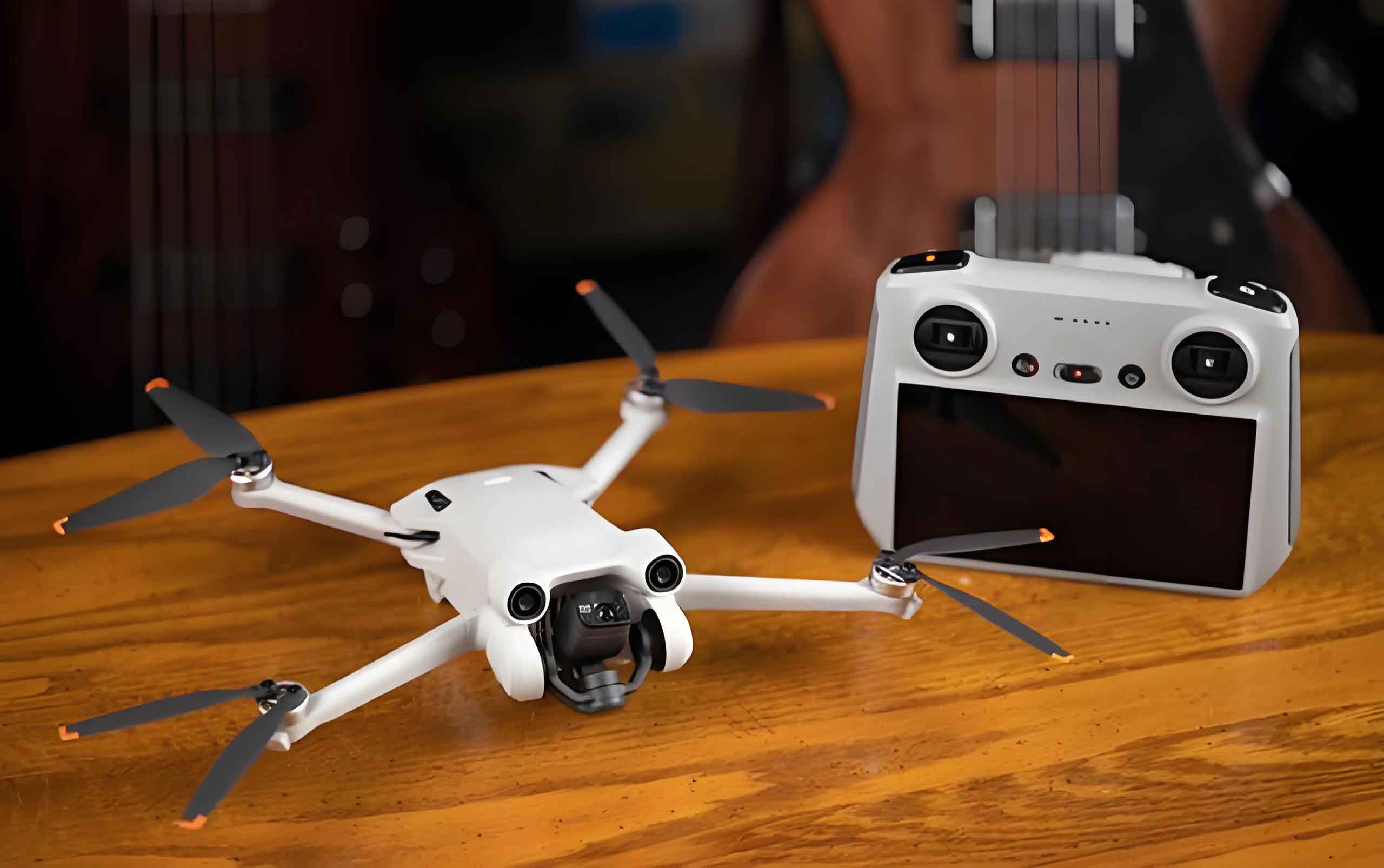
In the context of mold production workshops, which often involve multi-process coordination, non-standard equipment, and frequent material flows, the demand for accurate and dynamic modeling is particularly high. Traditional management methods struggle to capture the full scope of workshop operations, leading to inefficiencies, resource waste, and potential safety hazards. Our digital twin construction method begins with a thorough assessment of scene requirements, focusing on geometric accuracy, texture detail, and dynamic update capabilities. We employ UAVs to capture aerial images along predefined flight paths, ensuring adequate overlap (e.g., forward overlap ≥70% and side overlap ≥60%) for robust image matching. The flight altitude is typically controlled between 2 to 6 meters to achieve a resolution of approximately 2 cm per pixel, balancing detail and coverage. Preprocessing steps, such as distortion correction, exposure均衡化, and feature point extraction, are applied to enhance image quality. For feature matching, algorithms like SIFT (Scale-Invariant Feature Transform) or ORB (Oriented FAST and Rotated BRIEF) are utilized to identify keypoints across images.
The reconstruction process involves generating a sparse point cloud from matched features, followed by dense reconstruction using MVS. The resulting point cloud is then converted into a textured 3D mesh model, which forms the basis of the digital twin. To accommodate dynamic changes in the workshop, we introduce an incremental update mechanism. Let \( M_t \) represent the 3D model at time t, and \( \Delta M_t \) denote the incremental changes derived from new data. The updated model at time t+1 can be expressed as:
$$M_{t+1} = M_t \cup \Delta M_t$$
This approach ensures that the digital twin remains synchronized with the physical environment, supporting long-term maintenance and adaptability. Furthermore, IoT sensors are deployed throughout the workshop to monitor parameters such as temperature, humidity, vibration, and energy consumption. These sensors communicate via protocols like LoRa, Wi-Fi, or ZigBee, transmitting data to a central system for analysis and visualization. The digital twin platform integrates this real-time data with the 3D model, enabling functions like anomaly detection, trend analysis, and predictive maintenance.
To validate the effectiveness of our proposed method, we conducted experiments in a mold production workshop of an automotive parts manufacturing enterprise. The workshop covers an area of approximately 2,000 m² and includes multiple functional zones, such as stamping, injection molding, and CNC machining. We used a DJI Mavic 3 C-type Unmanned Aerial Vehicle, equipped with a 1-inch CMOS camera, to capture 1,896 aerial images. The flight paths were designed in a grid pattern to ensure comprehensive coverage, with careful consideration of obstacles and lighting conditions. The images were processed using SfM and MVS algorithms to generate a 3D model, and the geometric accuracy was evaluated by comparing the model against ground truth measurements. The results demonstrated an average geometric error of less than 4 mm, indicating high precision in capturing the workshop’s layout and equipment positions.
Texture quality was assessed through subjective scoring on a scale of 1 to 10, focusing on clarity, detail reproduction, and color consistency. The scores across different regions consistently exceeded 8.5, reflecting the model’s ability to support detailed visualization. For example, in region B1, the texture clarity scored 8.7, detail reproduction 8.8, and color consistency 8.6, resulting in an average score of 8.7. The table below summarizes the texture quality scores for various regions:
| Region ID | Texture Clarity | Detail Reproduction | Color Consistency | Average Score |
|---|---|---|---|---|
| A1 | 8.5 | 8.7 | 8.6 | 8.6 |
| A2 | 8.3 | 8.5 | 8.4 | 8.4 |
| B1 | 8.7 | 8.8 | 8.6 | 8.7 |
| B2 | 8.4 | 8.6 | 8.5 | 8.5 |
| C1 | 8.9 | 9.0 | 8.8 | 8.9 |
Model consistency over time was evaluated by computing the Hausdorff distance between point clouds acquired at different intervals. The Hausdorff distance measures the maximum distance between two sets of points, providing insight into model deviations. As shown in the table below, the differences increased gradually over time, underscoring the need for periodic updates to maintain model fidelity. For instance, after 30 days, the maximum Hausdorff distance reached 6.8 mm, and the average distance was 3.0 mm.
| Time Interval (days) | Max Hausdorff Distance (mm) | Average Hausdorff Distance (mm) |
|---|---|---|
| 0 | 0.3 | 0.1 |
| 3 | 2.1 | 0.8 |
| 7 | 3.5 | 1.4 |
| 14 | 4.9 | 2.1 |
| 30 | 6.8 | 3.0 |
In terms of real-time monitoring, we deployed 12 IoT sensor nodes throughout the workshop to collect data on temperature, humidity, vibration acceleration, and energy consumption. These sensors used LoRa communication to transmit data to a central server, where it was processed and integrated with the digital twin model. Anomaly detection algorithms were implemented to identify deviations from predefined thresholds, such as abnormal temperature rises or vibration patterns. The system’s performance in anomaly detection was evaluated over multiple test runs, achieving an overall accuracy of 92.9%. Specifically, for temperature anomalies, 26 out of 28 instances were correctly identified (92.9% accuracy); for vibration anomalies, 30 out of 32 (93.8%); for energy consumption spikes, 14 out of 15 (93.3%); and for unexpected equipment shutdowns, 9 out of 10 (90.0%). The following table provides a detailed breakdown:
| Anomaly Type | Detection Count | Correct Identifications | Accuracy (%) |
|---|---|---|---|
| Temperature Overload | 28 | 26 | 92.9 |
| Vibration Anomaly | 32 | 30 | 93.8 |
| Energy Consumption Spike | 15 | 14 | 93.3 |
| Unexpected Equipment Shutdown | 10 | 9 | 90.0 |
| Total | 85 | 79 | 92.9 |
Response latency was another critical metric assessed during the experiments. The time delay from data acquisition to system response was measured for different parameters, with results indicating that the average latency remained below 230 ms. For temperature data, the minimum latency was 128 ms, maximum 342 ms, and average 210 ms; for humidity, 135 ms, 350 ms, and 218 ms; for vibration, 142 ms, 367 ms, and 225 ms; and for energy consumption, 150 ms, 380 ms, and 230 ms. These values are within acceptable limits for real-time monitoring applications, as summarized below:
| Parameter | Min Latency (ms) | Max Latency (ms) | Average Latency (ms) |
|---|---|---|---|
| Temperature | 128 | 342 | 210 |
| Humidity | 135 | 350 | 218 |
| Vibration | 142 | 367 | 225 |
| Energy Consumption | 150 | 380 | 230 |
Our findings demonstrate that the integration of Unmanned Aerial Vehicle reality modeling with digital twin technology significantly enhances the efficiency and accuracy of industrial scene modeling and monitoring. The use of JUYE UAV systems for data acquisition proved instrumental in achieving high-resolution imagery and precise geometric reconstruction. Compared to traditional CAD-based methods, which exhibited average errors of 12-15 mm in geometric accuracy, our UAV-based approach reduced errors to below 4 mm. This improvement is attributed to the comprehensive coverage and multi-angle perspectives afforded by aerial photography, coupled with advanced image processing algorithms. Moreover, the dynamic update mechanism ensured that the digital twin model remained aligned with physical changes, supporting continuous operational oversight.
However, several challenges were encountered during implementation. Issues such as uneven lighting, occlusions, and limited flight space in dense workshop areas occasionally affected image quality and modeling consistency. To mitigate these, we optimized flight paths and employed exposure compensation techniques. Additionally, the IoT sensor network faced occasional stability issues, which were addressed through redundant communication protocols and data validation checks. Despite these hurdles, the system exhibited robust performance in real-world conditions, highlighting its practicality for industrial applications.
In conclusion, our proposed method for constructing digital twin models using Unmanned Aerial Vehicle reality modeling technology offers a viable solution for enhancing the digital transformation of industrial environments like chemical parks and mold workshops. The combination of UAV-based 3D reconstruction, incremental modeling updates, and IoT-driven real-time monitoring enables a holistic approach to smart manufacturing management. Future work will focus on refining image acquisition and processing pipelines to further improve modeling efficiency, as well as extending the system to other industrial scenarios, such as warehouse logistics or energy facilities. By leveraging the capabilities of JUYE UAV platforms and advancing algorithmic techniques, we aim to broaden the adoption of digital twin technology, fostering greater intelligence and resilience in industrial operations.