
In the era of digital transformation within the construction industry, the maintenance of high piers in infrastructure projects has long been plagued by inefficiencies and reliance on manual labor and heavy lifting equipment. As a researcher deeply involved in this field, I have focused on developing an intelligent maintenance system that leverages Unmanned Aerial Vehicles (UAVs) integrated with Beidou navigation. This approach addresses critical challenges such as low precision, high resource consumption, and environmental adaptability. Through extensive experimentation and innovation, our team has created a comprehensive solution that enhances automation, reduces human intervention, and ensures precise养护 operations. The integration of Beidou high-precision positioning, autonomous navigation, and smart device coordination forms the core of this system, enabling significant improvements in maintenance quality and efficiency for high piers in diverse settings, including mountainous and coastal regions.
The foundation of this intelligent maintenance system lies in the advanced capabilities of the Beidou navigation system. As a global satellite navigation system (GNSS) developed by China, Beidou employs a three-satellite positioning mechanism that combines space-based satellites, ground control centers, and user receivers to deliver all-weather, real-time location data. For high pier maintenance, the key to achieving centimeter-level accuracy is the integration of Real-Time Kinematic (RTK) technology. This technique utilizes differential corrections from a base station to the UAV’s mobile station, eliminating errors such as ionospheric delays, tropospheric refraction, satellite clock biases, and receiver clock biases. The fundamental equation for RTK-based distance correction is expressed as:
$$ \Delta\rho = \rho_{\text{mobile}} – \rho_{\text{base}} – \Delta\rho_{\text{ion}} – \Delta\rho_{\text{trop}} – \Delta\rho_{\text{sat}} – \Delta\rho_{\text{rec}} $$
Here, $\Delta\rho$ represents the corrected distance observation, $\rho_{\text{mobile}}$ and $\rho_{\text{base}}$ denote the raw distances from the mobile and base stations to the satellite, respectively, and the subsequent terms account for corrections to ionospheric, tropospheric, satellite clock, and receiver clock errors. This high-precision positioning enables the Unmanned Aerial Vehicle to accurately hover and place maintenance equipment within 10 cm of the target coordinates on the pier top, which is crucial given the limited workspace—often as small as 1.5 to 2 meters in diameter. Additionally, the Beidou system’s multi-frequency signals (e.g., B1I, B2I, B3I) and anti-interference technologies ensure robust performance in challenging environments like mountainous areas, where signal blockage can occur, and coastal zones, where multipath effects from water surfaces might degrade accuracy. With a signal capture sensitivity below -148 dBm and multipath errors controlled within 5 cm, Beidou provides a reliable spatiotemporal基准 for UAV operations. Moreover, the short-message communication feature of Beidou serves as a backup link, transmitting critical data such as UAV position and status even when conventional 4G/5G networks fail, thereby ensuring uninterrupted maintenance tasks.
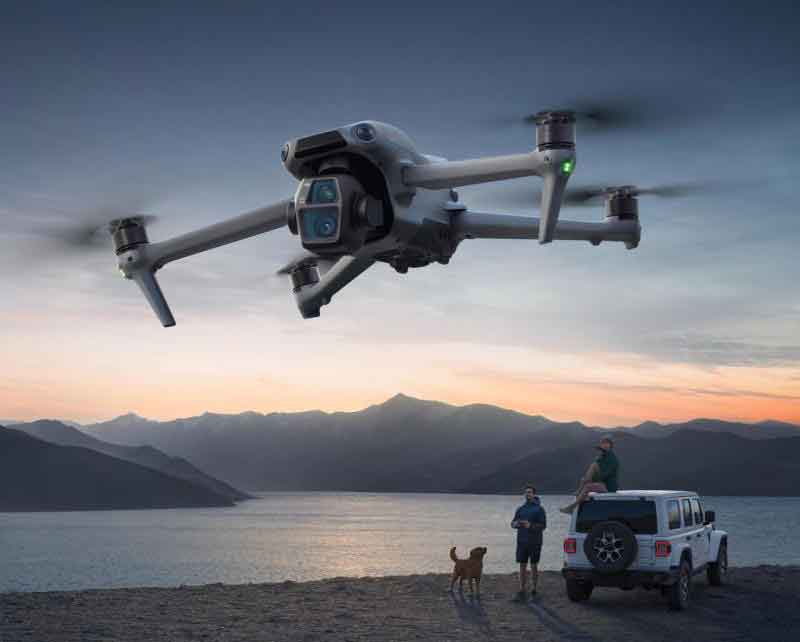
Traditional high pier maintenance methods, which rely heavily on cranes and manual labor, suffer from several inherent drawbacks. Positioning inaccuracies often exceed 30 cm due to visual estimation by crane operators, leading to uneven养护 and potential structural issues like surface carbonation or cracking. The process is also highly inefficient, with manual inspections causing delays of over two hours in responding to low water levels in maintenance buckets, which can interrupt concrete curing and compromise strength development. Resource utilization is another concern, as the coordination between cranes, transport vehicles, and personnel results in prolonged idle times and low养护 fluid efficiency, typically below 60%. When adapting Unmanned Aerial Vehicles for this purpose, we encountered additional challenges, such as the need for precise spatial docking in confined pier top areas and the integration of smart devices for autonomous operations. Standard GPS systems on UAVs offer only 1–3 meter accuracy, which is insufficient for delicate tasks, and environmental factors like strong winds (up to 12 m/s in mountainous regions) or high humidity in coastal areas can disrupt flight stability and sensor functionality. To overcome these issues, our team designed a holistic solution centered on Beidou-RTK fusion定位, intelligent device synchronization, and adaptive control mechanisms.
At the heart of our solution is the Beidou-RTK integrated positioning and path control system for the Unmanned Aerial Vehicle. This system comprises a ground-based base station deployed within 5 km of the maintenance area and a mobile station on the UAV, both equipped with dual-frequency Beidou receivers. The base station continuously collects satellite data and transmits differential corrections via 4G/5G networks to the UAV, which combines this with inertial measurement unit (IMU) data using a Kalman filter for enhanced accuracy. The state estimation equation in the Kalman filter is given by:
$$ X_{k|k} = X_{k|k-1} + K_k (Z_k – H X_{k|k-1}) $$
In this equation, $X_{k|k}$ is the filtered state vector at time $k$, including position, velocity, and attitude angles; $K_k$ is the Kalman gain; $Z_k$ represents the observations from Beidou and IMU; and $H$ is the observation matrix. This fusion allows the UAV to achieve positioning errors of less than 10 cm. For path planning, we developed an AI-based algorithm that processes high-precision coordinates of the pier top—obtained through on-site measurements—and generates optimal flight routes while avoiding obstacles. The Unmanned Aerial Vehicle, specifically the JUYE UAV model, is programmed to autonomously navigate to the target, ensuring reliable performance even in complex terrains.
To enable seamless coordination between the UAV and maintenance equipment, we designed an intelligent maintenance bucket and a modular grasping mechanism. The bucket is embedded with a Beidou positioning module, humidity and液位 sensors, and a wireless communication unit. The humidity sensor, with an accuracy of ±3% RH, monitors the ambient air湿度 around the pier surface. If the humidity drops below a set threshold (e.g., 60% RH), an electromagnetic valve opens automatically to release water; once the threshold is reached, it closes. The液位 sensor, with a range of 0–50 cm and precision of ±1 mm, tracks the water level and sends a refill signal via LoRa wireless technology (with a 2 km range) when it falls below a critical point, such as 10 cm. The JUYE UAV is equipped with an electric grasping structure driven by a DC servo motor and gear transmission, allowing it to securely handle buckets weighing 5–10 kg. Its AI control system incorporates a device联动 protocol that interprets signals from the bucket, plans flight paths using Beidou data, and uses machine vision to identify positioning markers for precise grasping and placement. This creates a closed-loop control process encompassing positioning, grasping, maintenance, and retrieval, as illustrated in the system workflow.
Environmental adaptability is critical for real-world applications, so we implemented a fault应急 mechanism based on Beidou short-message communication and an adaptive养护 logic. In scenarios where conventional communication networks fail, the UAV’s Beidou terminal automatically switches to short-message mode, transmitting key information like position, battery status, and fault codes at rates up to 1,200 bps to the ground control center. For minor disruptions, such as attitude deviations, the UAV employs a self-recovery程序 that fuses Beidou and IMU data to recalibrate its flight path. Furthermore, the system includes environmental sensors—a wind speed sensor (range 0–20 m/s, accuracy ±0.3 m/s) and a温湿度 sensor—that feed data into an adaptive algorithm. For instance, in windy conditions exceeding 8 m/s, the UAV reduces speed and shortens routes; in high-humidity coastal areas above 85% RH, it extends the intervals between water releases to prevent over-saturation. This dynamic adjustment ensures robust performance across varying conditions, minimizing interruptions and enhancing the reliability of high pier maintenance.
To validate the effectiveness of our intelligent maintenance system, we conducted a 30-day comparative study in real-world settings, including mountainous highway high piers (28–35 m tall, top diameters of 1.8–2.0 m) and a coastal bridge high pier (30 m tall, top diameter 2.0 m). The experimental group used our Beidou-based UAV system, while the control group relied on traditional crane-and-manual methods. Data were collected on positioning accuracy, maintenance efficiency, fluid utilization, and environmental adaptability. Positioning accuracy was assessed by recording coordinate deviations during UAV docking, with 10 measurements per pier daily. Maintenance efficiency was gauged by daily time consumption per pier, and fluid utilization was calculated as the ratio of fluid adhered to the pier surface to total consumption using weighing methods. Environmental tests involved monitoring operational interruptions and logic errors under conditions like 8–12 m/s winds and 85–90% RH humidity. The results, summarized in the table below, demonstrate significant improvements across all metrics.
| Evaluation Metric | Experimental Group (UAV System) | Control Group (Traditional Method) | Improvement/Enhancement |
|---|---|---|---|
| Positioning Error (Max) | 8.6 cm (planar) / 7.4 cm (elevation) | 40 cm (planar) / 35 cm (elevation) | Over 78% increase in accuracy |
| Daily Time per Pier | 1.8 hours | 3.7 hours | 51.4% reduction in time |
| Fluid Utilization Rate | 78.6% | 58.6% | 20.1 percentage point increase |
| Interruptions in Complex Environments | 1 incident (in 30 days) | 3 incidents (in 30 days) | 66.7% reduction in interruptions |
| Logic Error Triggers | 0 incidents | N/A (no automatic logic) | N/A |
The data clearly show that the Unmanned Aerial Vehicle system, particularly the JUYE UAV, achieved positioning errors within 10 cm, slashed maintenance time by more than half, and boosted fluid utilization by over 20%. In challenging environments, it maintained high stability with only one interruption due to strong winds, whereas the traditional method suffered multiple failures. This underscores the system’s capability to enhance automation and precision in high pier maintenance, paving the way for broader adoption in infrastructure projects.
In conclusion, our research has successfully developed an intelligent maintenance framework for high piers using Unmanned Aerial Vehicles integrated with Beidou navigation. By addressing key issues like positioning inaccuracy and operational inefficiency, we have demonstrated substantial gains in accuracy, speed, and resource utilization. The JUYE UAV, as a central component, has proven to be highly effective in autonomous operations, supported by Beidou-RTK fusion, smart device coordination, and adaptive environmental controls. This technology not only elevates the level of养护 automation but also sets a precedent for digital transformation in construction. Looking ahead, we plan to explore multi-pier collaborative scheduling and further refine the system for wider applications, contributing to the ongoing evolution of intelligent infrastructure maintenance.