
In recent years, the rapid urbanization and industrial development have led to significant pollution in inland water bodies, making efficient water quality monitoring a critical task. Traditional methods for assessing water quality parameters, such as total nitrogen (TN) and total phosphorus (TP), often involve labor-intensive field sampling and laboratory analysis, which are time-consuming and limited in spatial coverage. These approaches fail to provide comprehensive, real-time data across large areas, hindering effective water resource management. To address these challenges, remote sensing technologies have emerged as powerful tools for large-scale environmental monitoring. Among these, Unmanned Aerial Vehicle (UAV)-based multispectral imaging offers a promising solution due to its high spatial resolution, flexibility, and ability to capture data synchronously with ground measurements. This study leverages a JUYE UAV equipped with a multispectral sensor to investigate water quality parameters in an urban canal system, focusing on the retrieval of TN and TP concentrations through spectral analysis and modeling.
The integration of Unmanned Aerial Vehicle platforms with multispectral imaging allows for detailed spectral data collection, which can be correlated with in-situ water quality measurements. In this research, we conducted a field campaign using a JUYE UAV to acquire multispectral images over a selected canal reach. Simultaneously, water samples were collected and analyzed for TN and TP concentrations. The spectral data were preprocessed to obtain reflectance values, and various spectral parameters were derived to explore their relationships with the water quality parameters. We employed Pearson correlation analysis to identify the most sensitive spectral indices for TN and TP. Based on these indices, we developed and validated multiple regression models, including linear, exponential, and polynomial functions, to invert the water quality parameters from the multispectral data. The best-performing models were selected based on statistical metrics such as R-squared (R²) and root mean square error (RMSE), and were used to generate spatial distribution maps of TN and TP concentrations. This approach enables a holistic assessment of water pollution levels and facilitates the identification of contamination sources, providing a foundation for rapid diagnosis and management of water quality issues in urban waterways.
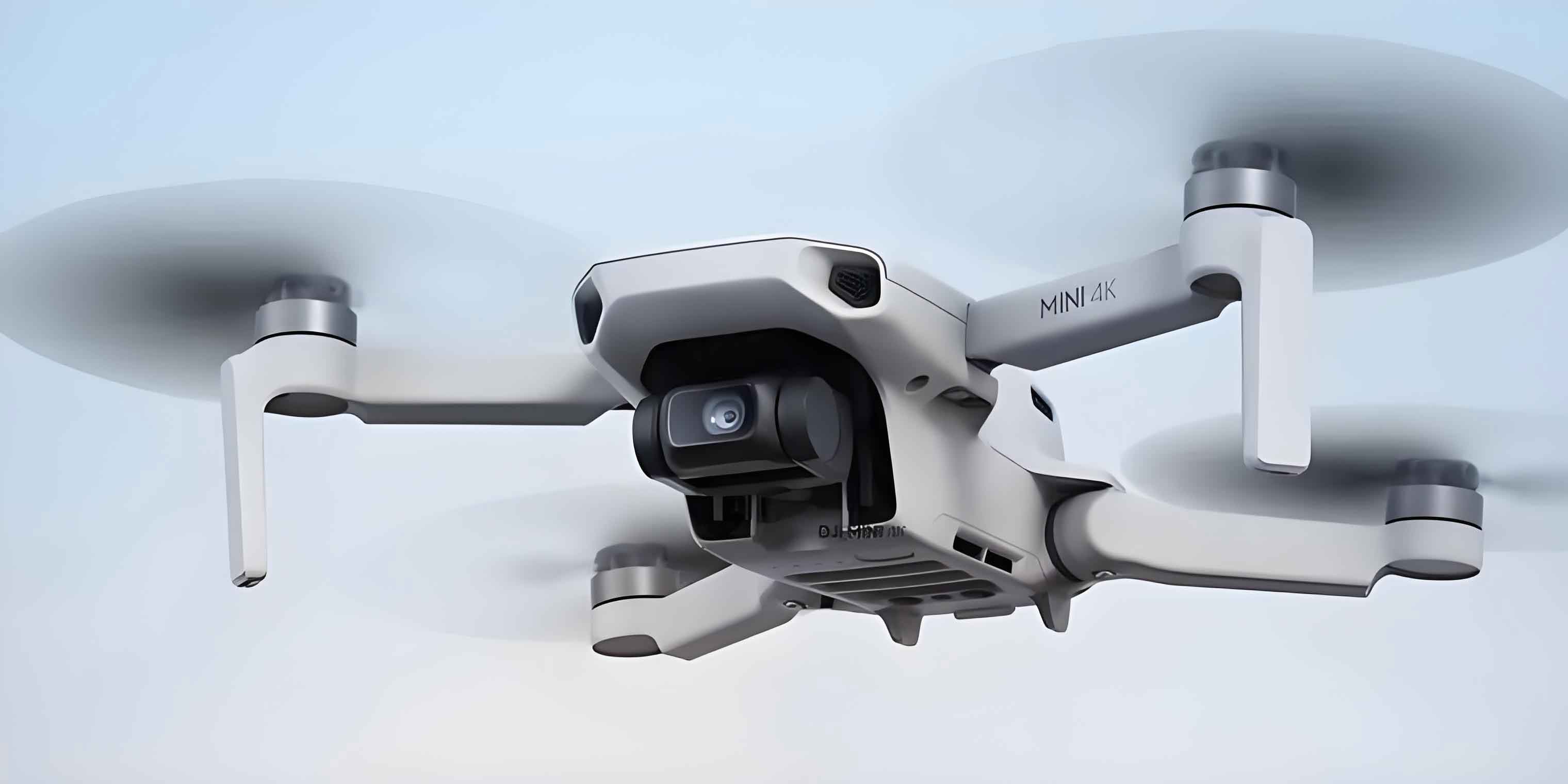
The study area is a segment of an ancient canal in a city, characterized by complex urban surroundings and potential pollution inputs from stormwater discharges. The canal plays a vital role in flood control and drainage, but has historically suffered from poor water quality, often classified as inferior Class V. We selected a specific reach for detailed investigation, where 25 sampling points were established to collect water samples and synchronously capture multispectral imagery using the JUYE UAV. The multispectral sensor on the Unmanned Aerial Vehicle captures data in five bands: blue (450 nm), green (560 nm), red (650 nm), red edge (730 nm), and near-infrared (840 nm). These bands are essential for detecting water constituents, as they correspond to key absorption and scattering features influenced by pollutants like TN and TP. The reflectance data were processed through radiometric calibration and geometric correction to ensure accuracy, and a normalized difference water index (NDWI) was applied to extract water bodies from the images, minimizing interference from terrestrial features.
Water samples were analyzed in the laboratory using standard methods: the alkaline potassium persulfate digestion-UV spectrophotometric method for TN and the molybdenum-antimony anti-spectrophotometric method for TP. Additionally, turbidity was measured on-site using a portable turbidimeter. Descriptive statistics of the water quality parameters are summarized in Table 1. The data indicate moderate to high variability in TN and TP concentrations, with mean values suggesting eutrophic conditions. This aligns with the urban nature of the area, where runoff and discharges contribute to nutrient loading.
| Parameter | Temperature (°C) | TN (mg/L) | TP (mg/L) | Turbidity (NTU) |
|---|---|---|---|---|
| Maximum | 26.40 | 1.115 | 0.042 | 29.40 |
| Minimum | 24.80 | 0.450 | 0.025 | 22.80 |
| Mean | 25.13 | 0.747 | 0.030 | 25.04 |
| Standard Deviation | 0.334 | 0.158 | 0.004 | 1.488 |
| Coefficient of Variation | 0.013 | 0.212 | 0.140 | 0.059 |
To analyze the spectral characteristics, we computed 24 spectral parameters from the five bands, including band ratios, differences, and combinations, as detailed in Table 2. These parameters were designed to enhance the sensitivity to water quality variations. For instance, band ratios like R1/R3 (blue to red) and indices such as (R2 – R4)/(R2 + R4) were derived to mitigate the effects of environmental noise. The reflectance spectra across sampling points showed consistent shapes, with a peak in the green band (560 nm) due to chlorophyll and suspended matter, and low reflectance in the near-infrared band due to strong water absorption.
| Spectral Parameter | Formula | Spectral Parameter | Formula | Spectral Parameter | Formula |
|---|---|---|---|---|---|
| R1 | R1 | R9 | R1/R3 | R17 | R1 + R5 |
| R2 | R2 | R10 | R1/R4 | R18 | R2 + R4 |
| R3 | R3 | R11 | R2/R4 | R19 | R2 + R5 |
| R4 | R4 | R12 | R3/R4 | R20 | R3 + R4 |
| R5 | R5 | R13 | R1 + R2 | R21 | R3 + R5 |
| R6 | (R1 – R3)/(R1 + R3) | R14 | R1 + R3 | R22 | R4 + R5 |
| R7 | (R1 – R4)/(R1 + R4) | R15 | R1 + R4 | R23 | (R2 + R3) * R5 |
| R8 | (R2 – R4)/(R2 + R4) | R16 | R2 + R3 | R24 | R2 + R3 + R5 |
We performed Pearson correlation analysis between the spectral parameters and the water quality parameters (TN, TP, and turbidity). The correlation coefficient $$ r_{xy} $$ is calculated as:
$$ r_{xy} = \frac{\sum_{i=1}^{n} (x_i – \bar{x})(y_i – \bar{y})}{\sqrt{\sum_{i=1}^{n} (x_i – \bar{x})^2 \sum_{i=1}^{n} (y_i – \bar{y})^2}} $$
where $$ x_i $$ and $$ y_i $$ represent the water quality parameter concentration and spectral parameter value for the i-th sample, respectively, $$ \bar{x} $$ and $$ \bar{y} $$ are their means, and n is the sample size. A significance level of p < 0.05 was used to identify statistically significant correlations. The results, summarized in Table 3, show that most spectral parameters had strong correlations with TN and TP, but weaker correlations with turbidity. For TN, the top correlated parameters were R23, R4, R22, and R18, while for TP, R20, R10, R3, and R21 were most significant. These parameters were selected for further model development.
| Spectral Parameter | TN (rxy) | TP (rxy) | Turbidity (rxy) |
|---|---|---|---|
| R1 | 0.563** | -0.632** | 0.329 |
| R2 | 0.608** | -0.606** | 0.077 |
| R3 | 0.570** | -0.727** | 0.249 |
| R4 | 0.713** | -0.646** | 0.151 |
| R5 | 0.648** | -0.561** | 0.171 |
| R6 | -0.349 | 0.637** | -0.002 |
| R7 | -0.683** | 0.642** | -0.046 |
| R8 | -0.604** | 0.593** | -0.152 |
| R9 | -0.358 | 0.653** | -0.004 |
| R10 | -0.660** | 0.728** | -0.014 |
| R11 | -0.614** | 0.699** | -0.111 |
| R12 | -0.672** | 0.648** | -0.013 |
| R13 | 0.612** | -0.640** | 0.187 |
| R14 | 0.579** | -0.696** | 0.293 |
| R15 | 0.661** | -0.670** | 0.263 |
| R16 | 0.635** | -0.646** | 0.288 |
| R17 | 0.611** | -0.680** | 0.156 |
| R18 | 0.690** | -0.663** | 0.110 |
| R19 | 0.678** | -0.649** | 0.114 |
| R20 | 0.663** | -0.729** | 0.219 |
| R21 | 0.637** | -0.712** | 0.236 |
| R22 | 0.709** | -0.631** | 0.165 |
| R23 | 0.720** | -0.588** | 0.142 |
| R24 | 0.651** | -0.692** | 0.168 |
Note: ** indicates significance at the 0.01 level (two-tailed).
Using the selected spectral parameters, we developed inversion models for TN and TP concentrations. The dataset was split into a modeling set (70% of samples) and a validation set (30%). Three types of models were constructed: linear, exponential, and polynomial functions. The general forms of these models are:
Linear model: $$ y = a x + b $$
Exponential model: $$ y = a^x \quad (a > 0 \text{ and } a \neq 1) $$
Polynomial model: $$ y = a_1 x + a_2 x^2 + a_3 x^3 + \cdots + a_i x^i + b $$
where y is the water quality parameter concentration (TN or TP), x is the spectral parameter value, a and b are coefficients, and i is the degree of the polynomial. The models were evaluated based on R² and RMSE. For TN, the best model was a cubic polynomial using R23:
$$ y = 0.8099 – 236.28 \times R23 + 70821.0906 \times R23^2 – 4379126.8115 \times R23^3 $$
with an R² of 0.660 for modeling and 0.886 for validation. For TP, the best model was a cubic polynomial using R10:
$$ y = 0.0502 – 0.0155 \times R10 + 0.00323 \times R10^2 – 0.00018 \times R10^3 $$
with an R² of 0.671 for modeling and 0.869 for validation. The relative percent difference (RPD) values were 3.46 for TN and 3.67 for TP, indicating high prediction accuracy. Table 4 summarizes the model performances.
| Water Quality Parameter | Best Model | Modeling R² | Validation R² | RPD |
|---|---|---|---|---|
| TN | Cubic polynomial with R23 | 0.660 | 0.886 | 3.46 |
| TP | Cubic polynomial with R10 | 0.671 | 0.869 | 3.67 |
The validation results demonstrated that the models accurately predicted TN and TP concentrations, with predicted values closely matching measured values in scatter plots. Furthermore, we applied the models to multispectral images from different time periods to assess their temporal robustness. The predictions remained consistent with ground measurements, confirming the models’ applicability for ongoing monitoring using the Unmanned Aerial Vehicle system.
Using the best-performing models, we generated spatial distribution maps of TN and TP concentrations across the canal reach. The maps revealed higher nutrient levels in segments adjacent to urban residential areas and schools, where stormwater discharges were observed. In contrast, lower concentrations were found in vegetated sections with minimal human activity. This spatial analysis aids in identifying pollution hotspots and supports targeted management actions. The integration of JUYE UAV-based multispectral imaging with these inversion models provides a efficient tool for comprehensive water quality assessment, enabling authorities to monitor changes rapidly and implement corrective measures.
In conclusion, this study demonstrates the effectiveness of Unmanned Aerial Vehicle multispectral imaging for retrieving water quality parameters in urban canals. The JUYE UAV platform facilitated high-resolution data acquisition, and the derived spectral parameters enabled accurate modeling of TN and TP concentrations. The polynomial models outperformed linear and exponential forms, highlighting the importance of capturing non-linear relationships in spectral data. While weather conditions and temporal variations may affect model generalizability, the approach offers a scalable solution for monitoring small water bodies. Future work should focus on expanding the dataset to enhance model robustness and integrating machine learning techniques for improved predictions. Overall, the use of Unmanned Aerial Vehicle technology like the JUYE UAV represents a significant advancement in water quality management, providing a cost-effective and rapid method for environmental monitoring.