
In recent years, the low-altitude economy has emerged as a novel and comprehensive economic model, penetrating various fields such as inspection, logistics, rescue, and communication. Unmanned Aerial Vehicles (UAVs), as pivotal aircraft in the low-altitude industry, have garnered significant attention due to their diverse forms and functional completeness. This paper focuses on a collaborative delivery system integrating trucks and Unmanned Aerial Vehicles, specifically addressing the dynamic synchronization between these entities to enhance delivery efficiency. The proliferation of Unmanned Aerial Vehicle delivery models, favored by major logistics companies like Amazon and JD.com, offers advantages such as immunity to ground traffic congestion, shorter delivery times, and operational flexibility. However, limitations in battery capacity and payload restrict Unmanned Aerial Vehicles from handling large or heavy packages over long distances. Consequently, the integration of trucks and Unmanned Aerial Vehicles in collaborative delivery systems has become a critical research area, extending classical problems like the Traveling Salesman Problem and Vehicle Routing Problem.
The collaborative delivery problem involving trucks and Unmanned Aerial Vehicles can be categorized based on predetermined and flexible takeoff and landing points. Traditional approaches often limit Unmanned Aerial Vehicle operations to fixed locations, such as customer nodes or dedicated depots, which reduces infrastructure costs but compromises the inherent flexibility of Unmanned Aerial Vehicle paths. In contrast, dynamic synchronization allows Unmanned Aerial Vehicles to take off and land at any point along the truck’s route, minimizing waiting times and optimizing resource utilization. This paper introduces a dynamic synchronization mechanism where Unmanned Aerial Vehicles, including models like the JUYE UAV, can be launched and recovered during the truck’s movement, thereby reducing overall costs and improving delivery efficiency. The problem is formulated as an optimization model aiming to minimize the weighted total cost, encompassing truck operation, waiting, and Unmanned Aerial Vehicle operation costs. An Adaptive Large Neighborhood Search (ALNS) algorithm is designed to solve this model, incorporating destruction and repair operators to explore feasible solutions efficiently.
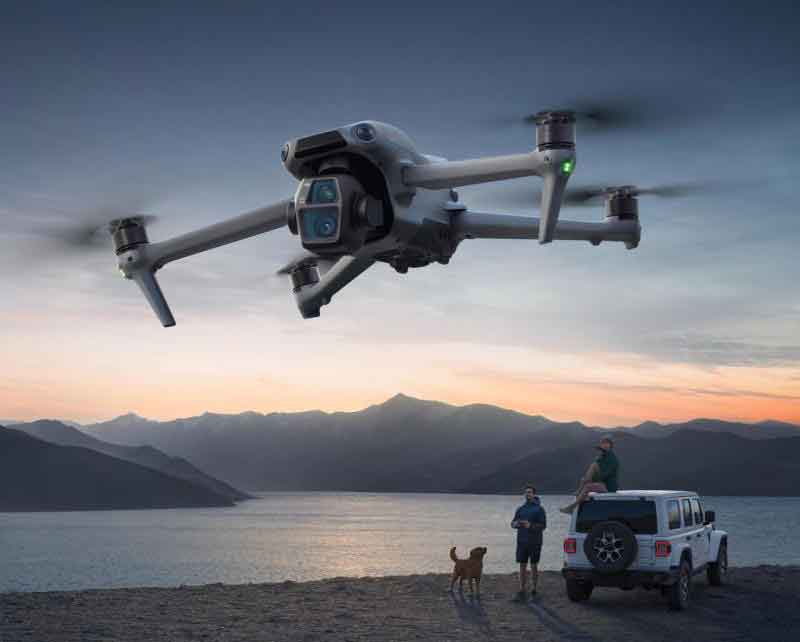
The core of this research lies in the dynamic synchronization of Unmanned Aerial Vehicles with trucks during delivery operations. Unlike conventional methods where Unmanned Aerial Vehicles are confined to specific takeoff and landing points, our approach enables Unmanned Aerial Vehicles to interact with trucks at synchronization points along the route. This flexibility is particularly beneficial in urban logistics, where traffic congestion and delivery windows pose significant challenges. The JUYE UAV, as an example of advanced Unmanned Aerial Vehicle technology, exemplifies the capabilities required for such dynamic operations, including robust flight endurance and payload capacity. The model considers multiple Unmanned Aerial Vehicles deployed from a single truck, each capable of serving one customer per sortie while adhering to constraints like maximum flight distance and payload capacity. The truck serves as a mobile base for Unmanned Aerial Vehicle operations, carrying packages and providing launch and recovery platforms. The dynamic synchronization mechanism ensures that Unmanned Aerial Vehicles can rendezvous with the truck at optimal points, calculated based on geometric intersections between Unmanned Aerial Vehicle flight paths and the truck’s route, thus minimizing idle times and enhancing overall system performance.
To formalize the problem, we define the following sets, parameters, and variables. Let $V = \{0, 1, 2, \dots, c+1\}$ represent the set of all nodes, including the depot and customer locations. The set $A = \{(i,j) \mid \forall i \in V, j \in V, i \neq j\}$ denotes all possible edges between nodes. Customers are represented by $C = V \setminus \{0, c+1\}$, while $C_0 = \{0, 1, \dots, c\}$ and $C_+ = \{1, 2, \dots, c+1\}$ indicate start and end nodes, respectively. The set $D$ encompasses all Unmanned Aerial Vehicles, such as the JUYE UAV, available in the system. Key parameters include distances $d_{ij}$ between nodes $i$ and $j$, truck speed $v_t$, Unmanned Aerial Vehicle speed $v_d$, maximum Unmanned Aerial Vehicle flight distance $L_d$, Unmanned Aerial Vehicle payload capacity $Q_d$, and customer demand $q_i$. Cost coefficients are defined for truck operation $c_t$, Unmanned Aerial Vehicle operation $c_d$, and waiting $c_w$, with weights $\omega_1$, $\omega_2$, and $\omega_3$ satisfying $\sum_{i=1}^3 \omega_i = 1$. Decision variables include $x_{ij}$ for truck routes, $y_{ijk}^d$ for Unmanned Aerial Vehicle sorties, and $p_{ij}$ for node sequencing.
The objective function minimizes the weighted total cost:
$$ \min z = \omega_1 \sum_{i \in C_0} \sum_{j \in C} c_t d_{ij} x_{ij} + \omega_2 \sum_{i \in C} c_w t_w^{ijk} v_t + \omega_3 \sum_{d \in D} \sum_{i \in C_0, i \neq j} \sum_{k \in C_+} c_d y_{ijk}^d (d_{ij} + d_{jk}) $$
Subject to constraints ensuring route continuity, customer service, and operational limits:
$$ \sum_{j \in C_+} x_{0j} = 1 $$
$$ \sum_{i \in C_0} x_{i,c+1} = 1 $$
$$ \sum_{i \in C_0} x_{ij} = \sum_{k \in C_+, j \neq k} x_{jk} \leq 1, \quad \forall j \in C $$
$$ \sum_{h \in C_0, h \neq i} x_{hi} + \sum_{g \in C, g \neq k} x_{gk} \geq 2 y_{ijk}^d, \quad \forall i \in C, j \in C, k \in C_+, d \in D $$
$$ \sum_{i \in C_0, i \neq j} x_{ij} + \sum_{d \in D} \sum_{i \in C_0, i \neq j} \sum_{k \in C_+} y_{ijk}^d = 1, \quad \forall j \in C $$
$$ \sum_{j \in C, j \neq i} \sum_{k \in C_+} y_{ijk}^d \leq 1, \quad \forall i \in C_0, d \in D $$
$$ \sum_{i \in C_0, i \neq k} \sum_{j \in C} y_{ijk}^d \leq 1, \quad \forall k \in C_+, d \in D $$
$$ 1 – (c+2)(1 – x_{ij}) \leq Z_j – Z_i, \quad \forall i \in C_0, j \in C_+, i \neq j $$
$$ (c+2)(1 – x_{ij}) + 1 \geq Z_j – Z_i, \quad \forall i \in C_0, j \in C_+, i \neq j $$
$$ p_{ij} + p_{ji} = 1, \quad \forall i \in C, j \in C, i \neq j $$
$$ \sum_{j \in C, j \neq i} \sum_{k \in C_+} q_j y_{ijk}^d \leq Q_d, \quad \forall i \in C_0, d \in D $$
$$ y_{ijk}^d (d_{ij} + d_{jk}) \leq L_d, \quad \forall i \in C_0, j \in C, k \in C_+, i \neq j, k \neq i, d \in D $$
Dynamic synchronization constraints are incorporated to allow Unmanned Aerial Vehicles to take off and land at optimal points along the truck’s path. The synchronization points are determined by solving for the radius $R^*$ that minimizes waiting time:
$$ R^* = \arg \min_{R_{\min} < R < R_{\max}} t_W^{i^* j k^*}(R) $$
$$ t_W^{i^* j k^*}(R) = \left| t_{i^* k^*}(R) – (\tau_{i^* j}(R) + \tau_{j k^*}(R)) \right| $$
$$ \omega_2 C_w^* + \omega_3 C_d^* < \omega_2 C_w + \omega_3 C_d $$
We employ an Adaptive Large Neighborhood Search (ALNS) algorithm to solve this complex optimization problem. The ALNS algorithm begins with an initial solution constructed using a greedy heuristic, which iteratively inserts customer nodes into the route based on cost minimization. The algorithm then iteratively destroys and repairs solutions using a set of operators, adapting their selection based on past performance. Destruction operators include random removal, worst removal, and related removal, while repair operators encompass random insertion, greedy insertion, and regret insertion. The adaptive mechanism updates operator weights periodically based on scores assigned for improving solutions, ensuring a balance between exploration and exploitation. To avoid local optima, we integrate the Metropolis criterion from simulated annealing, accepting worse solutions with a probability $P = e^{-(f(s’) – f(s))/T}$, where $T$ is the current temperature cooled over iterations.
Experimental analysis is conducted using instances of varying sizes, ranging from 8 to 100 nodes, to validate the algorithm’s effectiveness. The table below summarizes the optimization results obtained by the ALNS algorithm, highlighting the reduction in total cost and the number of Unmanned Aerial Vehicle sorties.
| Instance | Num Nodes | Initial UAV Sorties | Initial Cost ($Z_g$) | Optimized UAV Sorties | Optimized Cost ($Z_A$) | GAP1 (%) | Time (s) |
|---|---|---|---|---|---|---|---|
| 1 | 8 | 2 | 40.94 | 1 | 32.93 | 19.57 | 0.57 |
| 2 | 8 | 2 | 53.71 | 0 | 44.59 | 16.99 | 0.58 |
| 3 | 8 | 3 | 39.67 | 1 | 30.04 | 24.27 | 0.72 |
| 4 | 8 | 3 | 37.17 | 1 | 27.33 | 26.46 | 0.64 |
| 5 | 10 | 5 | 46.97 | 2 | 35.77 | 23.84 | 0.92 |
| 6 | 10 | 3 | 50.01 | 3 | 37.46 | 25.09 | 0.90 |
| 7 | 10 | 4 | 53.84 | 3 | 38.76 | 28.00 | 0.97 |
| 8 | 10 | 4 | 52.26 | 0 | 37.77 | 27.72 | 0.88 |
| 9 | 25 | 8 | 80.59 | 0 | 45.85 | 43.11 | 20.12 |
| 10 | 25 | 9 | 79.99 | 3 | 43.25 | 45.93 | 25.31 |
| 11 | 25 | 6 | 70.54 | 1 | 48.80 | 30.81 | 37.41 |
| 12 | 25 | 6 | 70.11 | 4 | 48.72 | 30.51 | 23.98 |
| 13 | 50 | 12 | 94.47 | 8 | 54.52 | 42.29 | 730.79 |
| 14 | 50 | 8 | 109.49 | 5 | 64.41 | 41.17 | 472.83 |
| 15 | 50 | 12 | 103.01 | 9 | 58.23 | 43.47 | 623.44 |
| 16 | 50 | 12 | 107.73 | 5 | 64.30 | 43.43 | 759.38 |
| 17 | 100 | 11 | 129.22 | 4 | 80.33 | 37.83 | 3131.01 |
| 18 | 100 | 11 | 123.76 | 6 | 79.73 | 35.58 | 3049.51 |
| 19 | 100 | 10 | 137.00 | 3 | 78.15 | 42.12 | 4572.76 |
| 20 | 100 | 10 | 126.30 | 9 | 81.02 | 35.85 | 5212.62 |
Dynamic synchronization updates further optimize the solution by allowing Unmanned Aerial Vehicles to take off and land at synchronization points along the truck’s route. The table below compares the results before and after dynamic synchronization for selected instances, demonstrating additional cost reductions.
| Instance | Original UAV Sorties | Original Cost ($Z_A$) | Updated UAV Sorties | Updated Cost ($Z^*$) | GAP2 (%) |
|---|---|---|---|---|---|
| 5 | 2 | 35.77 | 0 | 35.77 | 0.00 |
| 6 | 3 | 37.46 | 2 | 36.98 | 1.30 |
| 7 | 3 | 38.76 | 1 | 38.36 | 1.02 |
| 10 | 3 | 43.25 | 2 | 42.91 | 0.80 |
| 11 | 1 | 48.80 | 0 | 48.80 | 0.00 |
| 12 | 4 | 48.72 | 3 | 48.18 | 1.12 |
| 13 | 8 | 54.52 | 6 | 52.91 | 2.96 |
| 14 | 5 | 64.41 | 3 | 63.68 | 1.13 |
| 15 | 9 | 58.23 | 7 | 57.05 | 2.03 |
| 16 | 5 | 64.30 | 2 | 63.57 | 1.13 |
Sensitivity analysis is conducted to evaluate the impact of cost weights and the number of Unmanned Aerial Vehicles on system performance. The following table presents optimization results under different weight configurations for a 50-node instance, highlighting the influence of waiting cost on dynamic synchronization.
| $\omega_1$ | $\omega_2$ | $\omega_3$ | Initial UAV Sorties | Optimized UAV Sorties | Optimized Cost | Updated UAV Sorties | Updated Cost | GAP2 (%) | Total GAP (%) |
|---|---|---|---|---|---|---|---|---|---|
| 0.1 | 0.8 | 0.1 | 3 | 4 | 19.82 | 3 | 19.50 | 1.62 | 39.96 |
| 0.3 | 0.5 | 0.4 | 9 | 0 | 20.02 | 0 | 20.02 | 0.00 | 73.98 |
| 0.3 | 0.1 | 0.6 | 8 | 0 | 20.02 | 0 | 20.02 | 0.00 | 81.33 |
| 0.5 | 0.4 | 0.1 | 8 | 9 | 52.43 | 7 | 49.99 | 4.65 | 36.30 |
| 0.5 | 0.1 | 0.4 | 6 | 7 | 91.86 | 3 | 91.66 | 0.22 | 29.30 |
| 0.7 | 0.2 | 0.1 | 6 | 7 | 121.90 | 5 | 117.68 | 3.46 | 21.32 |
Additionally, we analyze the effect of varying the number of Unmanned Aerial Vehicles, such as the JUYE UAV, in the system. The table below shows that optimal dynamic synchronization is achieved with two Unmanned Aerial Vehicles, yielding the highest cost reduction.
| Number of UAVs | Initial UAV Sorties | Optimized UAV Sorties | Optimized Cost | Updated UAV Sorties | Updated Cost | GAP2 (%) |
|---|---|---|---|---|---|---|
| 1 | 3 | 3 | 58.97 | 2 | 58.72 | 0.43 |
| 2 | 12 | 9 | 58.23 | 7 | 57.05 | 2.03 |
| 3 | 20 | 6 | 57.05 | 4 | 56.60 | 0.79 |
| 4 | 21 | 7 | 58.21 | 5 | 57.73 | 1.17 |
| 5 | 14 | 7 | 57.63 | 4 | 57.37 | 0.46 |
| 6 | 24 | 8 | 57.60 | 5 | 57.16 | 0.77 |
In conclusion, this research presents a dynamic synchronization approach for truck and Unmanned Aerial Vehicle collaborative delivery, leveraging the flexibility of Unmanned Aerial Vehicles like the JUYE UAV to optimize route planning. The proposed model and ALNS algorithm effectively minimize weighted total costs, with dynamic synchronization providing additional savings of 0.80% to 2.96%. Sensitivity analyses reveal that waiting cost weights significantly influence optimization outcomes, and an optimal number of Unmanned Aerial Vehicles exists for maximizing efficiency. Future work could incorporate three-dimensional trajectory planning for Unmanned Aerial Vehicles, consider real-world network constraints, and integrate dynamic speed models to enhance practical applicability. This study contributes to the advancement of low-altitude economy applications in urban logistics, offering a framework for reducing last-mile delivery costs through innovative synchronization strategies.