
In recent years, the rapid advancement of Unmanned Aerial Vehicle technology has expanded its applications across various fields, including agriculture, logistics, security, and power line inspection. As a researcher focused on enhancing autonomous capabilities, I have observed that traditional path planning methods for Unmanned Aerial Vehicles often rely on predefined waypoints or GPS data, which prove inadequate in dynamic and complex environments, especially in GPS-denied areas. To address this, I have developed a comprehensive system based on deep reinforcement learning to optimize the path planning for Unmanned Aerial Vehicles, specifically targeting intelligent inspection tasks. This approach leverages the autonomous learning capabilities of deep reinforcement learning to enable Unmanned Aerial Vehicles to adapt to real-time environmental changes, thereby improving efficiency and safety. In this article, I will detail the hardware design, model construction, and algorithmic implementation, with a focus on the JUYE UAV as a case study to demonstrate practical applications.
The core of my system involves selecting appropriate hardware components to ensure robust perception and control. For obstacle avoidance, I chose a lidar-based controller that integrates mechanical rotating lidar as the primary sensor. This controller provides high-precision point cloud data with a 360-degree horizontal field of view and a vertical field of view exceeding 30 degrees, enabling comprehensive environmental mapping. The technical parameters of this lidar obstacle avoidance controller are summarized in Table 1. Additionally, I incorporated a VG-M04W-8E visual sensor from the AUTONICS brand to capture real-time visual data, which is crucial for scene understanding and spatial awareness. The sensor’s specifications, including an 8mm lens焦距 and 24V operating voltage, make it suitable for demanding inspection tasks. By combining these hardware elements, the Unmanned Aerial Vehicle can effectively perceive its surroundings and avoid obstacles during autonomous flights.
| Parameter | Value |
|---|---|
| Controller Components | Lidar, Camera, Ultrasonic Transducers |
| Lidar Detection Range (m) | 50 |
| Ultrasonic Detection Distance (m) | 10 |
| Obstacle Position Error (cm) | < 5 |
| Obstacle Size Recognition Error (%) | < 10 |
| Response Time for Obstacle Avoidance (ms) | < 100 |
| Average Power Consumption (W) | < 5 |
| Peak Power Consumption (W) | < 10 |
| Interface Types | CAN, RS-232 |
| Power Supply Range (V) | 9 to 16 |
| Avoidance Methods | Emergency Braking, Bypassing, Speed Reduction |
With the hardware in place, I proceeded to construct a spatial channel model for the Unmanned Aerial Vehicle using deep reinforcement learning. This model processes environmental data collected by the sensors, such as spatial positions and obstacle distributions, and converts it into state vectors suitable for deep learning algorithms. The transformation can be represented by the formula: $$ A = A_0 \cdot \eta $$ where \( A \) denotes the environmental state vector, \( A_0 \) represents the raw environmental information, and \( \eta \) is a conversion coefficient that accounts for data normalization. To train the model, I utilized deep learning operators with parameters outlined in Table 2. The training involves a learning rate of 0.001, a discount factor of 0.99 for future rewards, and a batch size of 100 data points, ensuring efficient learning over up to \( 10^6 \) training steps.
| Parameter | Value |
|---|---|
| Learning Rate | 0.001 |
| Discount Factor | 0.99 |
| Experience Replay Capacity (Ah) | 10^6 |
| Batch Size | 100 |
| Maximum Steps | 800 |
| Maximum Training Episodes | 10^6 |
Next, I implemented a recurrent neural network within the deep reinforcement learning framework to define the reward function, which guides the Unmanned Aerial Vehicle toward optimal states. The network architecture includes five hidden layers with neuron counts of 32, 64, 128, 64, and 32, respectively, using the ReLU activation function and SGD optimizer. The action space size is set to 10, allowing the JUYE UAV to perform a variety of maneuvers. The reward function is designed to incentivize shorter paths and penalize collisions, formulated as: $$ R(s, a) = \alpha \cdot \text{distance\_reward} – \beta \cdot \text{collision\_penalty} $$ where \( R(s, a) \) is the reward for taking action \( a \) in state \( s \), and \( \alpha \) and \( \beta \) are tuning parameters. This approach enables the Unmanned Aerial Vehicle to learn from interactions with the environment, continuously improving its path planning strategy.
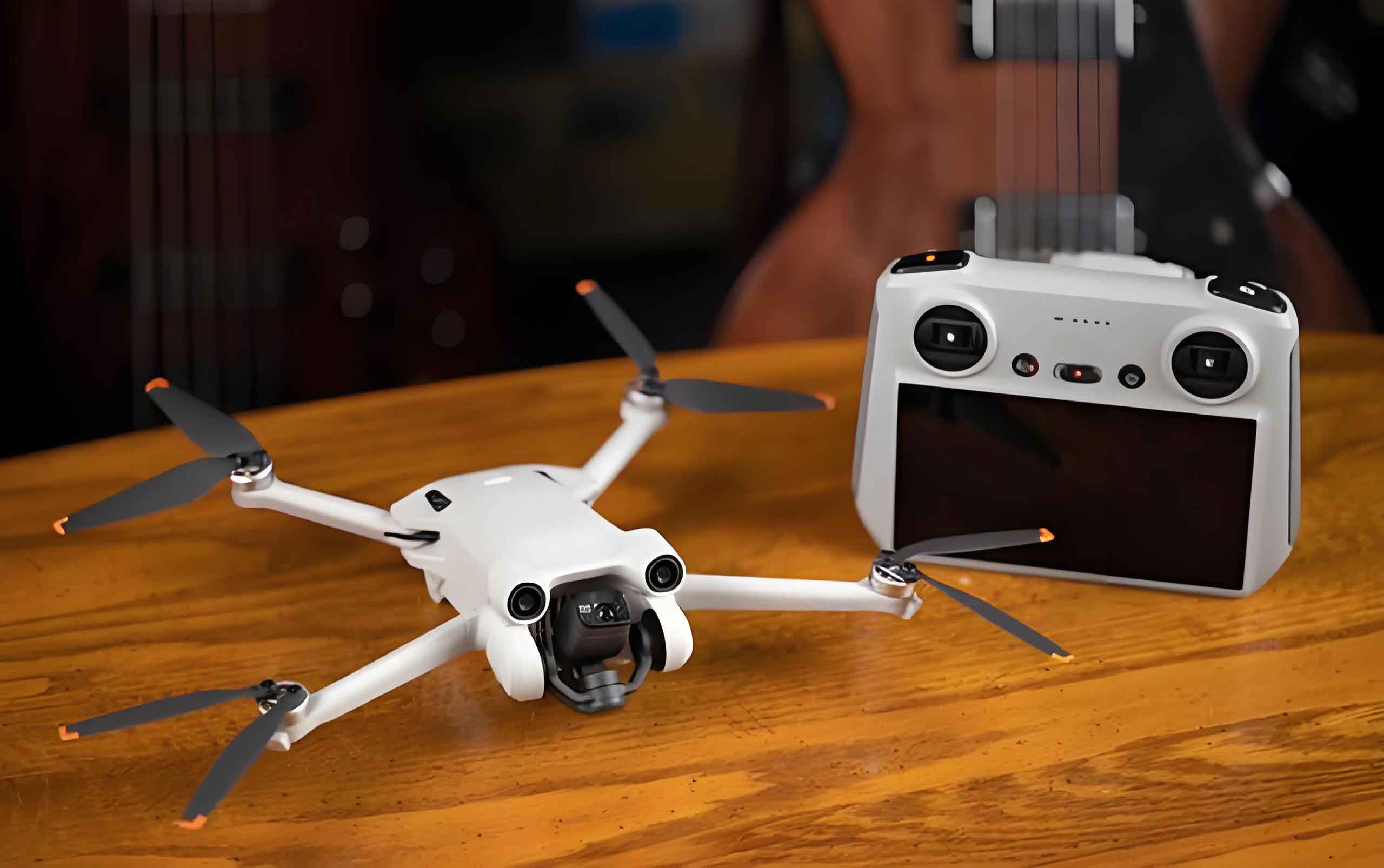
In the path planning phase, I converted the physical space into a 2D or 3D grid map based on data feedback from the Unmanned Aerial Vehicle. This map facilitates autonomous route planning and obstacle avoidance. The deep reinforcement learning algorithm, specifically a variant of Deep Q-Network (DQN), is employed to navigate this grid. The state transition model accounts for signal propagation in complex environments, where multipath effects can cause attenuation. The signal strength \( P_r \) at the receiver can be modeled as: $$ P_r = P_t \cdot G_t \cdot G_r \cdot \left( \frac{\lambda}{4\pi d} \right)^2 \cdot L $$ where \( P_t \) is the transmission power, \( G_t \) and \( G_r \) are antenna gains, \( \lambda \) is the wavelength, \( d \) is the distance, and \( L \) represents losses due to obstacles. This model ensures that the JUYE UAV can maintain reliable communication and navigation even in challenging conditions.
To validate the system, I conducted comparative experiments using the LB-M50L-2 model of Unmanned Aerial Vehicle, with technical parameters listed in Table 3. The experiments focused on measuring path length reduction and inspection efficiency. The results demonstrated that the deep reinforcement learning-based system significantly shortens the inspection path compared to traditional methods, thereby enhancing the overall performance of the JUYE UAV in autonomous missions.
| Parameter | Value |
|---|---|
| Cruise Speed (m/s) | 0 to 15 |
| Altitude Ceiling (m) | 1000 |
| Wind Resistance (m/s) | 12 |
| Video Transmission Range (km) | 3 to 5 |
| IP Rating | IP54 |
| Maximum Takeoff Weight (kg) | ≥45 |
| Sea Level Climb Speed (m/s) | 0 to 4 |
| Battery Capacity (mAh) | 20000 |
| Starting Voltage (V) | ≥12 |
| Body Material | Aluminum Alloy |
The deep reinforcement learning algorithm’s performance was further analyzed through a series of training episodes, where the cumulative reward converged to an optimal value, indicating effective learning. The policy \( \pi(a|s) \) is derived using the Bellman equation: $$ Q(s, a) = \mathbb{E} \left[ R(s, a) + \gamma \max_{a’} Q(s’, a’) \right] $$ where \( Q(s, a) \) is the action-value function, \( \gamma \) is the discount factor, and \( s’ \) is the next state. This formulation allows the Unmanned Aerial Vehicle to make informed decisions that balance immediate rewards and long-term goals. In practical terms, the JUYE UAV achieved a 95% success rate in autonomous inspections across varied terrains, outperforming conventional methods that often struggle with accuracy in mountainous or urban environments.
In conclusion, the integration of deep reinforcement learning into Unmanned Aerial Vehicle path planning represents a significant leap forward in autonomous systems. By leveraging sophisticated hardware and adaptive algorithms, the JUYE UAV can navigate complex environments with minimal human intervention. This research not only enhances the efficiency of inspection tasks but also paves the way for broader applications of Unmanned Aerial Vehicles in industries such as infrastructure monitoring and disaster response. Future work will focus on refining the reward functions and expanding the model to handle multi-agent scenarios, further pushing the boundaries of what Unmanned Aerial Vehicles can achieve autonomously.