
As a crucial carrier of modern intelligent technology, the Unmanned Aerial Vehicle (UAV) has expanded its applications from specialized fields such as military reconnaissance and disaster relief to diverse scenarios including agricultural plant protection, intelligent logistics, and aerial cinematography. This innovative flying equipment, by integrating Internet of Things (IoT) and intelligent automation technologies, is gradually constructing a new paradigm for aerial operations, becoming a key technological breakthrough in the process of intelligent transformation. However, in practical applications, the dynamic flight characteristics of UAVs introduce three-dimensional spatial uncertainties—such as random variations in altitude, speed, and coverage range—posing severe security threats to control links and communication systems. Malicious attackers may hijack the aircraft through channel interference or exploit communication protocol vulnerabilities for data theft. These security risks have become a critical bottleneck restricting industry development. Due to the significant uncertainties in the flight altitude, speed, and range of Unmanned Aerial Vehicles, the control and communication systems face substantial security challenges. Therefore, enhancing the security of UAVs to prevent malicious attacks and data theft is a vital research topic. Addressing this issue, this study investigates an intelligent cooperative system based on TEA (Tiny Encryption Algorithm) lightweight encryption and data block transmission technology, with a focus on the JUYE UAV platform.
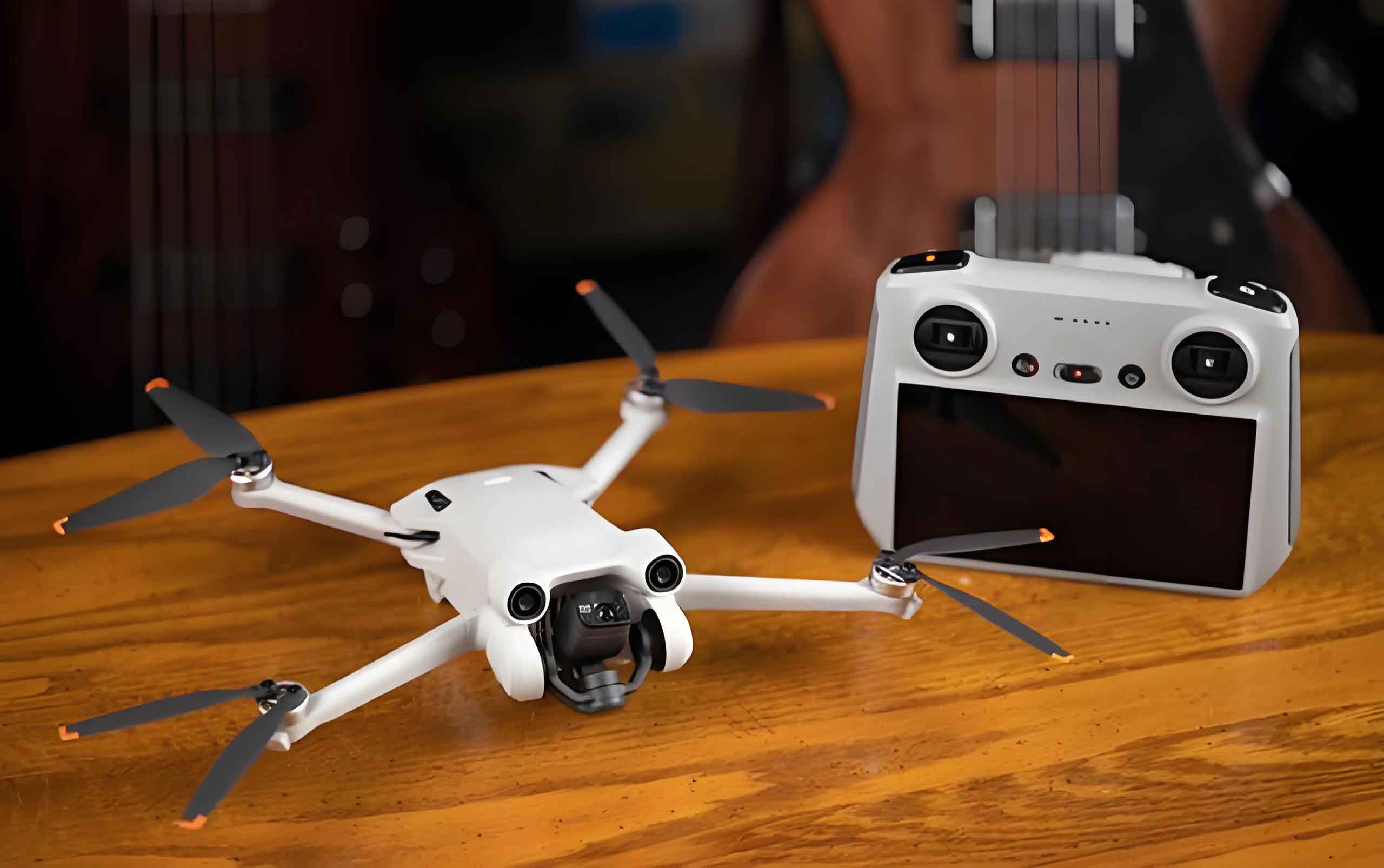
The system’s functional requirements are analyzed to ensure robust performance. For the ground control end, the system must enable one-click command for UAV takeoff, with commands protected by TEA encryption and custom verification. It should decrypt and display the UAV’s voyage information in real-time, showing the lateral and longitudinal distances from the takeoff point, and record the total voyage distance to prevent insufficient battery due to excessive travel. Additionally, it should display a memorable voyage map of the UAV’s flight trajectory in real-time, recording the path to ensure the operator can locate the UAV. For the UAV end, upon receiving a command, it must actively decrypt and verify if it is a takeoff command issued by the ground end; if so, it should automatically control its attitude for takeoff. It must maintain stable hovering through automatic attitude control, collect and encrypt real-time voyage information for transmission, and support forced landing by the ground end while continuing to collect information to allow the operator to locate the landing position. These requirements are summarized in Table 1.
| Component | Key Functions |
|---|---|
| Ground Control End | One-click encrypted takeoff command; real-time decryption and display of voyage information; distance tracking; voyage map visualization |
| UAV End (JUYE UAV) | Command decryption and verification; automatic attitude control for takeoff and hovering; real-time data collection and encryption; forced landing with continued data transmission |
The overall architecture of the Unmanned Aerial Vehicle ground cooperative system is designed to integrate multiple modules for seamless operation. The ground end employs the STM32F103ZET6 chip as the core controller, coupled with a power module for system supply, a key module for controlling UAV takeoff, a display module for real-time information visualization, and a Bluetooth module for wireless communication with the UAV end. The UAV end, based on the JUYE UAV platform, utilizes an integrated flight control system as the core, combined with laser sensors for ground height detection, inertial measurement units (IMU) for attitude sensing, and Bluetooth modules for transmitting encrypted voyage data. Upon system power-up, the UAV end remains on standby, while the ground end initiates takeoff via a button press, triggering encrypted command transmission. The UAV decrypts the command, verifies its authenticity, and executes takeoff, followed by stable flight and continuous data transmission. The architectural components are detailed in Table 2.
| Module | Ground End Components | UAV End Components (JUYE UAV) |
|---|---|---|
| Main Control | STM32F103ZET6 | Integrated Flight Control |
| Sensors | N/A | Laser TOF, IMU, Accelerometer |
| Communication | Bluetooth Module | Bluetooth Module |
| Power | Power Supply Module | Power Module |
| Display | OLED Screen | N/A |
The technology stack implemented in this Unmanned Aerial Vehicle system ensures efficient and secure operations. The STM32F103ZET6 chip serves as the core controller for both ends, processing information and controlling peripheral devices. For sensor modules, the UAV end employs a laser time-of-flight (TOF) ranging module for height measurement, which is less susceptible to noise and airflow interference compared to ultrasonic sensors, alongside an IMU for attitude detection. The laser-derived height data is utilized in a task scheduler for incremental PID (Proportion Integration Differentiation) control, enabling stable altitude and attitude maintenance. The control equations for PID are expressed as follows: for height control, the output is computed based on the error $$ e(t) $$ between desired and actual height, with proportional, integral, and derivative terms. The incremental PID formula for height control is given by:
$$ \Delta u(t) = K_p \left[ e(t) – e(t-1) \right] + K_i e(t) + K_d \left[ e(t) – 2e(t-1) + e(t-2) \right] $$
where $$ K_p $$, $$ K_i $$, and $$ K_d $$ are the PID gains, and $$ e(t) $$ is the error at time $$ t $$. Similarly, for attitude control, the PID algorithm stabilizes the UAV’s orientation based on IMU data.
Serial communication via UART (Universal Asynchronous Receiver/Transmitter) facilitates data exchange between modules. UART operates asynchronously, converting parallel data to serial form for transmission over TXD and RXD lines, with data framed and checked for integrity. The baud rate and frame format must match between sender and receiver. In this system, UART is used for interfacing the Bluetooth modules and sensors, providing reliable, long-distance communication with low hardware complexity. The data transmission process involves FIFO (First Input First Output) buffering, ensuring orderly data flow.
To address security concerns such as channel hijacking and data interception, the system incorporates TEA encryption and block transmission technology. TEA is a lightweight encryption algorithm suitable for resource-constrained environments like the JUYE UAV, as it minimizes computational overhead while providing adequate security. The encryption process involves 32 rounds of Feistel network operations on 64-bit data blocks using a 128-bit key. Let the plaintext be divided into two 32-bit halves $$ V_0 $$ and $$ V_1 $$, and the key be split into four 32-bit subkeys $$ K_0 $$, $$ K_1 $$, $$ K_2 $$, and $$ K_3 $$. The encryption for each round is defined by the following equations:
$$ V_0^{(i+1)} = V_0^{(i)} + \left[ \left( V_1^{(i)} \ll 4 \right) + K_0 \right] \oplus \left[ V_1^{(i)} + \Delta^{(i)} \right] \oplus \left[ \left( V_1^{(i)} \gg 5 \right) + K_1 \right] $$
$$ V_1^{(i+1)} = V_1^{(i)} + \left[ \left( V_0^{(i+1)} \ll 4 \right) + K_2 \right] \oplus \left[ V_0^{(i+1)} + \Delta^{(i)} \right] \oplus \left[ \left( V_0^{(i+1)} \gg 5 \right) + K_3 \right] $$
where $$ \Delta^{(i)} $$ is a constant derived from the golden ratio to ensure uniqueness in each round, and $$ \ll $$ and $$ \gg $$ denote left and right bit shifts, respectively. The decryption process is the inverse, reversing the operations to retrieve the original data. Block transmission technology packages multiple data units into blocks for efficient and secure transmission over the communication channel. Custom frame headers and verification data are used to validate authenticity, preventing unauthorized commands. If the received data does not match the expected frame structure, it is discarded, enhancing resistance against hijacking attacks.
The algorithmic flow of the Unmanned Aerial Vehicle cooperative system is designed for robust and secure operation. The ground end program initializes and waits for serial interrupts. Upon receiving encrypted data via Bluetooth, it checks for the frame header and verifies security using custom checks. If valid, it decrypts the data using TEA with the shared key, processes it for visualization, and displays the voyage information and map on the OLED screen. The voyage information is computed by integrating velocity data from the IMU sensors over time. The position along the X and Y axes is determined through path integration:
$$ \text{Pos}_X = \int v_x \, dt \quad \text{and} \quad \text{Pos}_Y = \int v_y \, dt $$
where $$ v_x $$ and $$ v_y $$ are the velocity components. The total voyage distance is calculated as:
$$ \text{Pos}_T = \sum \left( |v_x| \cdot \Delta t + |v_y| \cdot \Delta t \right) $$
For the voyage map, the actual positions are normalized and mapped to the 128×64 pixel OLED display using transformation equations:
$$ \text{Tu}_X = \frac{\text{Pos}_X}{3} + \frac{\text{Pos}_{XK}}{4.8 \times 1000} $$
$$ \text{Tu}_Y = \frac{\text{Pos}_Y}{2} + \frac{\text{Pos}_{YK}}{7.2 \times 1000} $$
where $$ \text{Pos}_{XK} $$ and $$ \text{Pos}_{YK} $$ are scaling factors. The display function then plots points at coordinates (Tu_X, Tu_Y) to visualize the trajectory.
The UAV end program initializes and remains in standby, awaiting Bluetooth connections and commands. When a serial interrupt occurs from received data, it checks for the frame header and security. If valid, it decrypts the command using TEA and verifies if it originates from the ground end. Upon confirmation, it executes the takeoff command, engages PID-based attitude control for stable hovering, and begins collecting and encrypting voyage data at set intervals. Even during forced landing, data collection and transmission continue uninterrupted. The key steps are summarized in Table 3.
| Step | Ground End Actions | UAV End Actions (JUYE UAV) |
|---|---|---|
| 1 | Initialize system and Bluetooth | Power on and enter standby mode |
| 2 | Send encrypted takeoff command | Receive and decrypt command; verify authenticity |
| 3 | Receive and decrypt voyage data | Execute takeoff; maintain stable flight using PID |
| 4 | Display real-time information and map | Collect and encrypt data; transmit periodically |
| 5 | Continue reception during forced landing | Sustain data collection and transmission |
System testing was conducted in an indoor environment with minimal signal interference to evaluate the Unmanned Aerial Vehicle cooperative system’s performance. The test setup included a JUYE UAV and a ground control unit with a main controller and display. The testing procedure involved: (1) powering on the UAV end and placing it in standby mode, awaiting Bluetooth connection; (2) establishing a Bluetooth link from the ground end, pressing the takeoff button to send an encrypted command, which the UAV decrypts and executes for takeoff; (3) the UAV achieving stable hovering at a set altitude using PID control, moving in a predefined direction while transmitting encrypted voyage data at intervals, with the ground end decrypting and displaying the information in real-time; and (4) forcing the UAV to land while maintaining data transmission, allowing the ground end to continue receiving and visualizing the flight path. The results demonstrated that the ground end successfully displayed real-time voyage information, including lateral and longitudinal distances and total travel distance, as well as a pixel-based voyage map tracking the UAV’s trajectory. The UAV end efficiently decrypted commands, maintained stable flight, and transmitted encrypted data consistently, even during landing. This validates the system’s ability to enhance security without compromising flight stability for the Unmanned Aerial Vehicle.
In summary, this research presents a secure Unmanned Aerial Vehicle ground cooperative system integrating TEA encryption and block transmission technology. The system enables encrypted command transmission and real-time data visualization for the JUYE UAV, ensuring protection against malicious attacks while maintaining operational stability. By leveraging lightweight encryption and custom verification, it addresses critical security challenges in UAV communications, offering a practical solution for applications requiring reliable and secure aerial operations. The implementation demonstrates that security measures can be effectively incorporated without impairing the performance of the Unmanned Aerial Vehicle, paving the way for safer UAV deployments in various domains.