
In recent years, the rapid evolution of unmanned aerial vehicle technology has necessitated advanced countermeasures, particularly in electromagnetic warfare. High-power microwave systems represent a potent solution for disrupting or disabling Unmanned Aerial Vehicle operations through backdoor coupling effects. This study focuses on the electromagnetic coupling characteristics of a representative Unmanned Aerial Vehicle, specifically the JUYE UAV, under HPM irradiation. We aim to elucidate the electromagnetic response and damage mechanisms across varying frequencies and incidence angles, leveraging a dual-coordinate system model that incorporates flight dynamics and attitude variations. Our approach employs COMSOL Multiphysics simulations to systematically analyze electric field and current distributions on the UAV fuselage and internal flight control motherboard within the 1–18 GHz frequency range. The findings underscore the critical role of aperture structures in facilitating backdoor coupling and identify resonant frequencies that exacerbate vulnerability, providing a foundation for optimizing HPM-based anti-Unmanned Aerial Vehicle strategies.
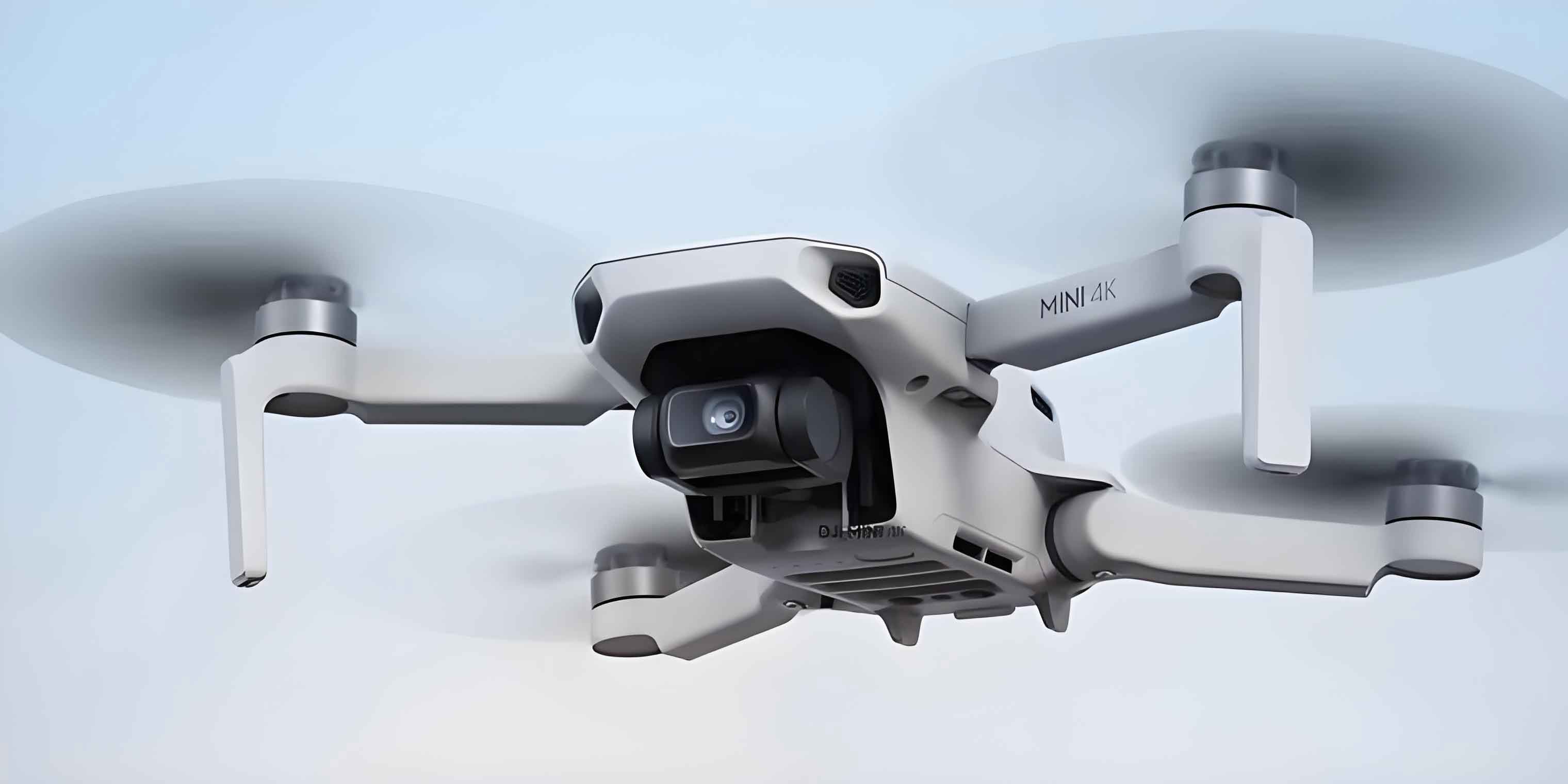
The proliferation of Unmanned Aerial Vehicle systems in modern conflicts and civilian applications has intensified the demand for effective electromagnetic countermeasures. High-power microwave weapons, capable of delivering intense electromagnetic pulses, target electronic systems through both front-door and backdoor coupling pathways. For the JUYE UAV, backdoor coupling via apertures and seams in the fuselage presents a significant threat. We developed a comprehensive model to simulate these effects, accounting for the dynamic nature of Unmanned Aerial Vehicle flight. The dual-coordinate system integrates Earth-fixed and body-fixed frames, enabling the analysis of HPM interactions under realistic flight conditions. This model discretizes the flight trajectory into static snapshots, approximating continuous motion while focusing on key parameters such as frequency and incidence angle.
Our simulation framework begins with the establishment of the electromagnetic environment. The HPM source is characterized by a peak power output $P_t = 5 \text{GW}$ and antenna gain $G_t = 40 \text{dB}$. The electric field intensity at a distance $R$ from the source is given by:
$$E = \frac{\sqrt{30 P_t G_t}}{R}$$
For instance, at $R = 3 \text{km}$, the field strength approximates $13 \text{kV/m}$. This field is treated as a plane wave in the far-field region, with the boundary defined by:
$$R = \frac{2D^2}{\lambda}$$
where $D = 3 \text{m}$ is the antenna aperture and $\lambda$ is the wavelength. This ensures that simulations accurately represent real-world scenarios for frequencies between 1 and 18 GHz.
The kinematic model of the Unmanned Aerial Vehicle incorporates roll ($\phi$), pitch ($\theta$), and yaw ($\psi$) angles. The velocity vector $\mathbf{v}$ in the Earth-fixed frame is expressed as:
$$\mathbf{v} = \begin{bmatrix} v_x \\ v_y \\ v_z \end{bmatrix} = \begin{bmatrix} -v \cos \phi \sin \psi \\ -v \cos \phi \cos \psi \\ v \sin \phi \end{bmatrix}$$
Rotation matrices facilitate the transformation between coordinate systems. The rotation about the x-axis is:
$$\mathbf{R}_x = \begin{bmatrix} 1 & 0 & 0 \\ 0 & \cos \phi’ & \sin \phi’ \\ 0 & -\sin \phi’ & \cos \phi’ \end{bmatrix}$$
about the y-axis:
$$\mathbf{R}_y = \begin{bmatrix} \cos \theta’ & 0 & -\sin \theta’ \\ 0 & 1 & 0 \\ \sin \theta’ & 0 & \cos \theta’ \end{bmatrix}$$
and about the z-axis:
$$\mathbf{R}_z = \begin{bmatrix} \cos \psi’ & \sin \psi’ & 0 \\ -\sin \psi’ & \cos \psi’ & 0 \\ 0 & 0 & 1 \end{bmatrix}$$
The composite Euler rotation matrix $\mathbf{R}_{zxy}$ is then:
$$\mathbf{R}_{zxy} = \mathbf{R}_x \mathbf{R}_y \mathbf{R}_z = \begin{bmatrix} \cos \psi’ \cos \theta’ + \sin \theta’ \sin \phi’ \sin \psi’ & \cos \phi’ \sin \psi’ & \cos \theta’ \sin \phi’ \sin \psi’ – \sin \theta’ \sin \psi’ \\ -\cos \theta’ \sin \psi’ + \cos \psi’ \sin \phi’ \sin \theta’ & \cos \phi’ \cos \psi’ & \cos \psi’ \cos \theta’ \sin \phi’ + \sin \theta’ \sin \psi’ \\ \cos \phi’ \sin \theta’ & -\sin \phi’ & \cos \theta’ \cos \phi’ \end{bmatrix}$$
The wave vector $\mathbf{k}$ for HPM irradiation, with an incidence angle $\alpha’$, is defined as:
$$\mathbf{k} = \begin{bmatrix} \sin \alpha’ \sin \psi” \\ \sin \alpha’ \cos \psi” \\ \cos \alpha’ \end{bmatrix}$$
This formulation allows us to simulate the Unmanned Aerial Vehicle’s exposure to HPM under various orientations, critical for assessing coupling effects.
We modeled the JUYE UAV with a fuselage length of 185 mm and a wingspan of 300 mm, constructed from carbon fiber composite. The focus was on the backdoor coupling pathways, particularly the side apertures measuring 16 mm × 8 mm, which serve as parachute deployment channels. These apertures are instrumental in electromagnetic energy penetration. The internal flight control motherboard, housing critical components like the FM25V05 chip, was included to evaluate subsystem-level responses. The skin depth $\delta$, which influences current distribution, is calculated as:
$$\delta = \sqrt{\frac{2}{\omega \mu \sigma}}$$
where $\omega$ is the angular frequency, $\mu$ is the permeability, and $\sigma$ is the conductivity. This depth decreases with increasing frequency, concentrating currents on the surface and enhancing coupling.
Our analysis of the Unmanned Aerial Vehicle’s external electric field distribution revealed significant frequency-dependent behavior. At lower frequencies, such as 1 GHz, the wavelength is large relative to the UAV dimensions, resulting in minimal perturbation of the incident field. As frequency increases, diffraction effects diminish, and the field interaction intensifies. The table below summarizes the maximum surface electric field on the fuselage for select frequencies at an incidence angle of 20°:
| Frequency (GHz) | Max Surface Electric Field (kV/m) |
|---|---|
| 1 | 20.2 |
| 8 | 48.9 |
| 14 | 89.7 |
| 18 | 35.8 |
Incidence angle also plays a crucial role. As the angle increases from 0° to 90°, the projected area of the electric field vector on the fuselage expands, amplifying coupling. For example, at 8 GHz, the maximum surface electric field rises from approximately 20 kV/m at 0° to over 48 kV/m at 60°. This trend is consistent across frequencies, underscoring the importance of orientation in HPM susceptibility.
The surface current density on the Unmanned Aerial Vehicle fuselage exhibits resonant behavior near 14 GHz, attributable to the aperture dimensions aligning with Ku-band waveguide characteristics. The current density $J$ can be related to the electric field $E$ and material properties by:
$$J = \sigma E$$
Simulations indicate a sharp peak in current density at 14 GHz, exceeding values at adjacent frequencies. The table below illustrates the maximum surface current density for various frequencies at 20° incidence:
| Frequency (GHz) | Max Surface Current Density (A/cm²) |
|---|---|
| 1 | 1.8 × 10⁷ |
| 8 | 3.0 × 10⁸ |
| 14 | 1.1 × 10⁹ |
| 18 | 4.0 × 10⁸ |
This resonance at 14 GHz highlights a critical vulnerability in the JUYE UAV design, where aperture coupling dominates the electromagnetic response.
Internally, the flight control motherboard of the Unmanned Aerial Vehicle demonstrates sensitivity to HPM frequencies. The electric field and current distributions on the motherboard are largely independent of incidence angle, as the side apertures act as primary coupling paths, effectively functioning as antennas. The maximum surface electric field on the motherboard remains relatively stable across angles but varies significantly with frequency. For instance, at 20° incidence, the field peaks at 1.21 MV/m at 14 GHz, compared to 0.144 MV/m at 1 GHz. The current density follows a similar pattern, with maxima occurring at resonant frequencies.
We evaluated the FM25V05 chip on the flight control motherboard, focusing on pin voltages. The supply pin Vdd has an operational range of 2–3.6 V, while the data input pin SI tolerates transient voltages below 2 V. The induced voltages under HPM exposure were calculated using the formula:
$$V = \int \mathbf{E} \cdot d\mathbf{l}$$
where the integral is taken along the pin pathways. The results for selected frequencies at 20° incidence are:
| Frequency (GHz) | Vdd Voltage (V) | SI Voltage (V) |
|---|---|---|
| 12 | 1.5 | 0.8 |
| 14 | 6.5 | 6.98 |
| 15 | 4.2 | 3.1 |
| 16 | 5.1 | 2.4 |
| 18 | 21.87 | 1.9 |
At 14, 15, 16, and 18 GHz, the Vdd voltage exceeds the 3.6 V threshold, with the highest value of 21.868 V at 18 GHz, indicating a high risk of functional failure. The SI pin surpasses 2 V at 14 and 15 GHz, further compromising the chip’s integrity. These findings emphasize the frequency-selective nature of HPM damage in Unmanned Aerial Vehicle systems.
The comprehensive simulation of the JUYE UAV under HPM irradiation reveals that backdoor coupling through fuselage apertures is the dominant mechanism for internal damage. Frequency and incidence angle critically influence the electromagnetic response, with resonant conditions at specific frequencies like 14 GHz exacerbating vulnerability. The flight control motherboard, particularly the FM25V05 chip, is prone to overvoltage conditions at multiple frequencies, leading to potential system failure. This study provides valuable insights for designing HPM-based countermeasures against Unmanned Aerial Vehicle threats, enabling the selection of optimal frequencies and attack angles. Future work should explore multi-angle, multi-target scenarios and experimental validation to enhance the practicality of these findings.
In conclusion, the electromagnetic modeling and simulation of the JUYE Unmanned Aerial Vehicle under high-power microwave exposure demonstrate the intricate relationship between external irradiation and internal component responses. The dual-coordinate system approach effectively captures the dynamic behavior of the Unmanned Aerial Vehicle, while the逐级毁伤 (gradual damage) analysis delineates the energy transmission chain from space to chip level. The identification of critical frequencies and coupling pathways aids in the development of robust anti-Unmanned Aerial Vehicle strategies, ensuring the efficacy of HPM systems in real-world applications. The continued advancement of such simulations will be pivotal in addressing the evolving challenges posed by unmanned aerial vehicles in electromagnetic warfare.