
As a professional engaged in mining surveying and environmental monitoring, I have extensively utilized multirotor drone technology to address the challenges of geological mapping and environmental assessment in metal mining areas. The integration of multirotor drones has revolutionized traditional methods, offering unparalleled efficiency, accuracy, and safety. In this article, I will delve into the technical principles, performance metrics, and practical applications of multirotor drones in mining surveys, supported by tables, formulas, and real-world insights. The multirotor drone platform, with its agility and advanced sensors, enables comprehensive data collection in complex terrains, making it indispensable for modern mining operations.
The core of multirotor drone measurement technology lies in its integration of unmanned aerial systems, image fusion processing, data computation, and real-time kinematic positioning. Initially, vertical photography dominated drone-based surveys, but it often resulted in data gaps due to limited perspectives. With advancements in tilt photography, multirotor drones now employ multi-angle imaging systems that capture detailed surface textures, enhancing the realism and precision of 3D models. For instance, the photogrammetric process involves flight planning, image preprocessing (including distortion correction and enhancement), aerial triangulation, and topographic map editing. A key formula in aerial triangulation is the collinearity equation, which relates image coordinates to ground coordinates: $$x = -f \frac{X – X_0}{Z – Z_0} + x_p, \quad y = -f \frac{Y – Y_0}{Z – Z_0} + y_p$$ where (x, y) are image coordinates, (X, Y, Z) are ground coordinates, (X₀, Y₀, Z₀) is the perspective center, f is the focal length, and (x_p, y_p) are principal point offsets. This ensures accurate georeferencing for mining applications.
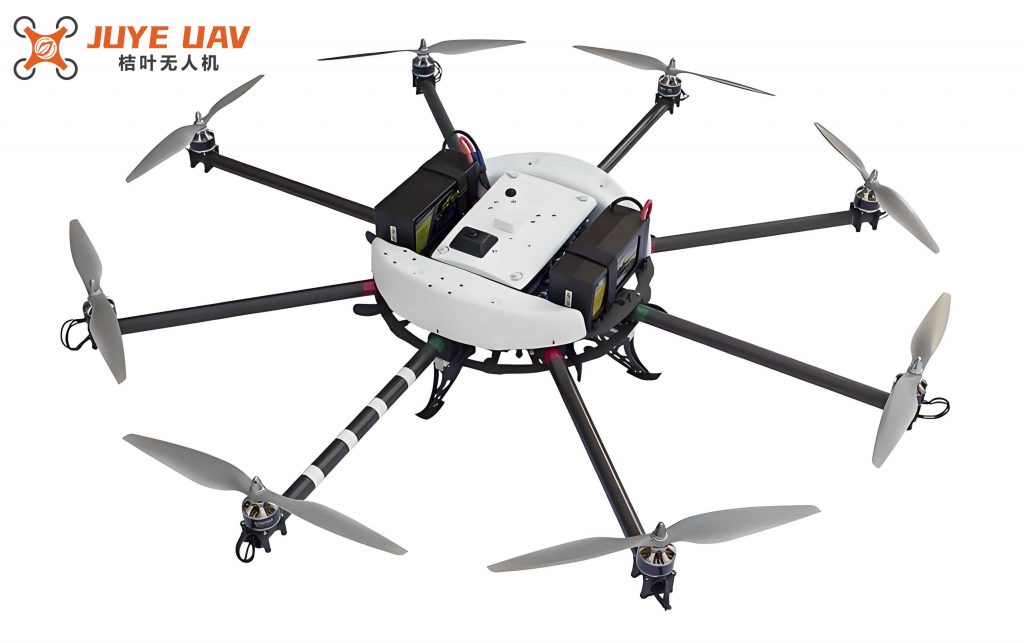
Multirotor drones excel in various performance aspects compared to traditional fixed-wing or manned aircraft. The following table summarizes key performance metrics based on my field experiences:
| Performance Aspect | Multirotor Drone | Fixed-Wing Drone | Manned Helicopter |
|---|---|---|---|
| Operational Simplicity | High (hovering capability, easy controls) | Moderate (requires runway or launcher) | Low (complex piloting and maintenance) |
| Reliability | High (minimal moving parts, low wear) | Moderate (mechanical stress on wings) | Low (high maintenance and fuel dependency) |
| Serviceability | High (easy component replacement) | Moderate (technical assembly needed) | Low (specialized tools and training) |
| Payload Capacity | Moderate (improving with lightweight materials) | High (suitable for heavier sensors) | High (can carry large equipment) |
In terms of operational performance, the multirotor drone stands out due to its ability to hover and maneuver in tight spaces, which is crucial for mining sites with irregular topography. The reliability of a multirotor drone is enhanced by its simple mechanical structure, reducing the risk of failure during missions. For instance, the mean time between failures (MTBF) for a typical multirotor drone can be modeled as: $$MTBF = \frac{1}{\lambda}$$ where λ is the failure rate, often lower for multirotor systems due to fewer moving parts. Additionally, the serviceability of a multirotor drone allows for rapid field repairs, such as swapping motors or propellers, minimizing downtime. Payload capacity, while initially a limitation, has improved with advancements in battery technology and composite materials, enabling the integration of high-resolution cameras and LiDAR sensors on multirotor drone platforms.
The application of multirotor drones in metal mining environmental surveys plays a pivotal role in obtaining comprehensive data, predicting geological hazards, and monitoring ecological impacts. Firstly, multirotor drones facilitate the collection of high-resolution imagery and topographic data across vast mining areas, which would be time-consuming with manual methods. For example, using a multirotor drone equipped with a 24-megapixel sensor, we can capture multispectral images to assess vegetation health and soil erosion around mines. The data volume V collected per flight can be estimated as: $$V = N \times R \times T$$ where N is the number of images, R is the resolution per image, and T is the flight duration. This enables the creation of detailed digital elevation models (DEMs) and 3D reconstructions, essential for planning and mitigation.
Secondly, multirotor drones aid in predicting地质灾害 such as landslides and subsidence. By analyzing slope stability through photogrammetric data, we can apply the factor of safety (FoS) formula: $$FoS = \frac{\sum (c + \sigma \tan \phi)}{\sum \tau}$$ where c is cohesion, σ is normal stress, φ is the angle of internal friction, and τ is shear stress. A FoS below 1 indicates potential failure, allowing for proactive measures. In one case, a multirotor drone survey identified fissures in a mine slope, leading to early reinforcement and avoiding a catastrophic collapse. The multirotor drone’s ability to perform frequent surveys ensures continuous monitoring of such hazards.
Thirdly, environmental monitoring with multirotor drones supports compliance with “green mining” policies. They track air quality, water contamination, and land degradation by capturing time-series data. For instance, the normalized difference vegetation index (NDVI) derived from drone imagery quantifies plant health: $$NDVI = \frac{NIR – Red}{NIR + Red}$$ where NIR is near-infrared reflectance and Red is red light reflectance. This helps in assessing the impact of mining activities on local ecosystems and guiding restoration efforts. The multirotor drone’s versatility makes it ideal for these tasks, as it can adapt to changing conditions and provide real-time insights.
The fieldwork process for deploying multirotor drones in mining surveys involves several critical steps to ensure safety and data accuracy. Initially, we conduct a pre-flight assessment, including site reconnaissance and risk analysis. Key considerations include weather conditions, obstacle avoidance, and ground control point (GCP) placement. GCPs are essential for georeferencing and can be distributed using a stratified random sampling approach to minimize errors. The following table outlines the main stages of external operations:
| Stage | Description | Tools/Methods |
|---|---|---|
| 1. Flight Planning | Define survey area, resolution, and flight paths (e.g., serpentine or circular routes) | GIS software, flight control apps |
| 2. GCP Setup | Place ground control points evenly across the site for accurate referencing | GPS receivers, surveying poles |
| 3. Drone Deployment | Execute flight, monitor real-time data, and ensure stable hovering and image capture | Multirotor drone with gimbal-stabilized camera |
| 4. Data Validation | Check image quality, coverage, and POS data for completeness | On-board sensors, post-processing software |
During flight operations, the multirotor drone’s autonomy allows it to follow predefined waypoints while adjusting for wind and obstacles. The flight time T_max for a multirotor drone can be approximated as: $$T_{max} = \frac{C}{P \cdot \eta}$$ where C is battery capacity, P is power consumption, and η is efficiency factor. This ensures optimal coverage without frequent landings. Safety protocols, such as maintaining line-of-sight and avoiding no-fly zones, are strictly adhered to when operating the multirotor drone.
Internal data processing for multirotor drone surveys involves transforming raw imagery into actionable insights. The workflow begins with data preparation, where we clean POS data and extract metadata from images. Next, aerial triangulation is performed using bundle adjustment techniques to refine spatial positions. The error minimization in bundle adjustment can be expressed as: $$\min \sum_{i=1}^{n} \left( \mathbf{x}_i – \mathbf{x}_i’ \right)^2$$ where \(\mathbf{x}_i\) are observed image points and \(\mathbf{x}_i’\) are projected points. This step is crucial for generating accurate 3D models. Subsequently, we construct measurement models in a local ENU (East-North-Up) coordinate system, facilitating the creation of digital terrain models (DTMs) and orthomosaics. Finally, topographic map editing involves automated feature extraction and manual annotation of elements like contours, buildings, and hydrology. The use of multirotor drone data streamlines this process, reducing human error and time investment.
In conclusion, the adoption of multirotor drone technology in mining surveying has proven transformative, offering a sustainable solution to environmental challenges. The multirotor drone’s ability to deliver high-frequency, comprehensive data supports hazard prediction, ecological monitoring, and regulatory compliance. Through rigorous fieldwork and advanced data processing, we can minimize the environmental footprint of mining activities while enhancing operational safety. As multirotor drone systems continue to evolve with improvements in battery life, sensor resolution, and AI integration, their role in achieving “green mining” objectives will only expand. I firmly believe that the multirotor drone is not just a tool but a cornerstone of future mining surveys, driving innovation and environmental stewardship.