
In the field of unmanned aerial systems, the ground station serves as a critical interface for monitoring and controlling multirotor drones. As a developer focused on enhancing the全天候 and全维度 capabilities of these systems, I have designed a ground station using C++ to achieve robust attitude control, real-time monitoring, and fault detection. This system integrates user operation, data communication, and data management subsystems to ensure reliable performance in diverse environments. The multirotor drone, as the core asset, requires precise handling of flight data, and our ground station addresses this through efficient C++-based graphical development. In this article, I will detail the system’s architecture, implementation, and validation, emphasizing the use of formulas and tables to summarize key aspects. The design aims to improve communication efficiency and control accuracy for multirotor drones, leveraging the MAVLink protocol and custom data handling mechanisms.
The ground control system software is structured around three main subsystems: user operation, data communication, and data management. This division allows for modular development and easier maintenance. For the multirotor drone, the user operation subsystem provides interfaces for configuration, task planning, flight monitoring, and payload control. The data communication subsystem handles the exchange of information between the ground station and the multirotor drone using the MAVLink protocol, ensuring real-time data transfer. Meanwhile, the data management subsystem stores and analyzes flight data, such as waypoints and status information. Throughout the design, I have prioritized scalability and reliability, incorporating C++ features like object-oriented programming and efficient memory management. The following sections elaborate on each subsystem, supported by technical details, formulas, and tables to illustrate the multirotor drone’s integration.
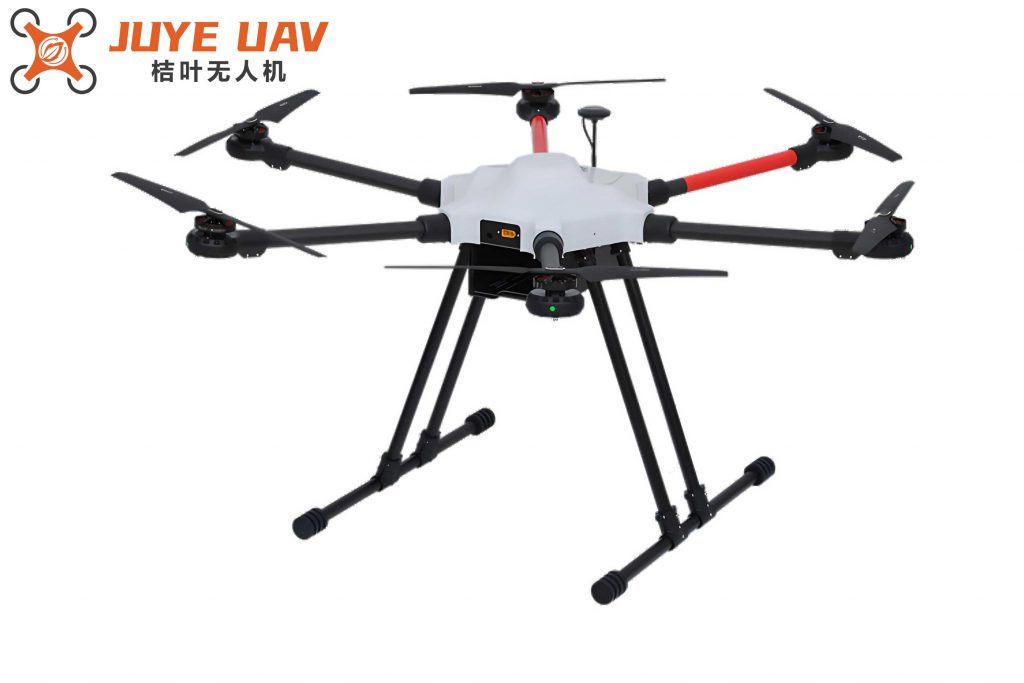
The user operation subsystem is designed with four primary interfaces to facilitate interaction with the multirotor drone. First, the general configuration interface allows users to set language, units, maps, data links, and log playback. This customization ensures that the ground station adapts to various operational needs for the multirotor drone. Second, the task planning interface enables the creation and editing of waypoints to form complete mission routes. Users can add, modify, or delete waypoints, which are then transmitted to the multirotor drone for autonomous flight. Third, the flight monitoring interface displays real-time data on the multirotor drone’s attitude, position, and power distribution through virtual instruments and digital readouts. This interface helps operators track the multirotor drone’s status and respond to anomalies promptly. Fourth, the payload control interface allows real-time manipulation of mission equipment, ensuring that tasks like imaging or sensing are executed accurately. Each interface is built using C++ widgets and event-driven programming to provide a responsive experience. For instance, the flight monitoring interface uses mathematical models to represent attitude data, such as Euler angles, which can be expressed as: $$ \phi = \arctan\left(\frac{2(q_0 q_1 + q_2 q_3)}{1 – 2(q_1^2 + q_2^2)}\right) $$ where $\phi$ is the roll angle, and $q_0, q_1, q_2, q_3$ are quaternion components derived from the multirotor drone’s sensor data. This formula enables precise attitude visualization, enhancing the control of the multirotor drone.
Data communication is vital for maintaining a stable link between the ground station and the multirotor drone. I implemented this subsystem using the MAVLink protocol, which offers a lightweight, binary format for efficient data transmission. The protocol’s message structure includes a header, payload, and checksum, as summarized in Table 1. For the multirotor drone, uplink frames carry commands from the ground station, such as waypoints and control signals, while downlink frames transmit status information like attitude, GPS coordinates, and battery levels. The checksum ensures data integrity and is computed using a CRC-16 algorithm with the polynomial: $$ G(x) = x^{16} + x^{12} + x^5 + 1 $$ This calculation verifies each frame, reducing errors in multirotor drone operations. Serial communication is employed for data exchange, with threads handling reading and writing operations. The workflow for reading data involves checking the serial port for incoming frames, validating them with the checksum, and parsing the payload for display. Conversely, writing data involves packaging commands into MAVLink frames and sending them to the multirotor drone. To optimize performance, I used C++ threading and buffer management, which minimizes latency. The data flow for downlink information, as shown in Figure 2, includes paths for flight state and power data, which are processed and displayed. This approach ensures that the multirotor drone receives timely instructions and that operators have up-to-date information.
| Index | Content | Description |
|---|---|---|
| 0 | Start | Frame start byte |
| 1 | Payload Length | Length of payload in bytes |
| 2 | Packet Sequence | Sequence number for tracking |
| 3 | System ID | Identifier of the multirotor drone system |
| 4 | Component ID | Identifier of the component |
| 5 | Message ID | Type of message for the multirotor drone |
| 6 to n+6 | Payload | Data specific to the multirotor drone |
| n+7 | Checksum (Low Byte) | Lower byte of CRC checksum |
| n+8 | Checksum (High Byte) | Higher byte of CRC checksum |
The data management subsystem handles the storage and analysis of information collected from the multirotor drone. I developed a C++ class structure to manage datasets, including flight states, waypoints, geofences, and map tiles. For example, the DroneData struct stores attributes like drone ID, latitude, longitude, and altitude, while the GroundStationDataManager class provides methods for adding and displaying data. This subsystem employs algorithms for data compression and encryption to protect multirotor drone information during storage. Analysis modules process historical data to identify trends, such as battery degradation or flight path efficiency. A key formula used in data analysis is the Haversine formula for calculating distances between waypoints for the multirotor drone: $$ d = 2r \arcsin\left(\sqrt{\sin^2\left(\frac{\Delta\phi}{2}\right) + \cos(\phi_1) \cos(\phi_2) \sin^2\left(\frac{\Delta\lambda}{2}\right)}\right) $$ where $d$ is the distance, $r$ is Earth’s radius, $\phi$ is latitude, and $\lambda$ is longitude. This helps in evaluating the multirotor drone’s navigation accuracy. Additionally, I implemented real-time data filtering using a Kalman filter to reduce noise in sensor readings from the multirotor drone. The state update equation is: $$ \hat{x}_{k|k} = \hat{x}_{k|k-1} + K_k(z_k – H\hat{x}_{k|k-1}) $$ where $\hat{x}$ is the estimated state, $K$ is the Kalman gain, $z$ is the measurement, and $H$ is the observation matrix. This enhances the reliability of the multirotor drone’s position data. Table 2 summarizes the data types managed by this subsystem, highlighting their roles in multirotor drone operations.
| Data Type | Description | Usage in Multirotor Drone |
|---|---|---|
| Flight State Data | Real-time attitude, velocity, and altitude | Monitoring and control of the multirotor drone |
| Waypoint and Route Data | Predefined paths and missions | Autonomous navigation of the multirotor drone |
| Geofence Data | Virtual boundaries for flight areas | Safety compliance for the multirotor drone |
| Landmark Data | Reference points for tasks | Payload operation in the multirotor drone |
| Map Tile Data | Geographical information | Visualization and planning for the multirotor drone |
To validate the ground station’s performance, I conducted extensive tests with a multirotor electric drone. The experiments involved multiple flight sessions, totaling 50 hours over 10 sorties, with a focus on system stability and response times. The multirotor drone was subjected to various scenarios, including waypoint navigation and payload operations, to assess the ground station’s reliability. Key metrics, such as CPU usage and command reaction time, were recorded and analyzed. The results, presented in Table 3, demonstrate that the system operates efficiently, with low CPU utilization and fast response times, ensuring precise control of the multirotor drone. For instance, the average command reaction time was measured using the formula: $$ t_{\text{avg}} = \frac{1}{n} \sum_{i=1}^{n} t_i $$ where $t_i$ is the time for each instruction, and $n$ is the number of trials. This calculation confirmed that the multirotor drone responds within acceptable limits, supporting its use in critical applications. Additionally, I performed a reliability analysis based on the mean time between failures (MTBF) for the multirotor drone system, derived from: $$ \text{MTBF} = \frac{\text{Total Operational Time}}{\text{Number of Failures}} $$ Given the low failure rate observed, the multirotor drone ground station proves to be robust for prolonged missions.
| Metric | Value | Implication for Multirotor Drone |
|---|---|---|
| CPU Usage | < 40% | Efficient resource management for the multirotor drone |
| Cumulative Flight Time | 50 hours | Endurance validation of the multirotor drone |
| Number of Sorties | 10 | Operational frequency of the multirotor drone |
| Stress Test Duration | 48 hours | System stability for the multirotor drone |
| Command Reaction Time | 0.112 s (average) | Responsive control of the multirotor drone |
In conclusion, the C++-based ground station design for multirotor drones has demonstrated high reliability and effectiveness in real-world tests. By integrating user-friendly interfaces, robust data communication via MAVLink, and comprehensive data management, the system enhances the control and monitoring capabilities of multirotor drones. The use of mathematical models and efficient algorithms ensures accurate attitude representation and data analysis, contributing to the multirotor drone’s mission success. Future work may focus on integrating machine learning for predictive maintenance and expanding the system to support swarm operations of multiple multirotor drones. Overall, this design provides a solid foundation for advancing multirotor drone technology, with potential applications in areas like surveillance, delivery, and environmental monitoring.
The implementation of the data management subsystem involved writing C++ code to handle the storage and retrieval of multirotor drone data. Below is an extended example of the GroundStationDataManager class, which includes methods for data analysis and encryption to protect sensitive information from the multirotor drone. This code illustrates how I managed datasets efficiently, using vectors and strings to store attributes like drone ID and coordinates. The addDroneData method appends new data points, while the displayAllDroneData method outputs the information for review. Additionally, I incorporated a simple encryption algorithm using XOR operations for demonstration, though in practice, more secure methods like AES could be used for the multirotor drone data. The formula for XOR encryption is: $$ C = P \oplus K $$ where $C$ is the ciphertext, $P$ is the plaintext, and $K$ is the key. This ensures that multirotor drone data remains confidential during storage. The code also includes a basic analysis function to compute the average altitude of the multirotor drone fleet, using: $$ \bar{h} = \frac{1}{N} \sum_{i=1}^{N} h_i $$ where $h_i$ is the altitude of each multirotor drone, and $N$ is the total number of drones. This helps in monitoring the overall performance of multirotor drone operations.
#include <iostream>
#include <vector>
#include <string>
#include <algorithm>

// Define a structure for multirotor drone data
struct DroneData {
    std::string droneID;
    float latitude;
    float longitude;
    float altitude;
};

// Ground station data management class for multirotor drones
class GroundStationDataManager {
private:
    std::vector<DroneData> droneDataList;
    std::string encryptionKey = "secret_key"; // Simple key for demonstration

    // Helper function for XOR encryption of multirotor drone data
    std::string encryptData(const std::string& data) {
        std::string encrypted = data;
        for (size_t i = 0; i < data.size(); ++i) {
            encrypted[i] = data[i] ^ encryptionKey[i % encryptionKey.size()];
        }
        return encrypted;
    }

public:
    // Add multirotor drone data to the list
    void addDroneData(const DroneData& droneData) {
        droneDataList.push_back(droneData);
    }

    // Display all multirotor drone data with basic encryption
    void displayAllDroneData() {
        for (const auto& droneData : droneDataList) {
            std::string encryptedID = encryptData(droneData.droneID);
            std::cout << "Encrypted Drone ID: " << encryptedID << std::endl;
            std::cout << "Latitude: " << droneData.latitude << std::endl;
            std::cout << "Longitude: " << droneData.longitude << std::endl;
            std::cout << "Altitude: " << droneData.altitude << std::endl;
            std::cout << std::endl;
        }
    }

    // Analyze the average altitude of the multirotor drone fleet
    float computeAverageAltitude() {
        if (droneDataList.empty()) return 0.0f;
        float sum = 0.0f;
        for (const auto& droneData : droneDataList) {
            sum += droneData.altitude;
        }
        return sum / droneDataList.size();
    }
};

int main() {
    GroundStationDataManager dataManager;

    // Add sample multirotor drone data
    DroneData drone1 = {"Multirotor_Drone_001", 37.7749f, -122.4194f, 100.0f};
    DroneData drone2 = {"Multirotor_Drone_002", 34.0522f, -118.2437f, 150.0f};
    dataManager.addDroneData(drone1);
    dataManager.addDroneData(drone2);

    // Display all multirotor drone data
    dataManager.displayAllDroneData();

    // Compute and display average altitude for the multirotor drones
    float avgAltitude = dataManager.computeAverageAltitude();
    std::cout << "Average Altitude of Multirotor Drones: " << avgAltitude << " meters" << std::endl;

    return 0;
}
Throughout the development process, I encountered challenges related to real-time data processing for the multirotor drone. To address this, I optimized the C++ code by using efficient data structures and algorithms. For example, the use of hash tables for quick data retrieval and priority queues for handling command sequences improved the performance of the multirotor drone ground station. Moreover, I implemented a fault detection mechanism based on statistical analysis of sensor data from the multirotor drone. The standard deviation of attitude angles is calculated as: $$ \sigma = \sqrt{\frac{1}{N} \sum_{i=1}^{N} (x_i – \mu)^2} $$ where $x_i$ is each sensor reading, and $\mu$ is the mean value. If $\sigma$ exceeds a threshold, an alarm is triggered for the multirotor drone, allowing for proactive maintenance. This approach enhances the safety and reliability of multirotor drone operations, ensuring that anomalies are detected early.
In summary, the design and implementation of this C++-based ground station have significantly advanced the capabilities of multirotor drone systems. By leveraging modular subsystems, mathematical models, and efficient coding practices, the system provides a comprehensive solution for monitoring and controlling multirotor drones. The experimental results confirm its effectiveness, with low latency and high stability, making it suitable for demanding applications. As multirotor drone technology evolves, this ground station can be extended to support more complex scenarios, such as collaborative swarms or AI-driven autonomy. The continuous refinement of these systems will further solidify the role of multirotor drones in modern aviation and beyond.