
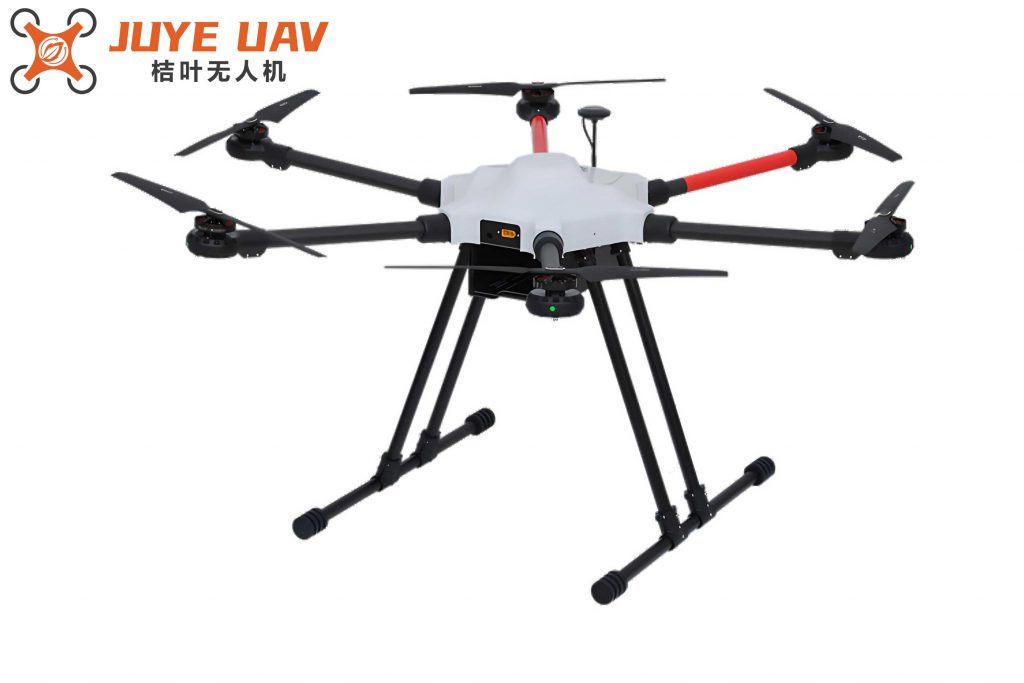
The rapid advancement of multi-rotor drone technology has revolutionized aeromagnetic surveying, particularly in challenging terrains where traditional methods are impractical. As a low-altitude flight system, the multi-rotor drone offers unparalleled flexibility for ground-hugging operations in inaccessible regions, such as rugged landscapes or densely forested areas. However, the operational efficacy of these systems is constrained by limited flight endurance, often necessitating segmented surveys with multiple takeoff points. This approach introduces complexities, including frequent relocation and susceptibility to environmental factors like wind interference, which can deviate the drone from planned flight paths. Moreover, strong electromagnetic disturbances during flight may result in anomalous magnetic readings or even signal loss from the magnetometer, leading to data gaps. Consequently, immediate post-flight quality assessment of aeromagnetic data is crucial to identify and rectify substandard survey lines, ensuring data integrity and minimizing the need for repetitive fieldwork. Traditional quality evaluation methods are often cumbersome, requiring manual extraction of survey line data and separate assessments of flight and magnetic data quality. To address these challenges, we developed an automated quality evaluation system using scripts within the Generic Mapping Tools (GMT) software platform. This system streamlines the extraction of survey line data, computes statistical metrics for flight and magnetic quality, and integrates satellite imagery and digital elevation models (DEMs) to generate vectorized outputs. By facilitating rapid analysis and decision-making in field settings, our approach enhances the efficiency and continuity of multi-rotor drone aeromagnetic surveys, ultimately supporting more reliable geophysical explorations.
The design of our quality evaluation system centers on automating the assessment of flight and aeromagnetic data quality for multi-rotor drone operations. Flight quality evaluation encompasses navigation accuracy, measured by cross-track distance (deviation from planned paths), and flight altitude consistency relative to the terrain. For multi-rotor drones, which are highly responsive to wind conditions, maintaining precise altitude and trajectory is critical, as deviations can compromise data resolution, especially for weak magnetic anomalies. Aeromagnetic data quality is evaluated based on dynamic noise levels, computed using a fourth-order difference method to quantify magnetic field stability. The system operates by first preprocessing raw aeromagnetic data to extract relevant survey lines, followed by statistical computations and graphical visualization. Key inputs include raw data files containing coordinates, altitude, magnetic field values, and timestamps; planned flight paths; DEM data for terrain reference; and satellite imagery for contextual analysis. The output consists of vectorized maps and statistical charts that provide an intuitive overview of data quality, enabling field personnel to quickly identify issues such as excessive deviations or noise spikes. This integrated workflow not only reduces manual effort but also ensures that evaluations are conducted consistently across all survey lines, promoting timely interventions and resource optimization in multi-rotor drone deployments.
In terms of system implementation, we leveraged GMT 6.4 as the core platform due to its robust data processing and mapping capabilities. The scripting environment utilizes bash commands, augmented with UnixTools like awk, paste, and grep for efficient data manipulation. For instance, awk is employed to filter and reformat data columns, while paste merges files column-wise. The preprocessing phase involves extracting survey line data from raw inputs, which typically include extraneous information from magnetometer calibrations or auxiliary sensors. Using GMT’s select module, data within planned flight corridors are isolated based on predefined boundaries, and the split module dissects them into individual lines using azimuthal criteria. This process generates intermediate files, such as mag.tmp for magnetic values and time.tmp for timestamps, which are subsequently merged into a comprehensive profile file. Key calculations include cross-track distance, derived using the mapproject module to compute deviations from planned paths, and flight height, obtained by subtracting DEM-derived ground elevation from recorded altitude via the grdtrack module. The resulting data, stored in netCDF format for each line, facilitate subsequent quality assessments. For flight quality, metrics like minimum, maximum, and mean cross-track distance and altitude are computed using GMT’s math module, which performs statistical operations on specified data columns. Aeromagnetic quality is assessed by calculating dynamic noise through a fourth-order difference approach: magnetic field values are resampled at 0.5-second intervals to mitigate high-frequency artifacts, and differences between sequential points are analyzed. The noise level $N$ is derived using the formula:
$$ N = \sqrt{\frac{1}{n} \sum_{i=1}^{n} \left( \frac{\Delta^4 T_i}{\Delta x_i} \right)^2 } $$
where $\Delta^4 T_i$ represents the fourth-order difference of the magnetic field at point $i$, $\Delta x_i$ is the distance increment, and $n$ is the number of points. Values exceeding 600 nT/km are filtered out to eliminate outliers. This automated preprocessing ensures that all necessary quality parameters are computed efficiently, providing a foundation for graphical representation.
Graphical display is a cornerstone of our system, designed to present quality evaluation results in an accessible format for field teams. The output adopts a “3 planar maps + N statistical charts” layout, where the maps offer a spatial overview and the charts provide detailed line-by-line summaries. The planar maps are generated using GMT’s subplot module, configured to display three aligned panels: a flight trajectory map, a flight height profile map, and an aeromagnetic total field profile map. To accommodate variable numbers of survey lines, the subplot origin is shifted vertically (e.g., using -Y100c) to prevent clipping of statistical charts. The flight trajectory map overlays actual flight paths and planned routes on a satellite imagery basemap, created by grdimage and grdcut modules, with line annotations added via text commands. This visualization helps identify navigation issues, such as deviations in complex terrain. The flight height profile map uses DEM data—preferably FABDEM for its bare-earth accuracy—to generate contour lines and display altitude variations relative to the design height. The wiggle module plots flight height anomalies, highlighting areas where the multi-rotor drone may have flown too high or low due to topographic influences. The aeromagnetic total field profile map visualizes magnetic data along flight lines, with abnormal values flagged for further investigation. Known interference sources, documented in an Info.txt file, are annotated to correlate noise with external factors. Below these maps, statistical charts for each survey line are rendered using histogram and text modules, presenting metrics like start/end coordinates, duration, average speed, and dynamic noise in tabular form, accompanied by histograms showing parameter distributions. This multi-faceted approach enables comprehensive quality assessment, allowing users to pinpoint specific issues and make informed decisions on re-flights or data corrections.
| Category | File Name | Longitude Column | Latitude Column | Altitude Column | Magnetic Field Column | Timestamp Column | Cross-Track Distance Column | Flight Height Column | Description |
|---|---|---|---|---|---|---|---|---|---|
| Reference Data | Plan.txt | 1 | 2 | – | – | – | – | – | Planned flight lines with line identifiers |
| Process Files | ini.tmp | 1 | 2 | 3 | 4 | 5 | – | – | Extracted aeromagnetic data including all flight tracks |
| Results | profile.txt | 1 | 2 | 3 | 4 | 6 | 7 | 8 | Merged survey line data with quality parameters |
The application of our system in real-world scenarios demonstrates its practicality and impact on multi-rotor drone aeromagnetic surveys. For example, in a mineral exploration project in Laiwu, Shandong, China, we evaluated data from two flight sessions comprising four survey lines. The area featured varied topography, from flat plains to mountainous regions, posing challenges for flight stability. The system processed raw data in under two minutes, generating outputs that included flight trajectories overlaid on satellite imagery, flight height profiles relative to DEM contours, and magnetic field visualizations. Statistical analysis revealed that cross-track distances averaged below 3 meters across all lines, meeting navigation standards, while flight heights fluctuated in hilly sections, with averages ranging from 103.3 to 110.9 meters against a design height of 100 meters. Aeromagnetic dynamic noise was within acceptable limits (≤0.07 nT) for three lines, but one line exhibited a noise level of 104 nT, indicating data corruption due to electromagnetic interference. This issue was visually apparent in the magnetic profile map, prompting an immediate re-flight. The integration of satellite and DEM data allowed field teams to correlate altitude deviations with terrain features, such as ridges and valleys, informing adjustments for subsequent flights. By enabling rapid identification of faulty lines, the system reduced downtime and enhanced survey continuity, underscoring its value in optimizing multi-rotor drone operations.
Our quality evaluation system offers several distinct advantages for multi-rotor drone aeromagnetic applications. First, the script-based automation ensures swift processing, typically completing analyses within minutes, which is vital for field efficiency. The use of open-source GMT tools minimizes costs while providing professional-grade mapping capabilities. Second, the incorporation of external data like satellite imagery and DEMs enriches contextual analysis, helping users discern whether quality issues stem from environmental factors or system errors. For instance, DEM accuracy directly influences flight height assessments; we recommend FABDEM for its superior bare-earth representation, as it reduces elevation RMSE by 24% compared to standard DEMs. Third, the graphical outputs—combining planar maps and statistical charts—provide an intuitive interface for non-specialists, facilitating quick judgments on data acceptability. Additionally, the preprocessing step outputs structured survey line data in netCDF format, which can be directly fed into downstream processing workflows, such as magnetic anomaly interpretation or inversion. This end-to-end integration streamlines the entire survey pipeline, from data acquisition to quality control and beyond. Looking ahead, we anticipate that real-time data transmission technologies will enable live quality monitoring during flights, further augmenting the system’s utility. However, even in its current form, this GMT-based solution represents a significant step toward robust and efficient quality assurance for multi-rotor drone aeromagnetics, empowering teams to achieve higher data reliability with reduced operational overhead.
| Metric | Description | Calculation Method | Acceptance Criteria |
|---|---|---|---|
| Cross-Track Distance | Deviation from planned flight path | $D = \text{mapproject}(data, plan)$ using GMT | Mean < 10 m for multi-rotor drones |
| Flight Height | Altitude above ground level | $H_{AGL} = H_{recorded} – H_{DEM}$ | Within ±20% of design height |
| Dynamic Noise | Magnetic field stability | $N = \sqrt{\frac{1}{n} \sum \left( \frac{\Delta^4 T}{\Delta x} \right)^2 }$ | < 0.1 nT for high-quality data |
In conclusion, the development of this GMT script-based quality evaluation system addresses critical needs in multi-rotor drone aeromagnetic surveying by automating data assessment and visualization. By harnessing GMT’s computational and graphical prowess, we have created a tool that not only accelerates quality checks but also enhances decision-making through integrated spatial and statistical displays. The system’s ability to handle variable survey conditions and output actionable insights makes it indispensable for modern geophysical campaigns, particularly in logistically challenging environments. As multi-rotor drone technology continues to evolve, with improvements in battery life and sensor miniaturization, the demand for efficient quality control will only grow. Our approach provides a scalable foundation that can adapt to these advancements, ensuring that aeromagnetic data collected via multi-rotor drones remains of the highest standard, thereby supporting accurate geological interpretations and resource discoveries.