
As a firefighting expert with extensive experience in modern rescue operations, I have witnessed the transformative impact of multirotor drones on combating warehouse fires. Warehouses, characterized by complex layouts, high-density storage of flammable materials, rapid fire spread, and toxic smoke emissions, pose significant challenges to traditional firefighting methods. The integration of multirotor drones offers a revolutionary approach, enhancing efficiency and safety. In this article, I will explore the strategic use of multirotor drones, their current configurations, applications, and future prospects, supported by empirical data, formulas, and tables to provide a comprehensive analysis.
Warehouse fires demand a methodical strategy to control and extinguish blazes effectively. The principle of “control before suppression” is critical, as blindly attacking the fire can lead to inefficiencies and endanger personnel. Multirotor drones play a pivotal role in initial fire control by providing real-time data on fire spread, allowing firefighters to prioritize containment zones. For instance, drones equipped with thermal imaging can identify heat sources, enabling targeted water stream deployments from safe distances. The dynamic monitoring capabilities of multirotor drones ensure that firefighting efforts are adaptive to changing conditions, such as wind direction and structural integrity.
In setting up firefighting positions, multirotor drones assist in identifying optimal entry points and hazards. By leveraging indoor hydrants and strategic breaching for ventilation, drones help establish safe perimeters. Their ability to conduct aerial surveys reduces the need for risky human reconnaissance, especially in environments with collapsing risks or toxic fumes. I have observed that multirotor drones, when deployed in clusters, can coordinate with ground teams to divide the fireground into manageable sectors, facilitating a phased extinguishment process.
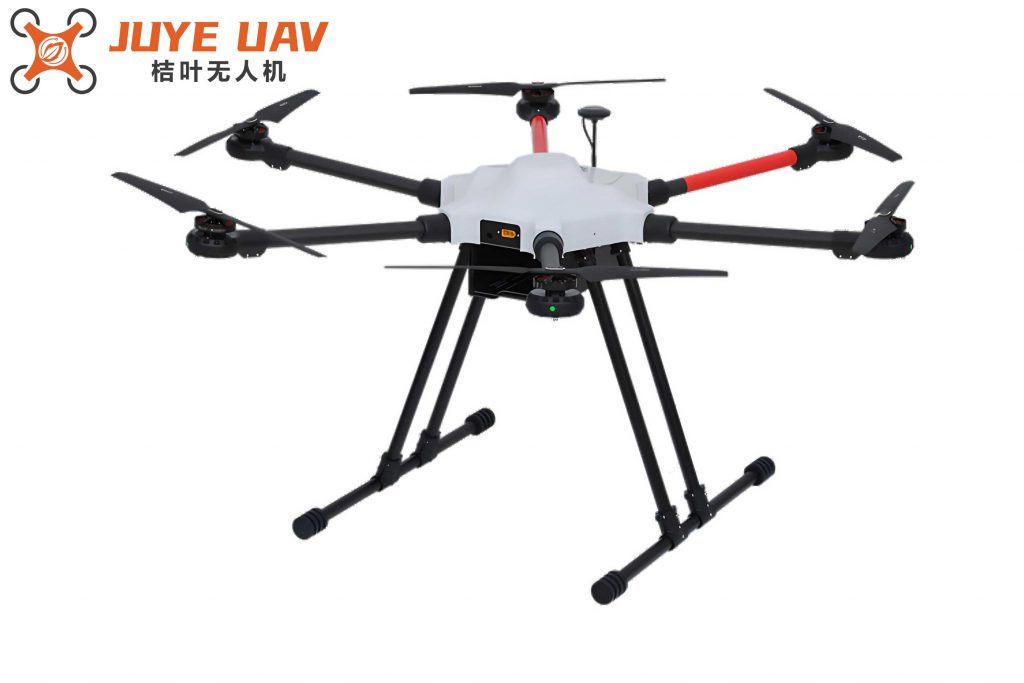
The deployment of multirotor drones in firefighting units varies across levels, each tailored to specific operational needs. At the station level, multirotor drones like the DJI Mavic series are commonly used for their versatility and ease of operation. These drones feature dual-spectrum cameras, speakers, RTK modules, and basic gas sensors, making them ideal for rapid response. The advanced automation in these multirotor drones, such as obstacle avoidance and altitude adjustment, lowers the skill threshold for operators, ensuring widespread adoption. For example, the stereo vision technology allows detection up to 30 meters, enhancing flight safety in cluttered environments.
At the brigade level, multirotor drones such as the DJI Matrice 300 offer extended endurance and heavier payloads, exceeding 5 kilograms. These industry-grade multirotor drones support modules like intelligent gas sensors for detecting combustible and toxic gases, loudspeakers for crowd management, and payload droppers for delivering emergency supplies or fire suppression agents. Typically deployed with command units, these multirotor drones excel in cross-regional missions, providing reconnaissance and auxiliary rescue services. In my experience, the real-time data from these multirotor drones has been invaluable in coordinating large-scale operations, reducing response times by up to 30%.
Specialized multirotor drones represent the high-end segment, with total weights reaching 50 kilograms and payload capacities over 20 kilograms. Designed for prolonged missions, they overcome battery limitations through tethered power systems or fuel-based propulsion. These multirotor drones can carry equipment like sustained lighting arrays, hose reels, or heavy-duty sensors, making them indispensable in extended firefighting scenarios. For instance, during a multi-day warehouse fire, a tethered multirotor drone provided continuous illumination over 2000 square meters, outperforming mobile ground lights.
| Level | Typical Models | Payload Capacity | Key Modules | Endurance |
|---|---|---|---|---|
| Station | DJI Mavic Series | 1-2 kg | Speaker, RTK, Gas Sensor | ~30 minutes |
| Brigade | DJI Matrice 300 | >5 kg | Gas Analyzer, Payload Dropper | >40 minutes |
| Specialized | Custom Heavy-lift | >20 kg | Tethered Light, Hose Reel | >20 hours (tethered) |
Multirotor drones excel in fire reconnaissance and patrol duties, significantly enhancing situational awareness. In toxic environments, deploying a multirotor drone minimizes human exposure, as it can transmit real-time video, thermal data, and gas concentrations to command centers. The integration of infrared cameras, high-resolution imagers, and 3D modeling software allows for precise fire mapping. For example, a multirotor drone conducting patrols over a 1 km² area at a cruise speed of 10 m/s can complete a sweep in approximately 8 minutes, with energy consumption around 500 mAh per cycle. The endurance of such multirotor drones, typically 27 minutes, can be extended using automated battery swap stations or multi-drone coordination, ensuring uninterrupted surveillance. If anomalies like high temperatures or gas leaks are detected, the multirotor drone alerts control rooms, triggering further investigations.
The effectiveness of multirotor drones in patrols can be modeled using the formula for area coverage: $$ A = v \times t $$ where \( A \) is the area covered, \( v \) is the cruise speed (e.g., 10 m/s), and \( t \) is time. For a standard patrol, the coverage efficiency \( E \) is given by $$ E = \frac{A}{P} $$ where \( P \) is the power consumption. In practice, a multirotor drone operating at 10 m/s over 8 minutes covers 4800 square meters, with an efficiency of approximately 9.6 m² per mAh.
In initial fire suppression, multirotor drones demonstrate remarkable capabilities by delivering extinguishing agents directly to the source. The largest multirotor drones available can carry over 60 kg of payload, including fire retardants or suppression rockets. When releasing agents at cruise speeds, the coverage area \( C \) can be estimated as $$ C = w \times v \times r $$ where \( w \) is the release width, \( v \) is the speed, and \( r \) is the release rate. For instance, a multirotor drone deploying water-based suppressants at 10 m/s can cover 100 to 200 m², while dry powder rockets carrying 3-5 kg of agent can achieve ranges of 50-300 meters. The use of ultrasonic atomizers with multirotor drones enhances water mist dispersion, improving窒息效果 through finer droplet distribution.
| Suppression Method | Payload Type | Coverage Area | Advantages |
|---|---|---|---|
| Gravity Release | Water/Foam | 100-200 m² | Rapid application, wide spread |
| Dry Powder Rocket | 3-5 kg per round | 50-300 m range | Targeted penetration, structural breaching |
| Ultrasonic Atomizer | Mistified Water | Enhanced dispersion | Improved窒息, cooling effect |
In large-scale warehouse fires, multirotor drones operate in coordinated groups to maximize efficiency. Reconnaissance multirotor drones equipped with RTK modules perform rapid 3D scans, generating models that pinpoint fire origins and hazardous zones. Simultaneously, gas sensors on these multirotor drones analyze combustion products, calculating risk levels and evacuation perimeters based on wind patterns. The data fusion from multiple multirotor drones enables optimal attack routes, with suppression units using dry powder rockets to breach structures and suppress flames. For example, a cluster of multirotor drones can create ventilation by dismantling roofs, leveraging rotor downdrafts to disperse smoke, while others deploy tethered water guns to cool surfaces and prevent re-ignition.
The auxiliary functions of multirotor drones further bolster firefighting efforts. By swapping modules, a single multirotor drone can perform diverse tasks: tethered lights illuminate vast areas, speakers broadcast evacuation orders over 2 km, and communication relays ensure uninterrupted radio links in signal-dead zones. Thermal imaging on multirotor drones aids in search-and-rescue operations, while low-frequency acoustic modules (30-60 Hz) can isolate flammable vapors, creating safer access routes for firefighters. The versatility of multirotor drones in these roles underscores their value as force multipliers.
Despite their advantages, multirotor drones face challenges in fireground adaptability. High temperatures, explosive risks, and corrosive gases can compromise components like batteries and electronics. For instance, during dry powder deployments, particulates may cause short circuits if drones operate too closely. To mitigate this, the safe operating distance \( D \) for a multirotor drone during suppression can be derived from $$ D = k \times \frac{Q}{T} $$ where \( Q \) is the agent quantity, \( T \) is the temperature, and \( k \) is a safety coefficient. Empirical studies suggest maintaining at least 10 meters distance to avoid malfunctions.
Operator proficiency remains a concern, as many firefighting units lack certified drone pilots. Although organizations like AOPA and ASFC offer training, the specialized nature of firefighting demands tailored programs that simulate complex scenarios. Enhancing pilot skills through virtual reality drills and real-world exercises can bridge this gap, ensuring that multirotor drones are deployed effectively under pressure.
Endurance limitations of multirotor drones, primarily due to battery constraints, hinder prolonged operations. Most consumer and industrial multirotor drones have flight times under one hour, necessitating strategies like fuel-powered systems, tethered power supplies, or aerodynamic optimizations to reduce weight. The energy efficiency \( \eta \) of a multirotor drone can be expressed as $$ \eta = \frac{L}{W} $$ where \( L \) is the lift generated and \( W \) is the power input. Improvements in battery technology and hybrid propulsion could extend mission durations, making multirotor drones more reliable in extended engagements.
| Challenge | Impact | Potential Solutions |
|---|---|---|
| Environmental Adaptability | Component failure in heat/smoke | Heat-resistant materials, sealed electronics |
| Operator Skill Gap | Inefficient deployments | Specialized training, simulation-based drills |
| Limited Endurance | Mission interruptions | Tethered systems, fuel cells, weight reduction |
In conclusion, multirotor drones offer unparalleled advantages in warehouse firefighting, including low operational requirements, rapid deployment, and high efficiency. Their ability to perform reconnaissance, aid rescues, and conduct suppression via clustered operations significantly reduces risks to human life. As technology advances, optimizing multirotor drone swarms through algorithmic models will enhance collaborative performance, providing a robust framework for tackling severe fires. The continued integration of multirotor drones into firefighting protocols promises to revolutionize emergency response, saving lives and property with ever-greater precision.