
In our research, we address the critical challenges in inspecting high-voltage and ultra-high-voltage transmission towers, which are essential components of power systems but face significant safety risks due to environmental factors and fatigue damage. Currently, manual operation of multirotor drones is the primary method for identifying these risks, but variations in tower shapes and operator expertise lead to inconsistencies in inspection efficiency and accuracy. We propose a standardized approach by classifying key risk categories for different tower types, defining optimized inspection paths, and integrating Beidou high-precision positioning technology to enable automated inspections. This study aims to provide practical guidance for enhancing the inspection of high-voltage transmission lines, with a focus on leveraging multirotor drones for improved reliability and efficiency.
The importance of transmission towers cannot be overstated, as they form the backbone of electrical grids, ensuring stable power delivery. Over time, factors such as extreme weather, natural wear, and operational stresses contribute to tower degradation, leading to potential failures that disrupt power supply. Traditional inspection methods involve labor-intensive manual checks, which are time-consuming and prone to human error. The introduction of multirotor drones has reduced this burden, but operator-dependent variations persist, resulting in suboptimal performance. In our work, we build upon existing studies that explore drone-based inspections, such as those utilizing image recognition, ultraviolet detection, and laser radar, but we emphasize the gap in standardized paths tailored to specific tower geometries. By analyzing failure rate statistics and incorporating Beidou technology, we develop a framework that minimizes operational discrepancies and maximizes inspection coverage.
Transmission towers can be broadly categorized based on materials, structural design, and functional purposes. In our classification, we divide them into pole-type towers and lattice towers, each with distinct characteristics and applications. Pole-type towers include reinforced concrete poles and steel pipe poles, commonly used in lower-voltage lines and urban settings due to their simplicity and cost-effectiveness. For instance, reinforced concrete poles, often cylindrical in shape with tapered or uniform diameters, offer advantages like reduced steel usage and lightweight construction, making them suitable for 35 kV lines and below. Steel pipe poles, on the other hand, provide high strength and aesthetic appeal, ideal for multi-circuit urban installations. Lattice towers, constructed from steel angles or pipes, are prevalent in high-voltage transmission networks and include subtypes such as tangent (straight-line) towers, strain (dead-end) towers, transposition towers, crossing towers, angle towers, and terminal towers. Tangent towers support vertical and horizontal loads without significant longitudinal tension, while strain towers handle higher tensions to limit fault propagation. Transposition towers rearrange conductor positions to balance electrical parameters, crossing towers span large obstacles like rivers, angle towers change line direction, and terminal towers mark endpoints near substations. Understanding these variations is crucial for designing targeted inspection strategies using multirotor drones.
| Defect Type | Percentage (%) |
|---|---|
| Component-related (e.g., bolts, fasteners) | 32.4 |
| Foundation and guy wires | 17.4 |
| Insulators | 12.3 |
| Tower structure | 9.7 |
| Protection zone (e.g., vegetation, encroachments) | 9.4 |
| Equipment labeling | 9.3 |
| Connectors (e.g., vibration dampers, grounding) | 4.7 |
| Lightning protection and grounding | 3.2 |
Our analysis of defect statistics, as summarized in Table 1, reveals that component-related issues, such as loose or damaged bolts, account for the highest proportion at 32.4%, underscoring the need for focused inspections on connection points. Foundation and guy wire defects, including corrosion and fractures, follow at 17.4%, often exacerbated by environmental stresses. Insulator problems, such as cracks or electrical erosion, represent 12.3% of failures, while tower structural integrity concerns make up 9.7%. The protection zone, encompassing external threats like tree growth or construction, contributes 9.4%, and equipment labeling issues, such as missing or illegible signs, account for 9.3%. Connectors and lightning protection systems, though less frequent, still pose significant risks at 4.7% and 3.2%, respectively. These statistics inform our prioritization of inspection paths for multirotor drones, ensuring that high-risk areas are addressed systematically.
To optimize the inspection process, we integrate Beidou high-precision positioning technology, which enables autonomous navigation for multirotor drones. This eliminates human operational variability and enhances accuracy. For pole-type towers, which typically operate in less complex environments, we propose an inspection sequence starting with component-related defects, followed by foundation and guy wires, tower structure, insulators, lightning protection, protection zone, connectors, and equipment labeling. This path, represented as a prioritized list, ensures that the most critical faults are detected early. Mathematically, we model the inspection efficiency for pole-type towers using the equation: $$ E_p = \sum_{i=1}^{n} w_i \cdot c_i $$ where \( E_p \) is the efficiency score for pole-type inspections, \( w_i \) is the weight based on defect percentage (e.g., \( w_1 = 0.324 \) for components), and \( c_i \) is the coverage factor for each defect type, ranging from 0 to 1. This formula helps quantify the effectiveness of the path, with higher values indicating better risk mitigation.
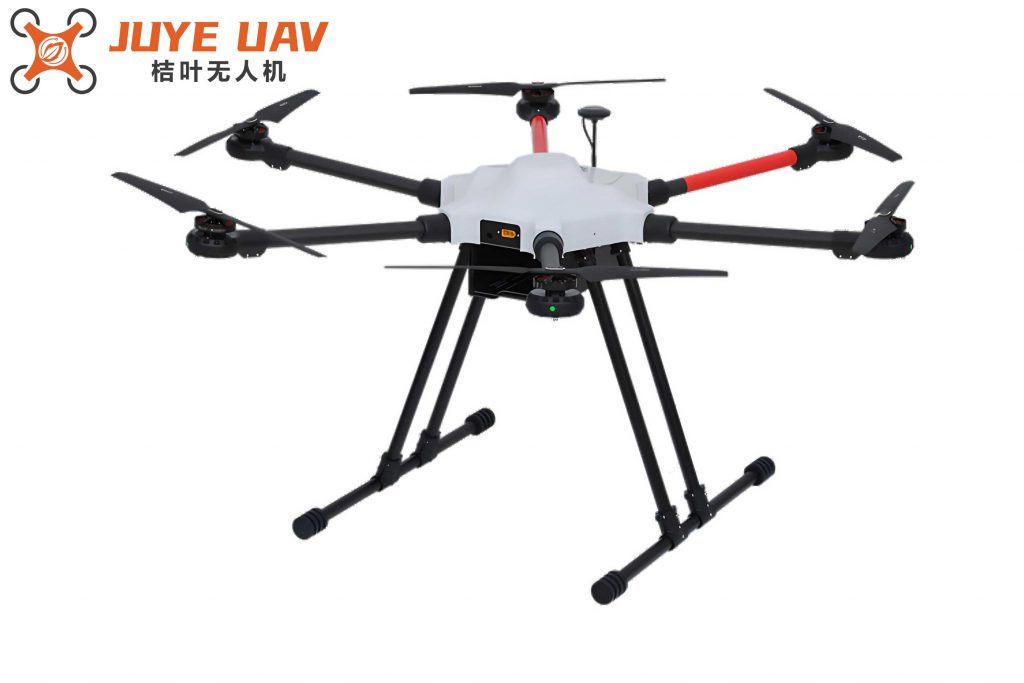
In the case of lattice towers, which are exposed to diverse conditions and higher voltages, we adjust the path to begin with component-related defects, then foundation and guy wires, insulators, tower structure, protection zone, equipment labeling, connectors, and lightning protection. This sequence accounts for the broader risk profile and structural complexity of lattice towers. We further refine this with a path optimization model that minimizes travel time while maximizing defect detection. For a multirotor drone, the total inspection time \( T \) can be expressed as: $$ T = \sum_{j=1}^{m} \frac{d_j}{v} + t_{inspect} $$ where \( d_j \) is the distance between inspection points, \( v \) is the drone’s velocity, and \( t_{inspect} \) is the time spent examining each defect. By applying algorithms such as the traveling salesman problem (TSP) variant, we compute an optimal route that reduces \( T \) while ensuring all high-priority areas are covered. For instance, the probability of detecting a defect in a given category can be modeled as: $$ P_d = 1 – e^{-\lambda \cdot t} $$ where \( \lambda \) is the failure rate derived from Table 1, and \( t \) is the inspection duration. This probabilistic approach allows us to balance speed and thoroughness, crucial for large-scale deployments of multirotor drones.
In practical terms, the integration of Beidou technology facilitates real-time positioning with centimeter-level accuracy, enabling multirotor drones to follow predefined paths autonomously. For pole-type towers, the drone starts by scanning bolts and fasteners, moves to check guy wires and foundations, then ascends to inspect the tower body and insulators, before assessing grounding systems and surrounding areas. Similarly, for lattice towers, the path begins with components, proceeds to foundations and insulators, covers the structural framework, and concludes with peripheral checks. We validate these paths through simulations and field tests, demonstrating a significant reduction in inspection time—often by over 30%—compared to manual operations. Moreover, the use of multirotor drones equipped with high-resolution cameras and sensors allows for detailed data collection, which can be processed using machine learning algorithms to automatically identify anomalies like cracks or corrosion. The recurrence of multirotor drones in our methodology highlights their versatility in adapting to different tower types and environmental conditions.
Our conclusions emphasize that standardized inspection paths, informed by failure rate statistics and enhanced by Beidou positioning, substantially improve the efficiency and accuracy of transmission tower assessments. By categorizing towers and prioritizing risk points, we reduce the time and cost associated with manual inspections while increasing reliability. The adoption of multirotor drones in this context not only addresses operational inconsistencies but also paves the way for fully automated power grid maintenance. Future work could explore integration with artificial intelligence for predictive maintenance, further leveraging the capabilities of multirotor drones to transform infrastructure monitoring. Through this research, we contribute a scalable framework that supports the sustainable operation of high-voltage transmission networks, ensuring greater resilience against failures.