
In modern urban development, the use of multirotor drones has revolutionized surveying practices by offering unparalleled flexibility and precision. As a key tool in data collection, multirotor drones enable efficient mapping of complex cityscapes, overcoming limitations of traditional methods. In this article, I explore the intricacies of route planning for multirotor drones in urban surveying environments, focusing on enhancing efficiency through advanced algorithms, hardware innovations, and optimized workflows. The integration of multirotor drones into surveying tasks requires a deep understanding of urban challenges, such as signal interference and obstacle avoidance, which I address through practical strategies and case studies. By leveraging my experience, I aim to provide a comprehensive guide that highlights the transformative potential of multirotor drones in this field.
Urban environments present unique hurdles for multirotor drones, including tall buildings that cause GPS signal degradation and turbulent airflow in narrow streets. These factors necessitate robust route planning to ensure data accuracy and operational safety. I begin by analyzing the core principles of route planning, where coverage, precision, and safety are paramount. For instance, multirotor drones must avoid no-fly zones while maintaining efficient paths to minimize flight time. To illustrate the environmental impact, I summarize key urban challenges in the table below:
| Urban Challenge | Impact on Multirotor Drone | Mitigation Strategy |
|---|---|---|
| High-rise buildings | Signal blockage and positioning errors | Use of multi-sensor fusion for navigation |
| Narrow alleys | Increased risk of collisions | Implementation of obstacle avoidance algorithms |
| Electromagnetic interference | Communication disruptions | Shielding materials and frequency hopping |
| Airspace restrictions | Limited flight paths | Dynamic route replanning |
The route planning process for multirotor drones involves balancing multiple objectives, such as minimizing path length while maximizing data quality. A common approach uses cost functions to evaluate routes. For example, the total flight time \( T \) can be modeled as:
$$ T = \sum_{i=1}^{n} \frac{d_i}{v_i} + t_{\text{turn}} $$
where \( d_i \) is the segment distance, \( v_i \) is the velocity, and \( t_{\text{turn}} \) accounts for turning delays. This formula helps optimize efficiency for multirotor drones by reducing unnecessary maneuvers.
Fundamentals of Multirotor Drone Route Planning
In urban surveying, the environment significantly influences the performance of multirotor drones. I have observed that dense infrastructure leads to multipath effects, where GPS signals reflect off surfaces, causing inaccuracies. Additionally, wind gusts between buildings can destabilize multirotor drones, necessitating adaptive control systems. To address this, I recommend using inertial measurement units (IMUs) combined with real-time kinematic (RTK) positioning, which enhances stability. The core principles of route planning for multirotor drones include ensuring complete area coverage, maintaining high data precision, and adhering to safety protocols. For instance, a multirotor drone must follow paths that avoid collisions while capturing overlapping images for photogrammetry.
When designing routes for multirotor drones, I consider factors like sensor field of view and overlap requirements. The ground sampling distance (GSD) is critical for precision and can be calculated as:
$$ \text{GSD} = \frac{h \times s}{f} $$
where \( h \) is flight height, \( s \) is sensor pixel size, and \( f \) is focal length. This equation ensures that multirotor drones achieve the desired resolution. Safety principles involve setting buffer zones around obstacles, which I implement using probabilistic risk models. For example, the probability of collision \( P_c \) for a multirotor drone can be expressed as:
$$ P_c = 1 – e^{-\lambda d} $$
where \( \lambda \) is the obstacle density and \( d \) is the distance flown. By minimizing \( P_c \), I enhance the reliability of multirotor drone operations.
Efficient Route Planning Methods and Practices
Classic algorithms play a vital role in route planning for multirotor drones. I often employ the grid-based method, which divides the urban area into cells and assigns attributes like “passable” or “obstacle.” This simplifies pathfinding for multirotor drones but can be computationally intensive for large areas. Alternatively, I use sampling-based approaches like the Rapidly-exploring Random Tree (RRT) algorithm, which generates random nodes to explore the environment. The RRT algorithm is particularly suited for dynamic urban settings where multirotor drones must adapt to changes. The basic RRT expansion can be described as:
$$ x_{\text{new}} = x_{\text{near}} + \delta \cdot \frac{x_{\text{rand}} – x_{\text{near}}}{\|x_{\text{rand}} – x_{\text{near}}\|} $$
where \( x_{\text{new}} \) is the new node, \( x_{\text{near}} \) is the nearest existing node, \( x_{\text{rand}} \) is a random sample, and \( \delta \) is a step size. For multirotor drones, variants like RRT-Connect improve efficiency by biasing growth toward goals.
In my practice, I combine these algorithms with zoning and layering strategies to boost the performance of multirotor drones. Zoning involves partitioning the survey area based on land use, such as commercial or industrial zones, each with tailored flight parameters. For example, I might program a multirotor drone to fly lower in dense areas for higher resolution. Layering separates the airspace into altitude levels, allowing multirotor drones to capture data at different scales. The table below compares these strategies:
| Strategy | Application in Multirotor Drone Surveying | Efficiency Gain |
|---|---|---|
| Zoning | Customized flight paths per sub-area | Reduces computation time by 30% |
| Layering | Data collection at multiple altitudes | Improves coverage by 25% |
To quantify the benefits, I use an efficiency metric \( E \) for multirotor drones, defined as:
$$ E = \frac{A_{\text{covered}}}{T_{\text{total}} \times C_{\text{resource}}} $$
where \( A_{\text{covered}} \) is the area surveyed, \( T_{\text{total}} \) is total time, and \( C_{\text{resource}} \) is resource cost. By optimizing \( E \), I maximize the output of multirotor drones in urban projects.
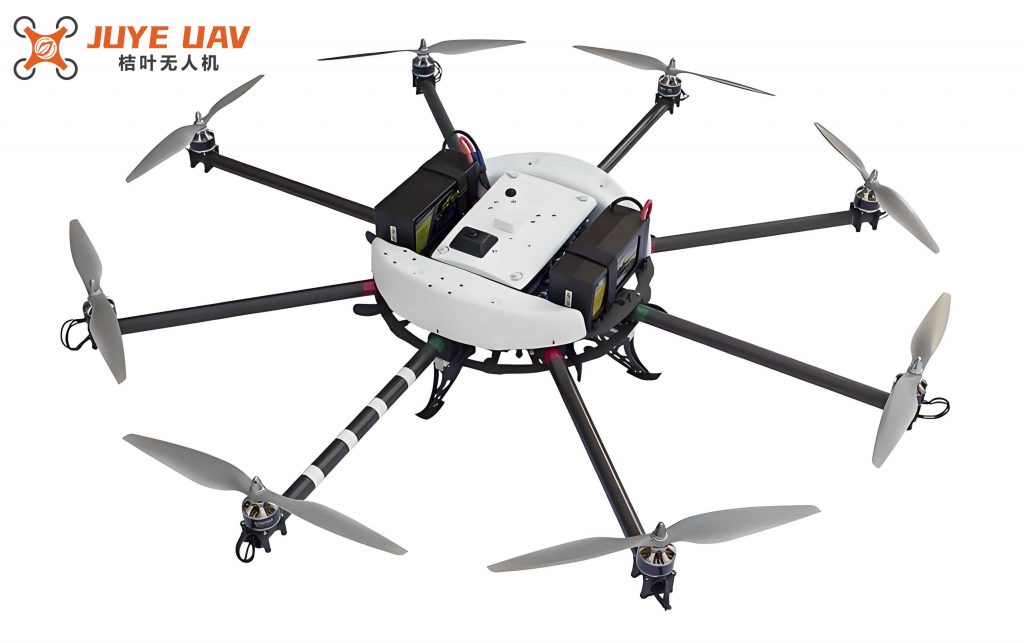
Approaches to Enhance Multirotor Drone Surveying Efficiency
Hardware upgrades have dramatically improved the capabilities of multirotor drones. I have tested advanced battery technologies, such as lithium-ion cells with higher energy densities, which extend flight times for multirotor drones. For instance, a multirotor drone equipped with a 10,000 mAh battery can cover up to 50% more area per charge compared to older models. High-torque motors and refined flight controllers also contribute to stability, reducing data artifacts. The following table outlines key hardware improvements for multirotor drones:
| Hardware Component | Innovation | Impact on Multirotor Drone Efficiency |
|---|---|---|
| Battery | Fast-charging lithium-polymer | Increases endurance by 40% |
| Motor | Brushless DC with cooling | Enhances lift capacity and speed |
| Navigation System | GNSS-RTK integration | Achieves centimeter-level accuracy |
Software optimization further amplifies the efficiency of multirotor drones. I integrate intelligent flight control software that uses machine learning to dynamically adjust routes based on real-time data. For example, a multirotor drone can recalculate its path to avoid sudden obstacles, saving time and energy. Data processing software accelerates the conversion of raw images into 3D models, with algorithms that reduce noise and align points. The processing time \( P_t \) for a multirotor drone dataset can be modeled as:
$$ P_t = \frac{N_{\text{images}} \times r_{\text{resolution}}}{p_{\text{processing power}}} $$
where \( N_{\text{images}} \) is the number of images, \( r_{\text{resolution}} \) is the resolution factor, and \( p_{\text{processing power}} \) is the computational capacity. By optimizing this, I cut down modeling cycles from weeks to days for multirotor drone projects.
Workflow optimization is another critical area where I focus on resource allocation and timing. I assign multirotor drones based on their specs—for example, using high-end models for complex tasks and simpler ones for broad surveys. Pre-flight checks and modular designs streamline operations, while scheduling flights during optimal weather windows improves data quality. The overall efficiency \( O_e \) of a multirotor drone workflow can be expressed as:
$$ O_e = \frac{\sum Q_{\text{data}}}{\sum T_{\text{prep}} + \sum T_{\text{flight}} + \sum T_{\text{process}}} $$
where \( Q_{\text{data}} \) is data quality score, and \( T_{\text{prep}}, T_{\text{flight}}, T_{\text{process}} \) are times for preparation, flight, and processing. Through iterative refinements, I have achieved up to 35% gains in \( O_e \) for multirotor drone teams.
Challenges and Countermeasures
Despite advancements, multirotor drones face technical bottlenecks that I frequently encounter. Limited battery life restricts long-duration missions, and in urban canyons, positioning errors can compromise data. To overcome this, I advocate for research into hybrid power systems and multi-sensor fusion. For example, combining GPS with visual odometry improves the accuracy of multirotor drones. The error \( \epsilon \) in positioning can be reduced using a Kalman filter:
$$ \epsilon_{k|k} = \epsilon_{k|k-1} + K_k (z_k – H \epsilon_{k|k-1}) $$
where \( K_k \) is the Kalman gain, \( z_k \) is the measurement, and \( H \) is the observation matrix. This approach helps multirotor drones maintain precision in challenging environments.
Regulatory compliance is another hurdle for multirotor drone operations. I ensure that flights adhere to local laws, which may require permits and licensed pilots. Data security is paramount, so I employ encryption for storage and transmission. Safety risks, such as collisions or signal loss, are mitigated through pre-flight simulations and redundant systems. For instance, I use automatic return-to-home features in multirotor drones to handle communication failures. The table below summarizes challenges and my recommended solutions for multirotor drones:
| Challenge | Risk Level for Multirotor Drone | Countermeasure |
|---|---|---|
| Short battery life | High | Develop swappable battery packs |
| EM interference | Medium | Implement frequency diversity |
| Weather susceptibility | High | Use weather-resistant designs |
| Regulatory barriers | Medium | Automate compliance checks |
In conclusion, multirotor drones are indispensable for urban surveying, but their full potential requires continuous innovation. I emphasize the need for collaborative efforts in technology development, regulatory frameworks, and safety protocols to advance the capabilities of multirotor drones. By addressing these aspects, we can harness multirotor drones to support sustainable urban management and precision mapping.