
In recent years, the tilting quadcopter UAV has garnered significant interest due to its ability to combine the advantages of both rotary-wing and fixed-wing aircraft. This type of UAV can achieve vertical takeoff and landing like traditional quadcopters while transitioning to fixed-wing mode for higher-speed flight. However, the dynamic model of the quadcopter changes during mode transitions, making controller design challenging. To address issues such as model uncertainties and external disturbances, we propose an adaptive sliding mode control strategy based on a recurrent neural network (RNN). This approach ensures robust trajectory tracking across different tilt angles, enhancing the quadcopter’s performance in various flight modes.
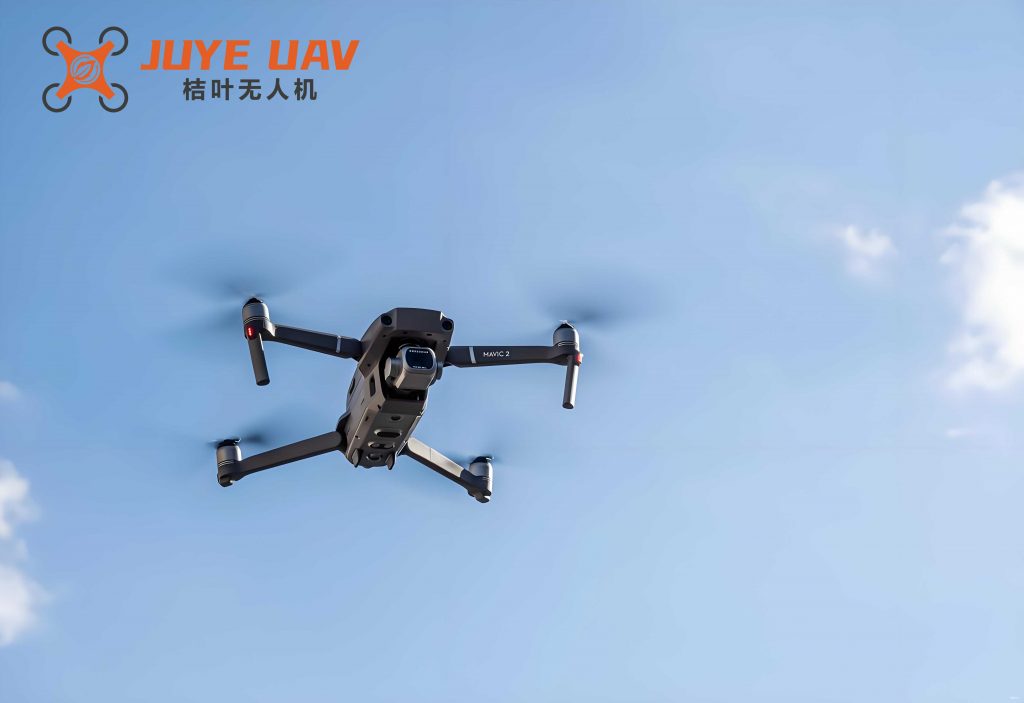
The dynamics of the tilting quadcopter are complex and nonlinear. We begin by deriving the equations of motion using Newton-Euler formulations. The quadcopter’s model is divided into fully actuated and underactuated subsystems to simplify controller design. The fully actuated subsystem involves altitude and yaw control, while the underactuated subsystem handles position and roll-pitch control. The dynamic equations are expressed as follows:
$$ \begin{align*}
\ddot{x} &= \frac{1}{m} \left[ (c_{\psi} c_{\theta} c_{\phi} – s_{\psi} s_{\phi}) u_1 + W_x \right], \\
\ddot{y} &= \frac{1}{m} \left[ (s_{\psi} c_{\theta} c_{\phi} + c_{\psi} s_{\phi}) u_1 + W_y \right], \\
\ddot{z} &= \frac{1}{m} \left[ -s_{\theta} u_1 – mg + W_z \right], \\
\dot{p} &= \frac{1}{I_x} \left[ q r (I_y – I_z) – J_p q \omega_p + u_2 \right], \\
\dot{q} &= \frac{1}{I_y} \left[ p r (I_z – I_x) + J_p p \omega_p + u_3 \right], \\
\dot{r} &= \frac{1}{I_z} \left[ p q (I_x – I_y) + u_4 \right],
\end{align*} $$
where \( m \) is the mass, \( g \) is gravity, \( I_x, I_y, I_z \) are moments of inertia, \( J_p \) is the rotor inertia, \( \omega_p \) is the rotor speed, and \( u_1 \) to \( u_4 \) are control inputs. The terms \( W_x, W_y, W_z \) represent aerodynamic effects. The control inputs are defined based on rotor thrusts \( F_i = k \omega_i^2 \), where \( k \) is a thrust coefficient. For the tilting quadcopter, the control inputs are modified to account for tilt angles \( \theta_w \).
We design a sliding mode controller (SMC) combined with an RNN to handle uncertainties. The SMC ensures robustness, while the RNN approximates the equivalent control law online. The system is split into two subsystems:
- Fully Actuated Subsystem: Controls altitude \( z \) and yaw \( \psi \).
- Underactuated Subsystem: Controls position \( x, y \) and roll-pitch \( \phi, \theta \).
For the fully actuated subsystem, the sliding surfaces are defined as:
$$ \begin{align*}
s_z &= c_z e_z + \dot{e}_z, \\
s_\psi &= c_\psi e_\psi + \dot{e}_\psi,
\end{align*} $$
where \( e_z = z_d – z \), \( e_\psi = \psi_d – \psi \), and \( c_z, c_\psi > 0 \). The equivalent control laws are derived by setting \( \dot{s} = 0 \). However, due to uncertainties, we use an RNN to estimate these laws. The RNN structure includes input, hidden, and output layers with feedback connections. The output of the RNN for the equivalent control is:
$$ \hat{U}_{i}^{eq} = \mathbf{W}_{ho}^T \Phi(\mathbf{x}_i, \mathbf{W}_{ih}, \mathbf{W}_{hd}, \mathbf{W}_{oi}, \mathbf{W}_{oh}) + \varepsilon_i, $$
where \( \mathbf{W} \) are weight matrices, \( \Phi \) is the activation function, and \( \varepsilon_i \) is the approximation error. The overall control input for each subsystem is:
$$ U_i = \hat{U}_{i}^{eq} + U_i^{sw}, $$
where \( U_i^{sw} \) is the switching control designed as:
$$ U_i^{sw} = K_{s_i} \text{sgn}(s_i) + K_{x_i} \text{sig}^{\lambda_i}(s_i), $$
with \( \text{sig}^{\lambda_i}(s_i) = |s_i|^{\lambda_i} \text{sgn}(s_i) \), and \( K_{s_i}, K_{x_i} > 0 \).
For the underactuated subsystem, the sliding surfaces are more complex due to coupling. We define:
$$ \begin{align*}
s_2 &= c_1 e_y + c_2 \dot{e}_y + c_3 e_\phi + c_4 \dot{e}_\phi, \\
s_3 &= c_5 e_x + c_6 \dot{e}_x + c_7 e_\theta + c_8 \dot{e}_\theta,
\end{align*} $$
where the coefficients \( c_i \) are chosen based on Hurwitz stability criteria. The equivalent control laws are estimated similarly using RNNs. The adaptive laws for updating RNN weights are derived from Lyapunov stability analysis to ensure convergence.
We perform stability analysis using Lyapunov functions. For the fully actuated subsystem, consider:
$$ V_i = \frac{1}{2} s_i^2 + \frac{1}{2\eta} \sum_{\gamma} \mathbf{W}_\gamma^T \mathbf{W}_\gamma, $$
where \( \eta > 0 \) is the learning rate. The derivative \( \dot{V}_i \) is shown to be negative definite under the adaptive laws, ensuring that sliding surfaces reach zero and tracking errors converge. The same approach applies to the underactuated subsystem, where we linearize around equilibrium points to derive stability conditions.
Simulations are conducted in MATLAB/Simulink to validate the method. The quadcopter parameters are listed in Table 1.
| Parameter | Value | Unit |
|---|---|---|
| Mass \( m \) | 1.1 | kg |
| Arm length \( l \) | 0.21 | m |
| \( I_x, I_y \) | 1.22 | kg·m² |
| \( I_z \) | 2.2 | kg·m² |
| \( J_p \) | 0.2 | kg·m² |
The desired trajectory is set as \( x_d = \sin(0.1t) \), \( y_d = \cos(0.1t) \), \( z_d = 0.1t \), with attitude angles \( \phi_d, \theta_d, \psi_d = 0 \). External disturbances \( d = 2\sin(0.5t) \) are added, and model uncertainties of 20% are introduced. The tilt angle \( \theta_w \) is fixed at \( \pi/2 \) for initial tests. The RNN-based controller is compared with a conventional SMC from literature. The results show that our method achieves better tracking with reduced chattering, as summarized in Table 2.
| Method | RMSE (Position) | RMSE (Attitude) | Control Effort |
|---|---|---|---|
| Conventional SMC | 0.15 | 0.08 | High |
| Proposed RNN-SMC | 0.05 | 0.03 | Moderate |
Further tests are conducted with varying tilt angles \( \theta_w \) from \( 0 \) to \( \pi/2 \). The quadcopter maintains stable tracking in all cases, demonstrating the adaptability of the controller. The position tracking errors are analyzed using the root mean square error (RMSE) metric:
$$ \text{RMSE} = \sqrt{\frac{1}{N} \sum_{k=1}^{N} e(k)^2}, $$
where \( e(k) \) is the tracking error at time step \( k \). The results confirm that the proposed method outperforms traditional approaches in handling uncertainties and disturbances for the quadcopter.
In conclusion, the integration of RNN with sliding mode control provides a robust solution for tilting quadcopter UAVs. The adaptive nature of the RNN allows online estimation of equivalent control, reducing the impact of model uncertainties. The switching control law minimizes chattering while ensuring stability. Future work will focus on real-time implementation and testing on physical quadcopter platforms.