
In recent years, the rapid development of low-altitude economies has propelled unmanned aerial vehicles (UAVs) into widespread use across various fields such as power inspection, surveillance, agricultural planting, search and rescue, tunnel detection, and post-disaster assessment. Among these, quadcopters stand out due to their ability to hover, take off and land vertically, compact size, and portability, making them ideal for complex environments like urban areas, dense forests, and unstructured spaces. However, the nonlinear, underactuated, and strongly coupled nature of quadcopters poses significant challenges for controller design. Additionally, increasing environmental complexities introduce multi-source disturbances—including external interference, internal model parameter uncertainties, and unknown velocity measurements—that severely impact trajectory tracking accuracy. This paper addresses these issues by proposing a composite control scheme that integrates an adaptive reduced-order generalized parameter estimation-based observer (GPEBO) with a non-singular fast terminal sliding mode controller to achieve finite-time convergence and enhanced anti-disturbance performance for quadcopter trajectory tracking.
The quadcopter’s dynamics are derived from Newton-Euler equations, with the system modeled under the assumption of a rigid and symmetric structure. The mathematical model accounts for position and attitude loops, incorporating factors such as mass, gravitational acceleration, moments of inertia, and aerodynamic coefficients. The control inputs include the total thrust and three-axis moments, which are related to the rotor speeds through specific coefficients. The dynamics are reparameterized to facilitate the design of the adaptive reduced-order GPEBO, transforming state estimation into parameter estimation via linear regression equations. This approach enables the reconstruction of unmeasurable states—specifically, the linear and angular velocities—and the estimation of lumped disturbances, which encompass external forces and torques, as well as internal coupling effects.
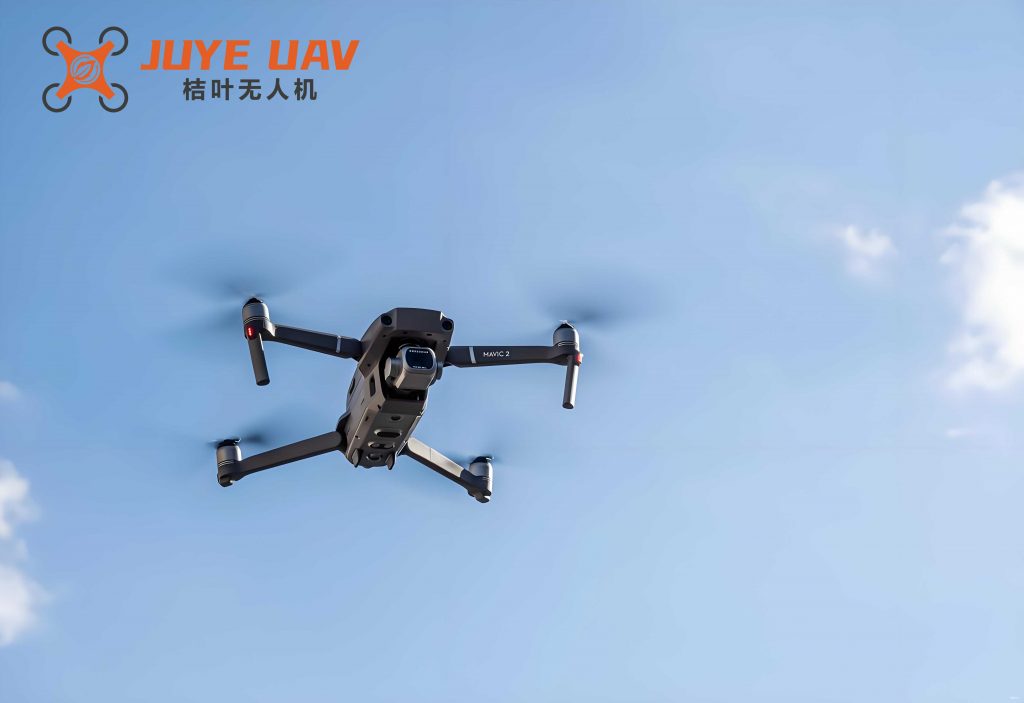
The core of the proposed method lies in the adaptive reduced-order GPEBO, which leverages dynamic regression extension and mixing (DREM) theory to achieve finite-time convergence. By constructing linear regression equations from the reparameterized system and applying filter operators, the observer efficiently estimates the unknown states and disturbances. The observer’s output is then utilized in a composite non-singular fast terminal sliding mode controller, designed for both position and attitude loops. This controller ensures that tracking errors converge to zero in finite time, leveraging the estimated states and disturbances to enhance robustness and convergence speed. The stability of the closed-loop system is rigorously proven using Lyapunov methods, confirming finite-time convergence under the proposed scheme.
Extensive simulations demonstrate the superiority of the proposed approach over existing methods, such as composite control based on extended state observers (ESO) and non-singular fast terminal sliding mode control without observers. The results show that the proposed method offers faster convergence and better disturbance rejection, making it highly suitable for real-world quadcopter applications. Key performance metrics, including integral square error (ISE) and integral absolute error (IAE), are used to quantitatively validate the improvements. The following sections delve into the system modeling, observer design, controller formulation, stability analysis, and simulation results in detail, providing a comprehensive framework for advanced quadcopter control.
System Modeling and Problem Formulation
The quadcopter is modeled as a six-degree-of-freedom system, with dynamics described in both inertial and body-fixed frames. The equations of motion are derived using Newton-Euler formalism, considering the forces and moments generated by the four rotors. The key dynamic equations for position and attitude are as follows:
For position dynamics:
$$ \ddot{x} = \frac{U_1}{m} (\cos\phi \sin\theta \cos\psi + \sin\psi \sin\phi) – \frac{k_t}{m} \dot{x} + F_{dx} $$
$$ \ddot{y} = \frac{U_1}{m} (\cos\phi \sin\theta \sin\psi – \cos\psi \sin\phi) – \frac{k_t}{m} \dot{y} + F_{dy} $$
$$ \ddot{z} = \frac{U_1}{m} \cos\phi \cos\theta – g – \frac{k_t}{m} \dot{z} + F_{dz} $$
For attitude dynamics:
$$ \ddot{\phi} = \frac{U_2 + (I_y – I_z) \dot{\theta} \dot{\psi}}{I_x} – \frac{k_c l}{I_x} \dot{\phi} + \tau_{d\phi} $$
$$ \ddot{\theta} = \frac{U_3 + (I_z – I_x) \dot{\phi} \dot{\psi}}{I_y} – \frac{k_c l}{I_y} \dot{\theta} + \tau_{d\theta} $$
$$ \ddot{\psi} = \frac{U_4 + (I_x – I_y) \dot{\phi} \dot{\theta}}{I_z} – \frac{k_c}{I_z} \dot{\psi} + \tau_{d\psi} $$
Here, $m$ is the mass, $g$ is gravitational acceleration, $I_x$, $I_y$, $I_z$ are moments of inertia, $k_t$ and $k_c$ are aerodynamic coefficients, $F_{dx}$, $F_{dy}$, $F_{dz}$ are external disturbance forces, and $\tau_{d\phi}$, $\tau_{d\theta}$, $\tau_{d\psi}$ are disturbance torques. The control inputs $U_1$ to $U_4$ are related to rotor speeds $\varpi_i$ through:
$$ U_1 = C_T (\varpi_1^2 + \varpi_2^2 + \varpi_3^2 + \varpi_4^2) $$
$$ U_2 = \frac{\sqrt{2}}{2} l C_T (-\varpi_1^2 + \varpi_2^2 + \varpi_3^2 – \varpi_4^2) $$
$$ U_3 = \frac{\sqrt{2}}{2} l C_T (\varpi_1^2 – \varpi_2^2 + \varpi_3^2 – \varpi_4^2) $$
$$ U_4 = C_m (\varpi_1^2 + \varpi_2^2 – \varpi_3^2 – \varpi_4^2) $$
where $C_T$ and $C_m$ are thrust and moment coefficients, and $l$ is the arm length. The virtual control inputs for position loops are defined as:
$$ u_x = \frac{U_1}{m} (\cos\phi \sin\theta \cos\psi + \sin\psi \sin\phi) $$
$$ u_y = \frac{U_1}{m} (\cos\phi \sin\theta \sin\psi – \cos\psi \sin\phi) $$
$$ u_z = \frac{U_1}{m} \cos\phi \cos\theta – g $$
From these, the desired thrust $U_1^d$, roll angle $\phi_d$, and pitch angle $\theta_d$ are computed as:
$$ U_1^d = m \sqrt{u_x^2 + u_y^2 + (u_z + g)^2} $$
$$ \theta_d = \arctan\left( \frac{u_x \cos\psi + u_y \sin\psi}{u_z + g} \right) $$
$$ \phi_d = \arcsin\left( \frac{u_x \sin\psi – u_y \cos\psi}{\sqrt{u_x^2 + u_y^2 + (u_z + g)^2}} \right) $$
The primary challenge addressed in this work is the unavailability of velocity measurements (linear and angular velocities) and the presence of multi-source disturbances. The goal is to design an observer-based control scheme that ensures finite-time convergence of tracking errors for position and attitude. The observer must reconstruct the unmeasurable states and estimate the lumped disturbances, which are defined as:
$$ \eta_{2x} = F_{dx}, \quad \eta_{2y} = F_{dy}, \quad \eta_{2z} = F_{dz} $$
$$ \eta_{2\phi} = \frac{(I_y – I_z) \dot{\theta} \dot{\psi}}{I_x} + \tau_{d\phi}, \quad \eta_{2\theta} = \frac{(I_z – I_x) \dot{\phi} \dot{\psi}}{I_y} + \tau_{d\theta}, \quad \eta_{2\psi} = \frac{(I_x – I_y) \dot{\phi} \dot{\theta}}{I_z} + \tau_{d\psi} $$
The tracking errors are defined as $e_x = x – x_d$, $e_y = y – y_d$, $e_z = z – z_d$, $e_\phi = \phi – \phi_d$, $e_\theta = \theta – \theta_d$, $e_\psi = \psi – \psi_d$, with the objective of achieving $\lim_{t \to t_a} e_i = 0$ for $i = x, y, z, \phi, \theta, \psi$ in finite time $t_a$.
Design of Adaptive Reduced-Order GPEBO
The adaptive reduced-order GPEBO is designed to estimate the unmeasurable states and lumped disturbances by transforming the state estimation problem into a parameter estimation problem. The system is first reparameterized into linear regression form for both position and attitude loops. Consider the roll channel as an example; the dynamics are reparameterized as:
$$ \dot{x}_{2\phi} = A_\phi x_{2\phi} + b_\phi + B_\phi \eta_{2\phi} $$
$$ \dot{x}_{1\phi} = C_\phi x_{2\phi} $$
where $x_{1\phi} = \phi$, $x_{2\phi} = \dot{\phi}$, $A_\phi = -k_c l / I_x$, $b_\phi = U_2 / I_x$, $B_\phi = 1$, $C_\phi = 1$. Similar reparameterization applies to other channels.
To construct the linear regression equation (LRE), dynamic extensions are introduced. For the roll channel, define:
$$ \dot{\varepsilon}_\phi = A_\phi \varepsilon_\phi + b_\phi, \quad \varepsilon_\phi(0) = 0 $$
$$ \dot{\chi}_{A_\phi} = A_\phi \chi_{A_\phi}, \quad \chi_{A_\phi}(0) = 1 $$
The unmeasurable state $x_{2\phi}$ can be expressed as:
$$ x_{2\phi} = \chi_{A_\phi}(t) \eta_{1\phi} + B_\phi \eta_{2\phi} \int_0^t \chi_{A_\phi}(t) dt + \varepsilon_\phi $$
where $\eta_{1\phi} = x_{2\phi}(0) – \varepsilon_\phi(0)$. The LRE is derived as:
$$ q = \kappa^T \eta $$
with $\eta = [\eta_{1\phi}, \eta_{2\phi}]^T$, and the signals are generated by:
$$ \dot{\kappa} = -\lambda \kappa + \lambda \left[ C_\phi \chi_{A_\phi}, C_\phi B_\phi \int_0^t \chi_{A_\phi} dt \right]^T, \quad \kappa(0) = 0_{2\times1} $$
$$ \dot{\omega} = -\lambda \omega + \lambda (\lambda x_{1\phi} + C_\phi \varepsilon_\phi), \quad \omega(0) = \lambda x_{1\phi}(0) $$
$$ q = \lambda x_{1\phi} – \omega $$
To enhance estimation performance, the DREM theory is applied. Define a filter operator $H(s) = [H_1(s), H_2(s)]^T$ with $H_i(s) = a_{\phi i} / (s + b_{\phi i})$ for $i=1,2$, where $a_{\phi i}$ and $b_{\phi i}$ are positive constants. Applying the filter to the LRE yields the extended LRE:
$$ q_f = \kappa_f \eta $$
where $q_f = H(s) q$ and $\kappa_f = H(s) \kappa^T$. The DREM estimator is designed as:
$$ \dot{r}(t) = -\lambda r(t) + \kappa_f^T q_f, \quad r(0) = 0_{2\times1} $$
$$ \dot{\delta}(t) = -\lambda \delta(t) + \kappa_f^T \kappa_f, \quad \delta(0) = 0_{2\times2} $$
$$ Y = \text{adj}\{\delta(t)\} r(t), \quad \Delta = \det\{\delta(t)\} $$
The parameter update law is:
$$ \dot{\hat{\eta}}(t) = -\gamma \Delta(t) (\Delta(t) \hat{\eta}(t) – Y), \quad \gamma > 0, \quad \hat{\eta}(0) = 0 $$
with an auxiliary variable:
$$ \dot{\nu}(t) = -\gamma \Delta^2(t) \nu(t), \quad \nu(0) = 1 $$
The observer output is given by:
$$ \xi = \frac{1}{1 – w_c} (\hat{\eta}(t) – w_c \hat{\eta}(0)) $$
where $w_c = \begin{cases} 1 – \rho, & \nu > 1 – \rho \\ \nu, & \nu < 1 – \rho \end{cases}$ with $\rho \in (0,1)$. The estimated state and disturbance are:
$$ \hat{x}_{2\phi} = \chi_{A_\phi} \xi_1 + B_\phi \xi_2 \int_0^t \chi_{A_\phi}(t) dt + \varepsilon_\phi $$
$$ \hat{\eta}_{2\phi} = \xi_2 $$
Under the interval excitation condition $\int_0^{t_c} \Delta^2(s) ds \geq -\frac{1}{\gamma} \ln(1 – \rho)$, the estimator achieves finite-time convergence, meaning $\xi(t) = \eta$ for $t \geq t_c$. This design is applied uniformly to all channels, ensuring consistent performance across the quadcopter’s dynamics.
Composite Non-Singular Fast Terminal Sliding Mode Controller Design
Based on the estimated states and disturbances from the adaptive reduced-order GPEBO, a composite non-singular fast terminal sliding mode controller is designed for both position and attitude loops. The sliding surface for each channel is defined as:
$$ S_i = e_i + \frac{1}{\alpha_i} e_i^{m_i/n_i} + \frac{1}{\beta_i} \dot{\hat{e}}_i^{p_i/q_i}, \quad i = x, y, z, \phi, \theta, \psi $$
where $\alpha_i > 0$, $\beta_i > 0$, $m_i$, $n_i$, $p_i$, $q_i$ are positive odd integers satisfying $1 < p_i/q_i < m_i/n_i < 2$, and $\dot{\hat{e}}_i$ is the estimated derivative of the tracking error, obtained from the observer. The controller for the position loops is designed as:
$$ u_x = \beta_x \frac{q_x}{p_x} \dot{\hat{e}}_x^{2 – p_x/q_x} \left(1 + \frac{m_x}{\alpha_x n_x} e_x^{m_x/n_x – 1}\right) – \hat{\eta}_{2x} + \ddot{x}_d + \frac{k_t}{m} \hat{x}_{2x} + k_{x1} S_x + k_{x2} \text{sign}(S_x) $$
$$ u_y = \beta_y \frac{q_y}{p_y} \dot{\hat{e}}_y^{2 – p_y/q_y} \left(1 + \frac{m_y}{\alpha_y n_y} e_y^{m_y/n_y – 1}\right) – \hat{\eta}_{2y} + \ddot{y}_d + \frac{k_t}{m} \hat{x}_{2y} + k_{y1} S_y + k_{y2} \text{sign}(S_y) $$
$$ u_z = \beta_z \frac{q_z}{p_z} \dot{\hat{e}}_z^{2 – p_z/q_z} \left(1 + \frac{m_z}{\alpha_z n_z} e_z^{m_z/n_z – 1}\right) – \hat{\eta}_{2z} + \ddot{z}_d + \frac{k_t}{m} \hat{x}_{2z} + k_{z1} S_z + k_{z2} \text{sign}(S_z) $$
For the attitude loops, the controllers are:
$$ U_2 = I_x \left( \beta_\phi \frac{q_\phi}{p_\phi} \dot{\hat{e}}_\phi^{2 – p_\phi/q_\phi} \left(1 + \frac{m_\phi}{\alpha_\phi n_\phi} e_\phi^{m_\phi/n_\phi – 1}\right) – \hat{\eta}_{2\phi} + \ddot{\phi}_d + \frac{k_c l}{I_x} \hat{x}_{2\phi} + k_{\phi1} S_\phi + k_{\phi2} \text{sign}(S_\phi) \right) $$
$$ U_3 = I_y \left( \beta_\theta \frac{q_\theta}{p_\theta} \dot{\hat{e}}_\theta^{2 – p_\theta/q_\theta} \left(1 + \frac{m_\theta}{\alpha_\theta n_\theta} e_\theta^{m_\theta/n_\theta – 1}\right) – \hat{\eta}_{2\theta} + \ddot{\theta}_d + \frac{k_c l}{I_y} \hat{x}_{2\theta} + k_{\theta1} S_\theta + k_{\theta2} \text{sign}(S_\theta) \right) $$
$$ U_4 = I_z \left( \beta_\psi \frac{q_\psi}{p_\psi} \dot{\hat{e}}_\psi^{2 – p_\psi/q_\psi} \left(1 + \frac{m_\psi}{\alpha_\psi n_\psi} e_\psi^{m_\psi/n_\psi – 1}\right) – \hat{\eta}_{2\psi} + \ddot{\psi}_d + \frac{k_c}{I_z} \hat{x}_{2\psi} + k_{\psi1} S_\psi + k_{\psi2} \text{sign}(S_\psi) \right) $$
The desired thrust $U_1^d$ is computed from $u_x$, $u_y$, $u_z$, and the rotor speeds are obtained by solving:
$$ \begin{bmatrix} \varpi_1 \\ \varpi_2 \\ \varpi_3 \\ \varpi_4 \end{bmatrix} = \begin{bmatrix} \frac{1}{4} & -\frac{\sqrt{2}}{4} & \frac{\sqrt{2}}{4} & \frac{1}{4} \\ \frac{1}{4} & \frac{\sqrt{2}}{4} & -\frac{\sqrt{2}}{4} & \frac{1}{4} \\ \frac{1}{4} & \frac{\sqrt{2}}{4} & \frac{\sqrt{2}}{4} & -\frac{1}{4} \\ \frac{1}{4} & -\frac{\sqrt{2}}{4} & -\frac{\sqrt{2}}{4} & -\frac{1}{4} \end{bmatrix} \begin{bmatrix} U_1^d / C_T \\ U_2 / (l C_T) \\ U_3 / (l C_T) \\ U_4 / C_m \end{bmatrix} $$
To avoid chattering, the sign function is replaced with a saturation function:
$$ \text{sat}(S_i, d) = \begin{cases} \text{sign}(S_i), & |S_i| > d \\ \frac{S_i}{d}, & |S_i| \leq d \end{cases} $$
with $d = 0.2$.
Stability Analysis
The stability of the closed-loop system is analyzed using Lyapunov theory, focusing on finite-time convergence of tracking errors. Consider the roll channel as a representative case. Define the estimation errors as:
$$ e_{A\phi} = \hat{x}_{2\phi} – x_{2\phi} = \dot{e}_\phi – \dot{\hat{e}}_\phi, \quad e_{d\phi} = \hat{\eta}_{2\phi} – \eta_{2\phi} $$
The sliding surface dynamics are derived as:
$$ \dot{S}_\phi = -\frac{p_\phi}{\beta_\phi q_\phi} \dot{\hat{e}}_\phi^{p_\phi/q_\phi – 1} (k_{\phi1} S_\phi + k_{\phi2} \text{sign}(S_\phi)) + \frac{p_\phi}{\beta_\phi q_\phi} \dot{\hat{e}}_\phi^{p_\phi/q_\phi – 1} (e_{d\phi} – \dot{e}_{A\phi} – \frac{k_c l}{I_x} e_{A\phi}) – e_{A\phi} \left(1 + \frac{m_\phi}{\alpha_\phi n_\phi} e_\phi^{m_\phi/n_\phi – 1}\right) $$
Choose the Lyapunov function:
$$ V = \frac{1}{2} (e_\phi^2 + \dot{e}_\phi^2 + S_\phi^2) $$
Its derivative is bounded by:
$$ \dot{V} \leq k_{v1} (|S_\phi| + |e_\phi| + |\dot{e}_\phi|) + k_{v2} (|S_\phi e_\phi| + |S_\phi \dot{e}_\phi| + |e_\phi \dot{e}_\phi|) + k_{v3} $$
which can be simplified to:
$$ \dot{V} \leq k_v V + L_v $$
where $k_v = 2k_{v2} + k_{v1}$ and $L_v = \frac{3}{2} k_{v1} + k_{v3}$. This ensures that the system states remain bounded before the observer converges. After finite-time convergence of the observer, the sliding surface dynamics reduce to:
$$ \dot{S}_\phi = -\frac{p_\phi}{\beta_\phi q_\phi} \dot{e}_\phi^{p_\phi/q_\phi – 1} (k_{\phi1} S_\phi + k_{\phi2} \text{sign}(S_\phi)) $$
Consider the Lyapunov function $V_{S_\phi} = \frac{1}{2} S_\phi^2$. Its derivative is:
$$ \dot{V}_{S_\phi} = -\frac{p_\phi}{\beta_\phi q_\phi} \dot{e}_\phi^{p_\phi/q_\phi – 1} (k_{\phi1} S_\phi^2 + k_{\phi2} |S_\phi|) $$
Since $\dot{e}_\phi^{p_\phi/q_\phi – 1} > 0$ for $\dot{e}_\phi \neq 0$, and using the fact that $F(\dot{e}_\phi) = \frac{p_\phi}{\beta_\phi q_\phi} \dot{e}_\phi^{p_\phi/q_\phi – 1} > \mu > 0$ for some $\mu$, we have:
$$ \dot{V}_{S_\phi} \leq -2 \mu k_{\phi1} V_{S_\phi} – \sqrt{2} k_{\phi2} \mu \sqrt{V_{S_\phi}} $$
By Lemma 1, this implies finite-time convergence of $S_\phi$ to zero. Once $S_\phi = 0$, the tracking error dynamics become:
$$ \dot{e}_\phi = -\beta_\phi^{q_\phi/p_\phi} e_\phi^{q_\phi/p_\phi} \left(1 + \frac{1}{\alpha_\phi} e_\phi^{m_\phi/n_\phi – 1}\right)^{q_\phi/p_\phi} $$
Integration shows that $e_\phi$ converges to zero in finite time. The same analysis applies to all other channels, ensuring global finite-time stability of the quadcopter system.
Simulation Results and Performance Evaluation
To validate the proposed method, simulations are conducted comparing three control schemes: the proposed composite non-singular fast terminal sliding mode control with adaptive reduced-order GPEBO (CNFTSM+ARGPEBO), composite control with extended state observer (CNFTSM+ESO), and non-singular fast terminal sliding mode control without observer (NFTSM). The quadcopter parameters are set as: mass $m = 2$ kg, gravity $g = 9.8$ m/s², moments of inertia $I_x = I_y = 1.25$ kg·m², $I_z = 2.5$ kg·m², arm length $l = 0.35$ m, aerodynamic coefficients $k_t = 0.035$ N/(m/s)², $k_c = 0.011$ N·m/(m/s)², thrust coefficient $C_T = 1.105 \times 10^{-5}$, and moment coefficient $C_m = 1.779 \times 10^{-7}$. The reference trajectory is defined as:
$$ x_d = \cos(0.5t), \quad y_d = \sin(0.5t), \quad z_d = 0.1t + 2, \quad \psi_d = \frac{\pi}{3} \sin(0.5t) $$
Disturbances include time-varying and constant components:
$$ F_{dx} = F_{dy} = F_{dz} = \begin{cases} 0, & 0 \leq t \leq 10 \\ 3, & 10 \leq t < 20 \\ 3 – 0.2t, & 20 \leq t < 30 \\ 3 + 3\sin(t), & 30 \leq t < 40 \\ 0, & 40 \leq t \leq 50 \end{cases} $$
$$ \tau_{d\phi} = \tau_{d\theta} = \tau_{d\psi} = \begin{cases} 0, & 0 \leq t \leq 10 \\ 2, & 10 \leq t < 20 \\ 2 + 2\sin(t), & 20 \leq t < 30 \\ -2, & 30 \leq t < 40 \\ 0, & 40 \leq t \leq 50 \end{cases} $$
The controller and observer parameters are tuned as follows. For position loops: $\alpha_x = \alpha_y = \alpha_z = 1$, $\beta_x = \beta_y = \beta_z = 1$, $m_x = m_y = m_z = 7$, $n_x = n_y = n_z = 5$, $p_x = p_y = p_z = 15$, $q_x = q_y = q_z = 13$, $k_{x1} = k_{y1} = k_{z1} = 1$, $k_{x2} = k_{y2} = k_{z2} = 0.8$. For attitude loops: $\alpha_\phi = \alpha_\theta = \alpha_\psi = 13$, $\beta_\phi = \beta_\theta = \beta_\psi = 15$, $m_\phi = m_\theta = m_\psi = 9$, $n_\phi = n_\theta = n_\psi = 5$, $p_\phi = p_\theta = p_\psi = 5$, $q_\phi = q_\theta = q_\psi = 3$, $k_{\phi1} = k_{\theta1} = 40$, $k_{\psi1} = 30$, $k_{\phi2} = k_{\theta2} = k_{\psi2} = 3$. Observer parameters: $\lambda_i = 500$, $\gamma_i = 0.4$ to $0.48$, $a_{i1} = 70,000$ to $300,000$, $b_{i1} = 4.5$ to $11$, $a_{i2} = 250$, $b_{i2} = 2000$ for $i = x, y, z, \phi, \theta, \psi$.
The simulation results demonstrate that the proposed CNFTSM+ARGPEBO method achieves superior trajectory tracking accuracy and disturbance rejection compared to CNFTSM+ESO and NFTSM. The position tracking errors for the proposed method remain within 0.1 m, while CNFTSM+ESO and NFTSM exhibit errors up to 1 m and 2 m, respectively. The estimated velocities and disturbances converge rapidly to their true values, enabling precise control. Quantitative performance metrics are evaluated using integral square error (ISE) and integral absolute error (IAE):
| Variable | NFTSM | CNFTSM+ESO | CNFTSM+ARGPEBO |
|---|---|---|---|
| X ISE | 30.17 | 5.002 | 0.7719 |
| Y ISE | 30.94 | 4.362 | 0.09855 |
| Z ISE | 33.72 | 7.291 | 3.041 |
| Variable | NFTSM | CNFTSM+ESO | CNFTSM+ARGPEBO |
|---|---|---|---|
| X IAE | 27.74 | 9.029 | 1.968 |
| Y IAE | 27.72 | 8.094 | 1.148 |
| Z IAE | 29.57 | 10.19 | 3.202 |
The proposed method reduces ISE by 84.57% to 97.44% in the X-channel, 97.77% to 99.68% in the Y-channel, and 58.29% to 90.98% in the Z-channel compared to the other methods. Similarly, IAE improvements range from 68.58% to 95.81%. These results highlight the enhanced convergence speed and anti-disturbance capability of the proposed approach, making it highly effective for quadcopter applications in dynamic environments.
Conclusion
This paper has presented a novel composite control scheme for quadcopter trajectory tracking that addresses the challenges of unknown velocity measurements and multi-source disturbances. The adaptive reduced-order GPEBO efficiently reconstructs unmeasurable states and estimates lumped disturbances with finite-time convergence, while the non-singular fast terminal sliding mode controller ensures robust and fast tracking performance. Stability analysis proves finite-time convergence of the closed-loop system, and simulations validate the superiority of the proposed method over existing approaches. Future work will focus on integrating control barrier functions for enhanced safety and further optimizing observer designs based on system observability conditions to ensure exponential convergence. The proposed framework offers a significant advancement in quadcopter control, with potential applications in various autonomous missions.