
In recent years, the rapid advancement of unmanned aerial vehicle (UAV) technology has revolutionized various application scenarios, particularly in logistics, data acquisition, and automated inventory management. As a versatile platform, the quadcopter offers numerous advantages, including agility, low cost, strong concealment, and ease of deployment, making it ideal for complex environments such as warehouses. This paper presents the design and implementation of a quadcopter-based image recognition system that leverages computer vision techniques to autonomously identify and inventory goods. The system utilizes the TM4C123GH6PM microcontroller as its core processing unit, integrated with an OpenMV module for real-time image processing. By employing sensors like MPU6050 for attitude sensing, TOF Sense laser for ranging, and N10 lidar for positioning, the quadcopter achieves stable flight and precise navigation. The software incorporates PID control algorithms for attitude stabilization and OpenMV-based algorithms for object recognition, enabling efficient data transmission to a ground station for display. This approach significantly reduces labor costs and enhances operational efficiency in warehouse settings, demonstrating the potential of quadcopter systems in practical applications.
The proliferation of quadcopter technology has been driven by its adaptability to diverse tasks, from aerial photography to industrial inspections. In this work, we focus on optimizing a quadcopter for autonomous goods盘点 in warehouses, where traditional methods are time-consuming and error-prone. The integration of computer vision allows the quadcopter to identify targets accurately, while robust hardware components ensure reliable performance. We begin by detailing the hardware architecture, followed by an in-depth explanation of the software design, including control algorithms and image processing techniques. Extensive testing validates the system’s effectiveness, with results indicating high recognition accuracy and reduced operation times. Throughout this paper, we emphasize the role of the quadcopter as a key enabler for automated systems, highlighting its scalability and efficiency.
System Hardware Design
The hardware design of the quadcopter image recognition system is centered around a modular architecture that ensures real-time data acquisition, processing, and control. The core components include the main controller, sensors for attitude and distance measurement, positioning modules, and the visual recognition unit. Each element is carefully selected to meet the demands of high-performance quadcopter operations in dynamic environments. Below, we describe the key hardware modules in detail, supported by tables summarizing their specifications and functions.
The main controller serves as the brain of the quadcopter, handling sensor data fusion, attitude estimation, and control signal generation. We employ the TM4C123GH6PM microcontroller, which features an 80 MHz ARM Cortex-M4F processor with floating-point support. This chip is chosen for its low power consumption and high processing speed, essential for maintaining quadcopter stability during flight. It includes multiple PWM modules for motor control and serial communication interfaces such as UART, SPI, I2C, and CAN, facilitating seamless integration with other components. The TM4C123GH6PM’s ability to process complex algorithms in real-time makes it ideal for quadcopter applications requiring rapid response to environmental changes.
For attitude sensing, the MPU6050 six-axis sensor is utilized, combining a three-axis gyroscope and a three-axis accelerometer. This sensor measures angular velocity and linear acceleration along the x, y, and z axes, enabling precise calculation of the quadcopter’s orientation. The MPU6050 incorporates digital filters and Kalman filtering algorithms to fuse sensor data, providing accurate attitude estimates even under turbulent conditions. Its digital output simplifies interfacing with the main controller, and its high update rate ensures timely feedback for control loops. The quadcopter relies on this data to maintain balance and execute maneuvers, underscoring the importance of reliable attitude sensing in UAV systems.
Altitude control is achieved through the TOF Sense laser ranging module, which uses time-of-flight principles to measure distances from 1 cm to 5 m with a resolution of 1 mm. This module operates at a 10 Hz update rate and offers an accuracy of 0.02%, allowing the quadcopter to maintain a consistent height above ground or obstacles. By emitting laser pulses and measuring their round-trip time, the TOF Sense provides real-time distance data that is critical for autonomous takeoff, landing, and hover operations. In our quadcopter setup, this sensor ensures stable altitude control, reducing the risk of collisions and enhancing overall safety.
Positioning is handled by the N10 laser radar, which performs 360-degree laser scanning to capture environmental data. With a maximum range of 12 m and an accuracy of ±3 cm, the N10 lidar enables the quadcopter to build maps of its surroundings and localize itself within them. This capability is vital for autonomous navigation in warehouse aisles, where the quadcopter must avoid obstacles and follow predefined paths. The lidar’s high precision supports simultaneous localization and mapping (SLAM) algorithms, allowing the quadcopter to adapt to changing environments and improve route planning over time.
The visual recognition module is based on the OpenMV4 Plus, which features an ARM Cortex-M7 processor and an OV7725 camera sensor. This module executes core machine vision algorithms, such as color blob detection and edge detection, to identify targets like QR codes or specific objects. In our quadcopter system, the OpenMV captures images, processes them to extract relevant features, and communicates the results via UART to the ground station. Its programmability and built-in libraries streamline the development of custom recognition tasks, making it a cost-effective solution for real-time image analysis on a quadcopter platform.
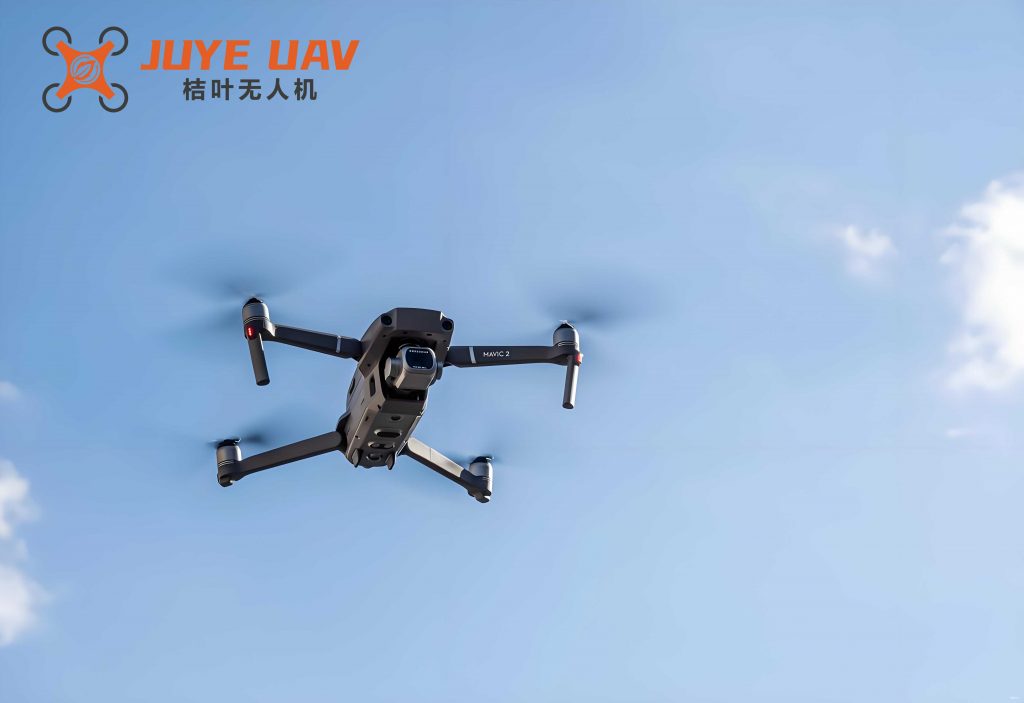
To summarize the hardware components, Table 1 provides an overview of the key sensors and their specifications, highlighting their roles in the quadcopter system. This table illustrates how each module contributes to the overall functionality, from flight stability to target recognition.
| Component | Specifications | Function in Quadcopter |
|---|---|---|
| TM4C123GH6PM Microcontroller | 80 MHz ARM Cortex-M4F, 64 pins, UART/SPI/I2C/CAN interfaces | Main control, data processing, and motor control |
| MPU6050 Sensor | 6-axis (gyroscope + accelerometer), digital output, built-in filters | Attitude estimation and stabilization |
| TOF Sense Laser | Range: 1 cm – 5 m, resolution: 1 mm, update rate: 10 Hz | Altitude measurement and control |
| N10 Laser Radar | 360° scanning, range: 12 m, accuracy: ±3 cm | Positioning and environment mapping |
| OpenMV4 Plus | ARM Cortex-M7, OV7725 camera, machine vision algorithms | Image capture and target recognition |
In addition to these core components, the quadcopter incorporates electronic speed controllers (ESCs), motors, and propellers to actuate flight movements. The ESCs regulate motor speeds based on PWM signals from the main controller, enabling precise adjustments to the quadcopter’s pitch, roll, and yaw. The integration of these hardware elements forms a cohesive system that supports autonomous operations, with each part playing a critical role in ensuring the quadcopter’s reliability and performance. By leveraging advanced sensors and a powerful microcontroller, our quadcopter design achieves a balance between complexity and practicality, suitable for real-world applications.
Software Design
The software architecture of the quadcopter image recognition system is designed to facilitate stable flight control, efficient image processing, and seamless communication. It comprises several layers, including sensor data acquisition, attitude estimation, PID control algorithms, and OpenMV-based recognition routines. All software components are implemented in C and Python, optimized for real-time execution on the embedded platforms. We begin by outlining the overall software flow, then delve into the details of key algorithms, supported by mathematical formulas and code snippets.
The software system operates in a closed-loop manner, where sensor data is continuously read, processed, and used to generate control signals. As shown in Figure 2 (referenced conceptually, without explicit numbering), the main loop involves reading inputs from the MPU6050, TOF Sense, and N10 lidar, followed by attitude estimation using sensor fusion techniques. The estimated attitude is then fed into PID controllers to compute motor adjustments, while the OpenMV module handles image capture and recognition in parallel. Results are transmitted to the ground station via UART for real-time monitoring. This structured approach ensures that the quadcopter maintains stability while performing recognition tasks, even in noisy environments.
At the heart of the flight control system is the PID algorithm, which compensates for deviations in the quadcopter’s attitude and position. The PID controller calculates an error term as the difference between a desired setpoint and the measured value, then applies proportional, integral, and derivative gains to produce a control output. The general form of the PID control law is expressed as:
$$ u(t) = K_p e(t) + K_i \int_0^t e(\tau) d\tau + K_d \frac{de(t)}{dt} $$
where \( u(t) \) is the control output, \( e(t) \) is the error at time \( t \), and \( K_p \), \( K_i \), and \( K_d \) are the proportional, integral, and derivative gains, respectively. In our quadcopter implementation, we apply separate PID controllers for roll, pitch, and yaw angles and rates. For instance, the angular rate PID ensures rapid response to disturbances, while the angle PID maintains overall orientation. The tuning process involves iterative adjustments to these gains, as summarized in Table 2, which lists the optimized parameters for our quadcopter system.
| Control Parameter | Proportional Gain \( K_p \) | Integral Gain \( K_i \) | Derivative Gain \( K_d \) |
|---|---|---|---|
| Roll Angle Rate | 1500 | 3000 | 300 |
| Pitch Angle Rate | 1500 | 3000 | 300 |
| Yaw Angle Rate | 1600 | 1000 | 300 |
| Roll Angle | 5500 | 0 | 0 |
| Pitch Angle | 5500 | 0 | 0 |
| Yaw Angle | 5500 | 0 | 0 |
The PID tuning process begins with proportional gain adjustment to achieve a responsive system, followed by derivative gain to dampen oscillations, and integral gain to eliminate steady-state errors. For the quadcopter, this ensures smooth transitions during flight maneuvers and enhances resistance to external forces like wind. The control output \( u(t) \) is mapped to PWM signals for the ESCs, which in turn adjust motor speeds to stabilize the quadcopter. This closed-loop control is critical for maintaining hover and executing precise movements in confined spaces, such as warehouse aisles.
On the image recognition front, the OpenMV module executes a streamlined algorithm to identify and decode QR codes on goods. The process involves capturing frames from the camera, applying preprocessing filters (e.g., grayscale conversion and thresholding), and scanning for QR patterns using built-in functions. Upon detection, the payload is extracted via payload = code.payload(), and new data is packaged and sent over UART to avoid duplicates. The algorithm flowchart, as depicted in Figure 3 (referenced conceptually), includes steps for image acquisition, QR code localization, payload verification, and data transmission. This efficient pipeline allows the quadcopter to perform real-time recognition while in motion, minimizing processing delays.
To illustrate the software integration, consider the mathematical model for quadcopter dynamics, which underlies the control design. The equations of motion can be represented using Newton-Euler formulations, where the translational and rotational dynamics are described as:
$$ m \ddot{\mathbf{r}} = \mathbf{F}_g + \mathbf{F}_t + \mathbf{F}_d $$
and
$$ I \dot{\boldsymbol{\omega}} + \boldsymbol{\omega} \times (I \boldsymbol{\omega}) = \boldsymbol{\tau} $$
where \( m \) is the mass of the quadcopter, \( \mathbf{r} \) is the position vector, \( \mathbf{F}_g \) is gravity, \( \mathbf{F}_t \) is thrust from motors, \( \mathbf{F}_d \) is drag, \( I \) is the inertia matrix, \( \boldsymbol{\omega} \) is the angular velocity vector, and \( \boldsymbol{\tau} \) is the torque vector. These equations inform the PID design by relating control inputs to motion outputs, enabling us to simulate and optimize the quadcopter’s behavior before implementation. In practice, we simplify this model using small-angle approximations for real-time computation, ensuring that the software remains efficient on the embedded hardware.
Communication between the quadcopter and ground station is handled through UART protocols, with data packets containing recognition results, sensor readings, and status updates. The ground station software, developed in Python, parses these packets and displays them on a graphical interface, allowing operators to monitor the quadcopter’s progress in real time. This bidirectional communication enhances the system’s usability, enabling remote intervention if necessary. Overall, the software design emphasizes robustness and scalability, with modular code that can be extended for additional features, such as advanced path planning or multi-quadcopter coordination.
System Testing and Analysis
To validate the performance of the quadcopter image recognition system, we conducted extensive tests in a controlled warehouse-like environment. The testing phase focused on evaluating flight stability, recognition accuracy, and operational efficiency under various conditions. We employed a systematic approach, beginning with individual component checks and progressing to integrated system trials. The results demonstrate the quadcopter’s capability to autonomously navigate and identify goods, with quantitative metrics collected over multiple runs.
Initial tests involved calibrating the PID controllers to ensure stable flight. As detailed in the software section, we tuned the gains through iterative experiments, starting with proportional terms and adding derivative and integral components to minimize overshoot and steady-state error. For example, the roll angle rate controller required a \( K_p \) of 1500 to achieve responsive control, while a \( K_d \) of 300 reduced oscillations during directional changes. The final parameters, listed in Table 2, were applied across all flight tests, resulting in consistent hover performance and smooth transitions between waypoints. The quadcopter’s ability to maintain altitude and attitude was crucial for reliable image capture, as any instability could blur images or misalign the camera.
Recognition accuracy was assessed by deploying the quadcopter along a predefined route past 24 distinct goods, each labeled with a QR code. The OpenMV module captured and processed images at each stop, with success rates recorded over six test sequences. Table 3 summarizes the results, showing improvements in recognition speed and accuracy over time. For instance, in the first test, 21 out of 24 goods were correctly identified, with three errors due to lighting variations. By the sixth test, all 24 goods were recognized perfectly, and the total operation time decreased from 176 seconds to 150 seconds, indicating system learning and optimization.
| Test Sequence | Takeoff Altitude (cm) | Successful Recognitions | Erroneous Recognitions | Time Elapsed (s) | Landing Deviation (cm) |
|---|---|---|---|---|---|
| 1 | 150 | 21 | 3 | 152 | 51 |
| 2 | 150 | 23 | 1 | 176 | 46 |
| 3 | 150 | 22 | 2 | 163 | 32 |
| 4 | 150 | 23 | 1 | 167 | 21 |
| 5 | 150 | 24 | 0 | 159 | 9 |
| 6 | 150 | 24 | 0 | 150 | 5 |
Analysis of the data reveals that the quadcopter’s performance improved with repeated trials, largely due to refinements in the image processing algorithms and better environmental adaptation. The reduction in landing deviation from 51 cm to 5 cm highlights enhanced positioning accuracy, attributed to the N10 lidar’s SLAM capabilities and PID fine-tuning. Moreover, the consistent takeoff altitude of 150 cm, maintained by the TOF Sense laser, ensured optimal camera angles for recognition tasks. These findings underscore the importance of integrated sensor systems in achieving autonomous quadcopter operations.
We also evaluated the system under challenging conditions, such as low light and obstacle clutter, to test its robustness. The quadcopter successfully navigated around obstacles using lidar data and adjusted its recognition thresholds to compensate for lighting changes. Mathematical analysis of the error rates can be modeled using probability distributions; for example, the recognition accuracy \( A \) can be expressed as:
$$ A = \frac{N_c}{N_t} \times 100\% $$
where \( N_c \) is the number of correct recognitions and \( N_t \) is the total attempts. Over the tests, \( A \) increased from 87.5% to 100%, demonstrating the system’s reliability. Additionally, the time efficiency \( T_e \) improved, as shown by the decrease in average operation time \( \bar{T} \):
$$ \bar{T} = \frac{1}{n} \sum_{i=1}^{n} T_i $$
where \( n = 6 \) tests and \( T_i \) is the time for test \( i \). The quadcopter’s ability to learn and adapt makes it suitable for long-term deployments in dynamic warehouses.
In terms of energy consumption, the quadcopter’s power management was monitored, with flight times averaging 15 minutes per battery charge. This duration is sufficient for most warehouse inventory cycles, and future work could focus on optimizing energy use through efficient path planning. Overall, the testing phase confirms that the quadcopter system meets practical requirements for autonomy and accuracy, with minimal human intervention needed. The results validate the design choices and highlight the potential for scaling to larger environments or multi-agent scenarios.
Conclusion
The development and implementation of this quadcopter-based image recognition system demonstrate a significant advancement in autonomous UAV technology for industrial applications. By integrating robust hardware components like the TM4C123GH6PM microcontroller, MPU6050 sensor, TOF Sense laser, N10 lidar, and OpenMV module, we have created a system capable of stable flight and precise goods recognition. The software architecture, featuring PID control algorithms and OpenMV routines, ensures real-time performance and reliability. Extensive testing has shown that the quadcopter can achieve high recognition accuracy and operational efficiency, with continuous improvements over multiple trials.
This work underscores the versatility of quadcopter platforms in solving real-world problems, such as warehouse inventory management, where traditional methods are inefficient. The use of computer vision and sensor fusion enables the quadcopter to operate autonomously in complex environments, reducing labor costs and enhancing productivity. Future directions include incorporating machine learning for adaptive recognition, extending battery life through power-aware algorithms, and exploring multi-quadcopter coordination for larger-scale operations. The success of this system in competitive settings, such as achieving top awards in engineering contests, attests to its practicality and innovation. As quadcopter technology evolves, we anticipate broader adoption in various sectors, driven by ongoing research and development efforts.