
In recent years, the development of unmanned aerial vehicles (UAVs) has gained significant momentum worldwide, with quadcopters emerging as a popular platform due to their versatility and ease of control. This paper presents the design and implementation of a quadcopter control system centered around the STM32F427VIT6 microcontroller. The quadcopter features a novel layout and compact structure, enabling stable and maneuverable flight. The system integrates key components such as the main control board, electronic speed controllers (ESCs), motors, propellers, power supply, MPU6050 attitude sensor, MS5611 barometer, LSM303D accelerometer and magnetometer, and wireless data transmission modules. By processing sensor data through quaternion-based algorithms, Kalman filtering, and PID control, the quadcopter achieves functionalities like hovering, diving, and flipping. Extensive flight tests confirm the system’s stability and reliability.
The quadcopter industry has seen rapid growth, particularly after 2015, driven by advancements in microcontroller technology and sensor integration. The STM32F427 chip, with its high-speed 168 MHz processing capability, rich peripheral interfaces including four UARTs, SPI, I2C, and ADC ports, facilitates efficient data acquisition and real-time control. However, quadcopters often exhibit underactuated and strongly coupled dynamics, posing challenges in control design. This work addresses these issues through a holistic hardware and software approach, ensuring robust performance in various flight conditions.
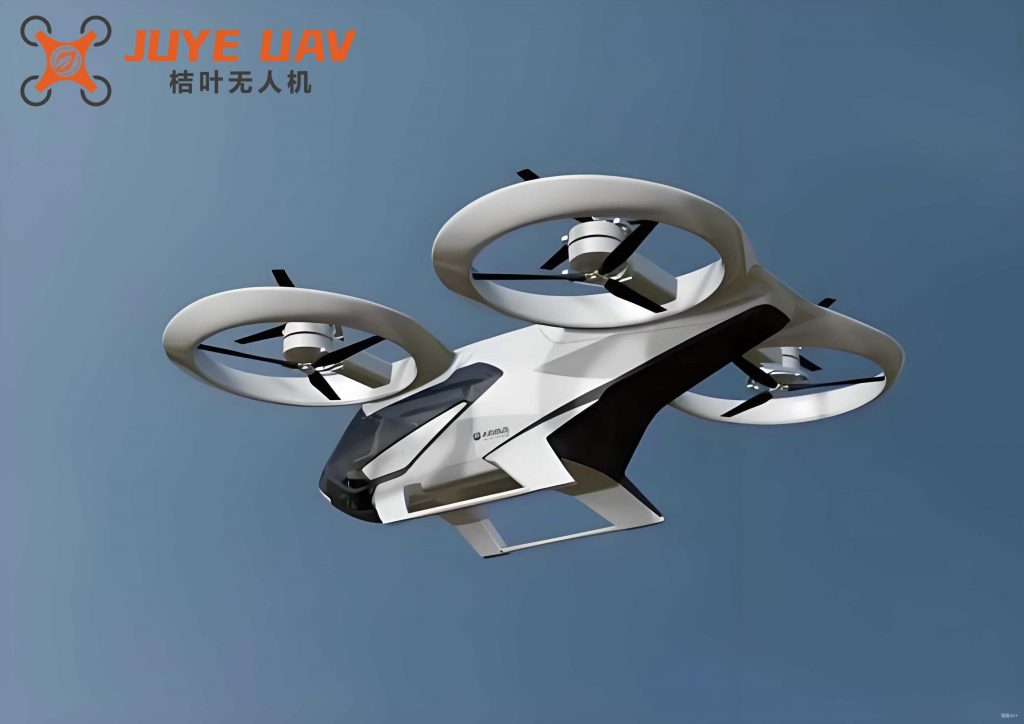
The hardware architecture of the quadcopter is built around the STM32F427 microcontroller, which serves as the core processing unit. The system comprises sensors for attitude and position sensing, power management, communication modules, and actuation components. Key elements include:
- MPU6050 for attitude control
- MS5611 for barometric pressure and altitude measurement
- LSM303D for acceleration and magnetic field data
- 3DR Radio Telemetry for wireless communication
- ESCs and motors for propulsion
Data from these sensors are fused and processed to generate control signals, enabling precise maneuvering of the quadcopter. The following sections detail the hardware and software design, emphasizing the control algorithms and integration strategies.
System Overview
The quadcopter’s hardware system is designed to ensure low latency and high reliability. The STM32F427 microcontroller collects data from various sensors and executes control algorithms to maintain stability. The overall system can be represented by the following block diagram components:
| Component | Function | Specifications |
|---|---|---|
| STM32F427VIT6 | Main Control | 32-bit, 168 MHz, multiple interfaces |
| MPU6050 | Attitude Sensing | ±2 g accelerometer, ±2000°/s gyroscope |
| MS5611 | Barometric Pressure | 24-bit resolution, low power |
| LSM303D | Acceleration/Magnetometer | 1.3–8.1 Gauss range, 12-bit ADC |
| 3DR Radio | Wireless Communication | 500 mW power, 250 kbps data rate |
Upon takeoff, the quadcopter’s position and attitude sensors continuously monitor the flight state. Data is transmitted to the remote control module via wireless links, and control commands are computed using advanced algorithms. The power module drives the ESCs and motors based on these commands, ensuring stable flight operations. This integrated approach allows the quadcopter to perform complex maneuvers with high precision.
Hardware Design
The hardware design focuses on selecting components that provide accurate data and efficient control. The STM32F427 microcontroller is chosen for its computational power and extensive I/O capabilities, which are crucial for real-time processing in a quadcopter system.
MPU6050 Attitude Control Sensor
The MPU6050 sensor is integral to the quadcopter’s attitude determination. It features a 3-axis gyroscope and 3-axis accelerometer, with internal 16-bit ADCs and a digital motion processor (DMP). The sensor operates via I2C communication and includes a FIFO buffer for data storage. Configuring the accelerometer range to ±2 g and the gyroscope range to ±2000°/s ensures sufficient dynamic range for aggressive quadcopter maneuvers. Data sampling occurs every 5 ms using timer interrupts, and Kalman filtering is applied to reduce noise.
The Kalman filter equations are as follows:
$$p_m = p_1 + Q$$
$$kg = \frac{P_m}{P_m + R}$$
$$X_n = x_m + kg \times (Re sr cData – x_m)$$
$$P_n = (1 – kg) \times P_m$$
Here, $Q$ and $R$ represent process and measurement noise covariances, respectively. The filter outputs optimal estimates for the $x$, $y$, and $z$ axes, which are then used for attitude calculation.
Quaternions are employed to represent the quadcopter’s orientation, avoiding gimbal lock issues associated with Euler angles. The quaternion $q$ is defined as:
$$q = [w, x, y, z]^T$$
with the constraint:
$$|q|^2 = w^2 + x^2 + y^2 + z^2 = 1$$
The components relate to the rotation axis and angle:
$$w = \cos(\alpha/2)$$
$$x = \sin(\alpha/2) \cos(\beta_x)$$
$$y = \sin(\alpha/2) \cos(\beta_y)$$
$$z = \sin(\alpha/2) \cos(\beta_z)$$
where $\cos(\beta_x)$, $\cos(\beta_y)$, and $\cos(\beta_z)$ are the direction cosines of the rotation axis. Conversion to Euler angles enables practical control implementation.
MS5611 Barometer
The MS5611 barometer provides high-resolution pressure and temperature measurements, essential for altitude hold in the quadcopter. With 24-bit digital output, it supports various operating modes to balance speed and power consumption. The sensor’s small form factor (5.0 mm × 3.0 mm × 1.0 mm) allows seamless integration into the quadcopter’s avionics. To mitigate environmental interference, the MS5611 is shielded from light and other external factors.
| Parameter | Value |
|---|---|
| Resolution | 24-bit |
| Pressure Range | 10–1200 mbar |
| Temperature Range | -40 to +85 °C |
| Supply Voltage | 1.8 to 3.6 V |
The MS5611 communicates via I2C or SPI, offering flexibility in system design. Its low power consumption makes it suitable for battery-operated quadcopter applications.
LSM303D Accelerometer and Magnetometer
The LSM303D combines a 3-axis accelerometer and 3-axis magnetometer, providing comprehensive motion and heading data for the quadcopter. The magnetometer offers selectable ranges from 1.3 to 8.1 Gauss, maintaining accuracy even in environments up to 20 Gauss. Key advantages include low power consumption, high linearity, and built-in self-test functionality.
The accelerometer achieves 1 mg resolution using a 12-bit ADC, enabling precise tilt and movement detection. The LSM303D’s automatic detection features enhance reliability by continuously monitoring sensor health.
The acceleration and magnetic field data are fused with other sensor outputs to compute the quadcopter’s orientation. The transformation equations involve:
$$a_x = k \cdot (A_x – O_x)$$
$$a_y = k \cdot (A_y – O_y)$$
$$a_z = k \cdot (A_z – O_z)$$
where $A_x$, $A_y$, $A_z$ are raw accelerometer readings, $O_x$, $O_y$, $O_z$ are offsets, and $k$ is a scaling factor. Similar adjustments apply to magnetometer data for heading calculation.
Wireless Data Transmission Module
The 3DR Radio Telemetry module enables long-range communication between the quadcopter and ground station. Operating at 500 mW transmit power, it supports data rates up to 250 kbps over distances of 2000 meters in open areas. The module uses the CP2102 chip for USB-to-TTL conversion, with pins for 3V3, TXR, DXR, GND, and +5V. Status indicators (green and red LEDs) provide visual feedback on connection and data transmission states.
Integration with the QGroundControl (QGC) software allows for mission planning and real-time telemetry monitoring. This wireless capability is vital for autonomous quadcopter operations, enabling features like waypoint navigation and remote configuration.
Software Design
The software architecture for the quadcopter control system is designed for real-time performance and reliability. The main program flowchart outlines the sequence of operations, from initialization to continuous control loops.
Controller Software Overview
Upon power-up and remote control activation, the quadcopter initializes all sensors and communication modules. The main loop reads data from the MPU6050 sensor, processes it through attitude algorithms, and adjusts the flight posture based on height setpoints. PID control loops regulate motor speeds to achieve desired attitudes and movements.
The inner PID loop uses angle references from the outer loop to fine-tune motor outputs. After each control cycle, the system checks for remote commands and executes corresponding actions, such as ascent, descent, or maneuvering. This iterative process ensures stable quadcopter flight under varying conditions.
PID Control Algorithm
The PID control algorithm is fundamental to the quadcopter’s stability. It combines proportional, integral, and derivative terms to minimize error between desired and actual states. The continuous-time PID output is given by:
$$u(t) = K_p \left( e(t) + \frac{1}{T_i} \int_0^t e(\tau) d\tau + T_d \frac{de(t)}{dt} \right)$$
Applying Laplace transform, the transfer function becomes:
$$D(s) = \frac{U(s)}{E(s)} = K_p \left( 1 + \frac{1}{T_i s} + T_d s \right)$$
where $K_p$ is the proportional gain, $T_i$ is the integral time constant, and $T_d$ is the derivative time constant. These parameters are tuned to achieve optimal response for the quadcopter.
In discrete form, the PID algorithm is implemented as:
$$u_k = K_p e_k + K_i \sum_{j=0}^k e_j \Delta t + K_d \frac{e_k – e_{k-1}}{\Delta t}$$
where $\Delta t$ is the sampling time, and $e_k$ is the error at step $k$. This formulation allows efficient computation on the STM32F427 microcontroller.
For the quadcopter, multiple PID controllers are used for roll, pitch, yaw, and altitude control. The following table summarizes typical PID gains:
| Axis | K_p | K_i | K_d |
|---|---|---|---|
| Roll | 1.2 | 0.05 | 0.1 |
| Pitch | 1.2 | 0.05 | 0.1 |
| Yaw | 1.0 | 0.02 | 0.05 |
| Altitude | 2.0 | 0.1 | 0.2 |
These values are derived through empirical testing and optimization, ensuring the quadcopter responds swiftly to disturbances without overshoot or oscillation.
Conclusion
This paper detailed the design of a quadcopter control system based on the STM32F427 microcontroller. By integrating advanced sensors and employing Kalman filtering, quaternion-based attitude estimation, and PID control, the system achieves stable flight and precise maneuvering. The hardware components, including the MPU6050, MS5611, LSM303D, and wireless modules, work in concert to provide reliable data acquisition and communication. Software algorithms process this data in real-time, enabling functionalities like hovering and flipping. Flight tests validate the design’s effectiveness, demonstrating that the quadcopter can operate robustly in diverse conditions. The use of the STM32F427 ensures ample processing power for future enhancements, such as autonomous navigation and obstacle avoidance. Overall, this quadcopter platform offers a cost-effective and flexible solution for various applications, from research to commercial use.
The success of this quadcopter design underscores the importance of a systems approach, where hardware and software are co-designed to meet performance requirements. Future work may focus on integrating additional sensors, such as GPS or vision systems, to expand the quadcopter’s capabilities. Moreover, machine learning techniques could be applied to adaptive control, further improving the quadcopter’s autonomy and resilience.