
In recent years, quadcopter drones have gained significant attention due to their versatility in applications such as surveillance, agricultural spraying, and infrastructure monitoring. However, the inherent susceptibility of quadcopters to external disturbances, such as wind gusts and internal sensor noise, often induces vibrational effects that compromise flight stability and control accuracy. This paper addresses the challenge of vibration suppression in quadcopters by proposing a novel parameter tracking robust observer. The approach leverages auxiliary filters to excite vibrational characteristics, estimates frequency-related parameters through a cascaded observer-tracker structure, and reconstructs periodic disturbances for feedforward compensation. By transforming the active vibration suppression problem into a constant parameter estimation task, the method reduces computational redundancy and enhances robustness against noise. The design avoids phase lag associated with traditional time-varying signal tracking and ensures asymptotic stability under bounded noise conditions. Extensive simulations validate the effectiveness of the proposed framework in achieving precise vibration cancellation while maintaining trajectory tracking performance.
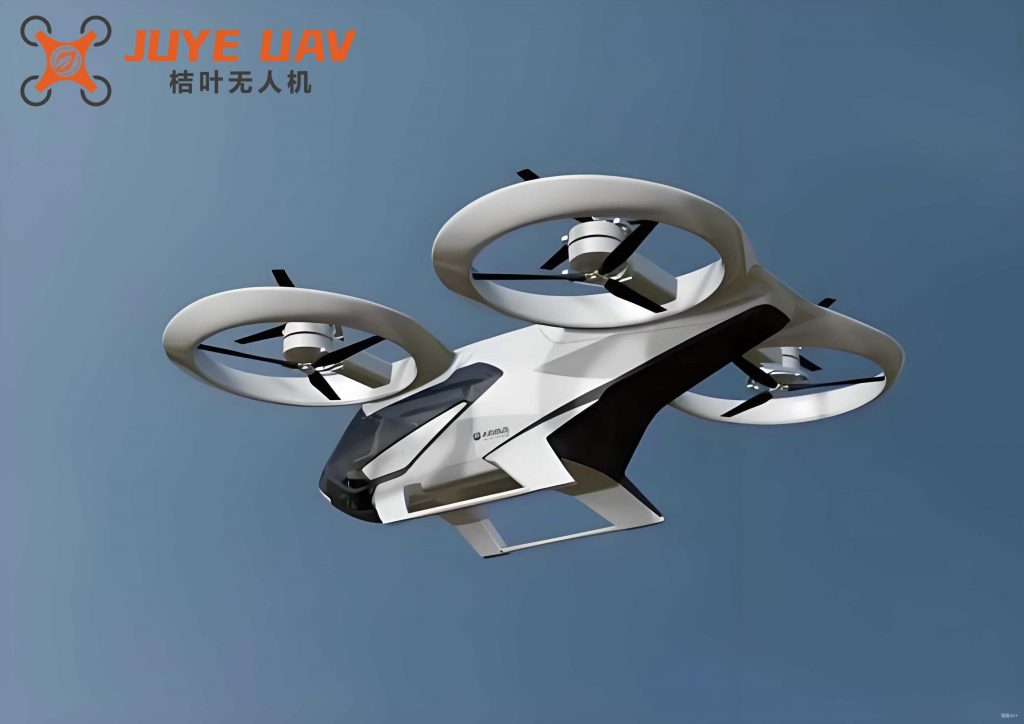
The dynamic model of a quadcopter is derived using the Newton-Euler formulation, accounting for translational and rotational motions. The system is underactuated, with four control inputs governing six output degrees of freedom. The equations of motion in the Earth-fixed frame are expressed as:
$$ \dot{x} = \frac{U_1 (\cos\phi \sin\theta \cos\psi + \sin\phi \sin\psi)}{m} – \frac{k_1}{m} \dot{x} + d_x + \Delta_x $$
$$ \dot{y} = \frac{U_1 (\cos\phi \sin\theta \sin\psi – \sin\phi \cos\psi)}{m} – \frac{k_2}{m} \dot{y} + d_y + \Delta_y $$
$$ \dot{z} = \frac{U_1 (\cos\phi \cos\theta)}{m} – g – \frac{k_3}{m} \dot{z} + d_z + \Delta_z $$
$$ \ddot{\phi} = \frac{\dot{\theta} \dot{\psi} (J_{yy} – J_{zz}) + U_2}{J_{xx}} – \frac{k_4}{J_{yy}} \dot{\phi} $$
$$ \ddot{\theta} = \frac{\dot{\phi} \dot{\psi} (J_{zz} – J_{xx}) + U_3}{J_{yy}} – \frac{k_5}{J_{xx}} \dot{\theta} $$
$$ \ddot{\psi} = \frac{\dot{\phi} \dot{\theta} (J_{xx} – J_{yy}) + U_4}{J_{zz}} – \frac{k_6}{J_{zz}} \dot{\psi} $$
Here, $x$, $y$, $z$ denote position coordinates; $\phi$, $\theta$, $\psi$ represent roll, pitch, and yaw angles; $U_1$ to $U_4$ are control inputs; $m$ is the mass; $J_{xx}$, $J_{yy}$, $J_{zz}$ are moments of inertia; $k_1$ to $k_6$ are drag coefficients; $d_i$ and $\Delta_i$ ($i = x, y, z$) denote periodic vibrations and bounded noise, respectively. The periodic disturbances are modeled as a superposition of sinusoidal components:
$$ d_i = d_{i,0} + \sum_{j=1}^{n} \Phi_j \sin(\omega_j t + \varphi_j) $$
This can be reformulated as an external dynamic system:
$$ \dot{\omega} = \Gamma \omega, \quad d_i = V \omega $$
where $\omega \in \mathbb{R}^{2n \times 1}$, $\Gamma \in \mathbb{R}^{2n \times 2n}$, and $V \in \mathbb{R}^{1 \times 2n}$ form an observable system. The characteristic polynomial is:
$$ p_\omega(s) = (s^2 + \omega_1^2)(s^2 + \omega_2^2) \cdots (s^2 + \omega_n^2) $$
To facilitate vibration suppression, the position subsystem is rewritten in state-space form:
$$ \dot{x}_1 = x_2 $$
$$ \dot{x}_2 = u_p – \frac{k_p}{m} x_2 + d + \Delta $$
where $x_1 = [x, y, z]^T$, $x_2 = [\dot{x}, \dot{y}, \dot{z}]^T$, $u_p = [u_x, u_y, u_z]^T$, $k_p = \text{diag}(k_1, k_2, k_3)$, $d = [d_x, d_y, d_z]^T$, and $\Delta = [\Delta_x, \Delta_y, \Delta_z]^T$.
The core of the proposed method lies in the design of a parameter tracking robust observer. First, an auxiliary filter is constructed to excite vibrational characteristics and reduce noise impact on auxiliary state variables. The filter is defined as:
$$ \xi = \nu + \vartheta $$
$$ \vartheta = L x_2 $$
$$ \dot{\nu} = G(\nu + \vartheta) – L u_p + L \frac{k_p}{m} x_2 $$
where $G$ is a Hurwitz matrix, and $L$ is a gain matrix. This yields the filter dynamics:
$$ \dot{\xi} = G \xi + L d + L \Delta $$
The vibrational signal can then be expressed in terms of auxiliary variables and frequency parameters:
$$ d_i = \Xi_{io}^T \theta_{io} + \Xi_{ie}^T g_{ie} + \theta_i^T \delta_i $$
where $\delta_i$ is an attenuation vector satisfying $\dot{\delta}_i = G_i \delta_i – L_i \Delta_i$. This formulation converts vibration suppression into a frequency-dependent parameter estimation problem.
Next, a frequency parameter observer is designed to estimate the unknown constant vector $\theta_{io}$:
$$ \hat{\theta}_{io} = \hat{z}_i + \hat{p}_i $$
$$ \dot{\hat{z}}_i = \beta \Xi_{io,f} \Xi_{io,f}^T g_{io} – \beta \Xi_{ie,f} \xi_{i(2n),f} – \beta \Xi_{io,f} \Xi_{io,f}^T \hat{\theta}_{io} $$
$$ \hat{p}_i = \beta \Xi_{io,f} \xi_{i(2n),f} $$
where $\beta > 0$ is a tuning parameter, and subscript $f$ denotes filtered signals. The estimation error dynamics are:
$$ \dot{\tilde{\theta}}_{io} = -\beta \Xi_{io,f} \Xi_{io,f}^T \tilde{\theta}_{io} – \beta \Xi_{io,f} \theta_i^T \delta_{i,f} – \beta \Xi_{io,f} \Delta_{i,f} $$
To enhance robustness, a frequency parameter tracker based on a modified hyperbolic tangent function is introduced:
$$ \dot{z}_1 = z_2 $$
$$ \dot{z}_2 = -z_1 – \hat{\theta}_{io}^p \tanh_{\text{Str}}[(z_1 – \hat{\theta}_{io}), a, b] – z_2^p \tanh_{\text{Str}}(z_2, a, b) $$
where $a, b > 0$ and $p > 1$ are design parameters. This tracker ensures accurate estimation of $\theta_{io}$ without phase lag, and the output $\hat{\theta}_{io}$ satisfies:
$$ | \theta_{io} – \hat{\theta}_{io} | \leq \mu | \theta_{io} – \tilde{\theta}_{io} | $$
for some $\mu > 1$. The vibrational estimate is reconstructed as:
$$ \hat{d}_i = \Xi_{io}^T \hat{\theta}_{io} + \Xi_{ie}^T g_{ie} $$
For control implementation, a backstepping controller combined with sliding mode control is employed. The control laws for position and attitude subsystems are:
$$ u_p = e_1 + \dot{x}_{1d} + l_1 \dot{e}_1 + l_2 e_2 + \frac{k_p}{m} x_2 – \hat{d} $$
$$ u_a = -J l_3 \zeta – J l_3 \text{sign}(\zeta) – J l_4 (\dot{\Theta} – \dot{\Theta}_d) + J \ddot{\Theta}_d + f(\Theta) + \frac{k_a}{m} \dot{\Theta} $$
where $e_1 = x_{1d} – x_1$, $e_2 = x_{2d} – x_2$, $\Theta = [\phi, \theta, \psi]^T$, and $\zeta$ is a sliding surface. The vibration estimate $\hat{d}$ is incorporated for feedforward compensation.
Stability and robustness analysis is conducted using Lyapunov theory. Consider the composite system:
$$ \dot{e} = A e + F f(e) + B \Delta $$
where $e = [e, \tilde{\theta}_o, \delta, \delta_f]^T$, and $f(e)$ represents nonlinear terms. A Lyapunov function is defined as:
$$ V(e) = e^T e + \frac{1}{\lambda^2} \int_0^t ( \| U e(\epsilon) \|^2 – \| f(e, \epsilon) \|^2 ) d\epsilon $$
Its derivative yields:
$$ \dot{V}(e) = e^T (A + A^T) e + 2 e^T F f(e) + 2 e^T B \Delta + \frac{1}{\lambda^2} \| U e \|^2 – \frac{1}{\lambda^2} \| f(e) \|^2 $$
Under the condition that there exists a matrix $U$ such that $\| U e \| > \| f(e) \|$, and by satisfying the linear matrix inequality (LMI):
$$ \Omega = \begin{bmatrix}
\Omega_1 & \Omega_2 & \Omega_3 & \Omega_4 & \Omega_5 \\
* & -I & 0 & 0 & 0 \\
* & * & -\gamma I & 0 & 0 \\
* & * & * & -I & 0 \\
* & * & * & * & -I
\end{bmatrix} < 0 $$
the system is asymptotically stable in the absence of noise and uniformly ultimately bounded otherwise. This ensures that the state error $\| e \|^2 \leq \gamma \| \Delta \|^2$ for some $\gamma > 0$.
Simulation studies are performed to validate the proposed method. The quadcopter parameters are: mass $m = 1.35$ kg, gravity $g = 9.8$ m/s², arm length $l = 0.25$ m, moments of inertia $J_{xx} = J_{yy} = 0.00825$ kg·m², $J_{zz} = 0.0165$ kg·m², and drag coefficients $k_i = 0.134$. The controller gains are set as $l_1 = \text{diag}(10, 10, 10)$, $l_2 = \text{diag}(10, 10, 10)$, $l_3 = \text{diag}(55, 55, 55)$, $l_4 = \text{diag}(30, 30, 30)$. The quadcopter tracks a desired trajectory $[x_d, y_d, z_d, \psi_d] = [\sin t, \cos t, 0.1t, 0]$ from initial conditions $[x_0, y_0, z_0, \psi_0] = [0, 0, 0, 0]$.
Two scenarios are considered: low-frequency vibrations $d_x = d_y = d_z = 1 + \sin(t) + 0.5 \sin(2t)$ and high-frequency vibrations $d_x = d_y = d_z = 1 + \sin(2t) + 0.5 \sin(20t)$, with bounded noise of 20 dB SNR. The observer parameters are tuned accordingly. The table below summarizes the key parameters used in the simulations:
| Parameter | Low-Frequency Case | High-Frequency Case |
|---|---|---|
| $G_i$ | $\begin{bmatrix} 0 & 1 & 0 & 0 & 0 & 0 \\ 0 & 0 & 1 & 0 & 0 & 0 \\ 0 & 0 & 0 & 1 & 0 & 0 \\ 0 & 0 & 0 & 0 & 1 & 0 \\ 0 & 0 & 0 & 0 & 0 & 1 \\ -180 & -576 & -703 & -414 & -124 & -18 \end{bmatrix}$ | $\begin{bmatrix} 0 & 1 & 0 & 0 & 0 & 0 \\ 0 & 0 & 1 & 0 & 0 & 0 \\ 0 & 0 & 0 & 1 & 0 & 0 \\ 0 & 0 & 0 & 0 & 1 & 0 \\ 0 & 0 & 0 & 0 & 0 & 1 \\ -900 & -2160 & -1931 & -842 & -192 & -22 \end{bmatrix}$ |
| $\beta$ | 10 | 100 |
| $\gamma$ | 0.4 | 0.5 |
| $p$ | 5/3 | 9/5 |
| $a$ | 0.5 | 0.2 |
| $b$ | 25 | 30 |
The results demonstrate that the proposed observer achieves faster convergence and higher estimation accuracy compared to conventional methods like the compensation function observer (CFO). For low-frequency vibrations, the estimation error stabilizes within 5 seconds, with a 1.6-fold improvement in precision. In high-frequency scenarios, the error reduces to 0.023 after 15 seconds, yielding a 4.3-fold enhancement. The quadcopter maintains stable trajectory tracking despite vibrational disturbances, underscoring the method’s efficacy.
In conclusion, the parameter tracking robust observer offers a systematic approach to vibration suppression in quadcopter drones. By leveraging auxiliary filters and a cascaded observer-tracker structure, it accurately estimates periodic disturbances while mitigating noise effects. The method eliminates phase lag and reduces computational complexity, making it suitable for real-time applications. Future work will focus on extending the framework to systems with unknown gains and experimental validation. The robustness and performance advantages position this approach as a viable solution for enhancing quadcopter operational reliability in dynamic environments.