
In recent years, the application of unmanned aerial vehicles (UAVs) has expanded significantly across various fields, including logistics, agriculture, and emergency response. Among these, quadcopters have emerged as a preferred platform due to their ability to perform vertical take-off and landing, hover stably, and adapt to diverse payloads and mission requirements. This paper presents the design and implementation of an automatic material delivery system using a quadcopter, focusing on achieving precise targeted drops in complex environments. We integrated multiple sensors, such as GPS, cameras, barometers, and ultrasonic sensors, to enable real-time attitude and position monitoring. The system employs the PIXHAWK4 flight controller to manage PWM signals for servo-based release mechanisms, ensuring reliable and accurate material deployment. Through extensive testing, we analyzed flight parameters and positional errors, demonstrating the system’s effectiveness and reliability. The quadcopter’s versatility makes it suitable for applications like aerial photography, rescue operations, and automated logistics, highlighting its broad potential.
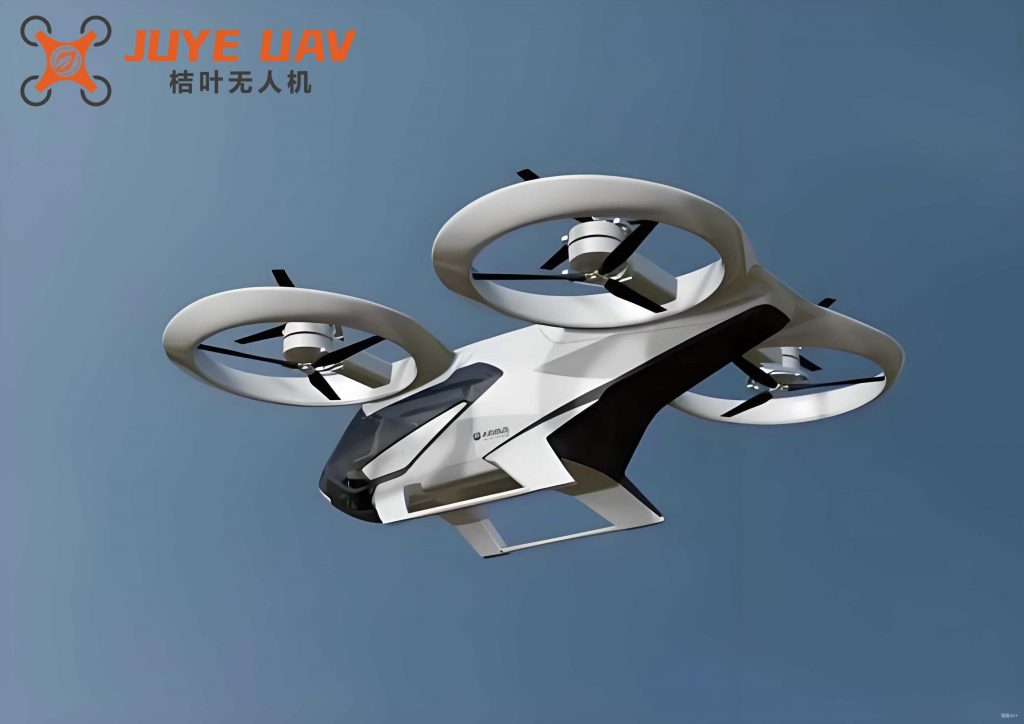
The quadcopter’s design centers on achieving autonomous navigation and precise control, leveraging advanced modeling techniques to represent its dynamic behavior. We utilized quaternion-based representations for attitude estimation, which avoids singularities and enables smooth interpolation in three-dimensional space. A unit quaternion is defined as: $$ q = w + xi + yj + zk $$ where \( w, x, y, z \) are real numbers, and \( i, j, k \) are the imaginary units satisfying \( i^2 + j^2 + k^2 = -1 \). The rotation matrix derived from this quaternion is expressed as: $$ R = \begin{bmatrix} 1-2(y^2+z^2) & 2(xy-wz) & 2(xz+wy) \\ 2(xy+wz) & 1-2(x^2+z^2) & 2(yz-wx) \\ 2(xz+wy) & 2(yz+wx) & 1-2(x^2+y^2) \end{bmatrix} $$ This matrix facilitates the transformation from the world coordinate system to the body-fixed frame of the quadcopter, essential for accurate motion control. To simplify the modeling process, we assumed the quadcopter as a rigid body with constant mass and inertia, its center of gravity aligned with the geometric center, and influences limited to propeller thrust and gravity. The kinematics model based on quaternions describes the rotational dynamics as: $$ \dot{q}_0 = -\frac{1}{2} \mathbf{q}_v^T \cdot \boldsymbol{\omega}_b $$ $$ \dot{\mathbf{q}}_v = \frac{1}{2} (q_0 \mathbf{I}_3 + [\mathbf{q}_v]_\times) \boldsymbol{\omega}_b $$ where \( q_0 \) is the scalar part of the quaternion, \( \mathbf{q}_v = [q_1, q_2, q_3] \) is the vector part, \( \boldsymbol{\omega}_b = [\omega_x, \omega_y, \omega_z] \) represents the angular velocity vector in the body frame, and \( [\mathbf{q}_v]_\times \) denotes the skew-symmetric matrix of \( \mathbf{q}_v \). This model allows us to numerically integrate quaternion variations over time, providing real-time flight state information for the quadcopter.
Our quadcopter system incorporates a comprehensive hardware architecture to support autonomous operations. The core processing unit is the STM32F427 microcontroller, which handles data acquisition, processing, and command transmission. Sensors are connected via high-speed SPI or serial interfaces, ensuring efficient data flow. For power management, we designed a circuit using the MIC5332 chip, which regulates input voltage to provide stable 3.3 V output for the mainboard and includes power-on reset functionality. Key components of the power management circuit are summarized in the table below:
| Component | Function | Specifications |
|---|---|---|
| MIC5332 IC | Voltage regulation and reset control | Input: VDD5V, Output: 3.3 V, Reset delay: 1s/μF |
| Capacitors (e.g., C5001-C5008) | Filtering and stability | Values: 0.1 μF to 22 μF, Rated up to 25 V |
| Resistors (e.g., R5001) | Current limiting and bias | 10 kΩ |
In terms of sensor integration, the quadcopter employs the HMC5983 three-axis magnetometer for heading calculation via Earth’s magnetic field measurements, and the MPU-6000, which combines a 3-axis gyroscope and accelerometer for attitude determination. These sensors communicate with the microcontroller through I²C protocol, enabling precise Euler angle computation and PID-based motor control. Additional hardware includes ultrasonic sensors for obstacle avoidance and altitude holding, GPS modules for navigation, servo-controlled release mechanisms for material deployment, and camera modules for image capture. The propulsion system consists of brushless motors, electronic speed controllers (ESCs), and propellers, all coordinated to ensure stable flight. The overall system composition is outlined in the following table:
| Subsystem | Components | Role in Quadcopter |
|---|---|---|
| Navigation | GPS module, magnetometer | Provides real-time position and heading data |
| Attitude Control | MPU-6000, gyroscope, accelerometer | Monitors and adjusts orientation using PID algorithms |
| Delivery Mechanism | Servo-controlled release, PWM signals | Executes automatic material drops at target locations |
| Communication | 433 MHz module, MAVLink protocol | Enables data transmission between quadcopter and ground station |
| Power System | Battery, voltage regulators | Supplies energy for extended flight durations |
Software design for the quadcopter focuses on autonomous flight and targeted material delivery. The operational workflow begins with system initialization, where sensors are calibrated and GPS data is validated. The quadcopter then takes off and follows a pre-planned route based on waypoints set via the ground control station. Upon approaching the target area, the camera captures ground images, which are processed using computer vision algorithms to identify the exact drop location. The position and altitude data from GPS and ultrasonic sensors are fused to compute the optimal approach path. Once aligned, the STM32F427 generates PWM signals to actuate the servo release mechanism, deploying the material. The quadcopter subsequently returns to its home position along a predefined path. This process is governed by control algorithms that adjust throttle and attitude to maintain stability, as described by the dynamic model equations. For instance, the thrust generated by each motor can be modeled as: $$ T_i = k_t \cdot \omega_i^2 $$ where \( T_i \) is the thrust of motor \( i \), \( k_t \) is the thrust coefficient, and \( \omega_i \) is the angular velocity. The total thrust \( T \) and torque \( \tau \) in the body frame are given by: $$ T = \sum_{i=1}^{4} T_i $$ $$ \boldsymbol{\tau} = \begin{bmatrix} l k_t (\omega_4^2 – \omega_2^2) \\ l k_t (\omega_3^2 – \omega_1^2) \\ k_d (\omega_1^2 – \omega_2^2 + \omega_3^2 – \omega_4^2) \end{bmatrix} $$ where \( l \) is the arm length of the quadcopter, and \( k_d \) is the drag coefficient. These equations are integral to the PID controllers that regulate motor speeds for precise maneuvering.
To evaluate the system’s performance, we conducted multiple automatic delivery tests in outdoor, calm conditions. The quadcopter’s flight parameters were recorded to assess endurance and speed capabilities, as summarized below:
| Flight Parameter | Value |
|---|---|
| Maximum Flight Time | 21 minutes |
| Maximum Range | 6 km |
| Maximum Horizontal Speed | 4.9 m/s |
| Maximum Ascent Speed | 2.3 m/s |
For the targeted drop experiments, we measured the positional errors of deployed objects relative to the intended coordinates. The displacement deviations along the X and Y axes were analyzed to determine accuracy and consistency. The results are presented in the following table:
| Displacement Direction | Maximum Deviation | Standard Deviation |
|---|---|---|
| X-axis | ±0.230 m | ±0.123 m |
| Y-axis | ±0.260 m | ±0.125 m |
The data indicates that the quadcopter achieved high precision in material delivery, with small standard deviations reflecting low dispersion in drop positions. This consistency underscores the reliability of the sensor fusion and control algorithms. The quadcopter’s ability to maintain stable flight and execute accurate drops demonstrates its suitability for real-world applications, such as delivering medical supplies in remote areas or automating inventory management in warehouses. Further improvements could involve enhancing image processing for better target recognition or integrating machine learning for adaptive path planning.
In conclusion, our quadcopter-based system effectively combines robust hardware design with advanced software algorithms to achieve autonomous targeted material delivery. The use of quaternion-based modeling ensures accurate attitude representation, while the integration of diverse sensors enables real-time navigation and control. Experimental results confirm that the quadcopter operates reliably with minimal positional errors, making it a viable solution for various industrial and commercial purposes. Future work will focus on optimizing energy efficiency and expanding the quadcopter’s payload capacity to broaden its applicability in dynamic environments.