
In recent years, quadcopter unmanned aerial vehicles (UAVs) have gained significant attention due to their versatility in applications such as surveillance, disaster management, and logistics. However, single quadcopter systems face limitations in complex environments, including low efficiency and limited coverage. Multi-quadcopter formations address these challenges by enabling cooperative tasks, but they introduce issues like actuator faults and tracking errors. Traditional PID control methods, with fixed parameters, struggle to adapt to dynamic conditions and faults. This paper proposes an integrated approach combining fuzzy adaptive PID control for fault tolerance and sliding mode control for formation coordination. We develop a system model for quadcopters with actuator faults, design controllers to ensure trajectory tracking, and achieve formation stability through rigorous simulation analysis.
The quadcopter’s dynamics are derived from Newton-Euler equations, accounting for translational and rotational motions. The system is highly nonlinear and coupled, making it susceptible to disturbances and actuator failures. We consider various fault scenarios, including partial loss of effectiveness and bias faults, which are common in real-world operations. Our controller design focuses on robustness and adaptability, leveraging fuzzy logic to adjust PID parameters in real-time and sliding mode theory to handle formation errors. The following sections detail the modeling, control strategies, and validation through simulations, demonstrating the effectiveness of our method in maintaining formation integrity under fault conditions.
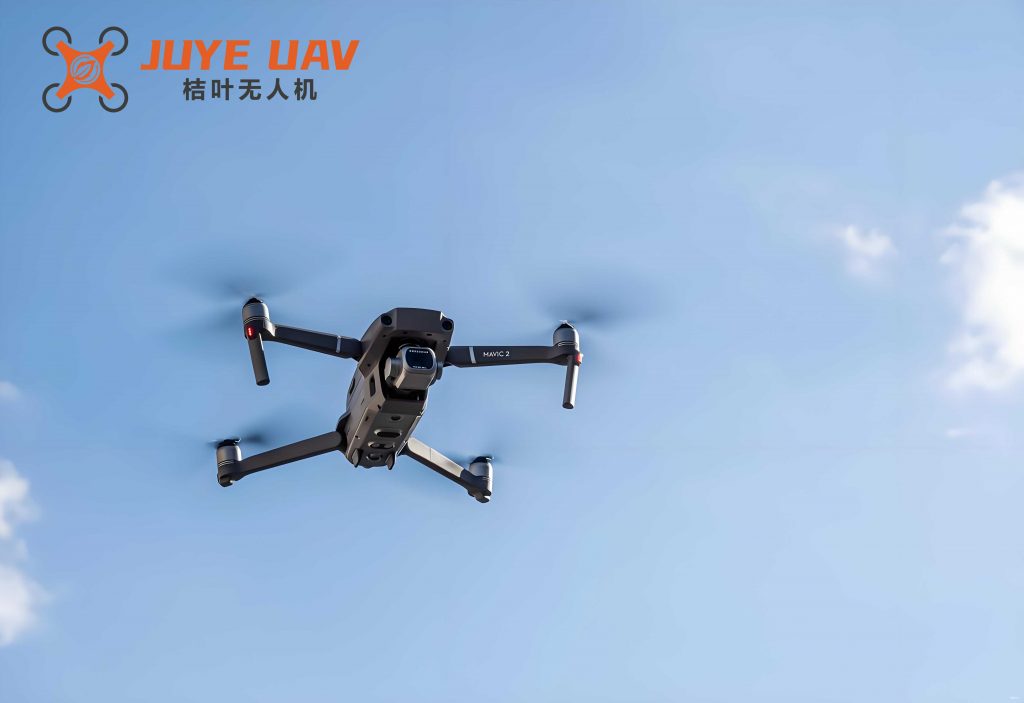
The dynamics of a quadcopter are described by the following equations, which incorporate position and attitude states. Let \( x, y, z \) denote the position coordinates, and \( \phi, \theta, \psi \) represent the roll, pitch, and yaw angles, respectively. The system model is given by:
$$ \ddot{x} = \frac{1}{m} (\cos\phi \sin\theta \cos\psi + \sin\phi \sin\psi) U_1 – \frac{k_x}{m} \dot{x} $$
$$ \ddot{y} = \frac{1}{m} (\cos\phi \sin\theta \sin\psi – \sin\phi \cos\psi) U_1 – \frac{k_y}{m} \dot{y} $$
$$ \ddot{z} = \frac{1}{m} (\cos\phi \cos\theta) U_1 – g – \frac{k_z}{m} \dot{z} $$
$$ \ddot{\phi} = \frac{I_{yy} – I_{zz}}{I_{xx}} \dot{\theta} \dot{\psi} + \frac{U_2}{I_{xx}} d – \frac{k_\phi}{I_{xx}} \dot{\phi} $$
$$ \ddot{\theta} = \frac{I_{zz} – I_{xx}}{I_{yy}} \dot{\phi} \dot{\psi} + \frac{U_3}{I_{yy}} d – \frac{k_\theta}{I_{yy}} \dot{\theta} $$
$$ \ddot{\psi} = \frac{I_{xx} – I_{yy}}{I_{zz}} \dot{\phi} \dot{\theta} + \frac{U_4}{I_{zz}} – \frac{k_\psi}{I_{zz}} \dot{\psi} $$
Here, \( m \) is the mass, \( g \) is gravitational acceleration, \( d \) is the distance from the propeller center to the center of gravity, \( I_{xx}, I_{yy}, I_{zz} \) are moments of inertia, \( k_x, k_y, k_z, k_\phi, k_\theta, k_\psi \) are air resistance coefficients, and \( U_1, U_2, U_3, U_4 \) are control inputs. The virtual control inputs relate to motor speeds through a transformation matrix. For a quadcopter, the control inputs are derived from the motor speeds \( w_1, w_2, w_3, w_4 \) as follows:
$$ \begin{bmatrix} U_1 \\ U_2 \\ U_3 \\ U_4 \end{bmatrix} = A \begin{bmatrix} w_1^2 \\ w_2^2 \\ w_3^2 \\ w_4^2 \end{bmatrix} $$
where \( A \) is an invertible matrix containing thrust and torque coefficients. This model forms the basis for designing fault-tolerant controllers.
Actuator faults in quadcopters can arise from motor degradation or external damage, leading to deviations in control effectiveness. We model these faults using:
$$ U_r = \eta_\gamma U_{ra} + f_r $$
where \( r = 1, 2, 3, 4 \), \( \gamma \) denotes the axis, \( \eta_\gamma \) is the effectiveness factor (0 < \( \eta_\gamma \) ≤ 1), and \( f_r \) is a bias fault. Different fault scenarios include:
| Fault Type | Conditions |
|---|---|
| No Fault | \( \eta_\gamma = 1, f_r = 0 \) |
| Bias Fault | \( \eta_\gamma = 1, f_r \neq 0 \) |
| Stuck Fault | \( \eta_\gamma = 0, f_r = 0 \) |
| Partial Loss | \( \eta_\gamma \in (0,1), f_r = 0 \) |
This fault model is integrated into the control design to enhance robustness. For the quadcopter formation, we consider a leader-follower structure, where the leader tracks a reference trajectory, and followers maintain desired distances. The formation control aims to minimize relative errors between quadcopters.
We design a fuzzy adaptive PID controller to handle actuator faults in individual quadcopters. The PID parameters are adjusted online based on error and error derivative inputs. Let \( e \) and \( e_c \) denote the tracking error and its derivative, respectively. The fuzzy system uses these inputs to compute adjustments \( \Delta K_P, \Delta K_I, \Delta K_D \) for the PID gains. The updated gains are:
$$ k_\delta = k’_\delta + \Delta K_\delta $$
where \( \delta = P, I, D \). The fuzzy sets for inputs and outputs are defined as {NB, NM, NS, Z, PS, PM, PB}, with triangular membership functions. The rule base consists of 49 rules to map \( e \) and \( e_c \) to gain adjustments. For example, if \( e \) is large, \( K_P \) and \( K_D \) are increased to improve response speed and damping.
For the position subsystem, the virtual controllers for \( x, y, z \) axes are:
$$ U_x = k_{Px} (x_d – x) + k_{Dx} (\dot{x}_d – \dot{x}) + k_{Ix} \int (x_d – x) dt $$
$$ U_y = k_{Py} (y_d – y) + k_{Dy} (\dot{y}_d – \dot{y}) + k_{Iy} \int (y_d – y) dt $$
$$ U_z = k_{Pz} (z_d – z) + k_{Dz} (\dot{z}_d – \dot{z}) + k_{Iz} \int (z_d – z) dt $$
These are derived from the dynamics model and fault considerations. The desired attitudes \( \phi_d, \theta_d \) are computed from the virtual controls, assuming \( \psi_d = 0 \):
$$ \phi_d = \arcsin\left( -\frac{m U_y}{U_{1a}} \right) $$
$$ \theta_d = \arctan\left( \frac{U_x}{U_z + g} \right) $$
$$ U_1 = \eta_\gamma m \sqrt{U_x^2 + U_y^2 + (U_z + g)^2} + f_1 $$
For the attitude subsystem, the controllers are:
$$ U_2 = \eta_\gamma \left( k_{P\phi} (\phi_d – \phi) + k_{D\phi} (\dot{\phi}_d – \dot{\phi}) + k_{I\phi} \int (\phi_d – \phi) dt \right) + f_2 $$
$$ U_3 = \eta_\gamma \left( k_{P\theta} (\theta_d – \theta) + k_{D\theta} (\dot{\theta}_d – \dot{\theta}) + k_{I\theta} \int (\theta_d – \theta) dt \right) + f_3 $$
$$ U_4 = \eta_\gamma \left( k_{P\psi} (\psi_d – \psi) + k_{D\psi} (\dot{\psi}_d – \dot{\psi}) + k_{I\psi} \int (\psi_d – \psi) dt \right) + f_4 $$
These ensure that the quadcopter tracks reference trajectories despite faults. The fuzzy adaptive mechanism continuously tunes the gains to compensate for uncertainties.
For multi-quadcopter formation, we employ a leader-follower approach. The kinematic model for each quadcopter in the horizontal plane is:
$$ \dot{x}_i = v_i \cos\psi_i $$
$$ \dot{y}_i = v_i \sin\psi_i $$
$$ \dot{\psi}_i = \Omega_i $$
where \( i \) denotes the leader (L) or follower (F). The relative distance errors between leader and follower are defined as:
$$ d_{LF}^x = (x_F – x_L) \cos\psi_L + (y_F – y_L) \sin\psi_L + d_f \cos(\psi_F – \psi_L) $$
$$ d_{LF}^y = (x_F – x_L) \sin\psi_L – (y_F – y_L) \cos\psi_L – d_f \sin(\psi_F – \psi_L) $$
where \( d_f \) is the safety distance. The errors between actual and desired distances are:
$$ e_{LF}^x = d_{LF}^x – d_{LF}^{xd} $$
$$ e_{LF}^y = d_{LF}^y – d_{LF}^{yd} $$
$$ e_{LF}^\psi = \psi_F – \psi_L $$
Differentiating these gives the error dynamics:
$$ \dot{e}_{LF}^x = -v_L – e_{LF}^y \Omega_L + v_F \cos e_{LF}^\psi – d_f \Omega_F \sin e_{LF}^\psi $$
$$ \dot{e}_{LF}^y = e_{LF}^x \Omega_L – v_F \sin e_{LF}^\psi – d_f \Omega_F \cos e_{LF}^\psi $$
In state-space form, this is:
$$ \dot{x} = A(x) + B(x) u^* $$
with \( x = [e_{LF}^x, e_{LF}^y]^T \), \( u^* = [v_F, \Omega_F]^T \), and matrices \( A(x) \), \( B(x) \) defined accordingly. We design a sliding mode controller to drive these errors to zero. The sliding surface is:
$$ s = \Gamma x $$
where \( \Gamma \) is an invertible gain matrix. The reaching law is:
$$ \dot{s} = -\lambda_1 \text{sgn}(s) $$
leading to the control law:
$$ u^* = -(\Gamma B(x))^{-1} \left( \lambda_1 \text{sgn}(s) + \Gamma A(x) \right) $$
Lyapunov analysis confirms stability, as \( V = \frac{1}{2} s^T s \) yields \( \dot{V} = -\lambda_1 |s| \leq 0 \). This ensures formation convergence even under leader faults.
Simulations validate the proposed method. We use parameters typical for quadcopters, as listed below:
| Parameter | Value |
|---|---|
| Mass \( m \) | 2 kg |
| Distance \( d \) | 0.225 m |
| Gravity \( g \) | 9.81 m/s² |
| Moment of Inertia \( I_{xx} \) | 0.01745 N·s²/rad |
| Moment of Inertia \( I_{yy} \) | 0.01745 N·s²/rad |
| Moment of Inertia \( I_{zz} \) | 0.03175 N·s²/rad |
| Air Resistance Coefficients | 0.01 N·s²/rad |
| Thrust Coefficient \( k_T \) | 1.116e-5 N·s²/rad² |
| Torque Coefficient \( k_M \) | 1.489e-7 N·s²/rad² |
The leader tracks a spiral trajectory: \( x_d = 0.5 \cos(0.02t) \), \( y_d = 0.5 \sin(0.02t) \), \( z_d = 0.2t \), \( \psi_d = 0 \). Followers maintain desired offsets. Under no-fault conditions, the fuzzy adaptive PID shows smaller overshoot and faster convergence compared to traditional PID. For instance, position tracking in \( x \) achieves steady-state in less time, and attitude angles like roll stabilize rapidly.
When actuator faults occur at \( t = 150 \) s, with effectiveness factors \( \eta_\phi = \eta_\psi = \eta_x = \eta_y = 0.6 \), \( \eta_z = \eta_\theta = 0.9 \), and bias \( f_r = 0.3 \), the fuzzy adaptive PID compensates effectively. Tracking errors in position and attitude are minimized within 10 seconds, whereas PID control exhibits significant deviations. The formation errors \( e_{LF}^x \) and \( e_{LF}^y \) converge to zero, confirming the robustness of the sliding mode controller.
In conclusion, our integrated approach of fuzzy adaptive PID and sliding mode control provides reliable fault tolerance and formation coordination for multi-quadcopter systems. The controllers adapt to dynamic changes and faults, ensuring stable operation. Future work will explore optimized fault diagnosis and distributed control strategies to further enhance resilience in large-scale quadcopter networks.