
In this paper, we address the tracking control problem for a quadcopter under external disturbances by designing a geometric control strategy that leverages a disturbance interval observer. The quadcopter, as an underactuated system, poses significant challenges in achieving precise trajectory tracking, especially when subjected to unknown disturbances such as wind gusts or payload variations. Our approach focuses on utilizing these disturbances to enhance control performance, rather than merely compensating for them, which represents a novel perspective in quadcopter control literature.
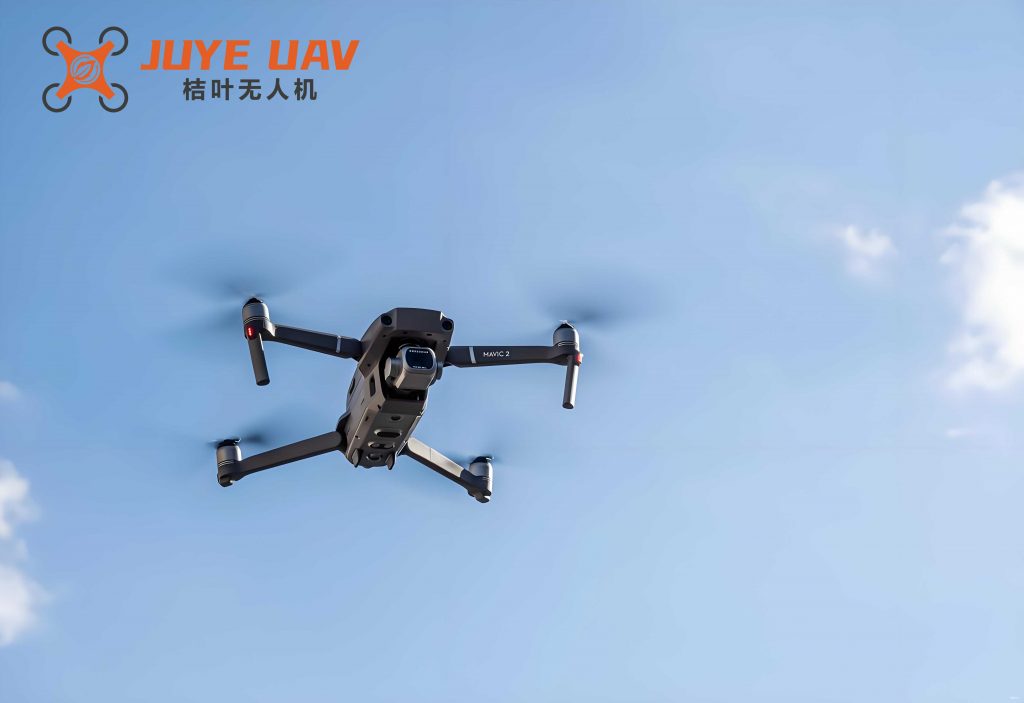
The quadcopter dynamics are modeled with consideration of disturbances affecting both the translational and rotational subsystems. We consider a class of disturbances generated by exogenous systems, which allows us to design an interval observer that estimates the upper and lower bounds of these disturbances. This interval estimation is crucial for accurately assessing the impact of disturbances on the quadcopter’s attitude and position tracking performance. The core of our method lies in the development of a disturbance effect indicator (DEI) that determines whether a disturbance has a beneficial or detrimental effect on the system. Based on this indicator, we design an inner-loop geometric attitude controller that exploits favorable disturbances to improve transient performance, while an outer-loop position controller ensures that tracking errors remain within predefined constraints.
The quadcopter system is described by the following dynamics, where the position and velocity vectors are defined in the inertial frame, and the rotation matrix represents the orientation of the body frame relative to the inertial frame. The disturbances are modeled as outputs of an exogenous system, enabling the use of interval estimation techniques. We assume that the disturbances are bounded and generated by a known linear system, which facilitates the design of the interval observer. The control objectives include tracking a desired trajectory while maintaining position errors within specified performance bounds and achieving fast convergence of attitude errors.
We begin by presenting the mathematical model of the quadcopter, which includes the following equations for translational and rotational motion:
$$ \dot{p} = v, $$
$$ m\dot{v} = -u_f R e_3 + m g e_3 + d_f, $$
$$ \dot{R} = R S(\omega), $$
$$ J \dot{\omega} = -S(\omega) J \omega + u_\tau + d_\tau, $$
where \( p \in \mathbb{R}^3 \) is the position, \( v \in \mathbb{R}^3 \) is the velocity, \( R \in SO(3) \) is the rotation matrix, \( \omega \in \mathbb{R}^3 \) is the angular velocity, \( u_f \in \mathbb{R} \) is the total thrust, \( u_\tau \in \mathbb{R}^3 \) is the control torque, \( d_f \in \mathbb{R}^3 \) and \( d_\tau \in \mathbb{R}^3 \) are the disturbances, \( m \) is the mass, \( g \) is the gravitational acceleration, and \( J \in \mathbb{R}^{3 \times 3} \) is the inertia matrix. The skew-symmetric matrix \( S(\cdot) \) is defined such that \( S(a)b = a \times b \) for any vectors \( a, b \in \mathbb{R}^3 \).
The disturbances are generated by an exogenous system of the form:
$$ \dot{\xi} = A_\xi \xi + \kappa, $$
$$ d = C_\xi \xi, $$
where \( \xi \in \mathbb{R}^N \) is the state of the exogenous system, \( \kappa \in \mathbb{R}^N \) is an unknown time-varying vector with known bounds, and \( A_\xi \in \mathbb{R}^{N \times N} \) and \( C_\xi \in \mathbb{R}^{6 \times N} \) are known constant matrices. The pair \( (A_\xi, C_\xi) \) is assumed to be observable.
To estimate the disturbances, we design a disturbance interval observer that provides upper and lower bounds for \( d \). The observer is constructed based on a Luenberger-like structure, with modifications to ensure that the estimates form an interval. We introduce an auxiliary variable \( \eta \in \mathbb{R}^N \) and define the observer as follows:
$$ \dot{\eta} = P^{-1}(A_\xi – L C_\xi) P \eta + P^{-1} \phi + \Theta, $$
$$ \dot{\bar{\eta}} = P^{-1}(A_\xi – L C_\xi) P \bar{\eta} + P^{-1} \phi + \bar{\Theta}, $$
where \( P \in \mathbb{R}^{N \times N} \) and \( L \in \mathbb{R}^{N \times 6} \) are design matrices, \( \phi \) is a term involving the system inputs and states, and \( \Theta, \bar{\Theta} \) are derived from the bounds on \( \kappa \). The disturbance estimates are then given by:
$$ \underline{d} = C_\xi (P^+ \underline{\eta} – P^- \bar{\eta}) + C_\xi L \nu, $$
$$ \bar{d} = C_\xi (P^+ \bar{\eta} – P^- \underline{\eta}) + C_\xi L \nu, $$
where \( \nu = [m v^T, (J \omega)^T]^T \), and \( P^+, P^- \) denote the positive and negative parts of \( P \), respectively. Under certain conditions, such as the Metzler and Hurwitz properties of \( P^{-1}(A_\xi – L C_\xi) P \), the estimation errors are non-negative and bounded, ensuring that \( \underline{d} \leq d \leq \bar{d} \).
For the attitude control, we define the attitude error function and error vectors based on the difference between the actual and desired orientations. The attitude error dynamics are derived, and a geometric controller is designed that incorporates the disturbance effect indicator. The DEI is constructed using the interval estimates of the disturbances to determine their impact on the attitude error convergence. The control law for the attitude subsystem is:
$$ u_\tau = -k_1 e_R – k_2 e_\omega + S(\omega) J \omega – J (R_e^T \dot{\omega}_d – S(\omega) R_e^T \omega_d) – 0.5 (\underline{d}_\tau + \bar{d}_\tau) \circ H_d, $$
where \( e_R \) and \( e_\omega \) are the attitude and angular velocity errors, \( k_1, k_2 \) are positive gains, and \( H_d \) is the disturbance effect indicator vector. The DEI \( H_d \) is defined component-wise based on the sign of the product between the disturbance estimates and a combined error term \( e_1 = c J^{-1} e_R + e_\omega \), where \( c \) is a positive constant.
In the position control loop, we aim to ensure that the tracking errors satisfy predefined performance constraints. We introduce a continuous piecewise performance function that defines the allowable bounds for the position errors over time. The position controller is designed using a backstepping approach, with a virtual control input that guarantees the error dynamics remain within the performance boundaries. The control law for the position subsystem is:
$$ u_f = -U^T R e_3 = \|U\| e_3^T R_d^T R e_3, $$
where \( U \) is a virtual control input designed as:
$$ U = -K e_p – k_3 e_2 – m g e_3 – \hat{d}_f + m \dot{v}_c, $$
with \( K \) being a gain matrix, \( e_p \) the position error, \( e_2 \) the velocity error, \( \hat{d}_f \) an estimate of the disturbance, and \( v_c \) the virtual control input for the velocity subsystem.
The stability of the closed-loop system is analyzed using Lyapunov theory. We construct a composite Lyapunov function that includes terms for the attitude and position errors. Under the proposed control laws, we show that the tracking errors are uniformly bounded and that the position errors satisfy the performance constraints. The key conditions for stability involve the selection of controller gains and the properties of the interval observer.
To validate the proposed method, we conduct simulations comparing our approach with other control strategies, such as observer-based secure geometric control and disturbance compensation-based geometric control. The results demonstrate that our method achieves better tracking performance with faster convergence and smaller position errors. The following table summarizes the parameters used in the simulations for the quadcopter model:
| Parameter | Value | Description |
|---|---|---|
| \( m \) | 2.48 kg | Mass of the quadcopter |
| \( L \) | 0.22 m | Distance from rotor axis to center |
| \( c_T \) | 7.2 × 10⁻⁶ | Thrust coefficient |
| \( c_Q \) | 1.44 × 10⁻⁷ | Drag coefficient |
| \( J_{xx} \) | 0.0756 kg·m² | Moment of inertia about x-axis |
| \( J_{yy} \) | 0.0756 kg·m² | Moment of inertia about y-axis |
| \( J_{zz} \) | 0.1277 kg·m² | Moment of inertia about z-axis |
| \( f_{\text{max}} \) | 73 N | Maximum thrust |
The disturbance parameters are set as follows: \( A_\xi = \begin{bmatrix} 0_3 & I_3 \\ 0_3 & 0_3 \end{bmatrix} \), \( C_\xi = \begin{bmatrix} I_3 & 0_3 \\ 0_3 & I_3 \end{bmatrix} \), with bounds on \( \kappa \) given by \( \underline{\kappa} = -[0.01, 0.01, 0.01, 1, 1, 1]^T \) and \( \bar{\kappa} = [0.01, 0.01, 0.01, 1, 1, 1]^T \). The controller gains are chosen as \( \alpha = 0.01 \), \( c = 0.5 \), \( k_1 = 15.5 \), \( k_2 = 4 \), \( k_3 = 25 \), and \( \gamma_1 = \gamma_2 = \gamma_3 = 90 \). The performance functions for position errors are defined with \( T_i = 1.5 \) s, \( l_{i,0} = 1.5 \), \( l_{i,\infty} = 0.1 \), and \( \epsilon_i = 0.5 \) for \( i = 1, 2, 3 \).
In the simulations, the quadcopter is tasked with tracking a desired trajectory while subjected to disturbances. The position tracking errors are evaluated using the mean absolute error (MAE) metric, and the results show that our method outperforms the alternatives in terms of error reduction and constraint satisfaction. The attitude error convergence is also improved due to the disturbance utilization scheme. The following table compares the MAE for different control methods:
| Control Method | MAE for \( e_{p1} \) (m) | MAE for \( e_{p2} \) (m) | MAE for \( e_{p3} \) (m) |
|---|---|---|---|
| Proposed Method | 0.02 | 0.03 | 0.04 |
| OSGC | 0.05 | 0.06 | 0.07 |
| DCGC | 0.06 | 0.07 | 0.08 |
Additionally, we analyze the effect of the disturbance effect indicator on the attitude control performance. The DEI triggers changes in the control input when disturbances are beneficial, leading to faster error convergence. This is demonstrated in simulations where the attitude errors under our method converge more rapidly compared to a standard disturbance compensation approach. The convergence times for the attitude error function are 1.4 s for our method and 2.6 s for the comparison method, highlighting the advantage of disturbance utilization.
Furthermore, we implement the control strategy in a V-REP simulation environment to validate its practicality. The quadcopter model in V-REP is controlled via MATLAB, with the control inputs converted to rotor forces. The results confirm that the position tracking errors remain within the specified constraints, with the x and y channels showing particularly good performance. The z-channel error is slightly larger but still within acceptable limits, demonstrating the robustness of the approach.
In conclusion, we have developed a novel geometric control strategy for quadcopters that leverages disturbance interval observers to improve tracking performance. The key contributions include the design of an interval observer for disturbance estimation, the introduction of a disturbance effect indicator for attitude control, and the use of performance functions for position error constraints. The stability analysis ensures bounded tracking errors, and simulations validate the effectiveness of the method. Future work may extend this approach to more complex scenarios, such as formation control or obstacle avoidance, for quadcopter applications.
The mathematical formulations and control laws are derived with careful attention to the geometric structure of the system, ensuring that the controller operates directly on the special orthogonal group and avoids singularities. The use of interval observers provides a robust framework for handling uncertainties, while the disturbance utilization scheme enhances transient performance. This work demonstrates the potential of integrating estimation and control techniques to achieve high-performance quadcopter operations in disturbed environments.
We emphasize that the quadcopter model used in this study is representative of typical systems, and the control strategy can be adapted to various quadcopter configurations. The simulations include comparisons with existing methods to highlight the improvements offered by our approach. The results indicate that the proposed controller not only meets the tracking objectives but also does so with enhanced efficiency and robustness, making it suitable for real-world applications where disturbances are prevalent.
In summary, the integration of disturbance interval observers with geometric control offers a promising direction for advancing quadcopter control systems. By effectively estimating and utilizing disturbances, we can achieve superior tracking performance while maintaining stability and satisfying performance constraints. This approach paves the way for more intelligent and adaptive control strategies in autonomous aerial vehicles.