
In recent years, quadrotor drones have gained widespread popularity due to their ease of use and maintenance, particularly in applications such as aerial photography and mapping. Since the early 21st century, advancements in micro flight control systems have made quadrotors a focal point of research globally. However, most studies have concentrated on developing control algorithms or investigating sensor vibration filtering. For small-scale quadrotors, vibration issues are less pronounced and have minimal impact on performance. In contrast, larger quadrotors face significant dynamic challenges as their structural natural frequencies often overlap with the operating speed range of the rotors. For heavy-duty or combustion-engine multi-rotor drones, addressing structural vibrations during the design phase is crucial to ensure that natural frequencies avoid the rotor or motor operating ranges. Finite element software is commonly employed for structural strength verification and frequency analysis during design, allowing for the early identification and mitigation of vibration problems. In cases where broadband excitations are present, adjusting the structure to shift natural frequencies may not be straightforward, leading to the adoption of vibration damping or isolation techniques. Additionally, methods such as analyzing vibration transmission paths or structural parameter sensitivity have been used for drone vibration reduction, with experimental validation of these analyses. Regardless of the approach, effectively resolving vibration issues in large-scale, heavy-load multi-rotor drones holds substantial value, significantly enhancing flight performance and operational efficiency.
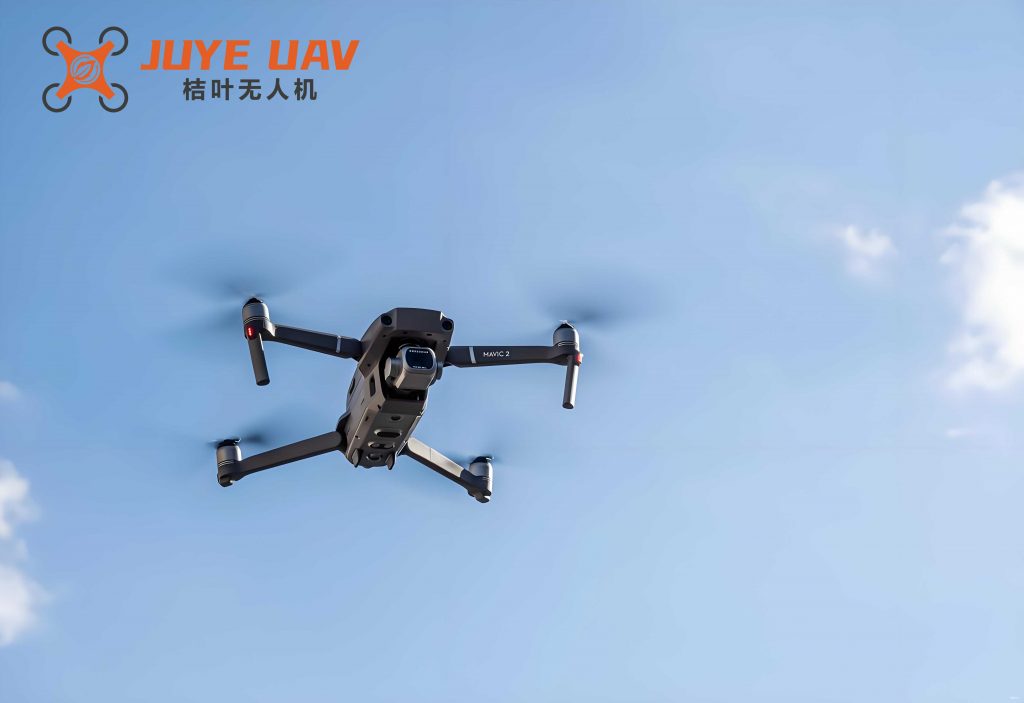
Quadrotor drones are inherently limited by their configuration, typically resulting in short flight durations. Commercially available electric-powered drones achieving flight times of 40 to 50 minutes are considered impressive, yet this still falls short compared to fixed-wing drones. A specific model of long-endurance electric quadrotor drone addresses this by reducing the rotor disk loading and increasing rotor diameter, thereby decreasing the hover power requirement and extending flight time to 1.5 hours—doubling that of similar commercial products. This extended endurance enhances mission capability, operational range, and efficiency. However, the large rotor disk introduces structural dynamics challenges: with a blade diameter of 1.65 meters, the overall drone size increases, leading to a distance of 2.5 meters between the central axes of diagonally positioned rotors. The slender arm structures result in low overall stiffness and reduced resistance to deformation. Moreover, the larger rotor area lowers the motor operating speed range, bringing it closer to the natural frequency range of the fuselage. The overall low stiffness makes the drone more susceptible to excitation forces from the rotor system, resulting in pronounced vibration issues.
The dynamic equation of an elastic body can be expressed as:
$$ M\ddot{x} + C\dot{x} + Kx = F(t) $$
where \( M \) is the mass matrix, \( C \) is the damping matrix, \( K \) is the stiffness matrix, and \( F(t) \) is the force vector function. Applying the Fourier transform to the displacement vector, the homogeneous solution of the equation transforms into a generalized eigenvalue problem:
$$ (K – \omega^2 M)\phi = 0 $$
For a non-trivial solution, the determinant must satisfy \( \det(K – \omega^2 M) = 0 \), where the eigenvalues \( \omega \) represent the system’s natural circular frequencies. The natural frequencies are then given by:
$$ f = \frac{\omega}{2\pi} $$
Resonance occurs when the external excitation frequency closely matches or equals the natural frequency, and if the system damping is low, the structure oscillates at this frequency. Natural frequencies are inherent properties of elastic bodies, primarily determined by structural stiffness and mass. Each natural frequency corresponds to a specific vibration mode, known as the natural mode or eigenmode. In practice, structures always possess some damping, and without sustained strong excitation, vibrations do not persist indefinitely. For quadrotor drones, the motor-driven blades produce continuous vibrational excitation due to dynamic imbalances from mass center deviations and aerodynamic imbalances. The excitation frequency is generally proportional to the rotor speed.
Modal testing was conducted on a large-scale electric quadrotor drone with a rotor operating speed range of 800 to 1200 RPM, resulting in a first-order excitation frequency range of 13.3 to 20 Hz. This range is close to the low-frequency resonance frequencies typical of slender thin-walled structures, making the drone prone to resonance during flight. The entire drone was suspended, and acceleration sensors were placed at various positions along the arms, including the tips, midpoints, and roots. A force hammer was used to impart impulse excitations at the arm tips, and the sensor data were processed to obtain frequency response curves for the flapwise and edgewise directions. The first four natural frequencies in the flapwise direction were identified as 9.23 Hz, 9.89 Hz, 16.78 Hz, and 22.62 Hz, while the edgewise direction frequencies were 9.95 Hz, 10.84 Hz, 12.31 Hz, and 18.08 Hz. The third flapwise and fourth edgewise natural frequencies lie within the rotor operating speed range, potentially exciting structural resonance and adversely affecting drone stability. The edgewise third-mode frequency, although not within the operating range, showed significant amplitude response near the lower limit, which could cause noticeable edgewise motion during takeoff. However, this does not affect the drone once airborne.
| Direction | Mode 1 (Hz) | Mode 2 (Hz) | Mode 3 (Hz) | Mode 4 (Hz) |
|---|---|---|---|---|
| Flapwise | 9.23 | 9.89 | 16.78 | 22.62 |
| Edgewise | 9.95 | 10.84 | 12.31 | 18.08 |
Finite element modal analysis was performed to model the large-scale quadrotor drone’s structure. The primary load-bearing components include the central fuselage, skid-type landing gear, and four extended arms, primarily made of carbon fiber composites with aluminum alloy connectors. The arms consist of a 3 mm thick root tube and a 1 mm thick outer tube, connected via foldable aluminum parts, with an aluminum motor mount at the tip for rotor attachment. The landing gear is constructed from carbon fiber tubes joined by aluminum components. Auxiliary structures and electronic elements were modeled as concentrated mass points using MPC constraints. Components were tied together, and the model employed quadrilateral shell elements for composite parts and tetrahedral solid elements for metal parts. The mesh configuration ensured accurate representation of the quadrotor’s dynamics.
The computed first eight natural frequencies were 9.26 Hz, 10.94 Hz, 11.79 Hz, 12.13 Hz, 16.23 Hz, 29.26 Hz, 31.07 Hz, and 52.05 Hz. Comparison with experimental results showed that the first and fifth finite element modes corresponded well with the first and third flapwise experimental frequencies, with similar mode shapes. The second and fourth finite element frequencies aligned with the second and third edgewise experimental frequencies, but the model failed to capture the first edgewise mode. Higher-order frequencies deviated due to simplifications, such as neglecting foldable part structures and gaps in the model. Overall, the finite element analysis provided a reasonable approximation of the quadrotor’s low-frequency vibration characteristics.
| Mode | Natural Frequency (Hz) | Description |
|---|---|---|
| 1 | 9.26 | Flapwise bending |
| 2 | 10.94 | Edgewise bending |
| 3 | 11.79 | Mixed mode |
| 4 | 12.13 | Edgewise bending |
| 5 | 16.23 | Flapwise bending |
| 6 | 29.26 | Higher mode |
| 7 | 31.07 | Higher mode |
| 8 | 52.05 | Higher mode |
To investigate the effect of stiffness variation on natural frequencies, the thickness of the outer arm tube was incrementally increased from 1.0 mm to 2.5 mm in steps of 0.5 mm. The natural frequencies for modes 1, 2, 4, and 5 were analyzed, showing an increasing trend with thickness. For instance, the first mode frequency rose from 9.26 Hz to 10.04 Hz, the second from 10.94 Hz to 12.86 Hz, the fourth from 12.13 Hz to 14.46 Hz, and the fifth from 16.23 Hz to 18.61 Hz. However, the fifth mode remained within the rotor operating range, and the fourth mode entered it as thickness increased. This indicates that merely increasing arm thickness to enhance stiffness may not suffice to avoid all critical frequencies, and the added weight could compromise the quadrotor’s payload capacity.
| Thickness (mm) | Mode 1 (Hz) | Mode 2 (Hz) | Mode 4 (Hz) | Mode 5 (Hz) |
|---|---|---|---|---|
| 1.0 | 9.26 | 10.94 | 12.13 | 16.23 |
| 1.5 | 9.65 | 11.52 | 12.71 | 16.77 |
| 2.0 | 9.89 | 12.18 | 13.52 | 17.45 |
| 2.5 | 10.04 | 12.86 | 14.46 | 18.61 |
Adjusting mass distribution is another approach to modify natural frequencies. The mass at the arm tip (motor mount) was varied from 1.8 kg to 3.0 kg in increments of 0.3 kg. The natural frequencies for modes 1, 2, 4, and 5 decreased with increasing tip mass. At 3.0 kg, the first mode dropped to 7.6 Hz, the second to 8.97 Hz, the fourth to 10.16 Hz, and the fifth to 14.45 Hz. While this method can shift frequencies out of the operating range, it adds significant weight without improving stiffness, potentially reducing the quadrotor’s overall performance and load-bearing ability.
| Tip Mass (kg) | Mode 1 (Hz) | Mode 2 (Hz) | Mode 4 (Hz) | Mode 5 (Hz) |
|---|---|---|---|---|
| 1.8 | 9.74 | 11.52 | 12.71 | 16.77 |
| 2.1 | 9.12 | 10.83 | 11.94 | 15.89 |
| 2.4 | 8.45 | 9.98 | 11.12 | 15.18 |
| 2.7 | 7.98 | 9.32 | 10.58 | 14.78 |
| 3.0 | 7.60 | 8.97 | 10.16 | 14.45 |
To enhance overall stiffness, carbon fiber struts were added between the arms at the mid-span positions (foldable part locations). The struts, with a diameter of 20 mm and thickness of 1 mm, were tied to the foldable parts in the finite element model. The first natural frequency increased to 16.8 Hz, with higher modes above 30 Hz, well outside the rotor operating range. The first mode shape resembled flapwise bending, but due to the excitation primarily coming from rotor dynamic imbalances in the edgewise direction, the impact was reduced. The strut reinforcement effectively suppressed lower-order modes and significantly raised natural frequencies, demonstrating a robust solution for vibration mitigation in large-scale quadrotor drones.
| Mode | Natural Frequency (Hz) | Description |
|---|---|---|
| 1 | 16.8 | Flapwise bending |
| 2 | 31.56 | Mixed mode |
| 3 | 37.72 | Landing gear involvement |
| 4 | 38.62 | Landing gear involvement |
| 5 | 43.61 | Higher mode |
| 6 | 44.35 | Higher mode |
| 7 | 48.38 | Higher mode |
| 8 | 55.9 | Higher mode |
In summary, this analysis of a large-scale electric quadrotor drone identified natural frequencies within the rotor operating range, posing risks to structural stability and flight safety. Finite element simulations explored the effects of varying arm tube thickness, tip mass, and strut reinforcement on natural frequencies. Increasing tube thickness and reducing tip mass raised frequencies, but strut reinforcement provided the most substantial stiffness improvement and frequency shift. These findings offer valuable guidance for designing large-scale quadrotor drones to mitigate vibration issues, ensuring enhanced performance and reliability. The use of finite element modeling and experimental validation underscores the importance of integrated approaches in addressing the dynamic challenges of advanced quadrotor systems.
The fundamental relationship for natural frequency in a single-degree-of-freedom system is given by:
$$ f = \frac{1}{2\pi} \sqrt{\frac{k}{m}} $$
where \( k \) is stiffness and \( m \) is mass. This principle underpins the parametric studies conducted, highlighting how adjustments in stiffness and mass distribution influence the vibrational behavior of quadrotor structures. For instance, in the thickness variation analysis, stiffness \( k \) increases with thickness, leading to higher frequencies, as shown in the data. Conversely, increasing mass \( m \) at the arm tips lowers frequencies, aligning with the inverse square root dependence. The strut reinforcement effectively increases the overall system stiffness, resulting in a pronounced upward shift in natural frequencies, which is critical for avoiding resonance in operational quadrotor drones.
Further considerations for quadrotor design include the trade-offs between weight, stiffness, and performance. While adding mass or thickness can adjust frequencies, it may compromise other aspects like payload capacity and energy efficiency. Therefore, strut-based solutions offer a balanced approach by providing significant stiffness gains without excessive weight addition. This analysis emphasizes the need for holistic design strategies in large-scale quadrotor development, incorporating both numerical and experimental methods to achieve optimal vibration control. Future work could explore advanced materials or active damping systems to further enhance the dynamic performance of quadrotor drones in demanding applications.