
In recent years, quadrotor unmanned aerial vehicles (UAVs) have gained significant attention due to their agility, compact design, and versatility in applications such as surveillance, delivery, and environmental monitoring. However, the quadrotor system is inherently nonlinear, underactuated, and highly coupled, posing substantial challenges for controller design to ensure stability during flight. Traditional control strategies, including Proportional-Integral-Derivative (PID) control, backstepping control, and sliding mode control, have been widely applied. For instance, PID control is simple but struggles with handling coupling effects, while sliding mode control often suffers from chattering issues that limit practical implementation. Backstepping control, a recursive method, effectively addresses nonlinearities and uncertainties in quadrotor systems, but its performance can be compromised by actuator faults, which are common in real-world scenarios. Actuator faults, such as partial loss of effectiveness or bias failures, can lead to unknown control gains, destabilizing the system if not properly managed. Existing fault-tolerant approaches, like fault detection and isolation or neural network-based compensation, often rely on precise models or may introduce estimation errors. To overcome these limitations, we propose a novel finite-time command filter fault-tolerant control scheme based on backstepping, incorporating a full-dimensional observer and Nussbaum functions to handle unknown control gains. This approach not only approximates unknown functions using neural networks but also enhances convergence speed through finite-time theory and mitigates computational burden via command filters. The key contributions include: (1) a new observer design combined with neural networks for accurate state estimation under faults, (2) integration of finite-time control to ensure rapid convergence, and (3) experimental validation demonstrating robustness against actuator faults. Through numerical simulations and real-world platform tests, we verify the effectiveness and practicality of our scheme, ensuring all signals in the quadrotor system remain uniformly ultimately bounded.
The quadrotor dynamic model is derived under the following assumptions: (1) the quadrotor is a rigid body with uniform mass distribution and symmetry, and (2) the reference signals and their derivatives are continuous and differentiable. The attitude dynamics of the quadrotor can be described as:
$$ \begin{aligned} \dot{x}_1 &= x_2, \\ \dot{x}_2 &= \frac{I_{yy} – I_{zz}}{I_{xx}} x_4 x_6 – \frac{J_r}{I_{xx}} w x_4 + \frac{\gamma_1}{I_{xx}} x_2 + \kappa_{e1} u_1, \\ \dot{x}_3 &= x_4, \\ \dot{x}_4 &= \frac{I_{zz} – I_{xx}}{I_{yy}} x_2 x_6 – \frac{J_r}{I_{yy}} w x_2 + \frac{\gamma_2}{I_{yy}} x_4 + \kappa_{e2} u_2, \\ \dot{x}_5 &= x_6, \\ \dot{x}_6 &= \frac{I_{xx} – I_{yy}}{I_{zz}} x_2 x_4 + \frac{\gamma_3}{I_{zz}} x_6 + \kappa_{e3} u_3, \end{aligned} $$
where $x = [x_1, x_2, x_3, x_4, x_5, x_6]^T = [\phi, \dot{\phi}, \theta, \dot{\theta}, \psi, \dot{\psi}]^T$ represents the roll, pitch, and yaw angles and their derivatives. The parameters $I_{xx}$, $I_{yy}$, and $I_{zz}$ denote the moments of inertia, $J_r$ is the rotor inertia, $w$ is the gyroscopic coefficient, $\gamma_i$ (for $i=1,2,3$) are air resistance coefficients, and $u_i$ are the control inputs subject to actuator faults. The fault model is given by $u_i = (1 – \Phi_i) u_i + \Theta_i$, where $\Phi_i \in (0, 0.95)$ represents the bias fault and $\Theta_i$ is a bounded gain fault. The unknown control gain $\kappa_{ei}$ arises from these faults, complicating the control design. To address this, we employ Nussbaum functions and a full-dimensional observer. The control objective is to design a fault-tolerant control scheme that ensures the quadrotor tracks desired attitude angles with all signals remaining bounded.
For mathematical preparation, we recall key theorems. Theorem 1 (Young’s Inequality): For constants $a > 0$, $b > 1$, $c > 1$ with $1/b + 1/c = 1$, and real numbers $d$ and $e$, the inequality $de \leq \frac{a^b}{b} d^b + \frac{a^{-c}}{c} e^c$ holds. Theorem 2 (Finite-Time Inequality): For $a > 0$, $b > 0$, $c > 0$, and real $d$, $e$, we have $d^b e^c \leq \frac{b}{b+c} a d^{b+c} + \frac{c}{b+c} a^{-\frac{b}{c}} e^{b+c}$. Theorem 3 (Neural Network Approximation): Any continuous nonlinear function $f(X)$ can be approximated as $f(X) = R^{*T} W(X) + \epsilon(X)$, where $R^*$ is the optimal weight vector, $W(X)$ is the basis function vector, and $\epsilon(X)$ is the approximation error bounded by $|\epsilon(X)| \leq \epsilon^*$. Theorem 4 (Nussbaum Function): A function $N(\omega)$ satisfying $\limsup_{p \to \infty} \frac{1}{p} \int_0^p N(\omega) d\omega = \infty$ and $\liminf_{p \to \infty} \frac{1}{p} \int_0^p N(\omega) d\omega = -\infty$ is used, e.g., $N(\omega) = \omega^2 \cos(\omega)$. Theorem 5 and 6 provide finite-time stability conditions for Lyapunov functions.
We now design the fault-tolerant controller using backstepping with a full-dimensional observer. First, consider the roll angle subsystem:
$$ \begin{aligned} \dot{x}_1 &= x_2, \\ \dot{x}_2 &= \kappa_{e1} u_1 + g_1(X), \\ y_1 &= x_1, \end{aligned} $$
where $g_1(X) = \frac{I_{yy} – I_{zz}}{I_{xx}} x_4 x_6 – \frac{J_r}{I_{xx}} w x_4 + \frac{\gamma_1}{I_{xx}} x_2$. To handle the unknown gain $\kappa_{e1}$, define $\Delta_1 = 1 – \Phi_1$ with $0 < \Delta_1 \leq \Delta_1 \leq \overline{\Delta}_1$, and let $\Lambda_1 = x_1 / \Delta_1$ and $\Lambda_2 = x_2 / \Delta_1$. The transformed system becomes:
$$ \begin{aligned} \dot{\Lambda}_1 &= \Lambda_2, \\ \dot{\Lambda}_2 &= \frac{u_1}{1 – \Phi_1} + \frac{\Theta_1}{\Delta_1} + g_1(X), \\ y_1 &= \Delta_1 \Lambda_1. \end{aligned} $$
A full-dimensional observer is designed as:
$$ \begin{aligned} \dot{\hat{\Lambda}}_1 &= \hat{\Lambda}_2 – \eta_1 (\hat{\Lambda}_1 – \Lambda_1), \\ \dot{\hat{\Lambda}}_2 &= -\eta_2 (\hat{\Lambda}_1 – \Lambda_1) + u_1, \end{aligned} $$
where $\eta_1 > 0$ and $\eta_2 > 0$ are constants. The estimation errors $\tilde{\Lambda}_1 = \Lambda_1 – \hat{\Lambda}_1$ and $\tilde{\Lambda}_2 = \Lambda_2 – \hat{\Lambda}_2$ form the error vector $\tilde{\Lambda} = [\tilde{\Lambda}_1, \tilde{\Lambda}_2]^T$. The error dynamics are:
$$ \dot{\tilde{\Lambda}} = N \tilde{\Lambda} + M \tilde{\Lambda}_1 + P \left( \frac{\Theta_1}{1 – \Phi_1 \Delta_1} + g_1(X) \right), $$
where $N = \begin{bmatrix} -\eta_1 & 1 \\ -\eta_2 & 0 \end{bmatrix}$, $M = [\eta_1, \eta_2]^T$, and $P = [0, 1]^T$. A Lyapunov function $V_1 = \tilde{\Lambda}^T B \tilde{\Lambda}$ is chosen, with $B > 0$ satisfying $N^T B + B N = -Q$ for $Q > 0$. Using neural networks, the unknown term $f_1(X) = M \tilde{\Lambda}_1 + g_1(X)$ is approximated as $f_1(X) = R_1^{*T} W_1(X) + \epsilon_1(X)$, leading to bounded error dynamics.
For the backstepping control design, define tracking errors and command filters. Let $z_1 = y_1 – \phi_{ref}$ and $z_2 = \hat{\Lambda}_2 – \alpha_1$, where $\alpha_1$ is the virtual control law. A first-order command filter is used: $\alpha_1 \dot{\alpha}_1 + \alpha_1 = \alpha_1^c$, with $\alpha_1^c$ as the filtered output. The compensation error is $\xi_1 = z_1 – \beta_1$, where $\beta_1$ is a compensation signal designed as $\dot{\beta}_1 = -s_1 \beta_1 + \Delta_1 \alpha_1^c – \Delta_1 \alpha_1$. The Lyapunov function for this step is:
$$ V_2 = V_1 + \frac{1}{2} z_1^2 + \frac{1}{2} \xi_1^2 + \frac{1}{2d_1} \tilde{h}_1^2 + \frac{1}{2b_1} \tilde{\Delta}_1^2, $$
where $\tilde{h}_1 = h_1 – \hat{h}_1$ and $\tilde{\Delta}_1 = \Delta_1 – \hat{\Delta}_1$ are estimation errors for neural network weights and fault parameters, respectively. The virtual control law is designed as:
$$ \alpha_1^c = N(\omega_1) \left( -s_1 z_1 – c_1 z_1^l – \eta_1 \xi_1 + \phi_{ref} \right), $$
with $\omega_1$ updated by $\dot{\omega}_1 = \frac{-s_1 z_1 – c_1 z_1^l – \eta_1 \xi_1 + \phi_{ref}}{\delta_1}$. The adaptive laws are $\dot{\hat{h}}_1 = d_1 (\xi_1 – \sigma_1 \hat{h}_1)$ and $\dot{\hat{\Delta}}_1 = b_1 (\xi_1 \alpha_1^c – \sigma_1 \hat{\Delta}_1)$. Proceeding to Step 2, the actual control law for roll is:
$$ u_1 = \eta_2 \hat{\Lambda}_1 + \dot{\alpha}_1^c – s_2 z_2 – c_2 z_2^l, $$
where $z_2 = \hat{\Lambda}_2 – \alpha_1^c$. Similar steps are applied to pitch and yaw subsystems. For pitch, the virtual control law is $\alpha_2^c = N(\omega_2) (-s_3 z_3 – c_3 z_3^l – \eta_3 \xi_2 + \theta_{ref})$, and the actual control is $u_2 = \eta_4 \hat{\Lambda}_3 + \dot{\alpha}_2^c – s_4 z_4 – c_4 z_4^l$. For yaw, $\alpha_3^c = N(\omega_3) (-s_5 z_5 – c_5 z_5^l – \eta_5 \xi_3 + \psi_{ref})$, and $u_3 = \eta_6 \hat{\Lambda}_5 + \dot{\alpha}_3^c – s_6 z_6 – c_6 z_6^l$. The parameters $s_i$, $c_i$, $\eta_i$, $d_i$, $b_i$, and $\sigma_i$ are positive constants tuned for performance.
Stability analysis is conducted using Lyapunov theory. The overall Lyapunov function for the attitude system is:
$$ V_A = \sum_{i=1}^3 \left( \frac{1}{2} z_{2i}^2 + \frac{1}{2} \xi_i^2 + \frac{1}{2d_i} \tilde{h}_i^2 + \frac{1}{2b_i} \tilde{\Delta}_i^2 \right) + \sum_{j=1}^3 \tilde{\Lambda}_j^T B_j \tilde{\Lambda}_j, $$
where $B_j$ are positive definite matrices. The derivative of $V_A$ satisfies:
$$ \dot{V}_A \leq -C V_A – D V_A^l + S, $$
for constants $C > 0$, $D > 0$, $S > 0$, and $0 < l < 1$. By Theorem 6, the system converges in finite time $T_{con} \leq \frac{1}{C(1-l)} \ln \left(1 + \frac{C V_A(0)^{1-l}}{D}\right)$. The compensation errors $\xi_i$ are shown to be bounded, ensuring all signals in the quadrotor system remain uniformly ultimately bounded.
To validate the proposed scheme, numerical simulations and experimental tests are conducted. The quadrotor parameters are: $\gamma_i = 0.006$, $I_{xx} = 0.021$, $I_{yy} = 0.021$, $I_{zz} = 0.039$, $J_r = 0.45$, and $w = 0.001$. Control parameters are set as $s_1 = 10$, $s_2 = 10$, $s_3 = 100$, $s_4 = 10$, $s_5 = 100$, $s_6 = 15$, $\eta_1 = 10$, $\eta_2 = 10$, $\eta_3 = 20$, $\eta_4 = 100$, $\eta_5 = 10$, $\eta_6 = 70$, $l = 0.9$, and others to 1. The desired attitudes are $\phi_{ref} = \sin(t)$, $\theta_{ref} = 0$, $\psi_{ref} = 0$. Actuator faults with $\Phi_i = 0.2$ and $\Theta_i = e^{-t^2}$ are introduced at $t = 10$ s. Initial conditions are $x(0) = [-0.43, 0, 0.18, 0, 0.1, 0]^T$.
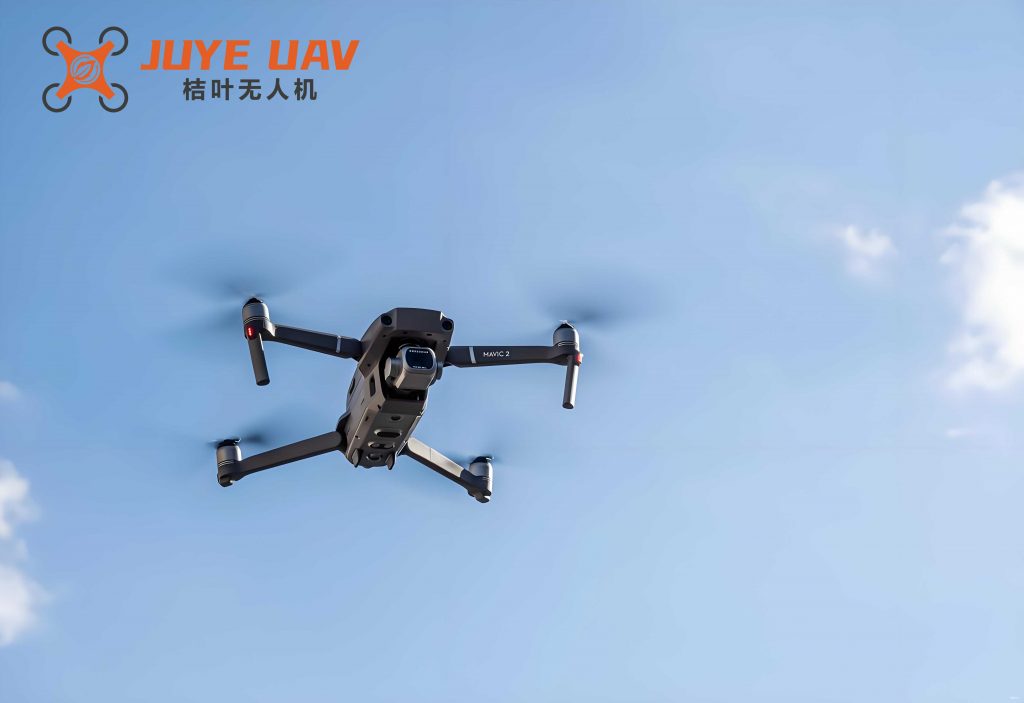
The simulation results demonstrate that the proposed control scheme achieves accurate attitude tracking despite faults, with errors converging to zero rapidly. In contrast, existing methods exhibit oscillations post-fault. The control inputs $u_1$, $u_2$, and $u_3$ adjust smoothly to faults, and command filter errors remain bounded. For experimental validation, we use a quadrotor platform from Beijing Lingsi Chuangqi, with parameters tuned to $s_1 = 3.5$, $s_2 = 1$, $s_3 = 4$, $s_4 = 1.5$, $s_5 = 2$, $s_6 = 3$, $\eta_1 = 0.4$, $\eta_2 = 1$, $\eta_3 = 0.6$, $\eta_4 = 1$, $\eta_5 = 1$, $\eta_6 = 0.5$, and $l = 0.9$. Faults are applied at $t = 20$ s, and the algorithm is embedded at $t = 10$ s. The results confirm practical applicability, with stable tracking and bounded control inputs.
The following table summarizes key parameters and their roles in the control scheme:
| Parameter | Description | Role in Control |
|---|---|---|
| $s_i$ | Control gains | Enhance tracking precision and convergence |
| $\eta_i$ | Observer coefficients | Improve state estimation accuracy |
| $c_i$ | Finite-time gains | Accelerate convergence speed |
| $l$ | Fractional power | Ensure finite-time stability |
| $\Delta_i$ | Fault parameters | Compensate for unknown gains |
Another table compares the proposed method with existing approaches:
| Method | Convergence Time | Fault Tolerance | Complexity |
|---|---|---|---|
| Proposed Scheme | Finite-time | High | Moderate |
| PID Control | Asymptotic | Low | Low |
| Sliding Mode | Finite-time | Medium | High |
| Neural Network | Asymptotic | High | High |
In conclusion, we have developed a novel fault-tolerant control scheme for quadrotor attitude tracking using full-dimensional observers and finite-time command filters. The integration of Nussbaum functions handles unknown control gains from actuator faults, while neural networks approximate uncertainties. The proposed method ensures rapid convergence and robustness, as validated through simulations and experiments. Future work will extend this approach to position control and multi-quadrotor systems.