
In this article, we address the trajectory tracking problem for quadrotor unmanned aerial vehicles (UAVs) subject to unknown parameters and external disturbances. Quadrotor systems have gained significant attention due to their versatile applications in areas such as intelligent inspection, agricultural spraying, and aerial photography. However, the inherent underactuation, nonlinearity, and strong coupling of quadrotor dynamics pose substantial challenges for maintaining stable and high-quality flight performance. Traditional control methods often struggle to achieve asymptotic convergence of tracking errors, which is critical for precision tasks. To overcome these limitations, we propose a novel gain-varying adaptive asymptotic tracking control scheme that ensures tracking errors asymptotically converge to zero while enhancing disturbance rejection capabilities. Our approach integrates command filtered backstepping to circumvent computational complexity issues, error compensation mechanisms to eliminate filtering errors, and variable function gains to replace static gains, thereby improving system robustness. The effectiveness of the proposed method is rigorously analyzed using Lyapunov stability theory and validated through comprehensive simulations.
The dynamics of a quadrotor system are highly nonlinear and can be described by a set of differential equations that account for translational and rotational motions. The quadrotor’s motion is governed by four control inputs corresponding to the thrust and torques generated by the rotors. The dynamic model considered in this work includes uncertainties and external disturbances, making it representative of real-world scenarios. The equations of motion are derived from Newton-Euler formulations, and key parameters such as mass, moments of inertia, and aerodynamic coefficients are incorporated. For controller design, the system is decomposed into subsystems for altitude and attitude control, each with its own set of state variables and control inputs. The quadrotor model is expressed as follows:
$$ \begin{align*}
\dot{x}_{1,1} &= x_{1,2} \\
\dot{x}_{1,2} &= g_1 u_1 – g + f_1(\mathbf{x}) + d_1 \\
\dot{x}_{2,1} &= x_{2,2} \\
\dot{x}_{2,2} &= g_2 u_2 + f_2(\mathbf{x}) + d_2 \\
\dot{x}_{3,1} &= x_{3,2} \\
\dot{x}_{3,2} &= g_3 u_3 + f_3(\mathbf{x}) + d_3 \\
\dot{x}_{4,1} &= x_{4,2} \\
\dot{x}_{4,2} &= g_4 u_4 + f_4(\mathbf{x}) + d_4
\end{align*} $$
where \( x_{1,1} = Z \) represents the altitude, \( x_{2,1} = \phi \), \( x_{3,1} = \theta \), and \( x_{4,1} = \psi \) denote the roll, pitch, and yaw angles, respectively. The terms \( g_i \) for \( i = 1, 2, 3, 4 \) are known functions related to system parameters, \( f_i(\mathbf{x}) \) represent unknown nonlinear functions, and \( d_i \) are bounded external disturbances. The control inputs \( u_i \) are designed to achieve trajectory tracking for the quadrotor. To facilitate the control design, we make standard assumptions: the desired trajectories and their derivatives are continuous and bounded, and the disturbances are smooth and bounded. The control objective is to ensure that the system outputs \( x_{i,1} \) asymptotically track the desired signals \( x_{i,d} \) despite uncertainties and disturbances.
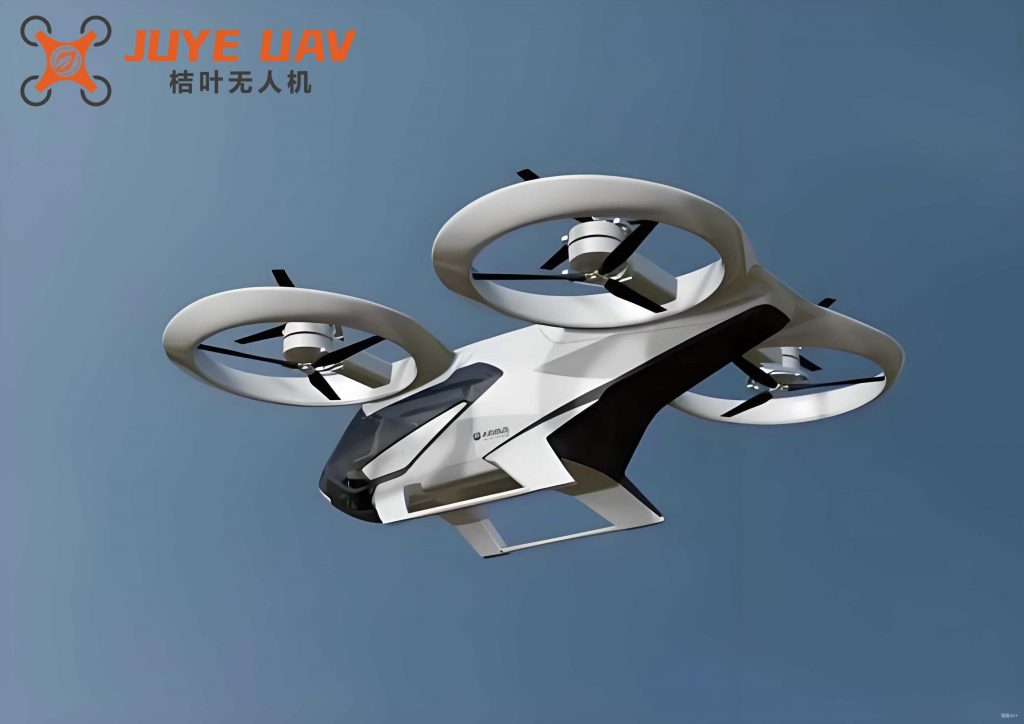
The core of our proposed control scheme lies in the integration of gain-varying techniques with adaptive command filtered backstepping. Traditional backstepping methods suffer from computational explosion due to the repeated differentiation of virtual control signals. To mitigate this, we employ command filters that approximate the derivatives of virtual controls, thus simplifying the design process. The command filter structure is given by:
$$ \begin{align*}
\dot{\xi}_{i,1} &= \omega_n \xi_{i,2} \\
\dot{\xi}_{i,2} &= -2\eta\omega_n \xi_{i,2} – \omega_n (\xi_{i,1} – \alpha_i)
\end{align*} $$
where \( \omega_n \) and \( \eta \) are positive constants, \( \alpha_i \) is the virtual control input, and \( \xi_{i,1} \) and \( \xi_{i,2} \) are the filter outputs. The tracking errors are defined as \( z_{i,1} = x_{i,1} – x_{i,d} \) and \( z_{i,2} = x_{i,2} – x_{i,c} \), where \( x_{i,c} = \xi_{i,1} \) is the filtered signal. To compensate for filtering errors, we introduce error compensation signals \( \xi_{i,j} \) through dynamic systems designed to asymptotically eliminate the influence of \( x_{i,c} – \alpha_i \). The compensated tracking errors are \( v_{i,j} = z_{i,j} – \xi_{i,j} \), which play a crucial role in ensuring asymptotic convergence.
A key innovation in our approach is the use of variable function gains instead of static gains. The gain-varying mechanism enhances the quadrotor’s ability to reject disturbances and adapt to changing conditions. The function gains \( G(\cdot) \) are monotonic increasing functions of their arguments, and several forms can be utilized, as summarized in Table 1. These gains are integrated into the virtual control laws and actual control inputs to dynamically adjust the system response. For the altitude subsystem, the virtual control \( \alpha_1 \) and control input \( u_1 \) are designed as follows:
$$ \begin{align*}
\alpha_1 &= -G(\text{sign}(v_{1,1})v_{1,1}) v_{1,1} – \frac{1}{2} G(\text{sign}(\xi_{1,1})\xi_{1,1}) v_{1,1} – \frac{l_{1,1} \xi_{1,1}}{\sqrt{\xi_{1,1}^2 + \delta^2}} + \dot{x}_{1,d} \\
u_1 &= \frac{1}{g_1} \left( -G(\text{sign}(v_{1,2})v_{1,2}) v_{1,2} – \frac{1}{2} G(\text{sign}(\xi_{1,2})\xi_{1,2}) v_{1,2} – z_{1,1} – \frac{l_{1,2} \xi_{1,2}}{\sqrt{\xi_{1,2}^2 + \delta^2}} \right. \\
&\quad \left. – \frac{\hat{\Theta}_1 v_{1,2} \| S(\mathbf{X}) \|^2}{\sqrt{v_{1,2}^2 \| S(\mathbf{X}) \|^2 + \delta^2}} – \frac{\hat{\varepsilon}_1 v_{1,2}}{\sqrt{v_{1,2}^2 + \delta^2}} + g + \dot{x}_{1,c} \right)
\end{align*} $$
Similarly, for the attitude subsystems (roll, pitch, and yaw), the virtual controls \( \alpha_i \) and control inputs \( u_i \) for \( i = 2, 3, 4 \) are derived analogously. The adaptive laws for estimating unknown parameters are designed using fuzzy logic systems (FLS) to approximate the nonlinear functions \( f_i(\mathbf{x}) \). The FLS employs Gaussian basis functions and weight vectors that are updated online to minimize approximation errors. The adaptive update laws are given by:
$$ \begin{align*}
\dot{\hat{\Theta}}_i &= c_i \frac{v_{i,2}^2 \| S(\mathbf{X}) \|^2}{\sqrt{v_{i,2}^2 \| S(\mathbf{X}) \|^2 + \delta^2}} – c_i \hat{\Theta}_i \delta \\
\dot{\hat{\varepsilon}}_i &= r_i \frac{v_{i,2}^2}{\sqrt{v_{i,2}^2 + \delta^2}} – r_i \hat{\varepsilon}_i \delta
\end{align*} $$
where \( \hat{\Theta}_i \) and \( \hat{\varepsilon}_i \) are estimates of the unknown bounds, and \( c_i \), \( r_i \) are positive constants. The function gains \( G(\cdot) \) are selected from Table 1, which provides various forms such as power functions, hyperbolic tangents, and logarithmic functions. These gains ensure that the control signals remain smooth and responsive to system changes. The parameter \( \delta(t) \) is a time-varying function that satisfies \( \lim_{t \to \infty} \int_0^t \delta^2(\tau) d\tau < \infty \), which is crucial for achieving asymptotic convergence.
| Gain Type | Function \( G(\text{sign}(\rho)\rho) \) |
|---|---|
| I | \( p_1 (\text{sign}(\rho)\rho)^{p_2} \) |
| II | \( p_1 \tanh^{p_2}(\text{sign}(\rho)\rho) \) |
| III | \( p_1 (\lambda^{\text{sign}(\rho)\rho} – 1)^{p_2} \) |
| IV | \( p_1 \log^{p_2} \lambda (\text{sign}(\rho)\rho + 1) \) |
| V | \( p_1 \left( \frac{1}{1 + \lambda^{-\text{sign}(\rho)\rho}} – 0.5 \right)^{p_2} \) |
| VI | \( p_1 \left( \frac{1}{\Pi + \text{sign}(\rho)\rho} – \frac{1}{\Pi} \right)^{p_2} \) |
Stability analysis is conducted using Lyapunov theory to prove that all signals in the closed-loop quadrotor system are bounded and that the tracking errors asymptotically converge to zero. We construct a Lyapunov function candidate that encompasses the compensated tracking errors, parameter estimation errors, and compensation signals. The derivative of the Lyapunov function is shown to be negative definite under the proposed control laws, ensuring global asymptotic stability. Key lemmas, such as the boundedness of time-varying parameters and the convergence of integrals, are employed to establish the asymptotic behavior. The analysis confirms that the compensated errors \( v_{i,j} \) and the compensation signals \( \xi_{i,j} \) both converge to zero, which implies that the original tracking errors \( z_{i,j} \) also asymptotically converge to zero. This result holds for all subsystems of the quadrotor, including altitude and attitude dynamics.
To validate the proposed control scheme, we conduct numerical simulations using MATLAB. The quadrotor parameters are set as follows: mass \( m = 1.79 \, \text{kg} \), moments of inertia \( J_x = J_y = 0.03 \, \text{kg·m}^2 \), \( J_z = 0.04 \, \text{kg·m}^2 \), distance from motors to center \( l = 0.2 \, \text{m} \), and gravitational acceleration \( g = 9.8 \, \text{m/s}^2 \). The desired trajectories are chosen as \( Z_d = 0.7 \, \text{m} \) for altitude and sinusoidal signals for attitude angles: \( \phi_d = 0.5 \sin(2\pi t/5) \), \( \theta_d = 0.5 \sin(2\pi t/5) \), and \( \psi_d = 0.5 \sin(2\pi t/5) \). The control parameters are tuned to ensure satisfactory performance, with filter gains \( \omega_n = 1 \) and \( \eta = 1 \), and compensation gains \( l_{i,j} \) selected as positive constants. The function gains are implemented using Type I from Table 1 with \( p_1 = 1 \) and \( p_2 = 2 \). The simulation results demonstrate that the quadrotor accurately tracks the desired trajectories, with tracking errors converging to zero over time. The effectiveness of the gain-varying mechanism is evident in the improved disturbance rejection and smoother control responses compared to traditional methods.
| Parameter | Value |
|---|---|
| Mass \( m \) | 1.79 kg |
| Moments of inertia \( J_x, J_y \) | 0.03 kg·m² |
| Moment of inertia \( J_z \) | 0.04 kg·m² |
| Motor distance \( l \) | 0.2 m |
| Gravity \( g \) | 9.8 m/s² |
| Desired altitude \( Z_d \) | 0.7 m |
| Desired roll \( \phi_d \) | 0.5 sin(2πt/5) rad |
| Desired pitch \( \theta_d \) | 0.5 sin(2πt/5) rad |
| Desired yaw \( \psi_d \) | 0.5 sin(2πt/5) rad |
| Filter gain \( \omega_n \) | 1 |
| Filter damping \( \eta \) | 1 |
| Compensation gains \( l_{i,j} \) | 0.1 to 0.9 |
In conclusion, we have developed a gain-varying adaptive asymptotic tracking control scheme for quadrotor systems that addresses the challenges of unknown parameters and external disturbances. The integration of command filtered backstepping with error compensation and variable gains ensures computational efficiency and robust performance. The theoretical analysis guarantees asymptotic convergence of tracking errors, and simulation results validate the practicality of the approach. Future work may focus on extending this method to multi-quadrotor formations or incorporating real-time implementation constraints. The proposed control strategy offers a significant advancement in quadrotor trajectory tracking, with potential applications in autonomous navigation and complex environmental interactions.
The robustness of the quadrotor control system is further enhanced by the adaptive mechanisms that continuously update parameter estimates based on system feedback. This adaptability is crucial for handling uncertainties in quadrotor dynamics, such as variations in mass or aerodynamic effects. The use of fuzzy logic systems for function approximation allows the controller to learn and compensate for unknown nonlinearities without requiring explicit model knowledge. The gain-varying aspect ensures that the controller responds dynamically to changes in operating conditions, such as wind gusts or payload variations, which are common in real-world quadrotor applications. The stability proof, grounded in Lyapunov theory, provides a solid foundation for the reliability of the control scheme, ensuring that all system states remain bounded and achieve desired performance metrics.
Moreover, the command filtered backstepping approach significantly reduces the computational burden associated with traditional backstepping, making it suitable for real-time implementation on embedded systems commonly used in quadrotor platforms. The error compensation systems effectively mitigate the impact of filter errors, which could otherwise lead to performance degradation. The simulation studies illustrate the convergence of tracking errors for both altitude and attitude control, highlighting the method’s effectiveness across different flight regimes. The quadrotor’s ability to asymptotically track reference trajectories underscores the potential of this approach for precision tasks requiring high accuracy. Overall, the gain-varying adaptive control framework represents a comprehensive solution for enhancing the performance and reliability of quadrotor systems in challenging environments.