
In recent years, quadrotor unmanned aerial vehicles (UAVs) have garnered significant attention due to their versatility in applications such as surveillance, delivery, and environmental monitoring. The inherent nonlinearity, strong coupling, and underactuation of quadrotor systems pose substantial challenges in control design, especially when considering real-world factors like actuator faults and unknown aerodynamic parameters. This paper addresses the critical issue of fault-tolerant control for quadrotors subject to actuator failures and uncertain drag coefficients, focusing on finite-time convergence for position subsystems and appointed-time prescribed performance for attitude subsystems. By integrating adaptive techniques with sliding mode control and dynamic surface frameworks, we ensure robust tracking performance while satisfying transient and steady-state constraints. The proposed methodology enhances the reliability and safety of quadrotor operations in adverse conditions, as validated through numerical simulations.
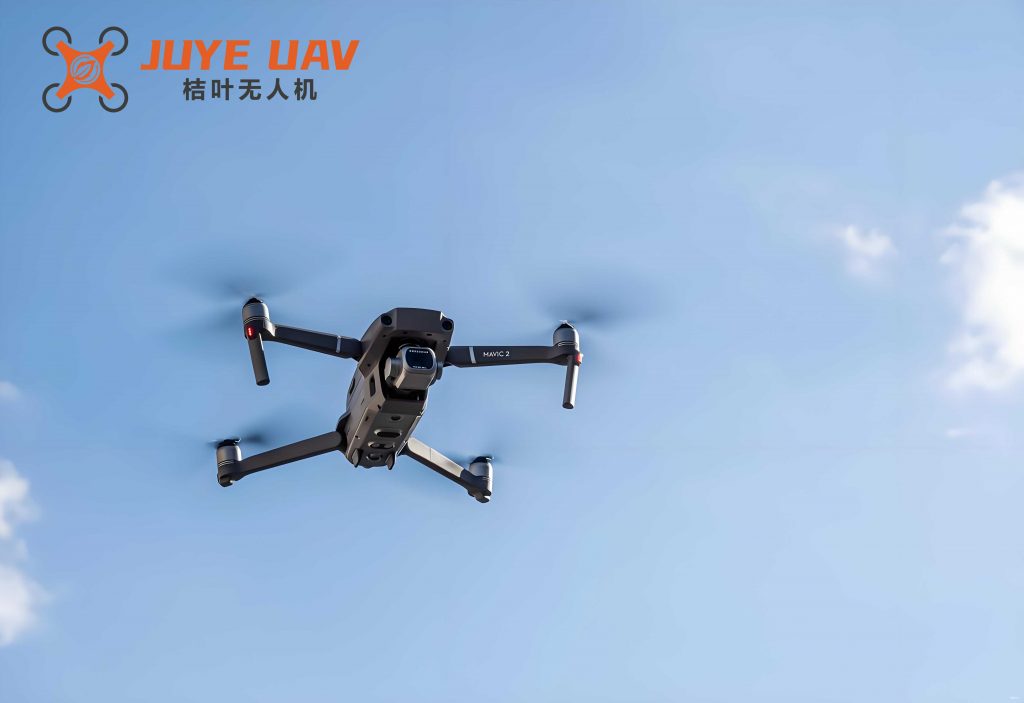
The mathematical model of a quadrotor UAV is derived using Newton-Euler formulations, accounting for aerodynamic drag effects and actuator dynamics. The system is divided into position and attitude subsystems, each governed by nonlinear equations. For the position subsystem, the dynamics along the x, y, and z axes are expressed as:
$$ \dot{x}_1 = x_2, \quad \dot{x}_2 = -\frac{1}{m} k_{dx} x_2 + \frac{1}{m} u_x $$
$$ \dot{x}_3 = x_4, \quad \dot{x}_4 = -\frac{1}{m} k_{dy} x_4 + \frac{1}{m} u_y $$
$$ \dot{x}_5 = x_6, \quad \dot{x}_6 = -\frac{1}{m} k_{dz} x_6 + \frac{1}{m} u_z – g $$
Similarly, the attitude subsystem for roll (φ), pitch (θ), and yaw (ψ) angles is described by:
$$ \dot{x}_7 = x_8, \quad \dot{x}_8 = \frac{I_y – I_z}{I_x} x_{10} x_{12} – \frac{1}{I_x} J_p \Omega_r x_{10} + \frac{L}{I_x} u_\phi – \frac{k_{d\phi}}{I_x} x_8 $$
$$ \dot{x}_9 = x_{10}, \quad \dot{x}_{10} = \frac{I_z – I_x}{I_y} x_8 x_{12} – \frac{1}{I_y} J_p \Omega_r x_8 + \frac{L}{I_y} u_\theta – \frac{k_{d\theta}}{I_y} x_{10} $$
$$ \dot{x}_{11} = x_{12}, \quad \dot{x}_{12} = \frac{I_x – I_y}{I_z} x_8 x_{10} + \frac{L}{I_z} u_\psi – \frac{k_{d\psi}}{I_z} x_{12} $$
Here, \( m \) represents the quadrotor mass, \( g \) is gravitational acceleration, \( k_{di} \) (for \( i = x, y, z, \phi, \theta, \psi \)) denote unknown drag coefficients, \( I_x, I_y, I_z \) are moments of inertia, \( J_p \) is the propeller inertia, \( \Omega_r \) is the rotor speed margin, and \( L \) is the arm length. The control inputs \( u_x, u_y, u_z \) are derived from the total thrust \( U_1 \) and orientation angles, while \( u_\phi, u_\theta, u_\psi \) correspond to torque inputs. Actuator faults are modeled as \( u_i = \sigma_i v_i + \delta_i \), where \( \sigma_i \) (with \( 0 < \sigma_i \leq 1 \)) is the fault coefficient and \( \delta_i \) is an additive fault component. This formulation captures partial failures, bias faults, and stuck actuators, which are common in practical quadrotor scenarios.
To achieve finite-time convergence for the quadrotor position subsystem, a novel fast terminal sliding mode control (FTSMC) technique is employed. The sliding surface for the altitude (z) subsystem is designed as:
$$ S_z = e_5 + a_3 \text{sign}(e_5) |e_5|^{\mu_3} + \beta_3 \text{sign}(\dot{e}_5) |\dot{e}_5|^{\vartheta_3} $$
where \( e_5 = x_5 – x_{5d} \) is the tracking error, \( a_3 > 0 \), \( \beta_3 > 0 \), \( \mu_3 > \vartheta_3 \), and \( 1 < \vartheta_3 < 2 \). The control law \( v_z \) is formulated to compensate for actuator faults and unknown drag:
$$ v_z = \frac{\hat{\chi}_z}{m} \left( \ddot{x}_{5d} – \lambda_z S_z – k_z \text{sign}(S_z) – \left( \frac{1}{m} |x_6| \hat{k}_{Dz} + \frac{1}{m} \hat{\Delta}_z \right) \text{sign}(S_z) + g – \frac{1}{\beta_3 \vartheta_3} |e_5|^{2-\vartheta_3} (1 + a_3 \mu_3 \text{sign}(e_5) |e_5|^{\mu_3-1}) \text{sign}(\dot{e}_5) \right) $$
Adaptive laws estimate the fault coefficient \( \chi_z = 1/\sigma_z \), drag bound \( k_{Dz} \), and additive fault bound \( \Delta_z \):
$$ \dot{\hat{\chi}}_z = r_{z1} \beta_3 \vartheta_3 |e_5|^{\vartheta_3-1} S_z \left( -\ddot{x}_{5d} + g + \left( \frac{1}{m} |x_6| \hat{k}_{Dz} + \frac{1}{m} \hat{\Delta}_z \right) \text{sign}(S_z) + \lambda_z S_z + k_z \text{sign}(S_z) + \frac{1}{\beta_3 \vartheta_3} |e_5|^{2-\vartheta_3} (1 + a_3 \mu_3 \text{sign}(e_5) |e_5|^{\mu_3-1}) \text{sign}(\dot{e}_5) \right) – r_{z1} \hat{\chi}_z $$
$$ \dot{\hat{\Delta}}_z = r_{z2} \beta_3 \vartheta_3 |e_5|^{\vartheta_3-1} \frac{1}{m} |S_z| – \hat{\Delta}_z $$
$$ \dot{\hat{k}}_{Dz} = r_{z3} \beta_3 \vartheta_3 |e_5|^{\vartheta_3-1} \frac{1}{m} |S_z x_6| – \hat{k}_{Dz} $$
Analogous controllers and adaptive laws are derived for the x and y position subsystems, ensuring finite-time stability across all translational degrees of freedom. The Lyapunov analysis confirms that the position tracking errors converge to zero within a finite time, enhancing the quadrotor’s responsiveness.
For the quadrotor attitude subsystem, an appointed-time prescribed performance control (PPC) scheme is integrated with adaptive dynamic surface control (DSC). A new performance function \( F_{bi} \) is defined to enforce tracking error constraints:
$$ F_{bi} = \begin{cases} \ln(\zeta_0 (t_e – t)^n + 1) + \zeta_\infty, & 0 < t < t_e \\ \zeta_\infty, & t \geq t_e \end{cases} $$
where \( \zeta_0 = (e^{l – \zeta_\infty} – 1)/(t_e – t_0)^n \), and \( l, n, \zeta_\infty, t_e \) are positive design parameters. This function guarantees that the tracking error \( e_i \) (for \( i = 7, 9, 11 \)) satisfies \( -d_2 F_{bi} < e_i < -d_1 F_{bi} \), with \( d_1 \) and \( d_2 \) shaping the transient and steady-state bounds. A coordinate transformation is applied to convert the constrained error dynamics into an unconstrained form:
$$ z_i = \tan\left( \frac{\pi e_i}{2d_1 F_{bi}} \right) q_i + \tan\left( \frac{\pi e_i}{2d_2 F_{bi}} \right) (1 – q_i) $$
where \( q_i = 1 \) if \( e_i \geq 0 \), and \( q_i = 0 \) otherwise. The derivative of \( z_i \) is computed as:
$$ \dot{z}_i = F_{bi} A_{Fi} \dot{e}_i – \dot{F}_{bi} A_{Fi} e_i $$
with \( A_{Fi} = \sec^2\left( \frac{\pi e_i}{2d_1 F_{bi}} \right) \frac{\pi}{2d_1} \frac{1}{F_{bi}^2} q_i + \sec^2\left( \frac{\pi e_i}{2d_2 F_{bi}} \right) \frac{\pi}{2d_2} \frac{1}{F_{bi}^2} (1 – q_i) \). The control laws for the roll, pitch, and yaw subsystems are designed as follows:
$$ v_\phi = \frac{I_x \hat{\chi}_\phi}{L} \left( -\frac{I_y – I_z}{I_x} x_{10} x_{12} + \frac{1}{I_x} J_p \Omega_r x_{10} + \dot{\alpha}_7 – \frac{1}{I_x} (\hat{k}_{D\phi} |x_8| + L \hat{\Delta}_\phi) \text{sign}(e_8) – c_8 e_8 – z_7 F_{b7} A_{F7} \right) $$
$$ v_\theta = \frac{I_y \hat{\chi}_\theta}{L} \left( -\frac{I_z – I_x}{I_y} x_8 x_{12} + \frac{1}{I_y} J_p \Omega_r x_8 + \dot{\alpha}_9 – \frac{1}{I_y} (\hat{k}_{D\theta} |x_{10}| + L \hat{\Delta}_\theta) \text{sign}(e_{10}) – c_{10} e_{10} – z_9 F_{b9} A_{F9} \right) $$
$$ v_\psi = \frac{I_z \hat{\chi}_\psi}{L} \left( -\frac{I_x – I_y}{I_z} x_8 x_{10} + \dot{\alpha}_{11} – \frac{1}{I_z} (\hat{k}_{D\psi} |x_{12}| + L \hat{\Delta}_\psi) \text{sign}(e_{12}) – c_{12} e_{12} – z_{11} F_{b11} A_{F11} \right) $$
The virtual control inputs \( \alpha_7^*, \alpha_9^*, \alpha_{11}^* \) are designed to stabilize the error dynamics:
$$ \alpha_7^* = -\frac{1}{2} z_7 F_{b7} A_{F7} + \dot{x}_{7d} – \frac{c_7}{F_{b7} A_{F7}} z_7 + \frac{\dot{F}_{b7}}{F_{b7}} e_7 $$
$$ \alpha_9^* = -\frac{1}{2} z_9 F_{b9} A_{F9} + \dot{x}_{9d} – \frac{c_9}{F_{b9} A_{F9}} z_9 + \frac{\dot{F}_{b9}}{F_{b9}} e_9 $$
$$ \alpha_{11}^* = -\frac{1}{2} z_{11} F_{b11} A_{F11} + \dot{x}_{11d} – \frac{c_{11}}{F_{b11} A_{F11}} z_{11} + \frac{\dot{F}_{b11}}{F_{b11}} e_{11} $$
These are filtered through first-order systems to avoid derivative computations. Adaptive laws for the attitude subsystem estimate the fault and drag parameters:
$$ \dot{\hat{\chi}}_\phi = r_{\phi1} e_8 \left( \frac{I_y – I_z}{I_x} x_{10} x_{12} – \frac{1}{I_x} J_p \Omega_r x_{10} – \dot{\alpha}_7 + c_8 e_8 + \frac{1}{I_x} (\hat{k}_{D\phi} |x_8| + L \hat{\Delta}_\phi) \text{sign}(e_8) + z_7 F_{b7} A_{F7} \right) – r_{\phi1} \hat{\chi}_\phi $$
$$ \dot{\hat{\Delta}}_\phi = r_{\phi2} \left( \frac{L}{I_x} |e_8| – \hat{\Delta}_\phi \right) $$
$$ \dot{\hat{k}}_{D\phi} = r_{\phi3} \left( \frac{1}{I_x} |e_8 x_8| – \hat{k}_{D\phi} \right) $$
Similar adaptive laws are defined for the pitch and yaw subsystems. The Lyapunov stability analysis demonstrates that all signals in the closed-loop quadrotor system are uniformly ultimately bounded, with attitude tracking errors converging within the prescribed performance bounds by the appointed time \( t_e \).
To validate the proposed control strategies, numerical simulations are conducted using MATLAB. The quadrotor parameters are summarized in Table 1, and the initial conditions are set to simulate realistic flight scenarios.
| Parameter (Unit) | Value | Parameter (Unit) | Value |
|---|---|---|---|
| m (kg) | 2.000 | Ixx (N·s²/rad) | 0.550 |
| g (m/s²) | 9.800 | Iyy (N·s²/rad) | 0.510 |
| Ωr (rad) | 1.000 | Izz (N·s²/rad) | 0.960 |
| L (m) | 0.200 | Jp (N·s²/rad) | 1.000 |
The performance function parameters are chosen as \( d_1 = 2.5 \), \( d_2 = 2 \), \( l = 2.5 \), \( \zeta_\infty = 0.05 \), \( t_0 = 0 \), \( t_e = 2 \), and \( n = 5 \). Actuator faults are introduced with \( \sigma_i = 0.5 \) and \( \delta_i = 0.5 \cos(t) \) for all axes. The control gains and adaptive parameters are tuned to ensure robust performance. Simulation results illustrate the quadrotor’s trajectory tracking, error convergence, and adherence to prescribed constraints, confirming the effectiveness of the proposed fault-tolerant control approach.
In conclusion, this paper presents a comprehensive fault-tolerant control framework for quadrotor UAVs, addressing both position and attitude subsystems under actuator faults and unknown drag coefficients. The integration of finite-time sliding mode control and appointed-time prescribed performance techniques ensures rapid convergence and guaranteed transient behavior. Adaptive mechanisms compensate for uncertainties and faults, enhancing the quadrotor’s resilience. Future work will explore multi-quadrotor coordination and real-time implementation in dynamic environments.