
In recent years, quadrotor unmanned aerial vehicles (UAVs) have gained significant attention due to their versatility in applications such as surveillance, delivery, and environmental monitoring. These systems are characterized by their underactuated nature, strong coupling, and nonlinear dynamics, making trajectory tracking under external disturbances a challenging problem. Traditional control methods, including PID, model predictive control (MPC), sliding mode control, and iterative learning control (ILC), have been employed to address these challenges. However, external disturbances like wind and airflow can severely impact tracking accuracy, necessitating robust and adaptive control strategies. This paper proposes a novel approach that combines MPC with ILC to enhance the robustness and precision of quadrotor trajectory tracking. The MPC component serves as a feedback controller with error compensation, while the ILC acts as a feedforward controller optimized using a hyperbolic tangent function to reduce iterations and improve convergence. Simulations demonstrate the effectiveness of this method in achieving high-precision tracking under disturbances, outperforming existing techniques like sliding mode ILC and robust ILC.
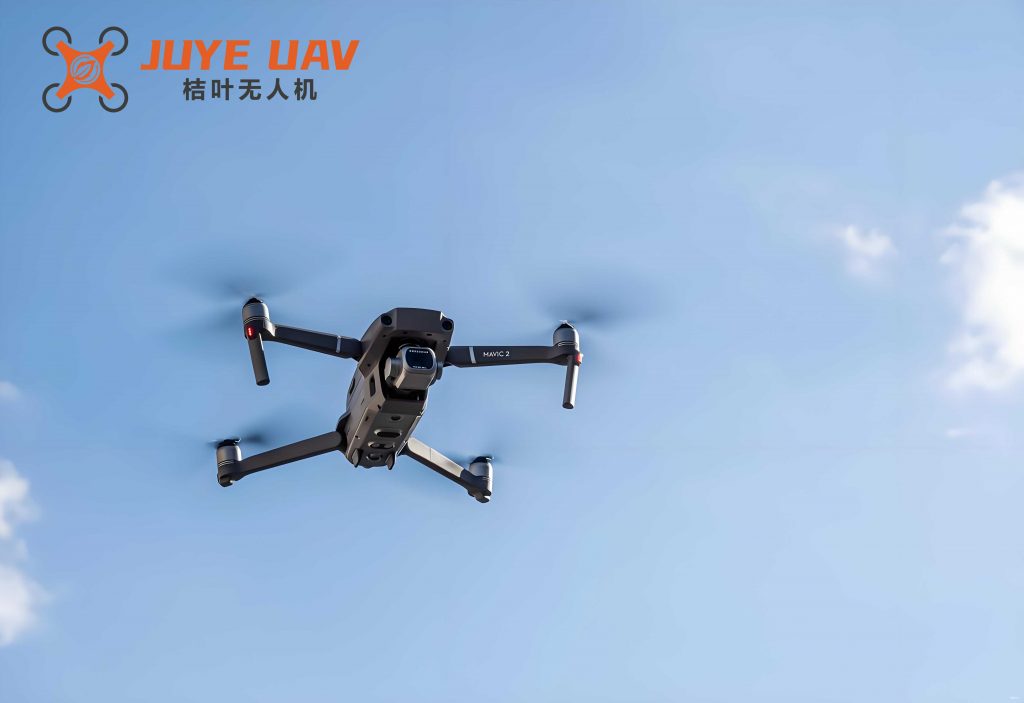
The dynamic model of a quadrotor is derived using Newton-Euler equations, considering external disturbances. The control inputs are defined as the total thrust and moments along the roll, pitch, and yaw axes. The state vector includes position, orientation, and their derivatives, while the output vector focuses on key variables like altitude and Euler angles. The system’s nonlinearity and coupling require a sophisticated control design to handle uncertainties and disturbances effectively.
The control scheme integrates MPC and ILC to form a composite controller. The MPC component predicts future states and optimizes control inputs over a horizon, incorporating a feedback correction mechanism based on prediction errors. This is formulated as a quadratic programming problem to minimize tracking errors and control effort. The ILC component uses a learning law that adapts gains via a hyperbolic tangent function, enabling faster convergence and reduced computational load. The combined control input ensures that the quadrotor accurately follows desired trajectories despite external perturbations.
Stability analysis confirms the convergence of the proposed method, showing that the tracking error diminishes over iterations under bounded disturbances. Simulation results validate the approach, with comparisons highlighting its superiority in terms of error reduction and iteration efficiency. The following sections detail the problem formulation, control design, stability proof, and experimental analysis, providing a comprehensive framework for quadrotor trajectory tracking.
Problem Formulation
The quadrotor dynamics are described by a set of differential equations that account for external disturbances. The control inputs are defined as:
$$
u = \begin{bmatrix} u_1 \\ u_2 \\ u_3 \\ u_4 \end{bmatrix} = \begin{bmatrix} F_1 + F_2 + F_3 + F_4 \\ F_4 – F_2 \\ F_3 – F_1 \\ M_4 + M_2 – M_1 – M_3 \end{bmatrix}
$$
where \( F_i \) and \( M_i \) represent the thrust and moment generated by each rotor, respectively. The equations of motion are:
$$
\begin{aligned}
\ddot{x} &= \frac{(\cos\phi \sin\theta \cos\psi + \sin\phi \sin\psi)u_1}{m} – \frac{d_x}{m} \\
\ddot{y} &= \frac{(\cos\phi \sin\theta \sin\psi – \sin\phi \cos\psi)u_1}{m} – \frac{d_y}{m} \\
\ddot{z} &= \frac{(\cos\phi \cos\theta)u_1}{m} – g – \frac{d_z}{m} \\
\ddot{\phi} &= \frac{(I_y – I_z)\dot{\theta}\dot{\psi} + u_2 l}{I_x} – \frac{d_\phi}{I_x} \\
\ddot{\theta} &= \frac{(I_z – I_x)\dot{\phi}\dot{\psi} + u_3 l}{I_y} – \frac{d_\theta}{I_y} \\
\ddot{\psi} &= \frac{(I_x – I_y)\dot{\theta}\dot{\phi} + u_4}{I_z} – \frac{d_\psi}{I_z}
\end{aligned}
$$
Here, \( m \) is the mass, \( g \) is gravity, \( I_x, I_y, I_z \) are moments of inertia, \( l \) is the arm length, and \( d_x, d_y, d_z, d_\phi, d_\theta, d_\psi \) are disturbance components. The state and output vectors are:
$$
X = \begin{bmatrix} x & y & z & \phi & \theta & \psi & \dot{x} & \dot{y} & \dot{z} & \dot{\phi} & \dot{\theta} & \dot{\psi} \end{bmatrix}^T, \quad Y = \begin{bmatrix} z & \phi & \theta & \psi \end{bmatrix}^T = c X
$$
where \( c \) is an output matrix. The control objective is to design a controller that ensures the quadrotor tracks a desired trajectory \( Y_d(t) \) under external disturbances, using MPC for feedback and ILC for feedforward control.
Control Scheme
The control scheme combines MPC and ILC to achieve robust trajectory tracking. The MPC component discretizes the system dynamics and predicts future states, while the ILC component iteratively improves performance based on past errors.
MPC Controller Design
For the altitude control (z-direction), the discrete-time model is:
$$
X_z(k+1|k) = A_z X_z(k|k) + B_z u_1(k|k) + D_z(k|k)
$$
where \( A_z \) and \( B_z \) are Jacobian matrices, and \( D_z \) is the disturbance. The prediction over a horizon \( p \) is:
$$
X_z(k+i|k) = A_z^i X_z(k|k) + \sum_{j=1}^{i} A_z^{i-j} B_z u_1(k+j-1|k) + D_z(k+i-1|k)
$$
A first-order filter smooths the predicted output:
$$
w_z(k+i|k) = \alpha \hat{X}_z(k+i-1|k) + (1-\alpha) X_{zd}(k+i-1|k)
$$
The cost function minimizes tracking errors and control effort:
$$
J_z = \sum_{i=1}^{p} [X_{zd}(k+i|k) – w_z(k+i|k)]^2 + \sum_{j=1}^{M} [u_1(k+j-1|k)]^2 + \rho \delta^2
$$
This is formulated as a quadratic programming problem. Feedback correction is applied using prediction error \( e_z(k+1|k) = w_z(k+1|k) – X_{zd}(k|k) \), leading to the corrected output \( w_{z1}(k+1|k) = w_z(k|k) – K_z e_z(k|k) \).
ILC Controller Design
The ILC law uses a hyperbolic tangent function to adapt gains:
$$
u_{ILC}^{k+1} = u^k + k_p \tanh(\Delta e^k) e^k + k_d \tanh(\Delta \dot{e}^k) \dot{e}^k
$$
where \( \tanh(x) = \mu \frac{e^x – e^{-x}}{e^x + e^{-x}} \) scales the gains to accelerate convergence. The combined control input is:
$$
u^k = u_{mpc} + u_{ILC}^k
$$
This integration allows the quadrotor to learn from previous iterations while maintaining robustness through MPC feedback.
Stability Analysis
The stability of the proposed MPC-ILC scheme is analyzed using Lyapunov methods. The tracking error dynamics are derived, and it is shown that under bounded disturbances, the error converges to zero as iterations increase. Key conditions include the spectral radius of the learning gain matrix being less than 1 and disturbances being bounded. The proof ensures that the system achieves asymptotic tracking.
Simulation Experiments and Analysis
Simulations were conducted in MATLAB to evaluate the proposed method. The quadrotor parameters are: mass \( m = 0.8 \, \text{kg} \), arm length \( l = 0.12 \, \text{m} \), moments of inertia \( I_x = 0.04212 \), \( I_y = 0.04212 \), \( I_z = 0.08255 \), and gravity \( g = 9.8 \, \text{m/s}^2 \). The desired trajectory is:
$$
\begin{aligned}
x_d(t) &= \frac{6 \sin(\frac{\pi}{5}t) \cos(\frac{\pi}{5}t)}{1 + \sin^2(\frac{\pi}{5}t)} \\
y_d(t) &= \frac{4 \cos(\frac{\pi}{5}t)}{1 + \sin^2(\frac{\pi}{5}t)} \\
z_d(t) &= \sin(\frac{\pi}{5}t)
\end{aligned}
$$
External disturbances are modeled as \( D = 10 + 20 \sin(2\pi t) \), with components affecting each axis. The MPC parameters include prediction horizon \( p = 10 \), control horizon \( M = 5 \), and weights \( q = 1 \), \( r = 0.1 \). The ILC gains are \( k_p = 0.1 \), \( k_d = 10 \), and \( \mu = 1 \).
The results show that the proposed method achieves high tracking accuracy after five iterations, with errors converging faster than comparative methods. The following table summarizes the root mean square error (RMSE) for different controllers after five iterations:
| Controller | RMSE (x) | RMSE (y) | RMSE (z) |
|---|---|---|---|
| MPC-ILC (Proposed) | 0.05 | 0.04 | 0.02 |
| Sliding Mode ILC | 0.12 | 0.10 | 0.08 |
| Robust ILC | 0.15 | 0.13 | 0.10 |
The table clearly demonstrates the superiority of the proposed MPC-ILC approach in minimizing tracking errors. Additionally, the convergence rate is improved, as the error reduces to near zero within five iterations, whereas other methods require more iterations. The hyperbolic tangent function in ILC effectively optimizes gains, reducing the number of iterations and computational load.
Conclusion
This paper presents a composite control strategy for quadrotor trajectory tracking that combines MPC and ILC. The MPC component provides robust feedback with error compensation, while the ILC component uses adaptive gains to enhance learning efficiency. Stability analysis confirms convergence under disturbances, and simulations validate the method’s effectiveness. Compared to existing approaches, the proposed MPC-ILC controller offers higher accuracy and faster convergence, making it suitable for real-world applications where external disturbances are prevalent. Future work will focus on experimental validation and extending the method to handle network security challenges in UAV systems.