
In recent years, quadrotor unmanned aerial vehicles (UAVs) have gained widespread adoption due to their vertical take-off and landing capabilities, hovering stability, and agile maneuverability. These attributes make them ideal for applications such as aerial photography, environmental monitoring, and terrain mapping. However, the functionality of conventional quadrotors is often limited to passive tasks like surveillance and data acquisition, restricting their utility in scenarios requiring active interaction with the environment. To address this limitation, we have developed a quadrotor system equipped with a multi-degree-of-freedom (DOF) manipulator, enabling it to perform complex operations such as object manipulation, inspection, and transportation in challenging environments like high-altitude operations, logistics, and power line maintenance. This study presents a comprehensive structural design, focusing on a telescopic manipulator with a carbon fiber-aluminum alloy composite architecture, which optimizes payload capacity and endurance while ensuring system stability through rigorous static and finite element analysis.
The quadrotor platform is designed with a lightweight carbon fiber cross-frame structure, measuring 800 mm in wheelbase, to minimize weight while maintaining structural integrity. It is powered by four brushless motors, each capable of generating a maximum thrust of 120 N, and utilizes APC 18×6 propellers for efficient lift. The energy system comprises a 6S 16000 mAh 22.2 V lithium polymer battery, providing sufficient power for extended operations. The manipulator, constructed from 7075-T7651 aluminum alloy, features five degrees of freedom (3 pitch and 2 rotation joints) and incorporates a harmonic reduction motor with a rated torque of 45 N·m, allowing for precise movements and a maximum end-effector payload of 2 kg. The telescopic mechanism enables the manipulator to extend and retract, adapting to confined spaces and reducing wind resistance during flight. Key design parameters are summarized in Table 1.
| Component | Parameter | Value |
|---|---|---|
| Quadrotor Platform | Frame Structure | Carbon Fiber Cross-Frame (800 mm) |
| Motors | 4 × Brushless (Max Thrust: 120 N each) | |
| Propellers | APC 18×6 | |
| Battery | 6S 16000 mAh 22.2 V | |
| Manipulator | Material | 7075-T7651 Aluminum Alloy |
| Degrees of Freedom | 5 (3 Pitch, 2 Rotation) | |
| End-Effector Payload | 2 kg |
The manipulator’s kinematic configuration is defined using the Denavit-Hartenberg (D-H) convention, with parameters detailed in Table 2. This framework facilitates the analysis of joint movements and ensures accurate positioning during operations. The telescopic feature allows the distance between joints to vary from 0 to 400 mm, enhancing flexibility in narrow environments.
| Link | αi (rad) | ai (mm) | di (mm) | θi (rad) |
|---|---|---|---|---|
| 1 | 0 | 0 | 0 | π/2 |
| 2 | 0 | 0–400 | 0 | π/2 |
| 3 | 0 | 400 | 0 | π/2 |
| 4 | 0 | 0 | 0 | π |
To ensure the quadrotor system’s operational reliability, we conducted a static analysis of the manipulator joints under maximum load conditions. The end-effector payload force is calculated as \( F_{mo} = m \cdot g = 2 \, \text{kg} \cdot 9.81 \, \text{m/s}^2 = 19.62 \, \text{N} \), where \( m \) is the mass and \( g \) is gravitational acceleration. Each link has a mass of 1 kg and a length of 0.4 m, with forces acting at their centroids. The joint torques are derived as follows:
$$ \tau_3 = l_3 \cdot F_{mo} = 0.4 \, \text{m} \cdot 19.62 \, \text{N} = 7.848 \, \text{N·m} $$
$$ \tau_2 = l_2 \cdot (F_{mo} + G_3) + \frac{l_2}{2} \cdot G_2 = 0.4 \, \text{m} \cdot (19.62 \, \text{N} + 9.81 \, \text{N}) + 0.2 \, \text{m} \cdot 9.81 \, \text{N} = 11.772 \, \text{N·m} $$
$$ \tau_1 = l_1 \cdot (F_{mo} + G_3 + G_2) + \frac{l_1}{2} \cdot G_1 = 0.4 \, \text{m} \cdot (19.62 \, \text{N} + 9.81 \, \text{N} + 9.81 \, \text{N}) + 0.2 \, \text{m} \cdot 9.81 \, \text{N} = 17.658 \, \text{N·m} $$
Here, \( G_i \) represents the gravitational force of each link (\( G_i = m_i \cdot g \)). All calculated torques are below the harmonic reducer motor’s rated torque of 45 N·m, confirming the design’s safety margin. For instance, \( \tau_1 = 17.8 \, \text{N·m} < 45 \, \text{N·m} \), indicating that the joints can handle dynamic loads without failure.
Stability analysis is critical for the quadrotor during manipulator operations. We assume the origin at the quadrotor’s center of mass to simplify force and moment equilibria. The vertical force balance ensures lift equals the total weight:
$$ \sum F_y = (F_1 + F_2 + F_3 + F_4) – M_{UAV} \cdot g = 0 $$
where \( M_{UAV} = 10 \, \text{kg} \) is the total mass, resulting in \( \sum F_y = 98.1 \, \text{N} \). The moment balance prevents tilting due to the manipulator’s weight:
$$ \sum M = (F_1 – F_3) \cdot d_x + (F_2 – F_4) \cdot d_y – M_{arm} \cdot g \cdot l_{arm} = 0 $$
With \( d_x = d_y = 0.4 \, \text{m} \) as distances between motors and \( l_{arm} = 0.4 \, \text{m} \) as the manipulator length, the moment sums to \( \sum M = 35.316 \, \text{N·m} \). A coordinated thrust strategy is employed: \( F_1 = F_{hover} + \Delta F \), \( F_3 = F_{hover} – \Delta F \), and \( F_2 = F_4 = F_{hover} \), where \( F_{hover} = 24.525 \, \text{N} \) is the hover thrust per motor. Solving for \( \Delta F \):
$$ \Delta F = 44.145 \, \text{N} $$
Thus, \( F_1 = 68.67 \, \text{N} \), which is below the motor’s maximum thrust of 120 N. The thrust margin is calculated as:
$$ \text{Margin} = \frac{120 \, \text{N} – 68.67 \, \text{N}}{120 \, \text{N}} \times 100\% = 42.78\% $$
This margin ensures stability under disturbances like wind gusts, which is essential for a quadrotor operating in turbulent conditions.
Endurance and energy consumption are vital for practical applications. The battery energy is \( E = U \cdot I \cdot t = 22.2 \, \text{V} \cdot 16 \, \text{Ah} = 355.2 \, \text{Wh} \). Considering motor efficiency \( \eta = 0.85 \), the usable energy is \( E_{usable} = 301.92 \, \text{Wh} \). The power required for hovering is derived from the thrust-to-weight ratio:
$$ P = F \cdot g = 98.1 \, \text{N} \cdot 9.81 \, \text{m/s}^2 = 962.361 \, \text{W} $$
However, for hover, the effective power is approximated as \( P \approx \frac{F \cdot g}{\eta} \), leading to:
$$ t = \frac{E_{usable}}{P} = \frac{301.92 \, \text{Wh}}{962.361 \, \text{W}} \approx 0.314 \, \text{h} = 31.4 \, \text{min} $$
This hover time meets operational requirements, but actual missions may vary due to dynamic loads and environmental factors.
Finite element analysis (FEA) was performed using SOLIDWORKS Simulation to validate the structural integrity under external loads. The manipulator and slide rail were subjected to a 25 N force at the end-effector, simulating worst-case scenarios. The results indicate that the von Mises stress distribution remains below the yield strength of 7075-T7651 aluminum alloy (490 MPa), confirming safety. For example, the slide rail, critical for telescopic motion, experiences minimal stress, ensuring smooth operation. The FEA outcomes demonstrate that the quadrotor manipulator system can withstand operational loads without deformation or failure.
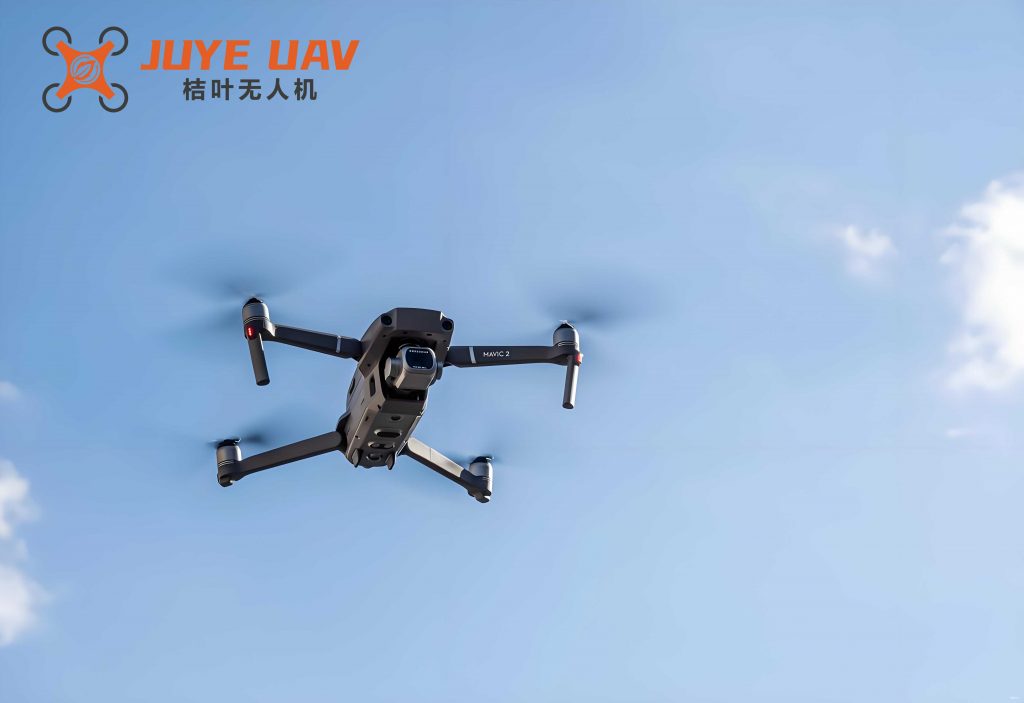
In discussion, our quadrotor design addresses key challenges in aerial manipulation. The lightweight composite structure reduces overall weight, enhancing payload and endurance. The modular approach allows quick adaptation to tasks like power inspection or logistics by swapping end-effectors. The telescopic mechanism overcomes space constraints, a limitation in prior designs that relied on fixed-length arms. However, friction in the slide rail may affect precision, suggesting future use of threaded drives or nested guides. Additionally, electromagnetic interference in power line environments necessitates robust control algorithms, and battery performance in low temperatures (-20°C) requires thermal management. Real-world testing is needed to validate these findings, as simulations assume ideal conditions.
In conclusion, the integration of a multi-DOF manipulator with a quadrotor UAV significantly expands its application scope. Through meticulous design and analysis, we have ensured structural robustness, stability, and efficiency. Future work will focus on hybrid power systems, such as hydrogen fuel cells, to extend endurance, and advanced control strategies for autonomous operations in complex environments. This research lays a foundation for next-generation quadrotor systems capable of active interaction in diverse fields.