
In recent years, the control of multiple unmanned aerial vehicles (UAVs) has garnered significant attention due to its potential to enhance operational efficiency in various applications. Among these, quadrotor UAVs are particularly popular for formation tasks owing to their agility and cost-effectiveness. However, quadrotor formations are highly susceptible to external environmental disturbances, system coupling factors, parameter uncertainties, and actuator failures, which can compromise stability and performance. Traditional control methods, such as PID, active disturbance rejection control (ADRC), and model predictive control (MPC), often assume ideal conditions and fail to address these challenges effectively. To overcome these limitations, we propose a novel control strategy that integrates a compensation function observer (CFO) with an inverse hyperbolic tangent sliding mode controller (IHTSMC) for robust formation control of quadrotor UAVs. This approach ensures precise estimation of composite disturbances and faults, while the controller compensates for these uncertainties, enabling stable and efficient cooperative flight.
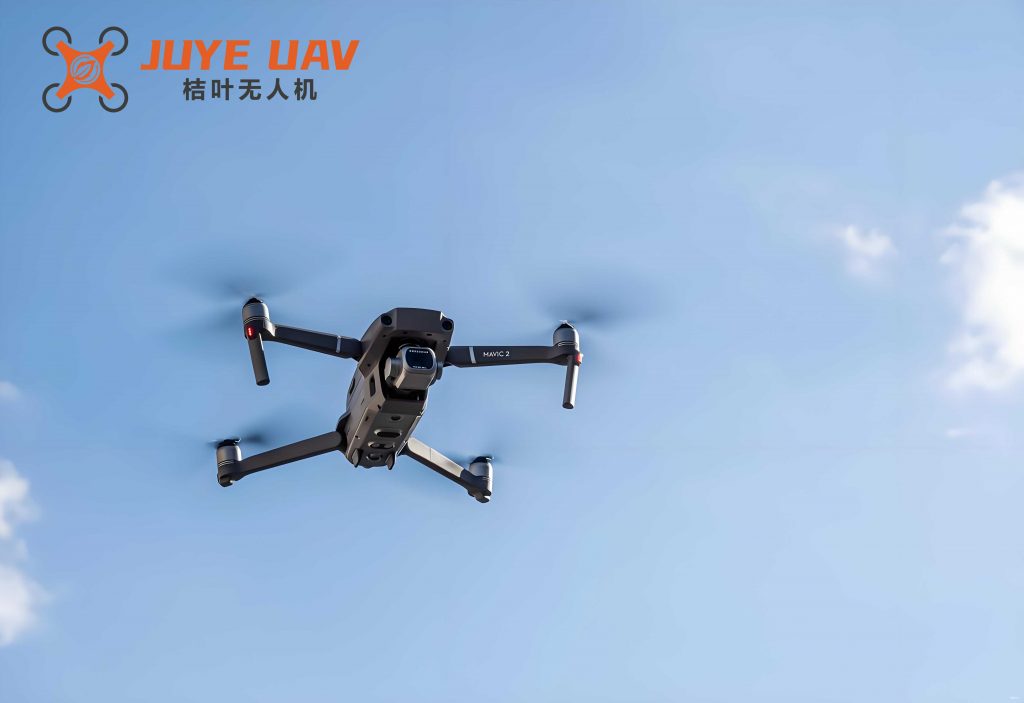
The dynamics of a quadrotor UAV are inherently nonlinear and underactuated, involving complex interactions between position and attitude states. When subjected to external disturbances like wind gusts or internal issues such as actuator faults, the system’s performance can degrade rapidly. Actuator faults, including bias faults and partial failures, are common in quadrotor systems due to factors like motor wear or propeller damage. These faults can be modeled mathematically to account for deviations in control inputs. For instance, the actual control input $U_r$ under actuator faults can be expressed as $U_r = \delta_\epsilon U_{ra} + f_r$, where $\delta_\epsilon$ represents the failure factor and $f_r$ denotes bias faults. Incorporating such models into the control design is crucial for enhancing robustness.
The equations of motion for a quadrotor UAV, considering external disturbances and actuator faults, are derived using Newton-Euler formalism. The position and attitude dynamics are coupled, leading to challenges in decoupling control. The position subsystem equations are given by:
$$ \ddot{x} = \frac{\cos\phi \sin\theta \cos\psi + \sin\phi \sin\psi}{m} U_{1a} – \frac{k_x}{m} \dot{x} + d_1 $$
$$ \ddot{y} = \frac{\cos\phi \sin\theta \sin\psi – \sin\phi \cos\psi}{m} U_{1a} – \frac{k_y}{m} \dot{y} + d_2 $$
$$ \ddot{z} = \frac{\cos\phi \cos\theta}{m} U_{1a} – g – \frac{k_z}{m} \dot{z} + d_3 $$
Similarly, the attitude subsystem involves roll ($\phi$), pitch ($\theta$), and yaw ($\psi$) angles, with dynamics described by:
$$ \ddot{\phi} = \frac{I_{yy} – I_{zz}}{I_{xx}} \dot{\theta} \dot{\psi} + \frac{U_{2a}}{I_{xx}} – \frac{k_\phi}{I_{xx}} \dot{\phi} + \frac{J_r}{I_{xx}} \dot{\theta} \lambda + d_4 $$
$$ \ddot{\theta} = \frac{I_{zz} – I_{xx}}{I_{yy}} \dot{\phi} \dot{\psi} + \frac{U_{3a}}{I_{yy}} – \frac{k_\theta}{I_{yy}} \dot{\theta} + \frac{J_r}{I_{yy}} \dot{\phi} \lambda + d_5 $$
$$ \ddot{\psi} = \frac{I_{xx} – I_{yy}}{I_{zz}} \dot{\phi} \dot{\theta} + \frac{U_{4a}}{I_{zz}} – \frac{k_\psi}{I_{zz}} \dot{\psi} + d_6 $$
Here, $d_i$ ($i=1$ to $6$) represent external disturbances, and $k$ terms denote drag coefficients. To address the composite disturbances (including faults and external effects), we design a compensation function observer (CFO) for each subsystem. The CFO offers higher estimation accuracy and convergence compared to traditional observers like the extended state observer (ESO), as it is a third-order system with improved tracking capabilities. For the roll angle subsystem, the dynamics are reformulated as:
$$ \dot{x}_{\phi1} = x_{\phi2} $$
$$ \dot{x}_{\phi2} = \tilde{f}_\phi + U_{2a} g_\phi $$
where $\tilde{f}_\phi$ encapsulates coupling terms, disturbances, and faults. The CFO for this subsystem is designed as:
$$ \dot{z}_{\phi1} = z_{\phi2} $$
$$ \dot{z}_{\phi2} = L e + z_{\phi3} + \tilde{f}_\phi + b_\phi U_{2a} $$
$$ \dot{z}_{\phi3} = \lambda L e $$
$$ \hat{\tilde{f}}_\phi = L e + z_{\phi3} $$
with $e = [x_{\phi1} – z_{\phi1}, x_{\phi2} – z_{\phi2}]^T$ as the error vector, and $L$, $\lambda$ as tunable parameters. This structure ensures exponential stability and zero steady-state error under certain conditions, making it ideal for real-time disturbance estimation in quadrotor systems.
Building on the CFO, we develop an inverse hyperbolic tangent sliding mode controller (IHTSMC) for both position and attitude loops. The inverse control approach decouples the system dynamics, while sliding mode control provides robustness against uncertainties. The hyperbolic tangent function $\tanh(\cdot)$ replaces the sign function to reduce chattering, enhancing control smoothness. For the position subsystem in the x-direction, define the tracking error $e_x = x_d – x_1$, and a sliding manifold $s_x = \dot{e}_x + c_x e_x$. The Lyapunov function $V = \frac{1}{2} e_x^2 + \frac{1}{2} s_x^2$ is used to derive the control law:
$$ u_{1x} = \ddot{x}_d + c_x \dot{e}_x + \frac{k_x}{m} \dot{x} + e_x + \eta_x s_x + \lambda_x \tanh\left(\frac{s_x}{\gamma_x}\right) – \hat{\tilde{f}}_x $$
where $\hat{\tilde{f}}_x$ is the estimated disturbance from the CFO, and $\eta_x$, $\lambda_x$, $\gamma_x$ are positive constants. Similar controllers are designed for y and z positions, as well as for attitude angles. For instance, the roll angle controller is:
$$ u_2 = I_{xx} \left( \ddot{\phi}_d + c_\phi \dot{e}_\phi + e_\phi + \eta_\phi s_\phi + \lambda_\phi \tanh\left(\frac{s_\phi}{\gamma_\phi}\right) – \hat{\tilde{f}}_\phi \right) $$
The stability of these controllers is proven using Lyapunov theory, ensuring that tracking errors converge to zero despite disturbances.
For formation control, we adopt a leader-follower strategy, where one quadrotor acts as the leader and others as followers. The kinematic model for each UAV in 2D space is:
$$ \dot{x}_j = v_{xj} \cos\psi_j – v_{yj} \sin\psi_j $$
$$ \dot{y}_j = v_{xj} \sin\psi_j + v_{yj} \cos\psi_j $$
$$ \dot{\psi}_j = \Omega_j $$
where $j$ denotes the leader ($L$) or follower ($F$). The relative distance errors between leader and follower are defined as $e_{xLF} = d_{xd}^{LF} – d_{x}^{LF}$ and $e_{yLF} = d_{yd}^{LF} – d_{y}^{LF}$, with $d_{x}^{LF}$ and $d_{y}^{LF}$ derived from geometric transformations. A sliding mode-based协同controller is designed to maintain formation shape. Define the sliding manifold $S_{L-F} = \chi + \Upsilon \int \chi$, where $\chi = [e_{xLF}, e_{yLF}, e_{\psi LF}]^T$. The control law for followers is:
$$ u^* = Q(\chi)^{-1} \left( -E(\chi) – \zeta_1 S_{L-F}^{1/2} \tanh\left(\frac{S_{L-F}}{\gamma_{L-F}}\right) – \zeta_2 \int \tanh\left(\frac{S_{L-F}}{\gamma_{L-F}}\right) – \Upsilon \chi \right) $$
This ensures that relative distance and velocity errors converge to zero, enabling stable formation flight even under disturbances.
To validate our approach, we conduct simulations in MATLAB/Simulink, comparing the CFO-IHTSMC method with ESO-based inverse hyperbolic tangent sliding mode control (ESO-IHTSMC) and CFO-based sliding mode control (CFO-SMC). The quadrotor parameters used in simulations are summarized in Table 1.
| Parameter | Value |
|---|---|
| Mass $m$ (kg) | 1.2 |
| Gravity $g$ (m/s²) | 9.81 |
| Roll inertia $I_{xx}$ (N·s²/rad) | 9.1e-3 |
| Pitch inertia $I_{yy}$ (N·s²/rad) | 9.6e-3 |
| Yaw inertia $I_{zz}$ (N·s²/rad) | 1.89e-2 |
| Drag coefficients $k_x, k_y, k_z$ (N·s²/rad) | 1.2e-2 |
| Gyroscopic coefficients $k_\phi, k_\theta, k_\psi$ (N·s²/rad) | 2.4e-3 |
| Rotor inertia $J_r$ (N·s²/rad) | 1.13 |
The observer and controller gains are listed in Table 2.
| Parameter | Value |
|---|---|
| Gain $l_1$ | 54 |
| Gain $l_2$ | 432 |
| Filter $\lambda$ | 8 |
| $c_q$ (for $q = x, y, z, \phi, \theta, \psi$) | 1.5 |
| $\eta_p$ (for $p = x, y, z$) | 1.2 |
| $\eta_\alpha$ (for $\alpha = \phi, \theta, \psi$) | 1.5 |
| $\lambda_\chi$ (for $\chi = x, y, z, \phi, \theta, \psi$) | 3 |
| $\gamma_\epsilon$ (for $\epsilon = x, y, z, \phi, \theta, \psi$) | 0.5 |
In the simulations, the quadrotor formation is tasked with tracking a helical trajectory defined by $x_d = 3\cos(t)$, $y_d = 3\sin(t)$, $z_d = 2 + 0.5t$, with a desired yaw angle $\psi_d = 0.5$ rad. Composite disturbances, including external disturbances and actuator bias faults, are introduced at $t = 8$ s. For example, the disturbance in the x-position channel is modeled as:
$$ \tilde{f}_x = \begin{cases}
0 & t < 8 \\
0.1 \sin(3\pi t + 0.2) + \sin(3\pi t) & t \geq 8
\end{cases} $$
Similar disturbances are applied to other channels. The CFO-IHTSMC method demonstrates superior performance in trajectory tracking, with faster convergence and smaller errors compared to ESO-IHTSMC and CFO-SMC. For instance, in the x-position subsystem, CFO-IHTSMC achieves tracking within 1.5 seconds, while CFO-SMC takes 4 seconds. The hyperbolic tangent function effectively reduces chattering, as seen in smooth control inputs. The CFO also shows higher estimation accuracy than ESO, with quicker response to disturbances. In formation control, the leader-follower strategy maintains desired distances, with relative errors converging to zero within 3.09 seconds, validating the协同controller’s efficacy.
In conclusion, the integration of CFO and IHTSMC provides a robust solution for quadrotor formation control under composite disturbances and actuator faults. The CFO’s high-precision estimation and the controller’s adaptability ensure stable and efficient cooperative flight. Future work will explore distributed communication protocols and fault-tolerant control for more complex scenarios, further enhancing the resilience of quadrotor formations.