
In recent years, the advancement of unmanned aerial vehicle technology has revolutionized various fields, with quadrotor drones emerging as a pivotal tool due to their vertical take-off and landing capabilities, hovering stability, and adaptability to diverse environments. As a designer focused on optimizing quadrotor performance, I prioritize structural integrity and weight reduction to enhance payload capacity and endurance. This article delves into the comprehensive design process of a quadrotor drone, covering flight and power schemes, performance parameters, frame and landing gear structural analysis, and validation through simulations. By integrating materials like carbon fiber-reinforced plastics (CFRP) and employing finite element analysis (FEA), I aim to achieve a balance between strength and lightness, ensuring the quadrotor operates efficiently in demanding scenarios such as urban delivery or adverse weather conditions. The quadrotor’s design emphasizes reliability, with considerations for vibration damping, radiation resistance, and waterproofing to maintain functionality in complex environments.
The quadrotor architecture consists of an aerial system, including the rotary unmanned aerial vehicle (RUAV), actuators, and sensors, and a ground system comprising control units and charging power sources. This integrated approach facilitates seamless operation and real-time data processing. A key aspect of the quadrotor design is its ability to sustain prolonged flights, which is critical for applications like logistics, where endurance directly impacts efficiency. Through iterative modeling and analysis, I have refined the quadrotor’s components to minimize stress concentrations and fatigue, thereby extending its service life. The following sections elaborate on each design phase, supported by mathematical models and empirical data to underscore the quadrotor’s robustness.
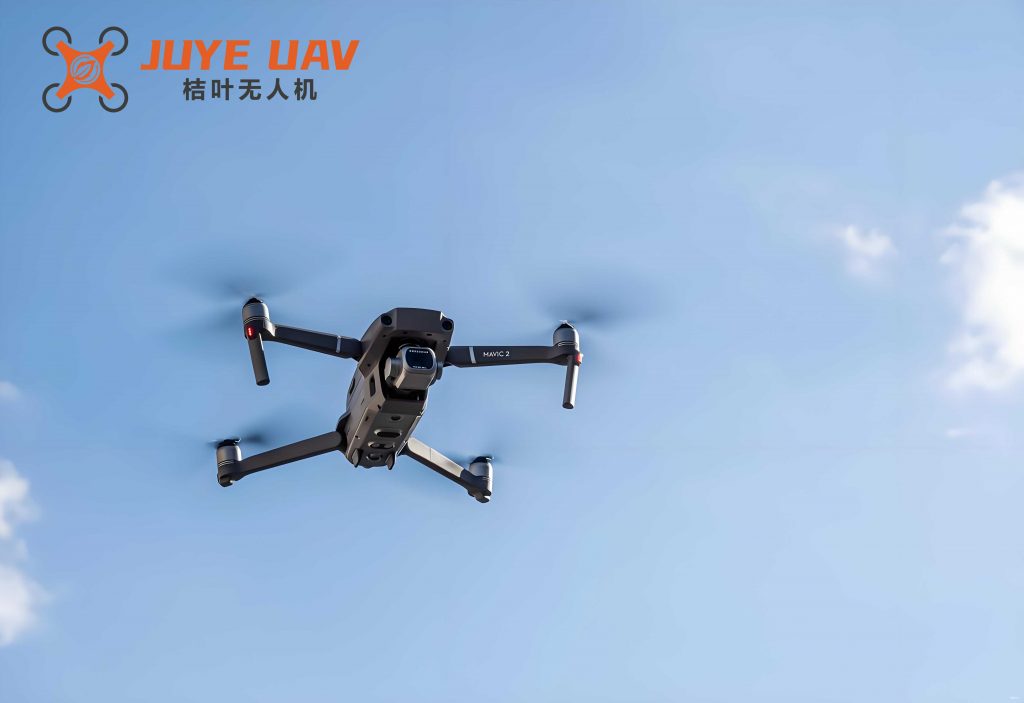
In the flight scheme design, I evaluated fixed-wing and multi-rotor configurations, ultimately selecting the quadrotor for its superior maneuverability and safety in confined spaces. Unlike fixed-wing drones, which require long runways and have minimum speed constraints, the quadrotor excels in urban settings due to its compact structure and controlled flight range. This reduces the risk of accidents and enhances operational reliability. The quadrotor’s simplicity in rotor mechanics—lacking complex pitch variations—further contributes to its durability. For instance, the quadrotor’s ability to hover steadily allows for precise payload deployment, making it ideal for tasks like aerial photography or emergency response. I incorporated redundancy in the quadrotor’s control systems to mitigate single-point failures, ensuring stable flight even under component malfunctions.
The power scheme for the quadrotor adopts hydrogen fuel cells as a sustainable alternative to traditional batteries or fossil fuels. Hydrogen energy offers high charging efficiency and minimal environmental impact, addressing the quadrotor’s续航 limitations in low-altitude operations. During design, I specified waterproof motors with drainage ports to prevent water accumulation in rainy or snowy conditions, thereby reducing additional weight and maintaining the quadrotor’s balance. Additionally, the quadrotor’s body incorporates radiation-shielding materials and hydrophobic coatings to protect electronic systems from high-altitude radiation and moisture. These features ensure the quadrotor remains operational in extreme climates, such as during heavy precipitation or intense solar exposure. The three-dimensional model of the quadrotor, analyzed using FEA, highlights optimized connection points and integrated shock absorbers, like rubber dampers, to minimize vibrations that could compromise sensitive equipment.
For the quadrotor’s performance parameters, I established key design specifications to guide the structural and power calculations. The quadrotor’s dimensions are 1,255 mm in length, 1,265 mm in width, and 1,255 mm in height, with a maximum take-off weight of 450 kg and a payload capacity of 120 kg. The endurance target is 4 hours, supported by rotors rated at 30 kW power and 3,000 r/min转速. To determine the motor power, I used the formula for initial power calculation, accounting for frictional losses:
$$ P = 4P_{\text{rated}} $$
where \( P_{\text{rated}} \) is the rated power per motor. After adjustments, the actual motor power totals 135 kW at 3,000 r/min. The shaft torque, transmitted at a 1:1.3 ratio, is derived as:
$$ T_{\text{shaft}} = \frac{9550 \times P}{n} $$
with \( n \) representing the motor speed. Applying a safety factor of 1.5, the practical torque is 840 N·m. This torque is distributed equally to the gearboxes via belt drives, with each gearbox torque calculated as:
$$ T_{\text{gearbox}} = \frac{T_{\text{shaft}}}{4} $$
The quadrotor’s total lift force is critical for sustaining flight. Using bevel gears with a 90° axis angle and a 1:1 transmission ratio, the drive force per rotor is:
$$ F_t = \frac{2 \times T_{\text{gearbox}}}{d} $$
where \( d \) is the pitch circle diameter of the gears. The lift component per rotor, considering a tilt angle \( \alpha = 20^\circ \) and a side inclination \( \beta = 45^\circ \), is:
$$ F_r = F_t \cdot \tan(\alpha) \cdot \cos(\beta) $$
Thus, the total lift from all four rotors is:
$$ F_{\text{total}} = 4 \times F_r $$
These calculations ensure the quadrotor achieves sufficient lift to handle the designated payload while maintaining stability. The table below summarizes the key performance parameters for the quadrotor:
| Parameter | Value |
|---|---|
| Overall Dimensions (L × W × H) | 1,255 mm × 1,265 mm × 1,255 mm |
| Max Take-off Weight | 450 kg |
| Max Payload | 120 kg |
| Endurance | 4 hours |
| Rotor Rated Power | 30 kW |
| Rotor Rated Speed | 3,000 r/min |
| Actual Motor Power | 135 kW |
| Shaft Torque (with Safety Factor) | 840 N·m |
The frame structure of the quadrotor is designed with a tower-like central section to provide robust support and distribute forces evenly across the arm shafts. I used aluminum alloy ribs for their high strength-to-weight ratio and corrosion resistance, connecting the central and arm shafts to maintain overall rigidity. The arm shafts are segmented into three equal parts, joined by couplings and sleeves for ease of maintenance without compromising structural integrity. To validate the frame’s durability, I conducted static analysis using UG for modeling and Ansys Workbench for simulation. Fixed constraints were applied at the center, with each rotor subjected to a 1,400 N lift force. The results showed a maximum displacement of 0.0058 mm and a stress of 4.05 MPa under full load, confirming the frame’s suitability for the quadrotor’s operational demands.
Modal analysis of the quadrotor frame revealed natural frequencies exceeding 195 Hz, well above the operating frequency of 19.28 Hz, thus eliminating resonance risks. However, the arm shafts exhibited potential deformation due to their length, indicating areas for optimization. Although the current design meets strength requirements, refining the arm shaft dimensions or material composition could enhance the quadrotor’s stability. For example, using advanced composites might reduce weight while increasing stiffness. This iterative design process underscores the importance of continuous improvement in quadrotor development to achieve optimal performance in real-world conditions.
Landing gear design is crucial for the quadrotor’s safety during take-off and landing. I parameterized the landing gear with a height of 805 mm, wheel diameter of 50 mm, and a span of 960 mm. The rigid support rods, made from steel tubes with an outer diameter of 48 mm and wall thickness of 3 mm, are welded to the cross-axis, which uses 30 mm outer diameter tubes. Bearings connect the cross-axis to the wheel hubs, and the entire assembly is bolted to the quadrotor’s body. To assess the landing gear’s performance, I performed static analysis in HyperMesh, employing shell elements for the thin-walled tubes. The mesh consisted of 22,732 elements and 22,480 nodes, with welding simulated as rigid connections for simplicity.
Three landing scenarios were analyzed: simultaneous landing of all gears with drag consideration, two-point symmetric landing involving only the main gears, and tail-down landing with drag effects. The table below presents the stress, displacement, and safety factors for each scenario, all within the yield strength limits of aluminum alloy, validating the design’s adequacy:
| Scenario | Landing Load (N) | Stress (MPa) | Spread Displacement (mm) | Sink Displacement (mm) | Safety Factor | Remarks |
|---|---|---|---|---|---|---|
| 1 | 975 | 146 | 1.55 | 2.05 | 5.00 | Meets design requirements |
| 2 | 1,950 | 292 | 3.10 | 4.10 | 2.50 | Meets design requirements |
| 3 | 3,900 | 584 | 6.20 | 8.20 | 1.25 | Meets design requirements |
In conclusion, the structural design of quadrotor drones is a multifaceted process that demands careful consideration of aerodynamics, materials, and environmental factors. Through this work, I have demonstrated how optimizing the quadrotor’s frame and landing gear can significantly improve payload capacity and endurance. The use of hydrogen power and advanced composites further elevates the quadrotor’s efficiency, making it a viable solution for prolonged missions. Future enhancements may involve adaptive control systems to counter variable wind conditions or temperature fluctuations, ensuring the quadrotor remains resilient in dynamic environments. By continually refining these elements, the quadrotor technology will advance, broadening its applications in sectors like transportation, surveillance, and disaster management.
The integration of FEA and modal analysis has been instrumental in verifying the quadrotor’s structural soundness, highlighting the importance of simulation-driven design. As quadrotor drones evolve, I anticipate further innovations in lightweight materials and energy sources that will push the boundaries of what these machines can achieve. Ultimately, this design approach not only enhances the quadrotor’s performance but also contributes to the broader goal of sustainable and reliable unmanned aerial systems.