
In recent years, the civil drone industry has emerged as a pivotal component of the low-altitude economy, driving technological advancements and economic growth globally. As a researcher focused on intellectual property and innovation, I have analyzed high-value patents to uncover key trends in civil drone technologies, including aerodynamic configurations, flight control systems, navigation systems, power systems, and data link transmission systems. This study leverages patent data from the past two decades to map innovation trajectories and propose strategic directions for future development. The civil drone sector is characterized by rapid evolution, with applications spanning logistics, agriculture, surveillance, and more, making it essential to understand how high-value patents shape technological progress. By examining these patents, I aim to provide insights that can guide stakeholders in enhancing competitiveness and fostering sustainable growth in this dynamic field.
The methodology of this analysis involves collecting high-value patent data from global databases, such as incoPat, which covers over 170 million patents from various jurisdictions. High-value patents are identified based on criteria including high citation counts, extensive patent families, long maintenance periods, and commercial activities like licensing or litigation. For civil drones, the search strategy incorporated keywords and classification codes related to unmanned aerial vehicles, aerodynamic designs, control mechanisms, navigation technologies, power sources, and data transmission. After data cleaning and filtering, a dataset of 15,683 high-value patent applications was obtained, focusing on innovations that demonstrate significant technological impact. Analytical techniques included quantitative metrics to assess application trends, major applicants, and inventors, as well as qualitative methods like technology innovation roadmaps to trace the evolution of key subsystems. This approach allows for a comprehensive view of how civil drone technologies have advanced and where future opportunities lie.
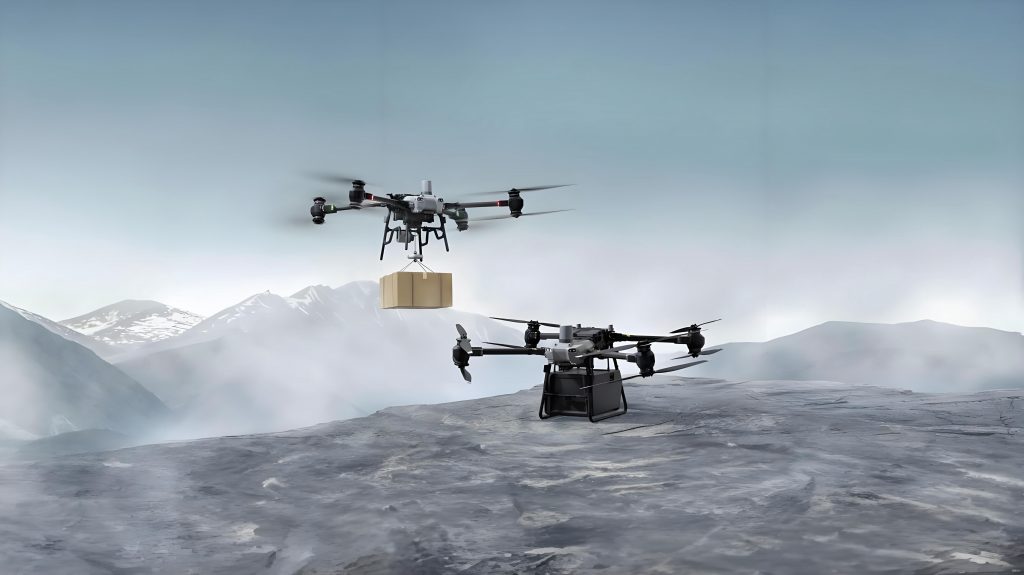
Global analysis of civil drone high-value patents reveals a substantial growth in innovation activity, particularly from 2015 onward. The number of high-value patent applications increased nearly tenfold between 2012 and 2020, indicating a period of rapid technological development. However, a slight decline was observed in 2021 and 2022, possibly due to factors such as the COVID-19 pandemic, economic uncertainties, or technological bottlenecks. Major applicants in the civil drone space include industry leaders like DJI, Boeing, Amazon, and AeroVironment, with DJI leading in patent volume. These entities have strategically protected their innovations across multiple regions, highlighting the global nature of the civil drone market. Inventors such as Gur Kimchi from Amazon and Yoichi Suzuki from Aeronext Inc. have contributed significantly, focusing on areas like rotor designs and flight stability. Technologically, patents are concentrated in IPC classes such as B64C for aircraft configurations, B64D for onboard equipment, and G05D for control systems, reflecting the multidisciplinary nature of civil drone development.
To delve deeper into specific technologies, I have categorized the analysis into five key subsystems: aerodynamic layout, flight control system, navigation system, power system, and data link transmission system. Each of these areas has seen distinct innovation patterns, as summarized in the table below, which outlines the primary technological focuses and their evolution over time.
| Subsystem | Key Technologies | Innovation Trends | Notable Patents |
|---|---|---|---|
| Aerodynamic Layout | Fixed-wing, rotary-wing, hybrid designs | Shift toward vertical take-off and landing (VTOL) and modular structures | US10994829B2 (foldable rotor assemblies) |
| Flight Control System | Sensors, onboard processors, servo actuators | Integration of AI and machine learning for autonomous operations | US10901436B2 (intelligent control methods) |
| Navigation System | GPS, inertial navigation, visual navigation | Combination of multiple sensors for enhanced accuracy | US10825347B2 (multi-sensor fusion) |
| Power System | Electric motors, hybrid engines, renewable energy | Focus on energy efficiency and sustainability | US11228200B2 (hybrid power systems) |
| Data Link Transmission | Wireless communication, data compression | Advancements in security and real-time data handling | US11223508B1 (flexible bandwidth usage) |
In aerodynamic layout innovations, civil drones have evolved from traditional fixed-wing and rotary-wing designs to hybrid configurations that combine the benefits of both. For instance, Boeing’s patents on foldable rotor components enable VTOL capabilities, enhancing the versatility of civil drones for urban air mobility. The aerodynamic efficiency of these designs can be modeled using equations like the lift equation: $$ L = \frac{1}{2} \rho v^2 S C_L $$ where \( L \) is lift, \( \rho \) is air density, \( v \) is velocity, \( S \) is wing area, and \( C_L \) is the lift coefficient. This formula underscores the importance of optimizing design parameters for improved performance in civil drones. Similarly, DJI’s focus on deformable structures allows for adaptive flight characteristics, which are crucial for applications in constrained environments. The trend toward modular and biomimetic designs suggests future opportunities for patents that integrate nature-inspired structures with existing aerodynamic principles, potentially leading to breakthroughs in civil drone agility and payload capacity.
Flight control systems in civil drones have seen significant advancements through the integration of advanced sensors, processors, and actuation mechanisms. High-value patents in this domain often cover intelligent processing algorithms that enable stable flight under varying conditions. For example, DJI’s patent US10901436B2 utilizes machine learning for adaptive control, which can be represented by a control law: $$ u(t) = K_p e(t) + K_i \int e(t) dt + K_d \frac{de(t)}{dt} $$ where \( u(t) \) is the control output, \( e(t) \) is the error signal, and \( K_p \), \( K_i \), and \( K_d \) are proportional, integral, and derivative gains, respectively. This PID controller formulation is foundational for autonomous civil drone operations, ensuring precision in tasks like hovering and trajectory tracking. The move toward networked and intelligent systems highlights the need for patents that address data fusion from multiple sensors, such as inertial measurement units (IMUs) and cameras, to enhance situational awareness. As civil drones become more autonomous, future patent layouts should focus on self-diagnostic and fault-tolerant systems that improve reliability and safety in complex scenarios.
Navigation systems for civil drones rely on a combination of technologies, including satellite-based systems like GPS, inertial navigation systems (INS), and visual odometry. The integration of these systems is critical for achieving high positioning accuracy, especially in GPS-denied environments. A common approach involves sensor fusion using Kalman filters, which can be expressed as: $$ \hat{x}_{k|k} = \hat{x}_{k|k-1} + K_k (z_k – H_k \hat{x}_{k|k-1}) $$ where \( \hat{x}_{k|k} \) is the updated state estimate, \( K_k \) is the Kalman gain, \( z_k \) is the measurement, and \( H_k \) is the observation matrix. This equation illustrates how civil drones can combine data from multiple sources to refine their location estimates. Patents from companies like Skydio Inc. emphasize visual navigation and obstacle avoidance, enabling civil drones to operate autonomously in dynamic environments. The table below summarizes the performance metrics of different navigation technologies in civil drones, based on patent analysis.
| Navigation Technology | Accuracy (meters) | Latency (ms) | Power Consumption |
|---|---|---|---|
| GPS | 1-5 | 50-100 | Low |
| Inertial Navigation | 0.1-1 (short-term) | < 10 | Medium |
| Visual Navigation | 0.01-0.1 | 20-50 | High |
| Sensor Fusion | < 0.1 | 10-30 | Variable |
Power systems in civil drones have evolved from conventional fuel-based engines to electric and hybrid solutions, driven by demands for longer endurance and environmental sustainability. High-value patents often focus on battery management, energy efficiency, and alternative power sources like solar or hydrogen. For instance, DJI’s patent US11228200B2 covers hybrid power systems that combine electric motors with combustion engines, optimizing energy use for extended flight times. The energy efficiency of a civil drone can be quantified using the specific energy consumption formula: $$ E_{specific} = \frac{P_{total}}{m \cdot t} $$ where \( P_{total} \) is the total power consumed, \( m \) is the mass of the civil drone, and \( t \) is the flight time. This metric helps in comparing different power technologies and guiding innovations toward lighter and more efficient designs. Boeing’s patents on thermal management and fuel systems highlight the ongoing research into reducing emissions and improving reliability. Future patent layouts should explore regenerative power systems and advanced materials that enhance the power-to-weight ratio, addressing one of the key limitations in civil drone operations.
Data link transmission systems are essential for the remote operation and real-time data exchange of civil drones. Innovations in this area include secure communication protocols, data compression techniques, and network architectures that support multiple drones. Patents from companies like GenghisComm Holdings focus on orthogonal frequency-division multiplexing (OFDM) and multiple-input multiple-output (MIMO) technologies, which improve data rates and reliability. The capacity of a data link can be modeled by the Shannon-Hartley theorem: $$ C = B \log_2 (1 + \frac{S}{N}) $$ where \( C \) is the channel capacity, \( B \) is the bandwidth, \( S \) is the signal power, and \( N \) is the noise power. This equation emphasizes the importance of optimizing bandwidth and signal-to-noise ratio for high-speed data transmission in civil drones. As civil drones are increasingly used in swarm applications, patents that address ad-hoc networking and interference mitigation will be crucial. The following table compares key data link technologies based on patent analysis.
| Data Link Technology | Data Rate (Mbps) | Range (km) | Security Features |
|---|---|---|---|
| Custom Line-of-Sight | 10-50 | 5-10 | Basic encryption |
| Satellite Communication | 1-10 | Global | Advanced encryption |
| Wireless Mesh | 50-100 | 1-5 | Dynamic key management |
| 5G Networks | 100-1000 | 0.1-1 | End-to-end security |
In conclusion, the analysis of high-value patents reveals that civil drone technologies are advancing toward modular, integrated, networked, and intelligent systems. Key areas such as aerodynamic layouts, flight control, navigation, power systems, and data links show robust innovation, with opportunities for further growth. For aerodynamic layouts, future patents could explore biomimetic and adaptive structures that enhance maneuverability. In flight control, AI-driven systems and fault-tolerant designs will be critical for autonomous civil drones. Navigation technologies should focus on multi-sensor fusion and resilience to interference. Power systems need innovations in renewable energy and efficiency, while data links must prioritize security and scalability for swarm operations. By aligning patent strategies with these trends, stakeholders can capitalize on the expanding applications of civil drones in sectors like logistics, agriculture, and public safety, ensuring long-term competitiveness in the global market.
Ultimately, the civil drone industry stands at a pivotal point, where strategic patent布局 can drive technological leadership. I recommend that innovators prioritize cross-disciplinary research, collaborate on standard-setting, and protect inventions in emerging domains like AI and sustainability. This approach will not only foster innovation but also address societal challenges, making civil drones an integral part of the future economy.