
In recent years, the rapid expansion of civil drone operations has heightened concerns regarding safety and risk management. As a researcher in this field, I focus on assessing the ground impact risk of civil drones by considering their operational scenarios. Traditional risk assessments often overlook the specific contexts in which civil drones operate, leading to either overly conservative or insufficient safety measures. This study aims to develop a comprehensive risk assessment model that integrates operational scenarios, environmental factors, and management practices to evaluate the probability and severity of ground impact events involving civil drones. By analyzing various scenarios, I seek to provide insights that can guide the development and operation of civil drones to achieve safety levels comparable to manned aviation.
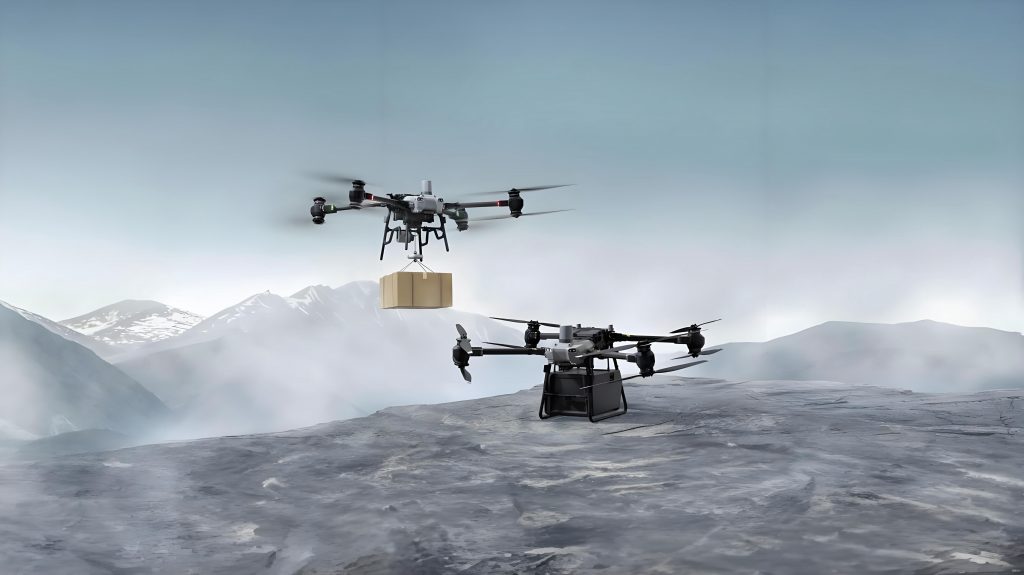
The concept of operational scenarios for civil drones refers to the specific conditions under which these unmanned systems perform their functions, including the type of civil drone, ground population density, and airspace environment. These elements collectively determine the risk profile of civil drone operations. For instance, a large civil drone operating in a densely populated area under mixed airspace conditions presents a different risk level compared to a small civil drone in a sparsely populated, segregated airspace. In this study, I define operational scenarios based on three dimensions: the civil drone type, ground population distribution, and airspace characteristics. This approach allows for a nuanced understanding of how various factors influence the overall risk of civil drone operations.
Risk factors for civil drone operations are categorized into two main dimensions: risk probability and risk hazard. The probability dimension includes elements such as the failure rate of the civil drone system, environmental conditions, and management practices. The hazard dimension encompasses the kinetic energy of the civil drone, the area affected by an impact, ground population density, and the level of shelter or protection available to people on the ground. By examining these factors, I can construct models that accurately reflect the real-world risks associated with civil drone operations. The following table summarizes the key risk elements for civil drone ground impact events:
| Risk Event | Risk Dimension | Influencing Factors | Determinants |
|---|---|---|---|
| Civil Drone Ground Impact | Risk Probability | Civil drone failure rate | Reliability of civil drone system |
| Risk Probability | Operational environment | Airspace, terrain, weather | |
| Risk Probability | Operational management | Organization and task management | |
| Civil Drone Ground Impact | Risk Hazard | Impact area | Configuration and size of civil drone |
| Risk Hazard | Population density | Distribution of ground population | |
| Risk Hazard | Impact fatality rate | Kinetic energy and ground shelter |
To quantify the risk probability, I use a model that incorporates the inherent failure rate of the civil drone system, environmental factors, and management influences. The probability of a ground impact risk event occurring, denoted as P, is given by the following equation:
$$ P = P_S \cdot f_{ep} \cdot f_{mp} $$
Here, \( P_S \) represents the probability of a ground impact due to system failures of the civil drone, which is typically on the order of \( 10^{-5} \) per flight hour but can vary based on the design and maintenance of the civil drone. The environmental factor \( f_{ep} \) accounts for conditions such as airspace environment, terrain, and weather, while the management factor \( f_{mp} \) reflects organizational and task-related practices. The environmental factor is further broken down into components for airspace, terrain, and meteorological conditions:
$$ f_{ep} = f_{ea} \cdot f_{eg} \cdot f_{em} $$
In this equation, \( f_{ea} \) is the airspace environment factor, with values greater than 1 for mixed airspace due to increased collision risks. \( f_{eg} \) represents the terrain influence, which varies with the flight phase and surface morphology. For example, mountainous terrain during takeoff or landing significantly increases the risk for a civil drone compared to flat plains. \( f_{em} \) captures meteorological effects, including wind speed, visibility, and wind shear, each with specific coefficients that adjust the risk probability based on the civil drone’s size and operational conditions. The following tables provide detailed coefficients for these factors:
| Terrain Type | Takeoff | Climb | Cruise | Descent | Landing |
|---|---|---|---|---|---|
| Mountainous | 3 | 2 | 1.2 | 2 | 3 |
| Hilly | 2 | 1.8 | 1 | 1.8 | 2 |
| Plateau | 2 | 1.6 | 1 | 1.6 | 2 |
| Plain | 1.5 | 1.2 | 1 | 1.2 | 1.5 |
| Basin | 2 | 1.5 | 1 | 1.5 | 2 |
| Wind Level | 0-3 (Light) | 4 (Moderate) | 5 (Fresh) | 6 (Strong) | 7+ (Gale) |
|---|---|---|---|---|---|
| Micro Civil Drone | 1 | 1.2 | 2 | 5 | 10 |
| Light Civil Drone | 1 | 1.2 | 1.5 | 3 | 5 |
| Small Civil Drone | 1 | 1 | 1.2 | 1.5 | 3 |
| Medium Civil Drone | 1 | 1 | 1 | 1.2 | 1.5 |
| Large Civil Drone | 1 | 1 | 1 | 1 | 1 |
| Visibility Level | Good (V > 2000m) | Fair (500m < V ≤ 2000m) | Poor (50m < V ≤ 500m) | Very Poor (V ≤ 50m) |
|---|---|---|---|---|
| Visual Line of Sight | 0.9 | 1 | 2 | 5 |
| Beyond Visual Line of Sight | 1 | 1 | 1 | 2 |
| Wind Shear Level | Light (0-2.5 m/s) | Moderate (2.5-4.5 m/s) | Strong (4.5-6.0 m/s) | Severe (>6.0 m/s) |
|---|---|---|---|---|
| Influence Coefficient | 1 | 1.5 | 2 | 3 |
The management factor \( f_{mp} \) is derived from organizational and task management aspects. It is expressed as:
$$ f_{mp} = f_{mo} \cdot f_{mt} $$
Here, \( f_{mo} \) represents organizational management factors, such as pilot training and safety oversight, with values ranging from 0.9 for excellent management to 4 for chaotic practices. \( f_{mt} \) accounts for task management, including flight mode, operational visibility, and flight independence, and is calculated as \( f_{mt} = f_{tf} \cdot f_{ti} \cdot f_{tv} \). For instance, automated flight reduces risk compared to manual operation, and operations within visual line of sight are safer than beyond visual line of sight missions. The following table outlines the organizational management influence coefficients:
| Management Level | Chaotic | Deficient | Standard | Excellent |
|---|---|---|---|---|
| Influence Coefficient | 4 | 2 | 1 | 0.9 |
For the risk hazard dimension, I model the fatality rate of a ground impact event using an equation that considers the impact energy and ground shelter protection. The mortality rate \( P_f \) for a person on the ground due to a civil drone impact is given by:
$$ P_f = \frac{1}{1 + \left( \frac{p_s \cdot E_{imp}}{E_{50}} \right)^{-k}} $$
In this equation, \( p_s \) is the ground shelter protection coefficient, which ranges from 1 for areas with minimal protection to 10 for sparsely populated regions with natural shelters. \( E_{imp} \) is the impact energy, approximated as 1.4 times the maximum design speed of the civil drone, and \( E_{50} \) is the energy at which the mortality rate is 50% for a given shelter coefficient. The parameter \( k \) is a correction factor, typically derived from empirical data. The number of fatalities \( N_f \) in a ground impact event is then calculated as:
$$ N_f = A_e \cdot \rho \cdot P_f $$
Here, \( A_e \) is the area affected by the impact, which depends on the size and configuration of the civil drone, and \( \rho \) is the ground population density in persons per square meter. This model allows me to assess the severity of ground impact risks for civil drones in various operational scenarios. The following table classifies ground population types and their corresponding shelter coefficients:
| Ground Population Type | Population Density (persons/km²) | Shelter Protection Coefficient |
|---|---|---|
| Congested Area | ≥10,000 | 1 |
| Dense Area | 1,000 to <10,000 | 3 |
| Sparse Area | 25 to 1,000 | 6 |
| Remote Area | ≤25 | 10 |
To illustrate the application of this risk assessment model, I analyze four types of civil drones: a micro civil drone (e.g., RQ-11 Raven), a light civil drone (e.g., Maxi Joker 2), a small civil drone (e.g., Neptune), and a large civil drone (e.g., CL-327 Guardian). The parameters for these civil drones are summarized in the table below:
| Civil Drone Type | Weight (kg) | Wingspan (m) | Design Speed (m/s) | Ceiling (m) |
|---|---|---|---|---|
| Micro Civil Drone | 1.9 | 1.3 | 15 | 300 |
| Light Civil Drone | 8 | 1.8 | 20 | 120 |
| Small Civil Drone | 36 | 2.1 | 43 | 2,400 |
| Large Civil Drone | 350 | 4.0 | 44 | 5,400 |
I define eight operational scenarios based on combinations of ground population density and environmental conditions. These scenarios range from S1 (congested areas with high population density and poor shelter) to S4 (remote areas with low population density and good shelter), each with subcategories for good (A) and poor (B) environmental conditions. The scenarios incorporate factors such as airspace type, terrain, wind speed, visibility, wind shear, and management practices. For example, S1-A represents a congested area with good weather and automated flight, while S1-B involves the same area with poor weather and manual operation. The detailed parameters for these scenarios are provided in the following table:
| Scenario Type | Environmental Factors | Management Factors | Ground Population Density (persons/km²) |
|---|---|---|---|
| S1-A (Congested, Good) | Segregated airspace, plain terrain, light wind, good visibility, light wind shear | Standard management, automated flight, beyond visual line of sight, independent operation | 10,000 |
| S1-B (Congested, Poor) | Mixed airspace, mountainous terrain, fresh wind, poor visibility, moderate wind shear | Standard management, manual flight, visual line of sight, independent operation | 10,000 |
| S2-A (Dense, Good) | Segregated airspace, plain terrain, light wind, good visibility, light wind shear | Standard management, automated flight, beyond visual line of sight, independent operation | 1,000 |
| S2-B (Dense, Poor) | Mixed airspace, mountainous terrain, fresh wind, fair visibility, moderate wind shear | Standard management, manual flight, visual line of sight, coordinated operation | 1,000 |
| S3-A (Sparse, Good) | Segregated airspace, plain terrain, light wind, fair visibility, light wind shear | Standard management, automated flight, beyond visual line of sight, independent operation | 100 |
| S3-B (Sparse, Poor) | Mixed airspace, mountainous terrain, fresh wind, poor visibility, moderate wind shear | Standard management, manual flight, visual line of sight, coordinated operation | 100 |
| S4-A (Remote, Good) | Segregated airspace, plain terrain, light wind, fair visibility, light wind shear | Standard management, automated flight, beyond visual line of sight, independent operation | 10 |
| S4-B (Remote, Poor) | Mixed airspace, mountainous terrain, fresh wind, poor visibility, moderate wind shear | Standard management, manual flight, visual line of sight, independent operation | 10 |
Using the risk probability model, I calculate the probability of ground impact events for each civil drone type across the scenarios. The results show that as environmental and management conditions deteriorate, the risk probability increases significantly, from orders of \( 10^{-5} \) to \( 10^{-4} \). For instance, micro and light civil drones exhibit higher sensitivity to these factors compared to medium and large civil drones. This highlights the importance of considering not only the civil drone’s design but also the operational context when assessing risks. The following equation summarizes the probability calculation for a specific scenario:
$$ P = P_S \cdot (f_{ea} \cdot f_{eg} \cdot f_{em}) \cdot (f_{mo} \cdot f_{mt}) $$
For the risk hazard analysis, I compute the fatality rate and the number of fatalities. In congested areas with poor shelter, the fatality rate can approach 100% for larger civil drones due to their high kinetic energy. Conversely, in remote areas, the fatality rate decreases substantially. The number of fatalities is highest in high-density regions, emphasizing the need for strict controls when operating civil drones in such environments. The overall risk degree, which combines probability and hazard, spans 4 to 5 orders of magnitude across scenarios, underscoring the variability in civil drone operational risks.
In conclusion, this study demonstrates that a scenario-based approach is essential for accurately assessing the ground impact risk of civil drones. By integrating environmental, management, and population factors, I develop models that provide a realistic evaluation of risk probability and hazard. The findings indicate that civil drone operations must be tailored to their specific scenarios to achieve desired safety levels. For example, in high-risk scenarios, measures such as restricting civil drone types, improving management practices, or limiting flight areas can mitigate risks. Future work should focus on refining these models with real-world data and expanding them to include other risk events, such as mid-air collisions. Ultimately, this research contributes to the safe integration of civil drones into national airspace systems by promoting risk-aware operations.
Throughout this analysis, I emphasize the critical role of operational scenarios in shaping the risk profile of civil drones. The models and tables presented here offer practical tools for regulators and operators to evaluate and manage the risks associated with civil drone activities. As the use of civil drones continues to grow, adopting such comprehensive risk assessment frameworks will be vital for ensuring public safety and fostering innovation in this dynamic field.