
In recent years, the rapid advancement of unmanned aerial vehicle (UAV) technology has led to the widespread adoption of civil drones across various sectors, including power and pipeline inspection, remote sensing, surveillance, disaster response, agricultural operations, and logistics delivery. The global market for drone technology is projected to grow significantly, highlighting the increasing reliance on these systems. However, as the number of civil drones in operation surges, collision avoidance has emerged as a critical technical bottleneck that threatens the safety and efficiency of autonomous flights. Collisions can occur due to path conflicts, communication failures, or dynamic obstacles, posing risks to property and human safety. To address these challenges, machine learning (ML) techniques have been applied to enhance the collision avoidance capabilities of civil drones, enabling them to learn from data and adapt to complex environments. This paper explores the latest developments in ML-based collision avoidance for civil drones, providing a comprehensive analysis of methodologies, applications, and future directions. Through this discussion, I aim to shed light on how machine learning can revolutionize the safety and reliability of civil drone operations in increasingly crowded airspaces.
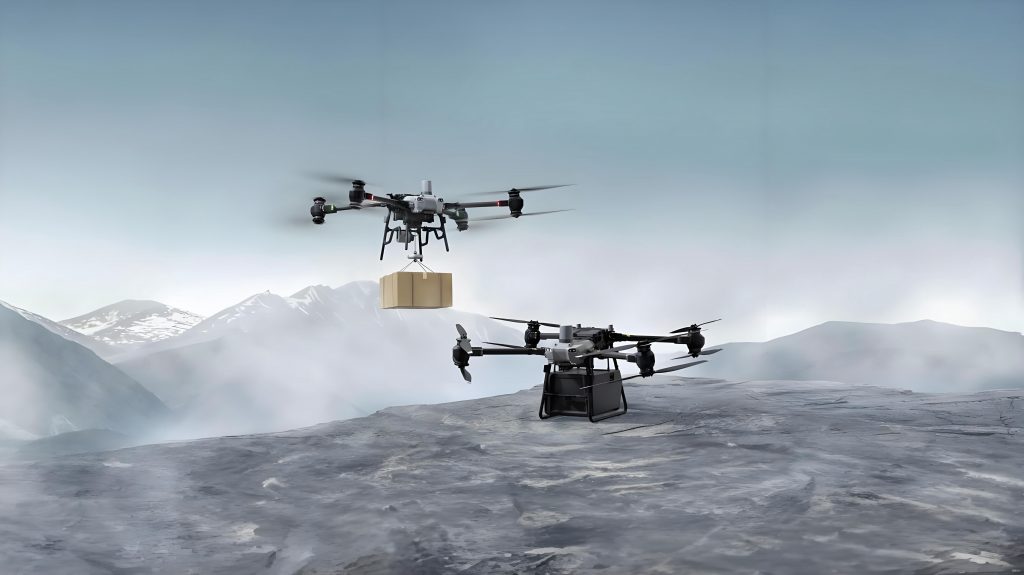
The demand for effective collision avoidance in civil drones stems from the exponential growth in their deployment, particularly in urban settings where airspace is congested. Traditional methods, such as rule-based systems or manual control, often fall short in handling the unpredictability of real-world scenarios. Machine learning, with its ability to process large datasets and identify patterns, offers a promising solution. In this paper, I delve into the fundamentals of machine learning, survey its applications in path planning and conflict resolution for civil drones, analyze the strengths and weaknesses of various ML approaches, and discuss the ongoing challenges and potential research avenues. By emphasizing the role of civil drones in modern society, this work underscores the importance of integrating intelligent systems to ensure safe and efficient operations.
Machine learning forms the backbone of many advanced collision avoidance systems for civil drones. At its core, ML involves the use of algorithms that enable computers to learn from data and make predictions or decisions without explicit programming. This process typically includes data collection and preprocessing, feature engineering, model selection, training, and evaluation. For civil drones, ML techniques can be broadly categorized into supervised learning, unsupervised learning, and reinforcement learning (RL), each with distinct applications in perception, decision-making, and control. Supervised learning relies on labeled datasets to train models for tasks like object detection, while unsupervised learning identifies hidden patterns in unlabeled data. Reinforcement learning, particularly relevant for civil drones, involves an agent learning optimal actions through interactions with the environment, using rewards and penalties to guide behavior.
Key mathematical foundations support these ML approaches. For instance, the Bayesian framework provides a probabilistic basis for many algorithms, as shown in the equation for conditional probability: $$P(A|B) = \frac{P(B|A)P(A)}{P(B)}$$ where \(P(A|B)\) represents the probability of event A given event B. This is crucial for uncertainty modeling in civil drone navigation. Additionally, neural networks, a staple of deep learning, can be represented as: $$y = f\left(\sum_{i=1}^{n} w_i x_i + b\right)$$ where \(y\) is the output, \(x_i\) are inputs, \(w_i\) are weights, \(b\) is the bias, and \(f\) is an activation function. Such models enable civil drones to process high-dimensional sensor data, such as images from cameras, to detect obstacles and plan safe paths. The training process often involves optimizing a loss function, such as mean squared error: $$L = \frac{1}{N} \sum_{i=1}^{N} (y_i – \hat{y}_i)^2$$ where \(y_i\) is the true value and \(\hat{y}_i\) is the predicted value. By leveraging these fundamentals, civil drones can achieve higher levels of autonomy and safety.
The application of machine learning in collision avoidance for civil drones can be divided into two primary phases: path planning and conflict resolution during flight. Path planning involves generating optimal routes that avoid static and dynamic obstacles before takeoff, while conflict resolution deals with real-time adjustments to prevent collisions with unexpected objects or other civil drones. Both phases are critical for ensuring the safe operation of civil drones in complex environments, such as urban areas with high building density or unpredictable weather conditions.
In the path planning phase, machine learning techniques enhance the ability of civil drones to navigate efficiently while minimizing collision risks. For example, graph-based algorithms like A* are often combined with ML to improve scalability and adaptability. A common approach involves using reinforcement learning to optimize path planning, where the civil drone learns from simulations or real-world data. The Q-learning algorithm, a popular RL method, updates action-value functions using: $$Q(s,a) \leftarrow Q(s,a) + \alpha \left[r + \gamma \max_{a’} Q(s’,a’) – Q(s,a)\right]$$ where \(Q(s,a)\) is the value of taking action \(a\) in state \(s\), \(\alpha\) is the learning rate, \(r\) is the reward, and \(\gamma\) is the discount factor. This allows civil drones to iteratively improve their paths based on environmental feedback. Additionally, hybrid methods integrate global planning with local adjustments; for instance, a civil drone might use a genetic algorithm for coarse route optimization and deep learning for fine-tuning in real-time. Genetic algorithms mimic natural selection by evolving a population of solutions through crossover and mutation operations, often represented as: $$f(x) = \sum_{i=1}^{n} c_i x_i$$ where \(f(x)\) is the fitness function to be maximized, and \(x_i\) are decision variables. Such techniques help civil drones balance energy efficiency and collision avoidance, particularly in scenarios with communication constraints, like low-signal areas where delays could lead to accidents.
| Technique | Description | Advantages | Disadvantages |
|---|---|---|---|
| Reinforcement Learning | Uses reward-based learning for path optimization | Adapts to dynamic environments; requires minimal human intervention | High computational cost; slow convergence in complex scenarios |
| Deep Learning | Employs neural networks for pattern recognition in obstacle detection | Handles high-dimensional data; improves accuracy in perception tasks | Prone to overfitting; demands large datasets and resources |
| Genetic Algorithms | Evolutionary approach for global path optimization | Finds near-optimal solutions; robust to nonlinear problems | Computationally intensive; may not guarantee global optimum |
| Hybrid Methods | Combines multiple algorithms (e.g., A* with RL) | Enhances efficiency and scalability; balances global and local planning | Increased complexity in implementation and tuning |
In conflict resolution, machine learning enables civil drones to react to unforeseen events during flight. Reinforcement learning methods, such as Deep Q-Networks (DQN), have been applied to teach civil drones evasion maneuvers. The DQN algorithm approximates the Q-function using a neural network: $$Q(s,a;\theta) \approx Q(s,a)$$ where \(\theta\) represents the network parameters. This allows civil drones to handle high-dimensional state spaces, such as those involving multiple moving obstacles. For instance, in urban environments, civil drones can use Monte Carlo Tree Search (MCTS) to simulate potential collision scenarios and select optimal actions. MCTS involves four steps: selection, expansion, simulation, and backpropagation, which can be modeled as: $$V(s) = \frac{1}{N(s)} \sum_{i=1}^{N(s)} R_i$$ where \(V(s)\) is the value of state \(s\), \(N(s)\) is the visit count, and \(R_i\) is the reward from simulations. This method is particularly effective for civil drones operating in dense airspace, as it provides a balance between exploration and exploitation. Moreover, deep reinforcement learning variants like Deep Deterministic Policy Gradient (DDPG) have been enhanced for robustness in dynamic settings. The DDPG update rule for the actor network is: $$\nabla_{\theta^\mu} J \approx \mathbb{E} \left[ \nabla_a Q(s,a|\theta^Q) \nabla_{\theta^\mu} \mu(s|\theta^\mu) \right]$$ where \(\mu\) is the policy function, and \(\theta^\mu\) and \(\theta^Q\) are parameters of the actor and critic networks, respectively. These advancements help civil drones maintain safe distances from other objects, even under uncertainty, such as in windy conditions or with limited sensor data.
| Technique | Success Rate (%) | Computational Time (ms) | Applicability to Dynamic Environments |
|---|---|---|---|
| Monte Carlo Tree Search | 95-98 | 50-100 | High for static obstacles; moderate for dynamic ones |
| Deep Q-Learning | 90-95 | 20-50 | Good for real-time adjustments; requires retraining for new scenarios |
| Robust DDPG | 98-100 | 30-60 | Excellent in uncertain conditions; resistant to adversarial attacks |
| YOLO-based Detection | 85-90 | 10-30 | Limited to visual data; depends on camera quality and lighting |
When analyzing the application of machine learning in collision avoidance for civil drones, it is essential to evaluate the advantages and disadvantages of each technique. Reinforcement learning, for example, allows civil drones to learn complex strategies through environmental interaction, making it highly adaptable to diverse scenarios. However, it often requires extensive training data and time, which can be impractical for real-time deployment. Additionally, the black-box nature of RL models reduces interpretability, raising safety concerns for civil drones in critical operations. In contrast, deep learning excels in processing large volumes of sensor data, such as images from onboard cameras, enabling accurate obstacle detection. Yet, deep neural networks are susceptible to overfitting and demand substantial computational resources, limiting their use in resource-constrained civil drones. Monte Carlo Tree Search offers robust decision-making under uncertainty by simulating multiple outcomes, but its computational cost grows exponentially with search depth, hindering scalability for high-density civil drone traffic. Global planning algorithms, like those based on graph theory, provide comprehensive path optimization but struggle with real-time updates in dynamic environments. Genetic algorithms, while effective for nonlinear optimization, involve randomness that can lead to suboptimal solutions and increased processing times.
To quantify these trade-offs, consider the overall efficiency of ML techniques for civil drones. For instance, the performance of a collision avoidance system can be measured using a cost function that combines safety, energy consumption, and time: $$C = \lambda_1 \cdot \text{collision risk} + \lambda_2 \cdot \text{energy use} + \lambda_3 \cdot \text{travel time}$$ where \(\lambda_1, \lambda_2, \lambda_3\) are weighting factors. Reinforcement learning often minimizes this cost through iterative learning, but may converge slowly. In comparison, deep learning can rapidly estimate collision risk from visual inputs, but at the expense of higher energy consumption due to model inference. This highlights the need for tailored approaches based on the specific requirements of civil drone applications, such as logistics delivery where timeliness is crucial, or surveillance missions where safety is paramount.
| Technique | Advantages | Disadvantages | Suitability for Civil Drones |
|---|---|---|---|
| Reinforcement Learning | Adaptive to dynamic changes; minimal human input | High training time; poor interpretability | Moderate to high, depending on scenario complexity |
| Deep Learning | High accuracy in perception; handles complex data | Overfitting risks; resource-intensive | High for data-rich environments, low for resource-limited cases |
| Monte Carlo Tree Search | Effective under uncertainty; provides probabilistic guarantees | Computationally expensive; limited real-time performance | Low for high-density operations, moderate for planned routes |
| Global Planning | Comprehensive path optimization; avoids local minima | Poor adaptability to dynamic changes; high computation for large areas | High for pre-flight planning, low for in-flight adjustments |
| Genetic Algorithms | Robust to nonlinearities; finds global optima | Slow convergence; random results variability | Moderate for offline planning, low for real-time use |
Despite the progress in machine learning-based collision avoidance for civil drones, several challenges remain that must be addressed to achieve widespread adoption. One major issue is the computational limitation of civil drones, as onboard processing power is often insufficient for running complex ML models in real-time. This can lead to delays in decision-making, increasing collision risks. Additionally, the variability of environmental conditions, such as weather changes or unpredictable obstacles, requires models that are highly robust and generalizable. Current ML techniques often struggle with out-of-distribution data, meaning that civil drones trained in one setting may fail in another. Furthermore, safety and regulatory concerns emphasize the need for explainable AI, as opaque decision processes in ML models can hinder trust and certification for civil drone operations in shared airspace.
Future research should focus on integrating multiple ML approaches to leverage their collective strengths. For example, combining reinforcement learning with transfer learning could allow civil drones to adapt quickly to new environments without extensive retraining. Moreover, edge computing and distributed algorithms could offload processing tasks from civil drones to ground stations, enhancing real-time performance. Another promising direction is the development of collaborative systems where civil drones share data and coordinate actions using multi-agent reinforcement learning, modeled as: $$Q_i(s,a) = \mathbb{E} \left[ r_i + \gamma \max_{a’} Q_i(s’,a’) \mid s,a \right]$$ for each civil drone \(i\) in a swarm. This could improve scalability in high-density scenarios. Additionally, advancing sim-to-real transfer techniques will enable more efficient training of civil drones in virtual environments before deployment. Ultimately, the goal is to create resilient and intelligent collision avoidance systems that ensure the safe integration of civil drones into everyday life, supporting applications from package delivery to emergency services.
In conclusion, machine learning has significantly advanced the collision avoidance capabilities of civil drones, offering solutions for path planning and conflict resolution through techniques like reinforcement learning, deep learning, and evolutionary algorithms. While these methods provide substantial benefits in adaptability and accuracy, they also face challenges related to computational demands, robustness, and interpretability. By addressing these issues through interdisciplinary research and technological innovation, the future of civil drone operations can achieve higher levels of safety and efficiency. As the adoption of civil drones continues to grow, the integration of intelligent machine learning systems will be pivotal in unlocking their full potential across various industries, ultimately transforming how we perceive and utilize autonomous aerial vehicles.