
In recent years, the rapid proliferation of civil drone operations has introduced significant challenges for airspace management, particularly as these systems increasingly seek access to non-segregated airspace alongside manned aircraft. As a civil drone researcher, I have observed that the integration of unmanned systems into shared airspace necessitates robust Sense and Avoid (DAA) capabilities to prevent mid-air collisions and ensure overall safety. This paper explores the functional requirements, system architectures, and technological implementations for civil drone DAA systems, drawing on current aviation standards and emerging technologies. The goal is to enable civil drone to achieve self-separation and collision avoidance, matching the safety levels of manned aviation. Throughout this discussion, I will emphasize the unique aspects of civil drone operations and how DAA systems can be tailored to address them.
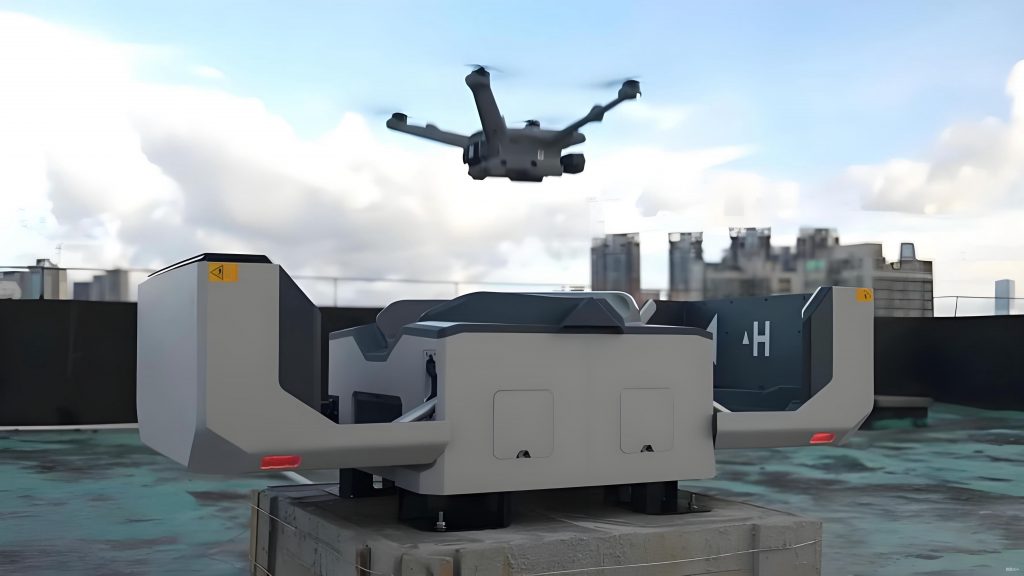
The fundamental requirement for any civil drone DAA system is to provide the equivalent of a pilot’s visual acquisition and avoidance capabilities in manned aircraft. This involves detecting potential threats, such as intruder aircraft, and initiating appropriate maneuvers to maintain safe separation. For a civil drone, the DAA system must issue alerts when an intruder breaches predefined thresholds, such as the well-clear volume and collision volume. These thresholds can be mathematically defined using time-to-collision and distance parameters. For instance, the well-clear threshold $d_{WC}$ might be expressed as a function of relative velocity and time, such as $d_{WC} = v_{rel} \times t_{WC}$, where $v_{rel}$ is the relative velocity and $t_{WC}$ is the time to well-clear violation. Similarly, the collision threshold $d_{col}$ could be derived from minimum separation standards, ensuring that a civil drone can react in time to avoid a hazard.
Key functional requirements for civil drone DAA systems include the ability to interface with existing aviation infrastructure, such as cooperative sensors like ADS-B and TCAS II, while also addressing non-cooperative intruders through radar or other means. The system must comply with right-of-way rules and provide both manual and automated response options. In my analysis, I have identified that a civil drone DAA system should integrate multiple data sources to achieve comprehensive situational awareness. The following table summarizes the core DAA functional requirements for a civil drone:
| Requirement Category | Description for Civil Drone | Key Parameters |
|---|---|---|
| Threat Detection | Detect intruders entering well-clear and collision volumes using sensors like ADS-B, radar, and TCAS. | Detection range: >5 nm; Update rate: ≤1 second |
| Alerting | Provide visual and auditory alerts to the drone operator or automated systems when thresholds are breached. | Alert time: 10-30 seconds prior to violation |
| Maneuver Guidance | Generate avoidance maneuvers, such as altitude or heading changes, based on intruder trajectory. | Maneuver options: climb/descend, turn left/right |
| Integration | Interface with ATC, navigation systems, and other aircraft via data links and communication protocols. | Data latency: <100 ms; Compatibility: DO-365 standards |
To meet these requirements, a holistic DAA system architecture is essential for civil drone operations. The architecture typically comprises two main domains: the airborne segment on the civil drone itself and the ground-based segment at the control station. In the airborne domain, the civil drone is equipped with various sensors that monitor the surrounding airspace. These sensors include ADS-B receivers for cooperative targets, active surveillance systems for S-mode and ATCRBS-equipped aircraft, and radar for non-cooperative intruders. The data from these sensors are processed by an onboard DAA processor, which fuses the information to generate tracks of nearby aircraft. This processor also interfaces with the civil drone’s navigation system, such as GPS, to obtain own-ship state data like position, velocity, and altitude. The threat assessment logic in the DAA processor can be modeled using equations that compute the probability of collision $P_{col}$ based on relative motion. For example, $P_{col} = \frac{1}{1 + e^{-k(d – d_{safe})}}$, where $d$ is the current separation, $d_{safe}$ is the safe distance, and $k$ is a scaling factor. This allows the civil drone to prioritize threats and initiate avoidance maneuvers.
The processed data, including intruder tracks and alert status, are then transmitted to the ground control station via a secure data link, such as a C2 (command and control) or CNPC (control and non-payload communications) link. At the control station, a DAA processor receives this data and presents it to the human operator through displays and audio alerts. The operator can then make informed decisions to maneuver the civil drone, or in automated modes, the system can execute maneuvers directly. The overall architecture ensures that the civil drone maintains situational awareness and can respond to threats in real-time, similar to a manned aircraft’s pilot. The interaction between these components can be represented by a system of equations that describe data flow and latency. For instance, the total system latency $T_{total}$ can be expressed as $T_{total} = T_{sensor} + T_{process} + T_{link} + T_{display}$, where each term represents the time delay in sensing, processing, data linking, and displaying, respectively. Minimizing $T_{total}$ is critical for a civil drone to react swiftly to dynamic threats.
Focusing on the airborne surveillance equipment, a civil drone must be equipped with a suite of sensors to detect both cooperative and non-cooperative intruders. Cooperative intruders, which broadcast their state via ADS-B or respond to interrogations, are relatively easier to track. However, non-cooperative intruders, such as general aviation aircraft without transponders, pose a greater challenge and require active sensors like radar. The ADS-B receiver on a civil drone decodes broadcasts from nearby aircraft, providing data such as position, velocity, and identification. This information is crucial for tracking and predicting trajectories. The active surveillance system, which may include a traffic alert and collision avoidance system (TCAS II), interacts with other TCAS-equipped aircraft to coordinate avoidance maneuvers. For radar systems, the detection range $R_{det}$ for a non-cooperative target can be estimated using the radar equation: $R_{det} = \sqrt[4]{\frac{P_t G^2 \lambda^2 \sigma}{(4\pi)^3 P_{min}}}$, where $P_t$ is transmitted power, $G$ is antenna gain, $\lambda$ is wavelength, $\sigma$ is radar cross-section, and $P_{min}$ is minimum detectable power. This equation highlights the importance of sensor design for a civil drone to ensure adequate coverage.
In addition to sensors, the onboard DAA processor plays a pivotal role in data fusion and threat evaluation. It integrates inputs from multiple sources, including the civil drone’s own navigation data, to generate a unified air picture. The processor employs algorithms to calculate the time to closest point of approach (CPA) and determine if an intruder poses a threat. For two aircraft on intersecting paths, the CPA distance $d_{CPA}$ can be computed as $d_{CPA} = \sqrt{(\Delta x – v_{rel} t_{CPA})^2 + (\Delta y – v_{rel} t_{CPA})^2}$, where $\Delta x$ and $\Delta y$ are the relative positions, $v_{rel}$ is relative velocity, and $t_{CPA}$ is time to CPA. If $d_{CPA}$ falls below the well-clear threshold, the system triggers an alert. The following table outlines the typical sensors used in a civil drone DAA system and their characteristics:
| Sensor Type | Target Type | Range Coverage | Data Output | Limitations |
|---|---|---|---|---|
| ADS-B Receiver | Cooperative | Up to 100 nm | Position, velocity, altitude | Dependent on intruder equipment; limited to equipped aircraft |
| Active Surveillance (e.g., TCAS II) | Cooperative | Up to 30 nm | Range, bearing, altitude; resolution advisories | Requires S-mode or ATCRBS; interference in dense airspace |
| Radar (e.g., pulse-Doppler) | Non-cooperative | 5-20 nm | Range, azimuth, elevation | Size, weight, and power constraints; weather effects |
| Electro-Optical/Infrared (EO/IR) | Non-cooperative | 1-5 nm | Visual imagery; target tracking | Limited by visibility conditions; processing intensive |
The ground control station is equally critical for civil drone DAA operations, as it serves as the human-machine interface where the operator monitors and controls the drone. The control station DAA processor receives data from the airborne segment via the data link and processes it to generate intuitive displays and alerts. These displays often include a traffic situation display that shows the civil drone’s position relative to intruders, with color-coded symbols indicating threat levels—for example, green for safe, yellow for caution, and red for imminent threat. The operator can input commands through a control panel to set DAA modes, such as manual override or automated response. In automated modes, the system can send maneuver directives directly to the civil drone’s flight control system. The effectiveness of the control station relies on low-latency communications; the data link must ensure that information is transmitted and received with minimal delay. The link budget equation $P_r = P_t + G_t + G_r – L_{path} – L_{other}$ can be used to design reliable links, where $P_r$ is received power, $P_t$ is transmitted power, $G_t$ and $G_r$ are antenna gains, $L_{path}$ is path loss, and $L_{other}$ accounts for other losses. This ensures that the civil drone and control station maintain continuous connectivity.
Moreover, the control station integrates with air traffic control (ATC) through communication systems, allowing the operator to coordinate maneuvers with ground controllers. This is vital for a civil drone operating in controlled airspace, as it must adhere to ATC instructions while executing DAA actions. The system also includes health monitoring functions to detect faults in DAA components, ensuring reliability. From a mathematical perspective, the overall performance of the DAA system can be evaluated using metrics like probability of detection $P_d$ and false alarm rate $P_{fa}$. For instance, $P_d = \frac{N_{detected}}{N_{total threats}}$ and $P_{fa} = \frac{N_{false}}{N_{total alerts}}$, where $N_{detected}$ is the number of correctly detected threats, $N_{total threats}$ is the total actual threats, $N_{false}$ is the number of false alerts, and $N_{total alerts}$ is the total alerts generated. Optimizing these metrics is essential for a civil drone to operate safely without unnecessary disruptions.
In conclusion, the development of effective Sense and Avoid systems is paramount for the integration of civil drone into non-segregated airspace. Based on my research, a comprehensive DAA architecture that combines airborne sensors, data processing, and ground-based control can provide the necessary capabilities for self-separation and collision avoidance. The use of multiple sensors, including ADS-B, radar, and TCAS, ensures that both cooperative and non-cooperative threats are addressed. Furthermore, the integration of mathematical models for threat assessment and system latency helps optimize performance. As civil drone technology evolves, ongoing advancements in sensor miniaturization, data fusion algorithms, and communication links will enhance DAA reliability. Ultimately, these systems will enable civil drone to achieve safety levels comparable to manned aircraft, fostering their widespread adoption in various applications. The continuous refinement of DAA standards, such as those outlined in documents like DO-365, will play a crucial role in shaping the future of civil drone operations.
Throughout this paper, I have emphasized the importance of tailoring DAA systems to the unique needs of civil drone, considering factors like cost, scalability, and regulatory compliance. By addressing these aspects, we can ensure that civil drone operations are not only efficient but also safe and sustainable. The equations and tables presented here provide a foundation for further research and development in this critical area. As a researcher, I believe that collaborative efforts between industry, academia, and regulatory bodies will drive innovation and enable seamless integration of civil drone into our airspace.