
In recent years, the rapid advancement of civil drone technology has transformed various sectors, including agriculture, logistics, and emergency response. As an integral part of modern technological ecosystems, civil drones offer unparalleled benefits in efficiency and accessibility. However, their exponential growth brings forth significant challenges in management, safety, and operational optimization. In this article, I will explore the current state of civil drone development, management frameworks, and the critical role of path planning in ensuring safe and efficient operations. The discussion will delve into global trends, algorithmic advancements, and future directions, emphasizing the importance of robust path planning systems for civil drones.
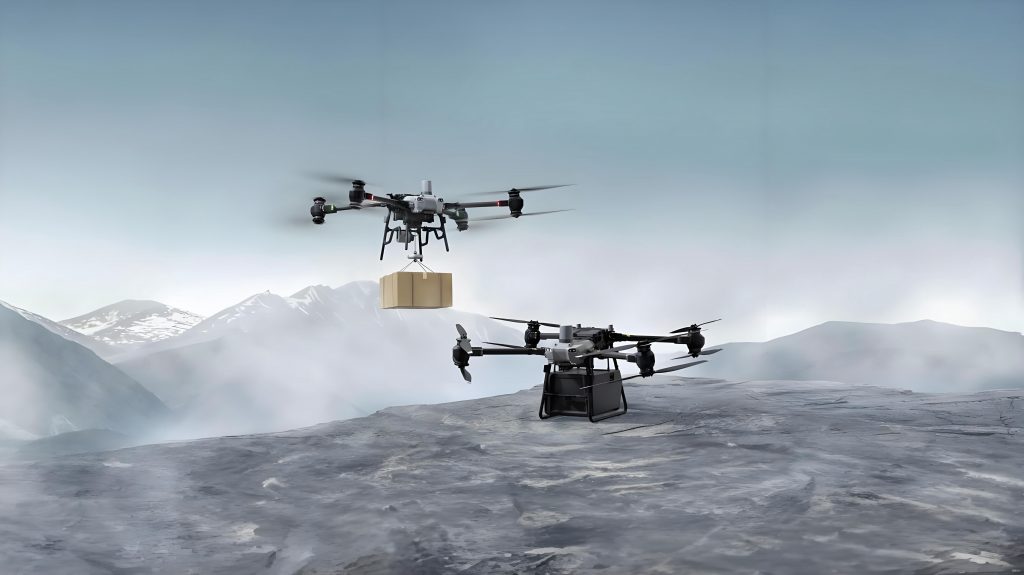
The proliferation of civil drones has been driven by innovations in sensors, communication technologies, and artificial intelligence. According to global estimates, the civil drone market is projected to grow at a compound annual rate of over 20%, with applications spanning from precision agriculture to urban air mobility. Despite this growth, issues such as airspace congestion, regulatory gaps, and security risks necessitate effective management systems. Path planning, which involves determining optimal flight paths for civil drones while avoiding obstacles and minimizing costs, is a cornerstone of addressing these challenges. I will analyze various path planning algorithms, their applications, and how they contribute to the sustainable integration of civil drones into everyday operations.
Global Development Status of Civil Drones
The development of civil drones has seen remarkable progress worldwide, with distinct trends in different regions. In China, the civil drone industry has experienced exponential growth since 2014, driven by a robust supply chain and technological innovations. By the end of 2020, China had over 520,000 registered civil drones, with operational hours exceeding 1.59 million annually. The market is dominated by lightweight, multi-rotor civil drones, which account for a significant share of global production. Applications include agricultural monitoring, disaster response, and infrastructure inspection, showcasing the versatility of civil drones. For instance, in agriculture, civil drones are used for crop spraying and yield estimation, reducing labor costs and improving accuracy. Similarly, in emergency services, civil drones provide real-time data during natural disasters, enhancing response efficiency.
In the United States, the Federal Aviation Administration (FAA) reports that as of 2019, there were approximately 1.7 million small civil drones, including both recreational and commercial models. The FAA predicts that by 2024, this number will rise to 2.3 million, with licensed operators increasing to 349,000. Commercial civil drones are expected to grow at an annual rate of 17%, highlighting their expanding role in sectors like delivery and surveillance. Europe, on the other hand, anticipates hosting 7.2 million civil drones by 2025, with the European Union’s U-Space initiative aiming to manage low-altitude airspace efficiently. The growth in civil drone adoption is fueled by advancements in electric vertical takeoff and landing (eVTOL) technologies, which are pivotal for urban air mobility (UAM) applications. These trends underscore the global shift towards integrating civil drones into economic and social frameworks.
| Region | Registered Civil Drones (2019) | Projected Civil Drones (2024) | Key Applications |
|---|---|---|---|
| China | 520,000 | 700,000 (estimated) | Agriculture, Logistics, Surveillance |
| United States | 1,705,000 | 2,308,000 | Delivery, Photography, Inspection |
| Europe | 86,000 (commercial) | 720,000 (total) | Emergency Services, Infrastructure |
The technological evolution of civil drones is characterized by improvements in battery life, autonomy, and payload capacity. For example, the integration of 5G networks enables real-time data transmission for civil drones, facilitating complex operations like swarm coordination. Additionally, solar-powered civil drones are being developed for long-endurance missions, such as environmental monitoring. Despite these advancements, challenges like limited battery life and regulatory hurdles persist. I believe that addressing these issues through innovation and international collaboration will be crucial for the future of civil drones.
Management Frameworks for Civil Drones
Effective management of civil drones is essential to ensure safety, security, and efficient airspace utilization. In China, the Civil Aviation Administration (CAAC) has established a comprehensive regulatory framework, starting with the “Light and Small Unmanned Aircraft Operation Regulations” in 2015. This was followed by initiatives like the Unmanned Aircraft System Traffic Management Information Service System (UTMISS), which mandates real-time flight data reporting for civil drones weighing over 250 grams. The UTMISS platform facilitates coordination between operators, manufacturers, and authorities, enabling dynamic airspace management. Key regulations include mandatory registration, geofencing, and specific operational zones for civil drones. For instance, civil drones are prohibited from flying near airports or sensitive areas, reducing the risk of accidents.
In the United States, the FAA’s Unmanned Aircraft System Traffic Management (UTM) framework focuses on integrating civil drones into the national airspace. The UTM system operates in phases, with the initial stages emphasizing data sharing and conflict detection. By 2024, the UTM is expected to support beyond visual line of sight (BVLOS) operations for civil drones, allowing for expanded applications like long-distance delivery. Europe’s U-Space, developed under the Single European Sky ATM Research (SESAR) program, provides digital services for civil drone operations, including flight planning and traffic management. U-Space aims to automate low-altitude airspace management, with full implementation targeted for 2030. These frameworks highlight the global effort to create standardized systems for civil drone management, though variations exist due to regional airspace characteristics.
| System | Region | Key Features | Implementation Status |
|---|---|---|---|
| UTMISS | China | Real-time data reporting, geofencing | Operational since 2018 |
| UTM | United States | BVLOS support, conflict resolution | Phase 2 (2020-2024) |
| U-Space | Europe | Digital services, automation | Phase 1 completed |
Despite these advancements, managing civil drones remains challenging due to issues like unauthorized flights and cybersecurity threats. I recommend enhancing management through multi-stakeholder collaboration, such as involving telecom providers for network-based tracking. Moreover, adaptive regulations that keep pace with technological innovations are vital for the sustainable growth of civil drone operations.
Path Planning for Civil Drones: Fundamentals and Requirements
Path planning is a critical component of civil drone operations, involving the computation of optimal routes from start to end points while adhering to constraints like obstacle avoidance, energy efficiency, and time limitations. For civil drones, path planning can be categorized into static and dynamic approaches. Static path planning relies on pre-defined maps and known threats, generating routes that minimize costs such as flight time or energy consumption. In contrast, dynamic path planning allows civil drones to adapt in real-time to unforeseen obstacles, such as other aircraft or weather changes. The objective function for path planning often involves minimizing a cost function, which can be expressed as:
$$ \min \sum_{i=1}^{n} \left( w_d \cdot d_i + w_t \cdot t_i + w_r \cdot r_i \right) $$
where \( d_i \) represents the distance of segment \( i \), \( t_i \) is the time, \( r_i \) is the risk factor, and \( w_d, w_t, w_r \) are weights assigned based on mission priorities. For civil drones, additional constraints include no-fly zones, terrain elevation, and communication reliability. Efficient path planning ensures that civil drones can complete tasks safely and economically, which is especially important in applications like delivery or surveillance where multiple waypoints are involved.
The requirements for path planning in civil drones vary by application. In urban environments, for example, civil drones must navigate complex structures while avoiding collisions with buildings or other drones. This necessitates high-resolution mapping and real-time sensor data. In agricultural settings, path planning for civil drones focuses on covering large areas uniformly, often using grid-based algorithms. I have observed that the integration of global navigation satellite systems (GNSS) and inertial measurement units (IMUs) has significantly improved the accuracy of path planning for civil drones. However, challenges such as signal interference and computational limitations persist, driving research into more robust algorithms.
Research Progress in Path Planning for Civil Drones
Research on path planning for civil drones has evolved from traditional methods to intelligent algorithms, with significant contributions from both Chinese and international scholars. In China, studies often focus on adapting military-derived algorithms for civilian applications. For instance, genetic algorithms (GA) have been widely used for static path planning of civil drones. An improved GA incorporates adaptive mutation operators to avoid local optima, enhancing the convergence speed for civil drone routes. The cost function in such approaches can be modeled as:
$$ f = \alpha \cdot L + \beta \cdot \sum_{j=1}^{m} T_j $$
where \( L \) is the path length, \( T_j \) represents threat exposure at point \( j \), and \( \alpha, \beta \) are tuning parameters. Similarly, particle swarm optimization (PSO) algorithms are employed for multi-civil drone coordination, optimizing paths based on swarm intelligence. Research shows that hybrid approaches, such as combining PSO with beetle antennae search (BAS), improve the robustness of path planning for civil drones in dynamic environments.
Internationally, path planning for civil drones has seen innovations in three-dimensional (3D) route optimization and machine learning. For example, the use of artificial potential fields (APF) allows civil drones to navigate around obstacles by simulating attractive and repulsive forces. The potential function can be defined as:
$$ U(q) = U_{\text{att}}(q) + U_{\text{rep}}(q) $$
where \( U_{\text{att}}(q) \) attracts the civil drone to the goal and \( U_{\text{rep}}(q) \) repels it from obstacles. In Europe, researchers have developed Voronoi diagram-based methods for civil drones, which generate safe paths by partitioning airspace into regions based on threat proximity. Additionally, deep learning techniques are being explored for real-time path planning, enabling civil drones to learn from historical data and adapt to complex scenarios. A comparative analysis of popular algorithms is provided in Table 3.
| Algorithm | Type | Advantages | Limitations | Suitability for Civil Drones |
|---|---|---|---|---|
| Genetic Algorithm (GA) | Global Optimization | Handles multiple constraints | High computational cost | Static environments |
| Particle Swarm Optimization (PSO) | Swarm Intelligence | Prone to local optima | Multi-civil drone systems | |
| Ant Colony Optimization (ACO) | Bio-inspired | Robust to dynamic changes | Slow initial convergence | Complex terrains |
| A* Algorithm | Heuristic Search | Guarantees optimal path | Memory-intensive | Urban navigation |
| Artificial Potential Field (APF) | Reactive Planning | Real-time adaptation | Local minima issues | Obstacle avoidance |
In my analysis, the trend in path planning for civil drones is shifting towards hybrid algorithms that combine the strengths of multiple methods. For example, integrating GA with APF enables civil drones to perform both global and local path planning efficiently. Furthermore, the rise of urban air mobility (UAM) demands advanced path planning that considers air traffic flow and landing zones for civil drones. I anticipate that future research will focus on AI-driven solutions that enhance the autonomy and safety of civil drones in crowded airspaces.
Future Trends and Challenges in Civil Drone Development
The future of civil drones is closely tied to emerging concepts like urban air mobility (UAM) and advanced air mobility (AAM), which envision civil drones as key players in transportation and logistics. In the UAM framework, civil drones are expected to operate in urban environments for tasks such as package delivery and passenger transport. This requires sophisticated path planning systems that can handle high-density airspace and integrate with existing infrastructure. For instance, the development of vertiports for civil drones necessitates route networks that minimize congestion and energy use. The path planning problem in UAM can be formulated as a multi-objective optimization:
$$ \min \left( F_1, F_2, \dots, F_k \right) $$
where \( F_1 \) to \( F_k \) represent objectives like time, cost, and safety for civil drones. Additionally, the integration of 5G and Internet of Things (IoT) technologies will enable real-time communication between civil drones and ground systems, enhancing collaborative path planning.
However, several challenges must be addressed to realize this vision. Regulatory harmonization is critical, as differing standards across regions can impede the global operation of civil drones. Moreover, public acceptance of civil drones, particularly in residential areas, depends on addressing noise pollution and privacy concerns. From a technical perspective, improving the energy efficiency of civil drones through better batteries and aerodynamic designs will extend their operational range. I propose that future efforts should prioritize the development of open-source path planning frameworks for civil drones, allowing for scalability and interoperability. In conclusion, the continued evolution of civil drones hinges on innovative path planning solutions and collaborative management approaches that balance innovation with safety.
In summary, civil drones represent a transformative technology with vast potential. Through comprehensive management and advanced path planning, we can harness their benefits while mitigating risks. As research progresses, I am confident that civil drones will become an indispensable part of our daily lives, driving economic growth and societal advancement.