
In recent years, the proliferation of civil drones has significantly expanded their market size, bringing substantial economic benefits while posing serious challenges to public security. As a result, the development of effective detection and countermeasure technologies has become a critical research focus. Among various approaches, such as radar, electro-optical, and acoustic recognition, radio frequency spectrum detection remains a primary method due to its reliability and range. Civil drones typically employ frequency-hopping (FH) communication for remote control, characterized by slow hopping rates (e.g., 60–80 hops per second) and a limited number of hopping channels (e.g., 10–50). Traditional methods for detecting FH signals often rely on Short-Time Fourier Transform (STFT) analysis, which suffers from fixed detection channels and inefficient resource utilization, especially in low signal-to-noise ratio (SNR) environments. To address these limitations, we propose a variable detection channel method based on Sliding Discrete Fourier Transform (SDFT) theory, optimized for FPGA implementation. This approach enhances resource efficiency, allows flexible channel selection, and maintains robust performance under interference and noise.
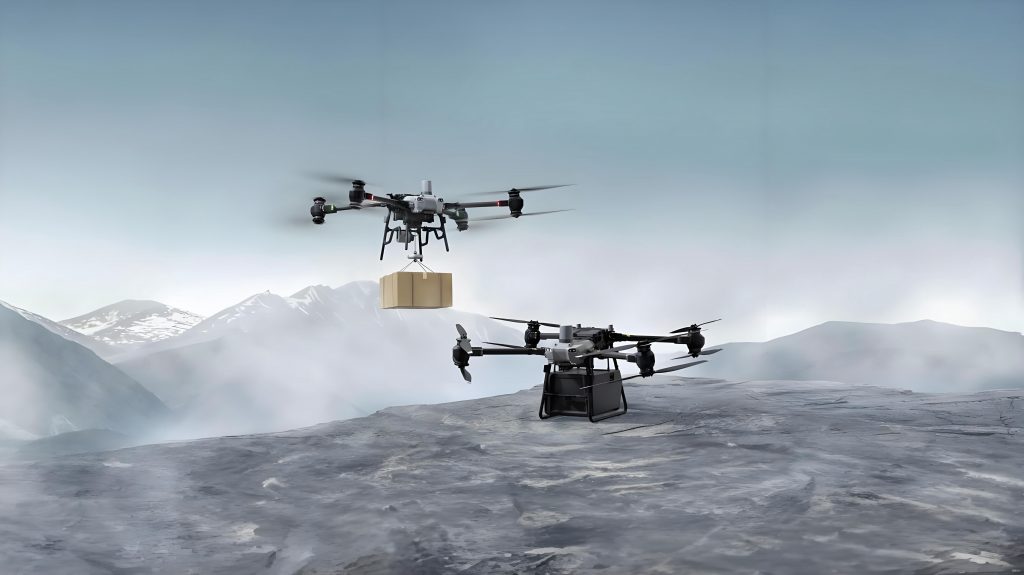
The increasing use of civil drones in applications like delivery, surveillance, and agriculture has heightened concerns about unauthorized activities, such as privacy invasion and security breaches. Radio frequency detection is particularly advantageous because it can operate over long distances and in various environmental conditions. However, civil drone remote control signals often occupy the Industrial, Scientific, and Medical (ISM) bands, where interference from other devices, like Wi-Fi, is common. Traditional STFT-based detection methods, implemented via Fast Fourier Transform (FFT), require fixed frequency bins and power-of-two transform sizes, leading to potential misalignment between detected and actual frequencies and suboptimal resource use. Our method leverages SDFT to enable arbitrary channel detection, improving adaptability and accuracy for civil drone signal monitoring.
To illustrate the core principles, consider the mathematical foundation of SDFT. For a discrete input signal \( x(n) \), the SDFT for the \( m \)-th frequency bin at time \( n \) is computed as:
$$ X_m(n) = \sum_{k=0}^{N-1} x(n – N + 1 + k) e^{-j2\pi mk/N} $$
where \( N \) is the number of frequency bins, and \( m \) corresponds to the specific channel. This can be efficiently implemented using an IIR filter structure, as shown in the Goertzel algorithm, which reduces computational complexity. The transfer function for the SDFT filter is given by:
$$ H_m(z) = \frac{1 – e^{-j2\pi m/N} z^{-1}}{1 – 2\cos(2\pi m/N) z^{-1} + z^{-2}} $$
This allows real-time computation of DFT bins without storing entire input blocks, making it ideal for dynamic civil drone signal detection. The key parameters influencing performance include the number of channels \( N \), the detection window length \( L \), and the quantization bits \( Q \). We define the detection frequency for the \( m \)-th channel as \( f_m = m \times F_s / N \), where \( F_s \) is the sampling rate. For civil drone applications, typical values are \( F_s = 240 \) MSps and \( N = 240 \), resulting in 1 MHz channel spacing.
Traditional STFT methods face limitations in civil drone detection due to their inflexible frequency resolution. For instance, with a fixed \( N \) that must be a power of two, STFT may miss or misalign with actual civil drone hopping frequencies. In contrast, our SDFT-based method allows \( N \) to be any integer, enabling precise targeting of civil drone channels. The following table compares STFT and SDFT for civil drone signal detection:
| Feature | STFT (FFT-based) | SDFT (Proposed) |
|---|---|---|
| Frequency Bin Flexibility | Fixed, requires power-of-two \( N \) | Arbitrary \( N \), any channel selectable |
| Resource Efficiency | High for full spectrum, low for sparse channels | High, scales with number of monitored channels |
| Real-time Processing | Requires block processing, latency issues | Sample-by-sample, low latency |
| Interference Robustness | Moderate, depends on windowing | High, with dynamic thresholding |
In civil drone environments, interference from constant-frequency signals like Wi-Fi can obscure FH signals. Our method incorporates a dynamic thresholding technique to mitigate this. The average power \( \bar{P} \) over a detection window of length \( L \) is calculated as:
$$ \bar{P} = \frac{1}{L} \sum_{i=0}^{L-1} |X_m(n-i)|^2 $$
where \( L \) is chosen to exceed the civil drone hopping period (e.g., twice the hop duration). The instantaneous power \( P_{\text{inst}}(n) = |X_m(n)|^2 \) is then compared to \( \bar{P} \). A binary decision is made:
$$ D(n) = \begin{cases}
1 & \text{if } P_{\text{inst}}(n) > \bar{P} \\
0 & \text{otherwise}
\end{cases} $$
This binary output is further processed with a duration threshold to eliminate spurious detections. For civil drones with a typical hop period of 3.262 ms, we set the duration threshold to \( \frac{2}{3} \) of this value, ensuring that only valid civil drone signals are identified.
The SDFT implementation for civil drone detection involves several optimizations. First, the Goertzel algorithm is modified for sliding window operation, allowing continuous output. The recursive update for the \( m \)-th bin is:
$$ X_m(n) = e^{j2\pi m/N} \left[ X_m(n-1) + x(n) – x(n-N) \right] $$
This structure consists of a comb filter and a complex resonator, with the latter tuned to the desired civil drone frequency. Multiple resonators can be instantiated to monitor multiple channels simultaneously, providing comprehensive coverage of civil drone hopping patterns. To reduce FPGA resource usage, we approximate the magnitude calculation \( |X_m(n)| \) using a fast fitting algorithm:
$$ |X_m(n)| \approx \alpha \cdot \max(|I|, |Q|) + \beta \cdot \min(|I|, |Q|) $$
where \( I \) and \( Q \) are the in-phase and quadrature components, and \( \alpha = 0.990 \), \( \beta = 0.197 \) yield a maximum error of 5.33%, sufficient for civil drone detection. Additionally, downsampling is applied to the power calculations to reduce processing load. For a hop period of 3.262 ms, the downsampled rate \( f_s’ \) is set to 40 kHz, achieved by a factor of 6,000 from the original 240 MSps rate.
In FPGA implementation, careful quantization of the coefficient \( e^{j2\pi m/N} \) is crucial to prevent instability. Using \( Q \)-bit quantization, the coefficient is represented as \( \lceil e^{j2\pi m/N} \times 2^{Q-1} \rceil \), ensuring poles remain inside the unit circle. For \( N = 240 \), \( L = 256 \), and \( Q = 24 \), our method efficiently utilizes FPGA resources, as shown in the following table summarizing resource usage on a XC7K410T device:
| Resource Type | Utilization | Percentage |
|---|---|---|
| Logic Resources | 28% | Moderate |
| DSP Slices (Multipliers) | 26% | Efficient |
| Memory | Low | Optimized |
Simulations in MATLAB and Modelsim validate our approach. Under conditions of -10 dB SNR and interference from two constant-frequency sources (one overlapping with a civil drone channel), the method correctly identifies civil drone signals while rejecting false alarms. The binary output after duration thresholding clearly represents the hopping pattern, demonstrating robustness in challenging environments. For instance, with four hopping frequencies (e.g., channels 1, 20, 30, 40) and interference at channels 30 and 50, the algorithm maintains detection accuracy without misclassification.
The advantages of our SDFT-based method for civil drone detection are multifaceted. It allows arbitrary channel selection, eliminating the constraints of power-of-two transforms. Resource efficiency is high because only relevant channels are monitored, reducing unnecessary computations. Moreover, the dynamic thresholding effectively suppresses constant-frequency interference, common in ISM bands. Future work could explore adaptive channel selection based on real-time civil drone behavior or integration with machine learning for enhanced classification.
In conclusion, the variable detection channel method using SDFT provides a scalable and efficient solution for civil drone remote control signal detection. Its implementation in FPGA ensures real-time performance and low resource consumption, making it suitable for practical deployment. As civil drone usage continues to grow, such advanced detection techniques will play a vital role in ensuring security and managing spectrum resources effectively.