
As an expert in aviation management, I have closely followed the rapid evolution of the civil drone industry. The increasing maturity of technology has propelled civil drones into widespread use across numerous sectors, showcasing their vast market potential. In the context of global advancements in IoT and internet technologies, civil drones are poised to play an even greater role in benefiting society. Many domestic enterprises have achieved leading positions in technical R&D, product quality, and industrial chain development, laying a solid foundation for the growth of the civil drone sector. However, this rapid expansion demands higher standards for airspace management legal frameworks and regulatory models. There is a pressing need to shift from traditional general aviation approaches centered on manned aircraft to exploring integrated development that accommodates both civil drones and manned aircraft in airspace management.
The civil drone, often referred to as an unmanned aircraft system (UAS) or unmanned aerial vehicle (UAV), is defined as an aircraft operated without a pilot on board. This fundamental characteristic distinguishes civil drones from manned aircraft and necessitates tailored regulatory measures. Internationally, organizations like the FAA, EU, and ICAO have standardized the terminology, emphasizing the system-based nature of civil drone operations. The differences between civil drones and manned aircraft are profound, influencing how airspace management must be approached. For instance, civil drones typically feature small size, flexibility, and ease of operation, but they lack onboard pilots and rely on remote control systems, which can fail. Moreover, civil drones do not possess the “see-and-avoid” capability of traditional aircraft, increasing risks of accidents like collisions or loss of control. Micro civil drones, due to their compact and隐蔽 nature, are difficult to track, complicating accountability in incidents. Therefore, developing specific regulatory rules and effective flight保障手段 for civil drones is essential to address these unique challenges.
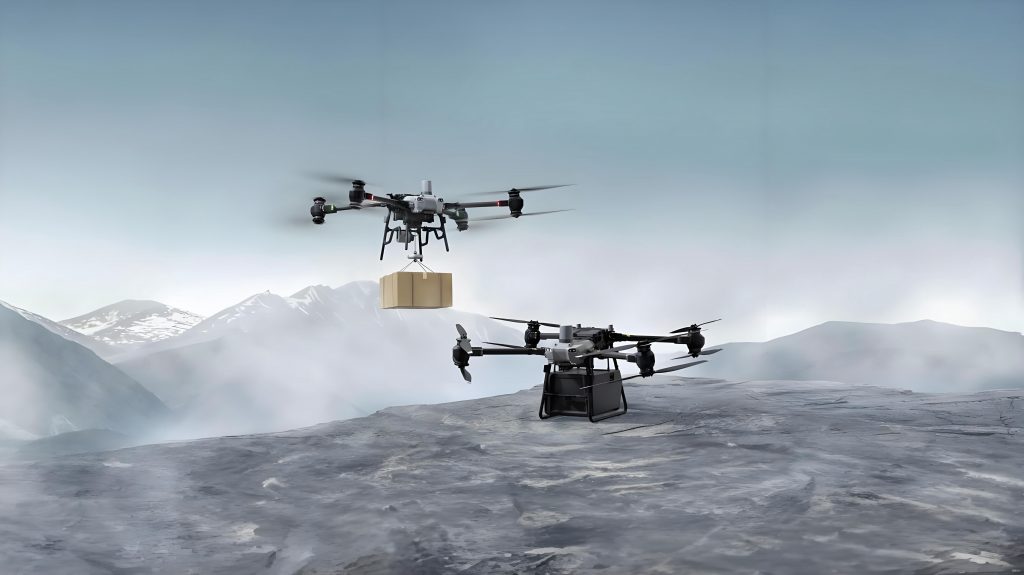
The legal basis for civil drone airspace management stems from principles of airspace ownership and spatial rights. In many jurisdictions, airspace is considered a natural resource owned by the state, reflecting a public trust relationship. For example, constitutional provisions often classify low-altitude airspace as state-owned, emphasizing its公权性 nature. This aligns with social contract theory, where the state acts on behalf of the people. Additionally, spatial rights, as outlined in civil codes, introduce concepts like usufructuary rights over airspace, acknowledging its economic value and controllability. Although spatial rights are not fully recognized as ownership, they provide a framework for managing civil drone operations in low-altitude zones. The equation for airspace utilization efficiency can be expressed as: $$ E = \frac{U}{T} $$ where \( E \) represents efficiency, \( U \) is the utilization rate of airspace by civil drones, and \( T \) denotes time. This highlights the need to optimize airspace use while ensuring safety.
Currently, the legal system for civil drone airspace management faces several critical issues. There is no dedicated legislation specifically for civil drones; instead, regulations are scattered across various documents, such as opinions, trial norms, and advisory notices. This fragmentation leads to ambiguities in definition,监管不足, jurisdictional overlaps, safety incidents, and difficulties in accountability. For instance, the lack of a clear legal definition for civil drones results in模糊 boundaries, making it hard to apply consistent standards. The table below summarizes the key problems in civil drone airspace management:
| Issue | Description | Impact on Civil Drones |
|---|---|---|
| Lack of Clear Legal Definition | Unclear categorization by function, structure, or weight; undefined scope in aviation laws. | Inconsistent regulatory application, increased risks in accidents, and hindered market growth. |
| Insufficient Flight Monitoring | Inability to monitor all civil drones due to diverse sources and “light, small, slow” characteristics. | Higher probability of “black flights” and safety hazards, undermining public trust. |
| Unclear Jurisdiction | Overlap among authorities like civil aviation, public security, and industry departments. | Duplicative management, confusion in enforcement, and inefficiencies in regulation. |
| Frequent Safety Issues | Rising incidents of unauthorized flights due to complex approvals and inadequate监管手段. | Cyclical tightening of restrictions, impeding the healthy development of the civil drone industry. |
| Difficult Accountability | Challenges in tracing responsibility due to incomplete registration and false information. | Prolonged disputes, loss of enterprise interests, and reduced incentives for compliance. |
To quantify the regulatory gap, consider the formula for监管 effectiveness: $$ R_e = \frac{C_r}{T_i} $$ where \( R_e \) is regulatory effectiveness, \( C_r \) represents the number of compliant civil drone operations, and \( T_i \) denotes total incidents. Low values indicate the need for improved frameworks. The rapid adoption of civil drones exacerbates these issues, as seen in the increasing frequency of “black flights” where users bypass regulations due to cumbersome processes. This not only threatens air defense security but also stifles innovation in the civil drone sector. Moreover, the integration of civil drones into logistics, agriculture, and other fields requires specialized standards that are currently lacking, leading to ad-hoc responses rather than systematic solutions.
In addressing these challenges, I propose several recommendations to enhance the civil drone airspace management legal system. First, it is crucial to clarify the legal definition of civil drones. This involves specifying their physical characteristics, such as autonomous navigation systems and remote control components, as well as their usage purposes and scope across various domains like aerial photography, agriculture, and emergency response. By distinguishing civil drones from manned aircraft in legal texts, we can establish a precise basis for regulation. For example, a civil drone can be defined by its technical构成: $$ D_c = \{ F_c, N_s, I_t, P_s \} $$ where \( D_c \) is the civil drone, \( F_c \) is the flight control system, \( N_s \) is the navigation system, \( I_t \) is the image transmission, and \( P_s \) is the power system. This formalization aids in standardizing management.
Second, improving the监管效能 of civil drones is essential. This includes establishing comprehensive registration and备案 systems, where users must provide technical details and usage plans before operation. A robust platform for online registration and real-name authentication can streamline this process. Additionally, strengthening flight management through no-fly zones and dynamic information platforms will enhance safety. The table below outlines key measures for enhancing civil drone监管:
| Measure | Implementation | Expected Outcome for Civil Drones |
|---|---|---|
| Registration and备案 System | Mandatory online registration with technical and usage data; penalties for non-compliance. | Better traceability, reduced unauthorized use, and improved data for监管 authorities. |
| Flight Management | Define no-fly zones based on airspace features; real-time updates via information platforms. | Decreased accident rates, enhanced public safety, and more orderly integration into airspace. |
| Safety Mechanisms | Standardize flight procedures; implement authorization processes and accident investigation. | Higher compliance levels, faster response to incidents, and overall risk reduction. |
Furthermore, the flight safety of civil drones can be modeled using a risk assessment formula: $$ R = P \times S $$ where \( R \) is the risk level, \( P \) is the probability of an incident involving civil drones, and \( S \) is the severity. By minimizing \( R \) through targeted regulations, we can foster a safer environment. Third,理顺管辖权 is vital to avoid overlaps. A unified监管体系 led by civil aviation authorities, with clear分工 among departments, can eliminate confusion. Establishing coordination bodies, such as a civil drone监管协调机构, will facilitate joint efforts and prevent执法盲区. This approach ensures that all stakeholders, including public security and industry departments, work cohesively to manage civil drone activities.
Fourth, building a collaborative management mechanism leveraging technology is key. In the era of big data and internet advancements,监管部门 can innovate监管手段 for civil drones. For instance, creating a shared information platform similar to air traffic service clouds for manned aircraft can break down information barriers. This allows authorities like public security and civil aviation to exchange non-confidential flight data, addressing asymmetry and boosting operational efficiency. The use of civil drone cloud systems enables real-time tracking of flight paths and pilot information, aiding in the punishment of illegal activities. Partnerships with industry players, such as AOPA’s U-Cloud or DJI’s GEO system, can enhance自律 and integration. The efficiency gain from such collaboration can be expressed as: $$ G_e = \frac{I_s}{T_d} $$ where \( G_e \) is governance efficiency, \( I_s \) is the amount of shared information, and \( T_d \) is the time delay in response. Higher \( G_e \) values indicate more effective监管 of civil drones.
Finally,落实飞行责任追究 is imperative to address the rising incidents of civil drone interference with aviation and public safety. A comprehensive accountability system covering侵权责任,违法责任, and刑事责任 should be developed. This includes clarifying责任主体 through legislation, such as defining ownership and operator responsibilities in cases of harm. For example, the liability for civil drone damage can be modeled as: $$ L = f(O, U, C) $$ where \( L \) is liability, \( O \) is ownership, \( U \) is usage intent, and \( C \) is causation. Strengthening registration laws to ensure traceability and establishing a追溯制度 will help hold parties accountable. By doing so, we can create a deterrent effect and promote responsible use of civil drones.
In conclusion, the civil drone industry holds tremendous promise for technological and economic advancement, but its sustainable growth hinges on a balanced approach to airspace management. As I reflect on the current landscape, it is clear that open低空空域 must go hand-in-hand with robust regulation. By clarifying definitions, enhancing监管效能,理顺管辖权, fostering collaboration, and enforcing accountability, we can progressively integrate civil drones into the national airspace system. This will not only safeguard security but also unlock the full potential of civil drones, driving innovation and prosperity in the years to come.